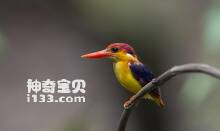
The Azure Kingfisher (Ceyx azureus) is a small but spectacularly coloured kingfisher of northern and eastern Australia and the New Guinea region. True to its name, it flashes electric blue over the back and wings, contrasted with warm orange underparts. Along rivers, creeks and mangrove channels, it often perches low over the water, scanning intently before dropping in a rapid plunge to seize a small fish or aquatic invertebrate. This watch-and-plunge lifestyle makes it a classic water’s-edge hunter and a vivid indicator of a healthy riparian corridor.
At a broad scale the species is commonly treated as Least Concern (LC), reflecting a relatively wide distribution. Even so, Azure Kingfishers depend on clean water, abundant prey and natural riverbank structure. Pollution that reduces fish and invertebrates, removal of low perches, and bank modification that eliminates nesting cuttings can all lower local density. Severe rain and flood events can also destroy or inundate bank nests. Protecting riparian vegetation, mangroves and natural banks helps keep local populations resilient and breeding sites available.
Taxonomy and naming
The Azure Kingfisher belongs to the order Coraciiformes and the family Alcedinidae. It is placed in the genus Ceyx, a group that includes several small, brightly coloured kingfishers. The name “azure” refers to the intense blue sheen of the upperparts.
Physical features
Adults are about 17–19 cm long. The head appears relatively large, the tail is short and the bill is stout and dark, suited to gripping slippery prey. Upperparts are vivid azure to blue-green with a glossy sheen, while the underparts are rich orange to cinnamon. The throat is paler and the eyes are dark. On a perch the bird looks compact and athletic, and in flight it often stays low and fast along the line of the water.
Range and habitat
The species occurs across northern and eastern Australia, New Guinea and nearby islands. It uses a wide range of freshwater and coastal waterways, including forest creeks, lowland rivers, lagoons, wetland channels and mangrove-lined tidal creeks. Hunting sites typically have low branches, snags or posts close to the water surface. Nesting requires sandy or earthen banks and steep cuttings where a tunnel can be excavated, so heavily engineered banks may reduce breeding opportunities.
Behaviour and ecology
Azure Kingfishers usually hunt by sitting still on a low perch and watching the surface. When prey is detected, they plunge straight down, often fully submerging, then return to a perch to reposition and swallow the catch. Individuals and pairs can be territorial along productive stretches of bank, using calls and chases to exclude rivals. They are often most active in the cooler parts of the day, especially in hot tropical regions.
Diet
Diet is dominated by small fish and aquatic invertebrates such as shrimp and other crustaceans. They also take aquatic insect larvae, tadpoles and other small prey depending on local availability. Clear, shallow water and complex edge habitat often improve hunting success by making prey easier to detect and capture.
Reproduction and life history
Breeding pairs excavate a tunnel nest in a sandy or earthen bank, ending in a chamber where eggs are laid. Both sexes may help with digging and nest defence. Nest placement typically aims to avoid normal high-water levels, but extreme rainfall and flooding can still destroy nests. Parents make frequent feeding trips to the nest, and fledglings remain dependent for a period after leaving the burrow as they learn to hunt and navigate along waterways.
Relationship with people
Because it often lives along urban rivers, park wetlands and mangrove boardwalks, the Azure Kingfisher is a popular and accessible species for nature education. Keeping a respectful distance from banks during the breeding season, avoiding disturbance near nest tunnels and reducing litter and pollution along waterways all benefit this species.
Conservation status and threats
While commonly listed as Least Concern (LC), local threats include declining water quality, loss of riparian vegetation and low perches, and modification or hardening of riverbanks that removes nesting habitat. Extreme flood events can directly scour or inundate nests. Conservation actions that protect riparian corridors, maintain natural bank structure, and safeguard mangroves and wetland channels help keep populations resilient.