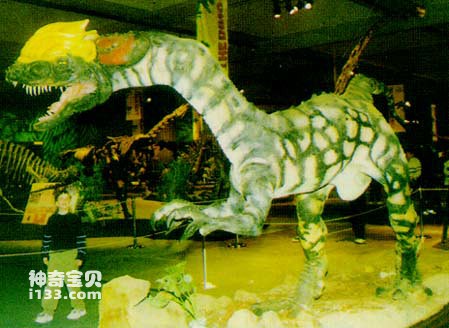
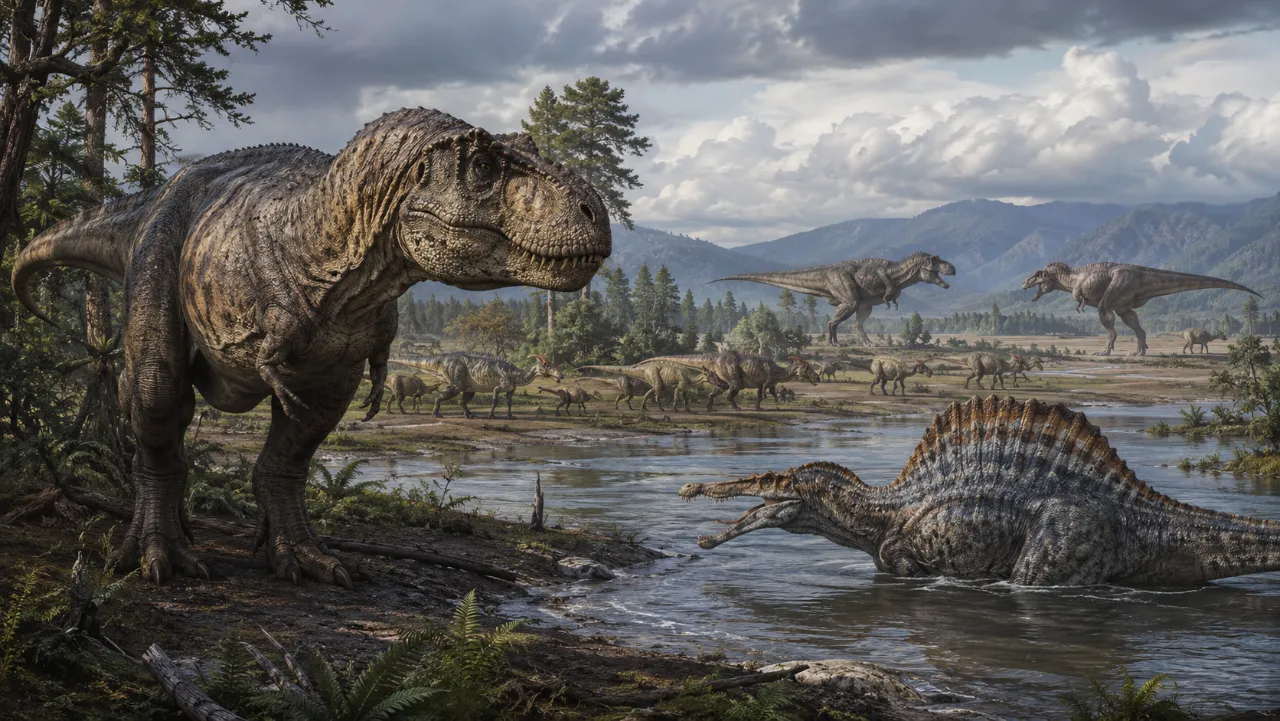
Yes—dinosaurs really existed, and we know this the same way we know extinct whales, mammoths, and ancient humans existed: multiple, independent lines of physical evidence that can be examined, tested, dated, and re-checked by different researchers across the world.
What makes dinosaurs special isn’t just that we have fossils—it’s that we have a gigantic, consistent “paper trail” in stone: bones, teeth, eggs, nests, footprints, skin impressions, and even rare soft-tissue outlines, all embedded in rock layers that can be placed into Earth’s timeline.
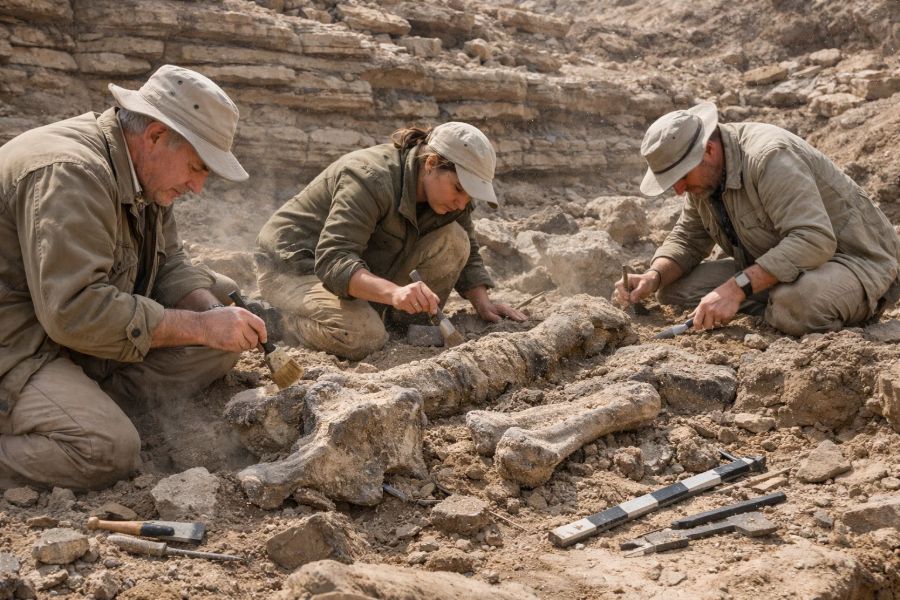
1) The strongest evidence: fossils (not stories, not drawings)
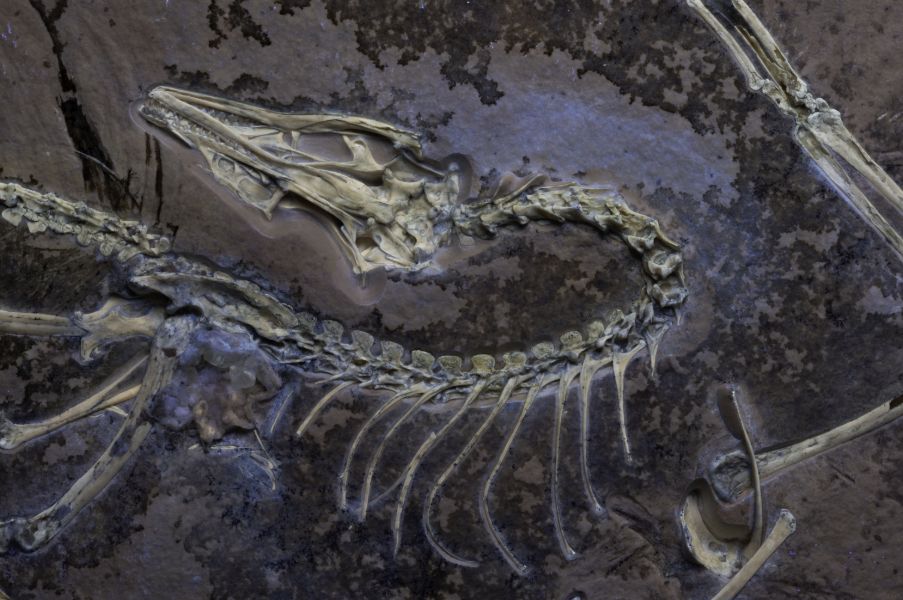
Body fossils: bones, teeth, and skeletons
Museums and research collections contain dinosaur remains from every continent, spanning hundreds of species and many geological formations. These specimens are not “one-off curiosities”—they are repeatable finds from well-documented field sites. As the American Museum of Natural History puts it, what we know about non-avian dinosaurs comes from fossils, including bones and teeth.
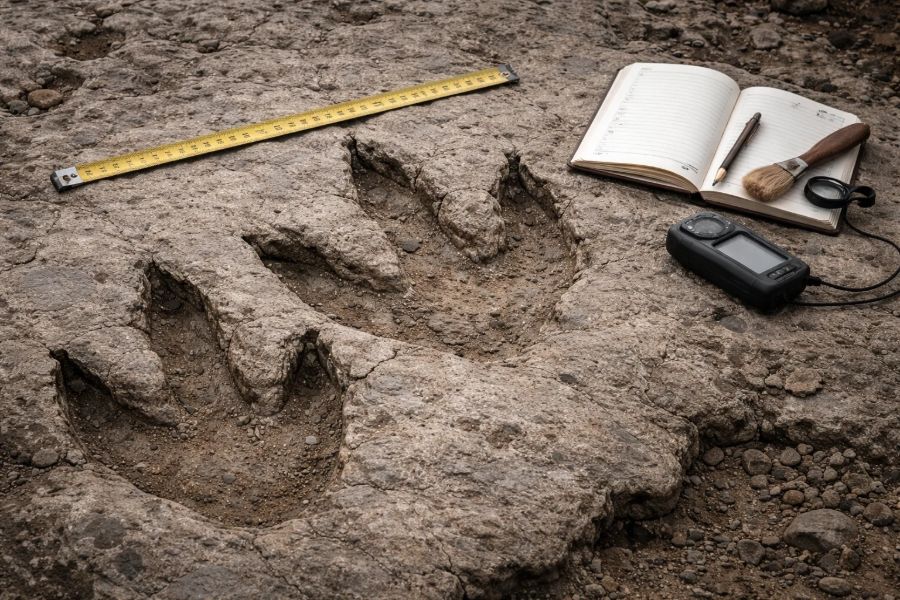
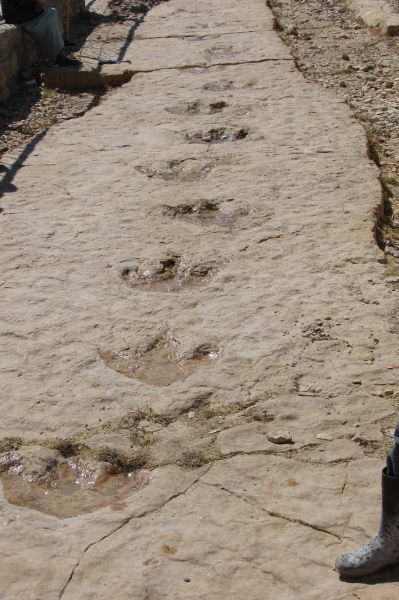
Trace fossils: footprints, trackways, nests, eggs
Dinosaurs also left trace fossils—especially footprints and trackways—that preserve behavior in a way bones often can’t (direction of travel, group movement, stride). Dinosaur eggs and nesting sites further confirm they were real animals with real reproductive biology.
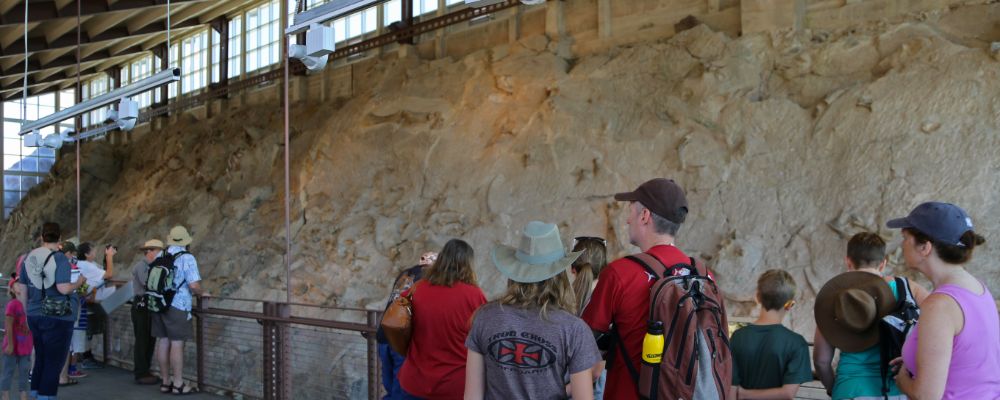
“In situ” bonebeds: fossils still embedded in the rock
One reason hoax claims fail quickly is that many famous dinosaur fossils are preserved in place within the rock, not as loose bones handed around on tables. For example, Dinosaur National Monument’s Quarry Exhibit Hall lets visitors view a wall containing about 1,500 dinosaur bones still in the rock layer.
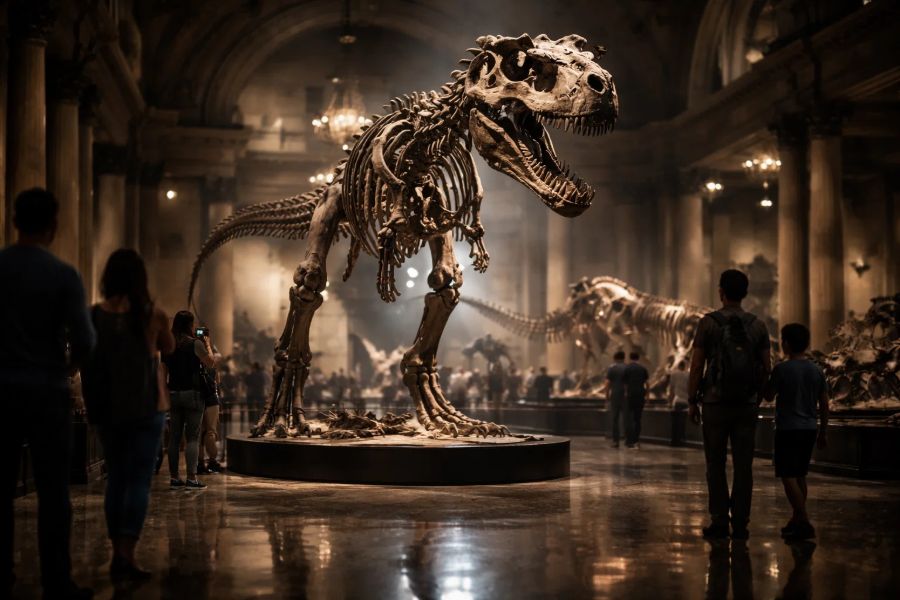
2) “But could fossils be fake?” Here’s why that doesn’t work
To fake dinosaurs globally, you’d need to fake (at minimum):
thousands of separate discoveries across countries and decades,
consistent anatomy that fits evolutionary patterns,
microscopic bone structures (growth rings, vascular canals),
matching chemistry/mineral replacement from fossilization,
and rock layers with correct ages and environments.
That’s not one conspiracy—it would require rewriting geology, chemistry, physics, and biology simultaneously, without leaving contradictions. Instead, what we observe is the opposite: evidence from different sciences agrees.
3) How we know dinosaur fossils are millions of years old
Fossils themselves are often dated indirectly by dating the rocks around them—especially volcanic ash layers above/below fossil beds—then combining that with stratigraphy (layer order) and correlation across regions.
Radiometric dating (the “atomic clock” in minerals)
Geologists use naturally radioactive elements in minerals to calculate numeric ages of rocks. The USGS explains that the ability to assign rock ages in millions/billions of years comes from radioactivity and radiometric methods.
4) Dinosaurs weren’t “mystery monsters”—they fit into a biological family tree
A key modern point: dinosaurs are not just “big reptiles.” Many dinosaur traits connect cleanly to later lineages, especially birds. UC Berkeley’s evolution resource summarizes that birds evolved from small carnivorous dinosaurs, a conclusion supported by fossils and comparative anatomy.
This matters for the original question because it means dinosaur reality isn’t just “we found some bones.” It’s that dinosaurs fit into a testable evolutionary framework that also explains living animals.
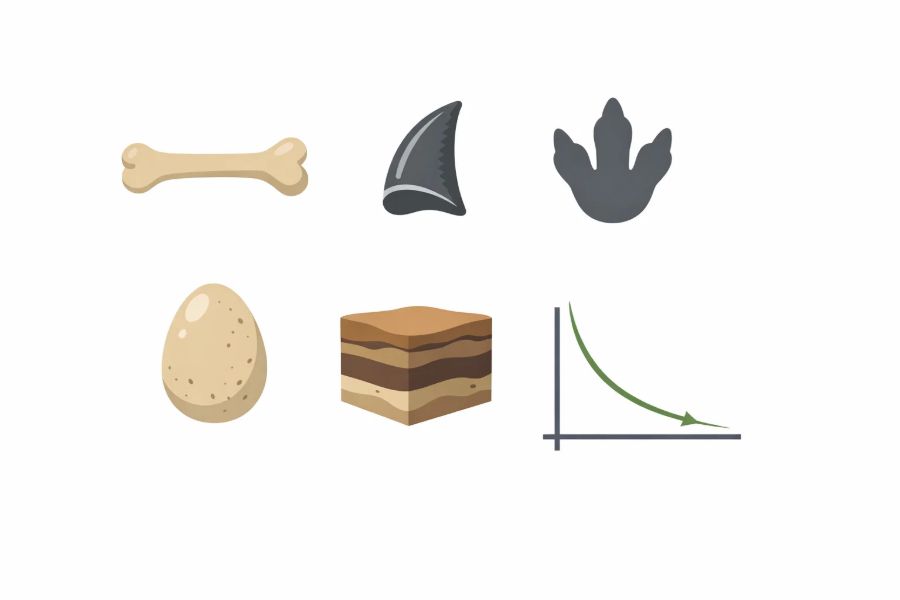
5) A quick evidence checklist (table)
| Evidence type | What it looks like | Why it’s powerful | How it’s verified |
|---|---|---|---|
| Body fossils | Bones, teeth, skeletons | Direct physical remains of animals | Anatomy comparisons + repeated finds across sites |
| Trace fossils | Footprints, trackways, nests, eggs | Records behavior and reproduction | Measured track patterns; sedimentology; site mapping |
| In-place bonebeds | Bones embedded in rock layers | Hard to fake; shows geological context | Excavation records; stratigraphic logging; public sites |
| Geologic dating | Ash beds, mineral clocks | Provides numeric ages for layers | Radiometric dating principles and cross-checks |
| Comparative evolution | Bird-like traits in theropods; transitional fossils | Links extinct forms to living lineages | Phylogenetic analysis + fossil series |
| Exceptional preservation | Skin impressions, soft-tissue outlines (rare) | Adds texture to biology beyond bones | Modern imaging + preparation + specialist study |
6) What a skeptic-friendly conclusion looks like
If dinosaurs didn’t exist, we’d expect messy, contradictory evidence: random bones, inconsistent rock ages, and stories that change depending on who’s looking.
Instead we see:
consistent anatomy across thousands of specimens,
consistent geology across continents,
repeatable dating methods rooted in physics,
and predictive biology (e.g., birds as living dinosaurs).
That combination is why, scientifically, dinosaur existence is not a “belief”—it’s an evidence-based conclusion.
References
American Museum of Natural History (AMNH). “Dinosaur Facts” (fossils include bones, teeth, footprints, tracks, eggs, skin impressions).
Natural History Museum (UK). “What can scientists learn about dinosaurs and how?” (how fossils preserve evidence; exceptional preservation).
USGS. “Fossils, Rocks, and Time: The Numeric Time Scale” (radiometric dating enables numeric ages).
USGS. “A beginner’s guide to dating (rocks)” (radiometric dating and other methods overview).
Smithsonian Magazine. “How Do Scientists Date Fossils?” (dating is often done via rocks/layers; methods overview).
Smithsonian Magazine. “Top Ten Dinosaur Discoveries of 2025…” (notes dating fossils via nearby ash beds/dated layers and correlation).
UC Berkeley (Understanding Evolution). “The origin of birds” (birds evolved from small carnivorous dinosaurs; fossil support).