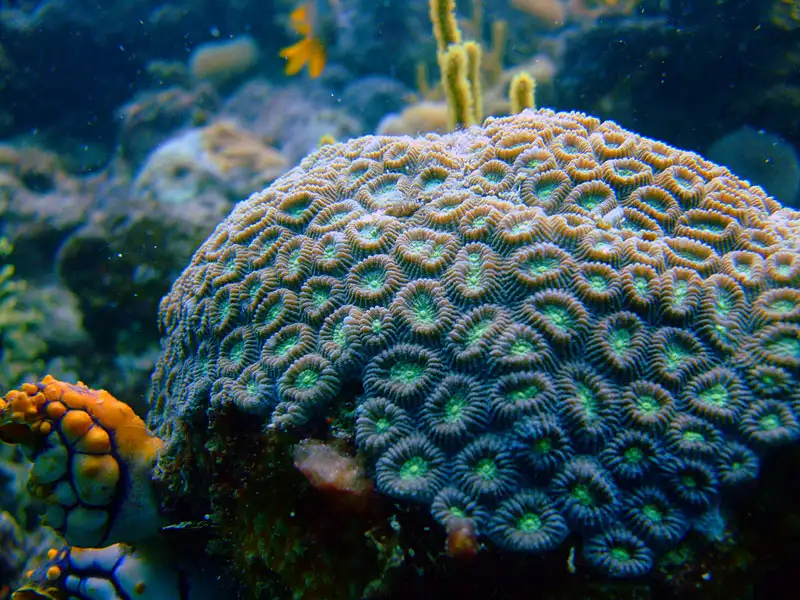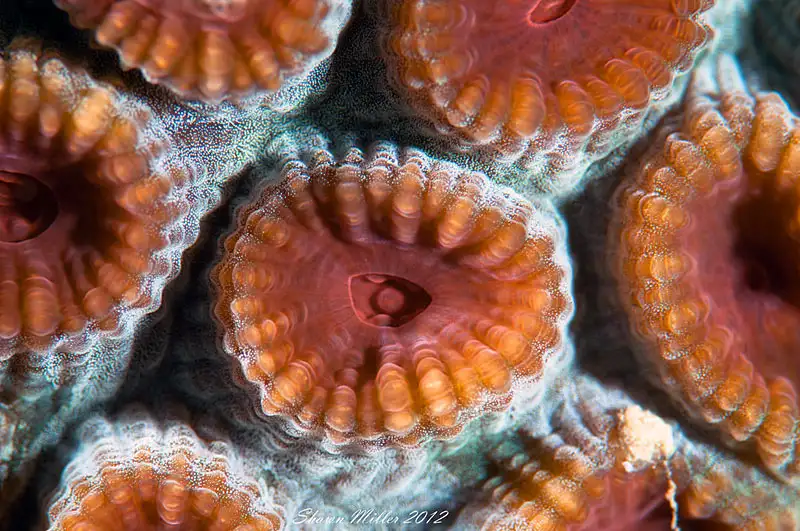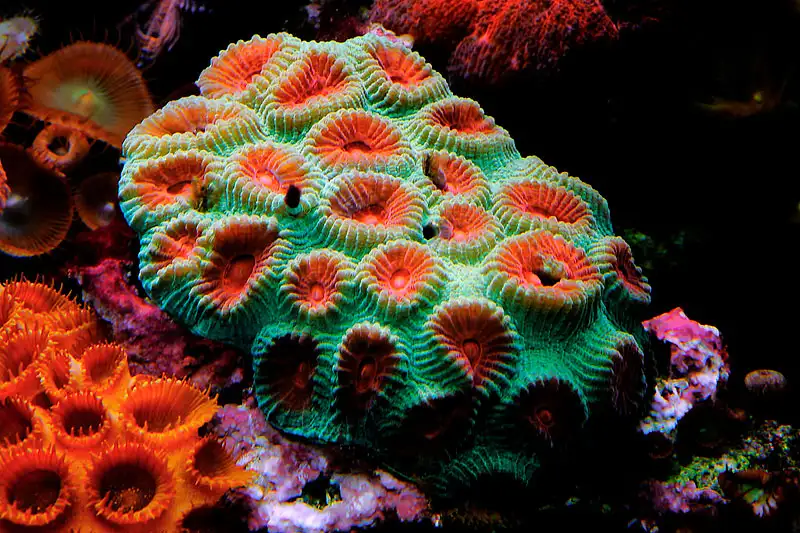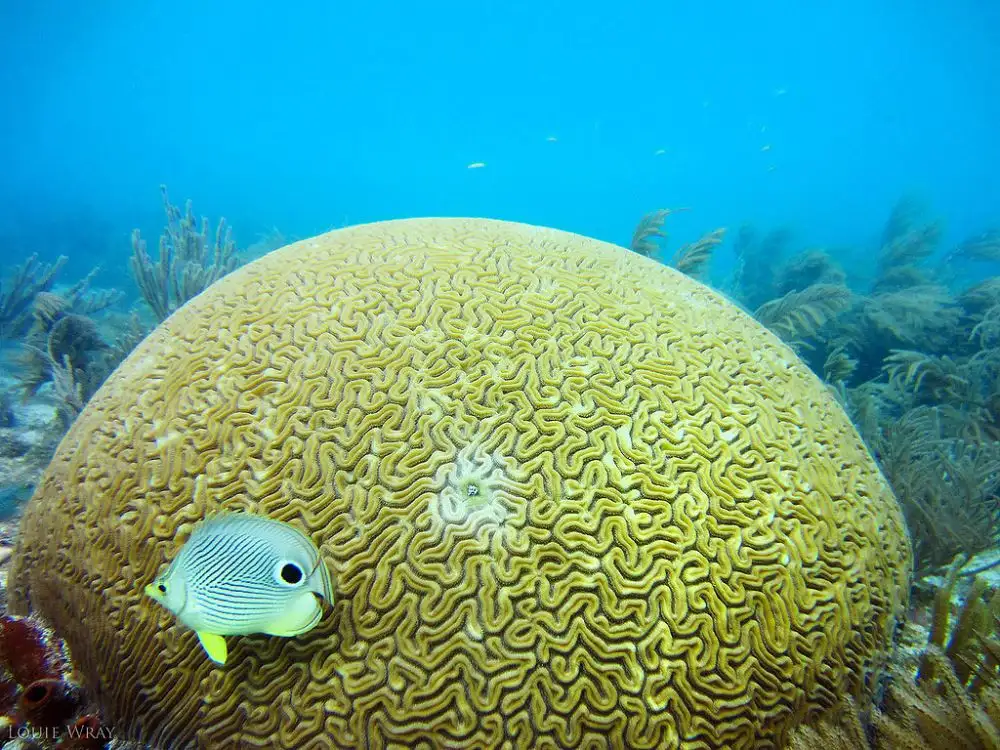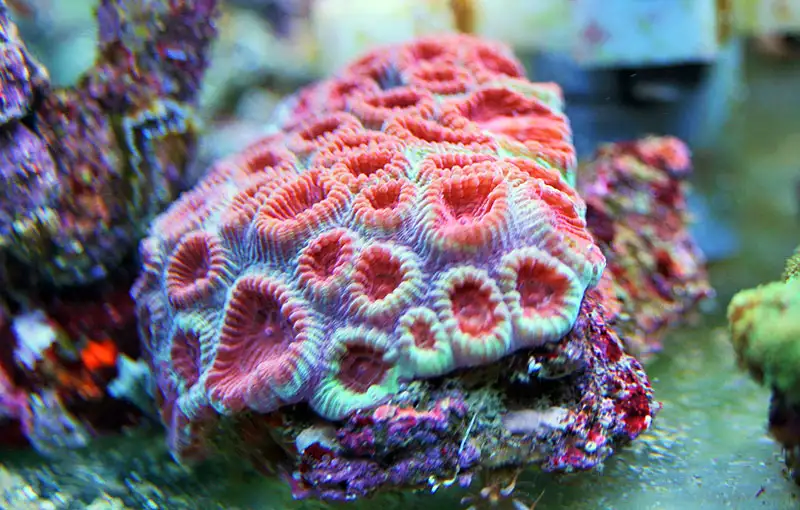
Favia speciosa (also cited as Dipsastraea speciosa) is a photosymbiotic, reef‑building stony coral. It harbours zooxanthellae (Symbiodiniaceae) for most of its energy and supplements this with nocturnal particle/zooplankton capture. Colonies are typically massive to sub‑hemispherical with clearly separated plocoid corallites.
Ecology & Biology
Nutrition: chiefly photosynthesis; polyps extend at night to feed on micro‑zooplankton and particulates.
Phenotypic plasticity: more compact/low‑profile forms on high‑energy reefs; more bulging forms in calmer/deeper sites.
Reproduction: sexual (seasonal broadcast spawning/planulation) and asexual budding; colonies are multi‑year.
Identification
Colonies massive, surface covered by evenly spaced corallites with distinct individual walls. Corallite diameter often ~5–12 mm (regional variation). Septa are relatively regular; oral discs and walls may show deeper hues. Colours include brown, green, yellow‑green etc., often with bright fluorescent rims; polyps extend as fine tentacles by night.
Colony size & Longevity
Colony diameter: typically 20–60 cm; occasionally >1 m on healthy reefs.
Growth: slow to moderate; strongly affected by light, nutrients and temperature.
Life: long‑lived reef builder (multi‑year to decades).
Range & Habitat
Widespread across the tropical Indo‑Pacific (Indian Ocean to W. Pacific, SE Asia, northern Australia and some Pacific islands). Common on reef flats, lagoons and upper outer‑reef slopes (~2–25 m) with moderate water movement to clear sediments.
Threats & Conservation
Thermal stress & bleaching during marine heatwaves.
Sedimentation/pollution reducing photosynthesis and larval settlement.
Physical damage from storms, anchoring and trampling.
IUCN: listings vary among sources and regions; for consistency here we mark it as Not Evaluated (NE) and note the synonymDipsastraea speciosa. Management: protect healthy reef tracts, control nutrients/sediments, and regulate tourism/collection.