A growing puppy, an active adult dog and a slow-moving senior all have very different needs. Yet in the US and Europe, many owners still feed the same food from puppyhood to old age, or switch randomly based on price and marketing.
Choosing the right dog food for each life stage is one of the simplest ways to support your dog’s long-term health. You don’t need the most expensive brand on the shelf, but you do need food that matches your dog’s age, size, activity level and medical needs.
In this guide, we’ll walk through:
What “puppy”, “adult” and “senior” really mean in dog nutrition
The key nutrients puppies, adults and seniors need most
How size and breed affect feeding choices
When and how to switch between life-stage foods
Common mistakes to avoid when choosing dog food
Simple sample feeding plans for each life stage
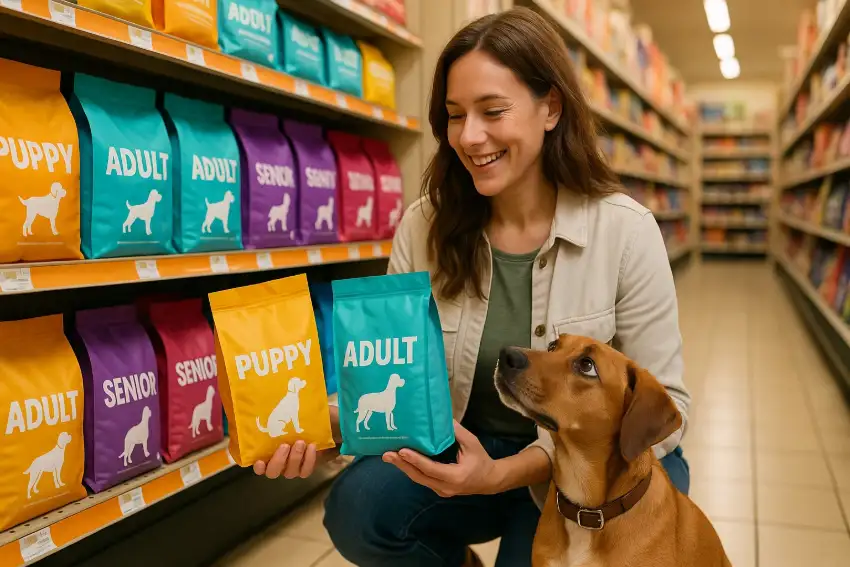
1. Understanding Dog Life Stages in Nutrition
Pet food labels often say “for puppies”, “adult dogs” or “senior dogs”, but what does that actually mean? Nutritionists usually split a dog’s life into three broad phases:
Growth (puppy). From weaning until physical maturity.
Maintenance (adult). From maturity until roughly middle age.
Aging (senior). The years when age-related changes and diseases become more likely.
1.1 Puppy vs adult vs senior in simple terms
Puppies: Need more calories per kilogram, higher protein and carefully balanced minerals for bones and muscles.
Adults: Need enough energy and nutrients to stay healthy and active, but not so much that they gain excess weight.
Seniors: Often need fewer calories, high-quality protein, joint support and easy-to-digest ingredients.
1.2 Why size matters so much
A Chihuahua and a Great Dane are both dogs, but their growth rates and life expectancy are completely different:
Small breeds grow quickly and often live 14–16 years or more.
Large and giant breeds grow for longer and may reach senior status as early as 6–7 years.
For this reason, many foods in US and European pet stores are labeled not just by life stage, but also by size: “small breed puppy”, “large breed adult” and so on.
2. Puppy Food: Fuel for Healthy Growth
Puppies grow rapidly in their first year (or longer for very large breeds). During this time, their bodies are building bones, joints, muscles, organs and brain tissue. The wrong food – or even the right food fed in the wrong amount – can increase the risk of future problems.
2.1 What good puppy food should provide
A complete and balanced puppy food should:
Contain more calories per gram than adult food to support growth.
Have higher protein to build muscles and tissues.
Provide the right balance of calcium, phosphorus and other minerals for bone development.
Include DHA and other omega-3 fatty acids to support brain and eye development.
In the US and Europe, reputable brands follow established nutritional guidelines for growth. Look for statements on the bag such as “formulated to meet the nutritional levels established for growth” or “for growth and reproduction”.
2.2 Special case: large breed puppies
Large breed puppies (for example Labradors, Golden Retrievers, German Shepherds, Great Danes) need particularly careful nutrition:
Their food should limit excessive calories to avoid extremely rapid growth.
Calcium and phosphorus levels must be controlled to support healthy bones and joints.
Overfeeding and incorrect mineral balance can increase the risk of hip dysplasia and other orthopedic issues.
For these breeds, it’s usually best to choose a “large breed puppy” formula rather than a generic puppy food and to follow your vet’s guidance on portion sizes.
2.3 How long should puppies eat puppy food?
The timing depends on size and breed:
Small breeds: Often switch to adult food around 10–12 months.
Medium breeds: Commonly transition around 12–14 months.
Large and giant breeds: May continue puppy food up to 18–24 months, depending on your vet’s advice and the specific formula.
Rather than switching based on age alone, monitor your puppy’s body condition and growth rate with your veterinarian.
3. Adult Dog Food: Maintaining a Healthy Weight and Lifestyle
Once your dog has finished growing, the goal shifts from building to maintaining: support a healthy body without adding unnecessary fat.
3.1 Key features of good adult dog food
An adult maintenance diet should:
Contain enough high-quality protein to maintain muscle.
Provide energy (calories) that match your dog’s activity level.
Include balanced vitamins and minerals for overall health.
Offer fiber to support digestion and regular stools.
Some adult foods are also tailored to specific needs – such as sensitive digestion, skin health or weight control.
3.2 Matching food to activity level
Two adult dogs of the same breed may need very different foods:
A working or sporting dog who runs for hours may need a higher-calorie, higher-fat diet.
An indoor dog who sleeps most of the day may need a lower-calorie or “light” formula to avoid weight gain.
In both the US and Europe, obesity is one of the most common health problems in adult dogs. Extra weight increases the risk of arthritis, diabetes and heart disease. If your dog’s ribs are hard to feel under a thick layer of fat, it may be time to switch to a leaner adult food or smaller portions.
3.3 Special adult formulas
Some adult dogs benefit from specialized diets prescribed or recommended by vets, such as:
Low-fat food for dogs with certain digestive issues
Renal support diets for kidney disease
Joint support formulas with glucosamine and omega-3s
Allergy or limited-ingredient diets for skin and stomach sensitivities
These diets should be chosen with veterinary guidance, especially if your dog has an existing medical condition.
4. Senior Dog Food: Supporting Aging Bodies and Minds
Dogs are considered “senior” at different ages depending on size. Small dogs may not truly be seniors until around 10–11 years old. Large dogs may reach senior status at 7–8 years. As dogs age, their metabolism, joints, organs and immune systems change.
4.1 What senior dog food usually focuses on
Senior dog foods are often designed to:
Control calories to reduce weight gain as metabolism slows.
Maintain muscle mass with good-quality protein.
Support joint health with added omega-3 fatty acids and joint-supporting nutrients.
Provide antioxidants to support the aging immune system.
Be more digestible for sensitive stomachs.
Not every older dog automatically needs a senior diet. The decision should be based on body condition, lab results and any health issues, not age alone.
4.2 Common health issues in seniors and food choices
Senior dogs in the US and Europe frequently face:
Arthritis and joint stiffness
Dental disease and missing teeth
Kidney or liver disease
Heart problems
Cognitive changes (dog dementia)
Depending on the diagnosis, your vet may recommend:
Soft or wet food if chewing is difficult
Therapeutic kidney or liver diets
Restricted sodium for some heart conditions
Diets with specific nutrients to support brain health
For seniors, regular check-ups and blood tests are just as important as choosing the right bag or can of food.
5. How and When to Switch Between Life-Stage Foods
Sudden diet changes can upset your dog’s stomach. Whether you’re switching from puppy to adult food, or adult to senior, take it slowly.
5.1 General timeline for transitions
Puppy → Adult: Transition gradually over 7–10 days once your vet agrees your dog is fully grown.
Adult → Senior: Consider switching when your vet identifies early age-related changes or when your dog’s weight and energy levels suggest a different formula would help.
5.2 Step-by-step transition method
A common approach is:
Days 1–3: 75% old food, 25% new food
Days 4–6: 50% old food, 50% new food
Days 7–10: 25% old food, 75% new food
Then: 100% new food
If your dog develops vomiting, diarrhea or severe gas during the switch, slow down the transition and contact your vet if problems persist.
6. Reading Dog Food Labels: What Really Matters
Dog food packaging in the US and Europe is full of marketing words like “holistic”, “premium”, “natural” or “gourmet”. These terms may sound good but are not strictly defined. Focus on the basics instead.
6.1 Check for life-stage statement
Look for wording that tells you the food is complete and balanced for:
Growth (puppies)
Adult maintenance
All life stages
Senior or mature
Foods labeled “all life stages” are usually nutrient-dense enough for puppies but may be too rich for some adult or senior dogs unless portions are carefully controlled.
6.2 Ingredient list and order
Ingredients are listed in order by weight before cooking:
Look for named animal proteins like “chicken”, “salmon” or “lamb” near the top of the list.
Whole grains, vegetables and added vitamins/minerals support balanced nutrition.
Avoid obsessing over every minor ingredient unless your dog has allergies or your vet has specific concerns.
6.3 Guaranteed analysis
This panel shows the minimum or maximum levels of key nutrients (for example, crude protein, fat, fiber and moisture). For detailed advice on what’s ideal for your dog, consult your veterinarian, especially if your dog is underweight, overweight or has health issues.
7. Common Mistakes When Choosing Dog Food
Even loving owners sometimes make choices that don’t match their dog’s needs. Here are common pitfalls:
Feeding puppy food for too long. This can contribute to weight gain once growth slows.
Switching foods too often “just to try something new”. Dogs usually benefit from consistent diets unless there is a good reason to change.
Ignoring body condition. Owners sometimes focus on age or brand and forget to regularly check if their dog is getting too thin or too heavy.
Choosing food only by price or brand image. Both cheap and premium foods can be good or bad; the life-stage and the dog’s condition matter more.
Home-cooked or raw diets without expert guidance. These can be healthy but are easy to unbalance if not designed with professional help.
8. Simple Sample Feeding Plans for Each Life Stage
These examples are not strict recipes but show how life-stage feeding might look in a typical US or European home.
8.1 Example: medium-breed puppy
Puppy food formulated for medium breeds
3–4 smaller meals per day
Portion based on package guidelines and adjusted with vet advice
Measured treats used mainly for training, counted as part of daily calories
8.2 Example: small adult dog in an apartment
Adult maintenance food for small breeds
2 meals per day
Few table scraps or high-calorie snacks
Regular weight checks and body condition scoring
8.3 Example: large senior dog with mild arthritis
Senior or joint-support adult food designed for large breeds
2 meals per day with slightly reduced portions to maintain a lean shape
Vet-approved joint supplements or diets rich in omega-3s
More frequent check-ups to adjust diet as needed
9. Working With Your Vet to Get Nutrition Right
Dog food marketing is noisy, and online advice can be confusing or contradictory. Your best partner in making smart decisions is a veterinarian who knows your dog’s history, body condition and health risks.
At each visit, consider asking:
Is my dog’s weight and body condition ideal for their age and breed?
Should we stay on the current food or consider a different life-stage formula?
Are there any health issues that might benefit from a special diet?
How should I adjust portions as my dog becomes more or less active?
Life-stage dog food is not about chasing trends. It’s about giving your dog the right nutrition at the right time, so they can grow well, stay strong as adults and enjoy a comfortable old age. With a bit of planning and regular check-ins, you can make mealtimes one of the most powerful tools for protecting your dog’s lifelong health.