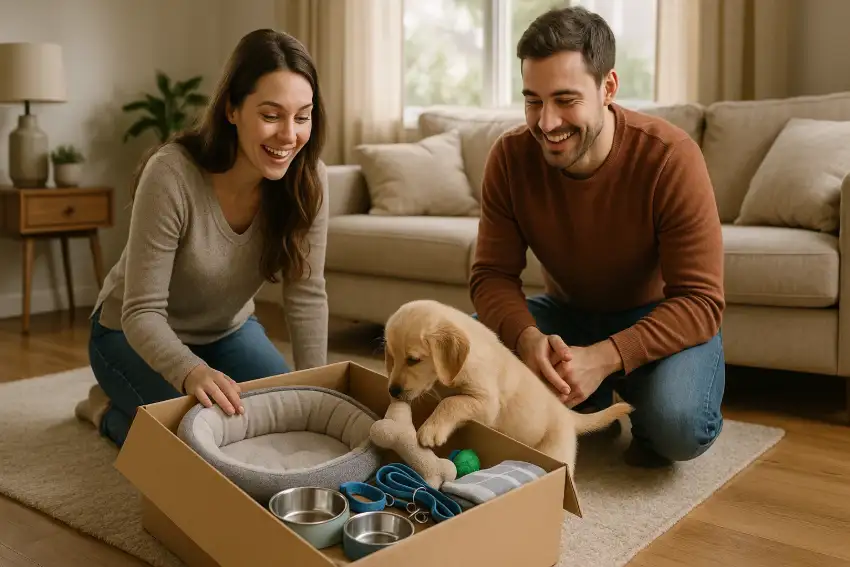
Bringing a new puppy home is exciting – and a little bit overwhelming. Between food, toys, vet visits and training, it’s easy to forget something important. A little planning now will make your puppy’s first days safer, calmer and much more enjoyable for both of you.
This ultimate puppy checklist will walk you through roughly 50 essential items and preparations you should have in place before your new best friend walks through the door. You don’t need the most expensive version of everything, but you do need the basics ready.
In this guide you’ll find:
Home and safety essentials for your puppy’s first day
Feeding and potty-training supplies
Sleep, comfort and enrichment items
Training and behavior tools
Health, grooming and vet-related must-haves
Travel gear and important documents
1. Home & Safety Essentials
Before your puppy arrives, you need to make your home safe and set up a “puppy zone” where they can relax, sleep and learn the rules.
1. Puppy-safe space or playpen. A gated area or exercise pen keeps your puppy safe when you can’t watch them every second.
2. Baby gates. Useful for blocking stairs, kitchens or rooms where puppies shouldn’t go.
3. Wire or plastic crate. Properly sized so the puppy can stand up, turn around and lie down comfortably. Great for house training and giving your puppy a secure den.
4. Comfortable crate mat or bed. Something washable and chew-resistant to go inside the crate.
5. Puppy-proofing kit. Cable covers, outlet covers and clips for loose wires can help prevent chewing-related accidents.
6. Trash can with tight lid. Puppies love raiding garbage, and many foods in the trash are dangerous for dogs.
7. Safe storage for chemicals and medicines. Cleaning supplies, detergents and human medications must be kept behind closed doors.
2. Feeding Supplies
A healthy start begins with the right food, bowls and feeding routine.
8. High-quality puppy food. Choose a diet formulated specifically for puppies and appropriate for your dog’s size (small, medium or large breed).
9. Measuring cup. Helps you feed the correct portion and avoid over- or under-feeding.
10. Food bowl. Stainless steel or heavy ceramic bowls are more hygienic and harder to tip over.
11. Water bowl or fountain. Fresh water should be available at all times; some puppies drink more with a pet fountain.
12. Treats for training. Small, soft, low-calorie treats you can give frequently during training sessions.
13. Food storage container. An airtight container keeps kibble fresh and helps prevent insects or curious pets from breaking in.
3. Potty Training & Cleaning Essentials
Accidents are guaranteed. Being prepared makes clean-up easier and training faster.
14. Puppy pads (if you plan to use them). Useful in apartments or for very young puppies who can’t yet hold it between outdoor trips.
15. Poop bags. Biodegradable or standard poop bags for outdoor clean-up.
16. Poop bag holder. Clips onto the leash so you are never caught without bags.
17. Enzyme cleaner. Special pet-safe cleaner that removes urine and stool odour so puppies aren’t tempted to re-mark the same spot.
18. Paper towels and cleaning cloths. You’ll use more than you think in the first few weeks.
19. Outdoor potty plan. Decide in advance where your puppy will go (specific corner of the yard or nearby green space) so you can be consistent from day one.
4. Sleep & Comfort Items
Puppies sleep a lot – often 16–20 hours a day. Creating a cozy, secure sleeping area helps them settle more quickly.
20. Main dog bed. A supportive bed in your puppy’s designated sleep area or near where you spend most of your time.
21. Extra blanket. A washable blanket to add warmth or to lay over the crate in noisy environments.
22. Comfort toy or snuggle toy. Some owners use a plush toy designed for puppies, sometimes with a “heartbeat” or warming insert to mimic littermates.
23. Night light or soft lamp. Not essential, but a dim light near the crate can make late-night potty trips safer and less stressful.
5. Collars, Harnesses & Leashes
Even if your puppy isn’t fully vaccinated yet, you’ll still need gear for short outdoor explorations and future walks.
24. Adjustable puppy collar. Lightweight and adjustable as your puppy grows.
25. ID tag. With your phone number and possibly your city; required in many areas.
26. Flat leash (1.2–1.8 m / 4–6 ft). Avoid retractable leashes for very young puppies; they can encourage pulling and be harder to control.
27. Harness. A well-fitted harness can be more comfortable and safer for growing necks than a collar alone, especially for small or flat-faced breeds.
28. Seatbelt clip or travel restraint. For safe car rides to the vet or puppy classes.
6. Toys & Mental Enrichment
A bored puppy finds their own entertainment – often by chewing furniture or shoes. The right toys give them safe ways to explore and burn energy.
29. Chew toys. Puppy-safe rubber or nylon chews designed for teething, not rock-hard bones that can crack teeth.
30. Soft plush toys. Great for comfort and gentle play; supervise to prevent stuffing from being swallowed.
31. Tug toy. A rope or fabric tug toy for interactive play and training impulse control.
32. Fetch toys. Lightweight balls or discs appropriate for your puppy’s mouth size.
33. Puzzle feeders or treat-dispensing toys. Encourage problem-solving and slow down fast eaters.
34. Snuffle mat. A fabric mat that hides kibble or treats and lets your puppy “forage” using their nose.
7. Training Tools & Supplies
Puppies are always learning, from the moment they arrive. A few simple tools can make training clearer and more fun.
35. Training treats. Tiny, tasty rewards that your puppy loves and can eat quickly.
36. Treat pouch. Clips to your belt so rewards are always within reach during training and walks.
37. Clicker (optional). A small training device that makes a distinct sound to “mark” correct behaviors.
38. Long training line. A 5–10 m (15–30 ft) line for recall training in safe open areas.
39. Puppy training book or online course. Guidance from a reputable source helps you avoid common mistakes.
40. Notebook or training log. Useful for tracking progress, potty times and questions for your vet or trainer.
8. Grooming & Health Essentials
Even tiny puppies benefit from gentle grooming and health routines. Starting early makes life easier when they’re full-grown.
41. Puppy-safe brush or comb. Chosen for your puppy’s coat type (short, double, curly, long).
42. Dog nail clippers or grinder. Getting puppies used to nail care early can prevent stress later.
43. Dog shampoo. Mild, puppy-safe shampoo – human products can be too harsh for dog skin.
44. Dog toothbrush and toothpaste. Start with short, positive sessions to build a lifelong habit.
45. Ear cleaner (if recommended by your vet). Especially useful for floppy-eared breeds prone to ear issues.
46. Basic first-aid kit. Gauze, bandages, tweezers and saline solution for minor issues, plus the phone number of an emergency vet.
47. Flea, tick and worm prevention plan. Discuss with your vet which products are appropriate for your puppy’s age and region.
9. Travel & Identification
Even if you don’t travel often, your puppy will need to visit the vet and may eventually join you on trips or holidays.
48. Secure travel carrier or travel crate. Especially important for small dogs, public transport and plane travel.
49. Microchip registration. In many countries microchipping is required; make sure your contact details are up to date in the database.
50. Copies of vaccination and medical records. Keep digital and paper copies for vet visits, puppy classes, daycare or boarding.
10. Planning, Expectations & What You Don’t Need
It’s easy to overspend on cute accessories while forgetting the basics. Before you start shopping, keep these guidelines in mind:
Focus on function, not fashion. A simple, well-fitting harness is more important than a designer outfit.
Skip complicated gadgets at first. Automatic ball launchers and fancy tech bowls can wait until you know your puppy’s real needs.
Plan your schedule, not just your shopping list. Decide who will handle night-time potty breaks, midday visits and training sessions.
Choose a vet and puppy class in advance. Have contact details saved before you need them in a rush.
Accept that you won’t be perfect. Mistakes and accidents are part of puppyhood. Patience, consistency and kindness are just as important as any physical item.
With these essentials in place, you’ll be ready to welcome your new puppy into a home that is safe, comfortable and prepared. The first few weeks will still be busy and messy, but you won’t be scrambling to buy basics at midnight – you can focus on bonding, socializing and enjoying life with your new four-legged family member.