One of the scariest moments for any pet owner is realizing, “My dog or cat needs a vet now.” In the US and Europe, modern emergency veterinary hospitals can save many lives – but the speed, staff and equipment that make this possible also make emergency care expensive.
The emotional shock of a sick or injured pet often arrives at the same time as the financial shock of a large, unexpected bill. Understanding how emergency vet care works and how to plan for the cost can reduce panic and help you make calmer decisions when minutes matter.
In this guide, we’ll cover:
Why emergency vet visits cost more than regular appointments
What typically happens during an emergency visit
Examples of high-cost situations and why they add up
Financial tools: insurance, savings, credit and payment options
How to talk about money with vets during a crisis
Practical steps to reduce the risk of emergencies
A simple emergency checklist to prepare in advance
Important: This article is for general education only. If your pet seems seriously unwell, contact a veterinarian or emergency clinic immediately.
1. What Counts as a Pet Emergency?
Many owners hesitate, wondering, “Is this really an emergency, or can it wait until tomorrow?” When in doubt, it is always safer to call a vet or emergency clinic for advice. They can help you decide how urgent the situation is.
1.1 Common emergency signs in dogs and cats
You should seek urgent veterinary help if your pet shows any of these signs:
Struggling to breathe, breathing very fast, or making unusual breathing noises
Collapse, extreme weakness or inability to stand
Gums that are very pale, gray, blue or bright red
Uncontrolled bleeding or a deep wound
Hit by a car, fallen from a height, or serious trauma (even if they seem “OK”)
Repeated vomiting or diarrhea, especially with blood or extreme lethargy
Bloated, hard or painful abdomen (especially in large, deep-chested dogs)
Seizures, repeated seizures or seizures that last more than a few minutes
Suspected poisoning (e.g., human medication, chocolate, grapes, xylitol, rat poison)
Severe pain: crying out, not wanting to be touched, or hiding and not moving
Difficulty urinating or straining with no urine produced (an emergency in male cats)
If you’re unsure, call. Emergency staff would rather tell you it’s safe to wait than see a pet arrive too late.
2. Why Emergency Vet Care Is More Expensive
Many owners are surprised that emergency visits are so much more expensive than routine care at their regular clinic. Several factors explain this difference.
2.1 24/7 staffing and specialized training
Emergency hospitals operate nights, weekends and holidays, when staffing costs are higher.
They need skilled vets and nurses on-site at all times, even when no cases are present.
Emergency teams are trained in intensive care, trauma stabilization and rapid decision-making.
2.2 Advanced equipment and on-site testing
Many emergency clinics have:
X-ray and ultrasound machines
Laboratories for fast blood and urine tests
ICU units with oxygen cages and monitoring equipment
Surgical facilities ready for urgent operations
Keeping this equipment available “just in case” is expensive, so each case reflects part of that cost.
2.3 The cost of working under time pressure
Emergency teams must act quickly and prioritize the most critical patients (triage).
They often cannot schedule cases for later; staff must be prepared for sudden surges of patients.
Fast, accurate work under stress requires both expertise and adequate staffing.
None of these reasons make emergency bills feel “cheap”, but understanding them can make the numbers slightly less shocking in the moment.
3. What Happens During an Emergency Vet Visit?
Knowing the typical steps of an emergency visit can help you feel more prepared and less overwhelmed.
3.1 Triage at arrival
When you arrive:
Staff often perform a quick assessment within minutes.
Pets with life-threatening issues (e.g., severe breathing problems, uncontrolled bleeding) are treated immediately, even before paperwork.
Less critical patients may need to wait, similar to human emergency rooms.
3.2 Initial stabilization and exam
Depending on your pet’s condition, the team may:
Provide oxygen or place an intravenous (IV) catheter
Give pain relief or anti-nausea medications
Check heart rate, breathing, temperature and blood pressure
Perform a full physical exam after the pet is stable enough
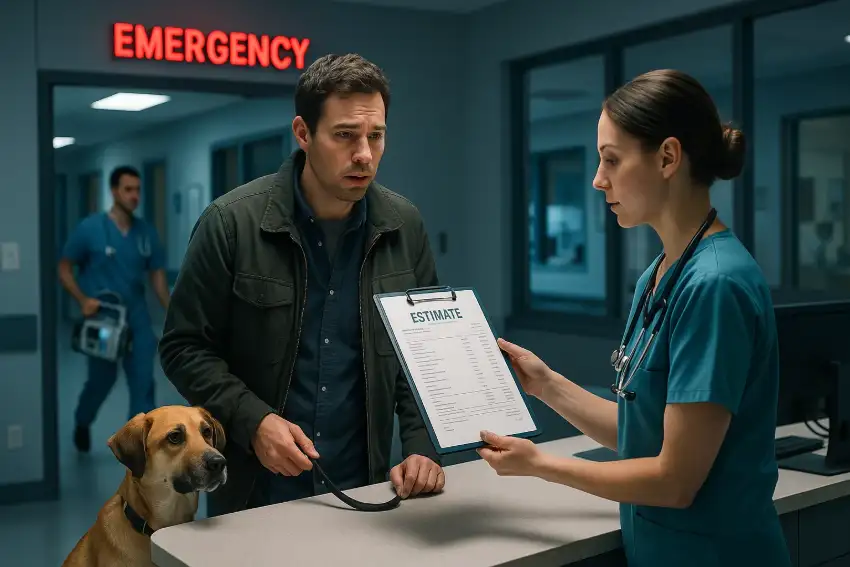
3.3 Estimates and consent
In most US and European emergency clinics:
You will receive an initial estimate for diagnostics and stabilization.
You’ll be asked to sign consent forms and possibly leave a deposit.
If the situation changes (for better or worse), the team should update the estimate.
3.4 Diagnostics and treatment
Once you approve the plan, the vet may recommend:
Blood and urine tests
X-rays or ultrasound
Medications for pain, infection, heart support, etc.
Hospitalization for monitoring and IV fluids
Surgery if needed (for example, to remove a foreign object or repair internal damage)
3.5 Hospitalization or discharge
Some pets can go home the same day with medications and instructions.
Others stay for 24 hours or longer, especially if they need intensive care or surgery.
Each extra hour of hospitalization includes nursing care, monitoring and access to emergency equipment – all contributing to the final bill.
4. Why Some Emergencies Become Very Expensive
Exact prices vary widely by country and clinic, but certain situations almost always generate high bills because they require multiple layers of care.
4.1 Major trauma: car accidents and falls
These cases often involve:
Emergency exam, stabilization and pain control
Multiple X-rays or scans to check for fractures and internal injuries
Surgery to repair broken bones or internal damage
Intensive care and monitoring for several days
Each step adds significant cost, especially when advanced imaging and multiple surgeries are needed.
4.2 Intestinal blockages (foreign bodies)
Dogs (and sometimes cats) swallow toys, socks, strings or bones that get stuck in the intestines. Treating this usually requires:
X-rays and/or ultrasound
Surgery to open the intestines and remove the object
Hospitalization with IV fluids, pain management and careful monitoring
4.3 Gastric dilatation-volvulus (“bloat”) in large dogs
In this condition, the stomach fills with gas and may twist. It is immediately life-threatening and often includes:
Aggressive stabilization with fluids and oxygen
Emergency surgery
Several days in intensive care
Possible complications that require extra treatment
4.4 Poisonings and toxic exposures
If your pet eats something toxic, care may involve:
Induced vomiting (when safe)
Activated charcoal to bind remaining toxins
Blood tests to check organ damage
Antidotes when available
Hospitalization for monitoring and supportive treatment
4.5 Intensive care for severe illness
Serious infections, organ failure, complicated diabetes or blood clotting problems may require:
Round-the-clock monitoring by nurses
Continuous IV medications and fluids
Frequent lab tests to adjust treatment
Special equipment such as oxygen cages or ventilators
These situations often produce the highest vet bills – but they also represent the most intensive life-saving care available.
5. Financial Tools: How to Prepare Before an Emergency
You cannot predict exactly what will happen to your pet, but you can build a financial safety net in advance. Most owners use some combination of the options below.
5.1 Pet insurance
A good accident-and-illness policy can:
Reimburse a large portion of emergency bills (after the deductible)
Make expensive treatments more affordable in the moment
Protect your savings from sudden, large costs
Keep in mind:
Pre-existing conditions are usually not covered.
You may still pay the vet up front and claim the money back later.
Premiums and coverage vary widely – read the terms carefully.
5.2 Dedicated emergency savings fund
If you prefer not to use insurance, or you want extra protection:
Open a separate savings account for pet emergencies.
Set up an automatic monthly transfer, even a small amount.
Treat this fund as “hands off” except for serious vet care.
Over time, this creates a buffer that can cover deductibles, minor emergencies or gaps not covered by insurance.
5.3 Credit options and payment plans
Some owners rely on:
Personal credit cards
Special veterinary financing services (available in some countries)
Clinic-specific payment arrangements, when offered
These can be helpful in a crisis, but they come with interest and long-term repayment. If you expect to use credit, it’s safer to:
Know your credit limits before an emergency
Keep some capacity available for genuine crises
Plan realistically how you would repay any large amount
5.4 Hybrid strategy (insurance + savings)
Many pet owners feel most comfortable with a combination:
Pet insurance to handle very large or rare events
A smaller savings fund to pay deductibles, non-covered items and routine care
This balances predictable monthly premiums with flexibility for smaller costs.
6. How to Talk About Money During an Emergency
When your pet is in danger, it can feel uncomfortable or even “wrong” to talk about money. But clear, honest communication about your budget is crucial to avoid misunderstandings and overwhelming debt.
6.1 Ask for an estimate and understand it
Request a written estimate for the proposed tests and treatments.
Ask what is included and what might be extra.
Clarify whether the estimate covers only the next few hours, or the entire expected stay.
6.2 Be honest about your financial limits
You can say things like:
“I want the best we can reasonably afford. Our limit is around X.”
“Please help me prioritize: what is absolutely essential right now?”
“Are there different levels of treatment – for example, minimum necessary vs. gold standard?”
6.3 Discuss priorities and alternatives
Sometimes there are several safe approaches; your vet can explain pros and cons.
In other cases, certain tests or treatments may be non-negotiable to avoid suffering.
A good emergency team will focus on both medical needs and your financial reality.
6.4 Ask about updates if the situation changes
If your pet needs more time in hospital or new procedures, ask for:
Updated estimates before major new steps
Regular financial updates along with medical updates
Clear communication helps you avoid surprise bills and allows you to make informed decisions every step of the way.
7. Reducing the Risk of Emergency Vet Visits
Not every emergency can be prevented, but many can be made less likely with everyday habits.
7.1 Pet-proof your home
Keep human medications, cleaning products and chemicals completely out of reach.
Store chocolate, grapes, xylitol, alcohol and other toxic foods securely.
Put trash in bins with tight-fitting lids.
Remove or secure small objects that can be swallowed (toys, socks, strings).
7.2 Use leashes, fences and secure carriers
Walk dogs on sturdy leashes in busy areas; use harnesses if they tend to pull.
Ensure gardens and yards have secure fences without escape gaps.
Always transport pets in safe carriers or harnesses when in vehicles or public spaces.
7.3 Keep up with vaccines and parasite prevention
Protect against diseases that can cause sudden, severe illness.
Reduce the risk of tick-borne diseases, heavy worm burdens and flea-related anemia.
7.4 Watch for early warning signs
Many emergencies start as mild problems that get worse when ignored. Contact your vet sooner if you notice:
Changes in appetite, thirst or urination
Weight loss, vomiting or diarrhea that last more than a day or two
New lumps, persistent coughing or breathing changes
Sudden behavior changes such as hiding, aggression or unusual restlessness
Early intervention can sometimes prevent a costly emergency admission.
8. A Simple Pet Emergency Preparedness Checklist
A little preparation now can make a big difference in a crisis. Use this checklist as a starting point:
Know your nearest emergency hospital.
Save their name, address and phone number in your phone and on the fridge.Keep basic information handy.
Your pet’s age, breed, weight, microchip number and any current medications.Create a “go bag”.
Include a leash, muzzle (for dogs), carrier (for cats), a towel, a small blanket and a copy of medical records if available.Decide your financial strategy.
Pet insurance, emergency savings, available credit – and roughly how much you can spend.Talk with your regular vet in advance.
Ask what they recommend in emergencies, and whether they have after-hours arrangements.Discuss basic plans with family members.
Who can drive? Who can stay with other pets or children? Who will be the main decision-maker?
9. Final Thoughts: Planning Ahead So You Can Focus on Your Pet
Emergency vet bills will probably never feel “comfortable” – they arrive in moments when you are scared, tired and under pressure. But by understanding how emergency care works and planning for the cost in advance, you can:
Reduce panic when something goes wrong
Make clearer decisions under stress
Protect your savings from sudden, large expenses
Give your dog or cat the best chance of a good outcome
Your pet doesn’t know what an emergency bill is. They only know whether you are there, whether they are in pain, and whether someone knowledgeable is helping. By preparing financially now – with insurance, savings, information and a simple plan – you give yourself the freedom to focus on what truly matters in a crisis: being there for them.