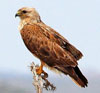
 LC
LC
Buteo rufinus
Brown-tailed Hawk,Long-legged Buzzard
The Rufous-tailed Hawk is a medium-to-large raptor of the genus Buteo in the family Accipitridae, with a body length of 50-65 cm a···
Explore birds by lifestyle and ecological group, from waterfowl and waders to parrots, raptors, landfowl, and songbirds.

Use these shortcuts to move into more specific animal groups.
In the traditional or morphological sense, "birds of prey" usually refers to birds that catch or tear prey with sharp claws and beaks, such as eagles, falcons, kites, vultures, owls, etc. However, from the perspective of modern phylogenetics, these birds of prey are scattered in different orders and are not a monophyletic group. Birds of prey are one of the six major ecological groups of birds, covering all species of Falconiformes and Strigiformes in the traditional classification system of birds. Birds of prey include secondary ecological groups such as eagles, eagles, buzzards, kites, vultures, kites, ospreys, falcons, owls, and owls, all of which are predatory birds. In the ecosystem, the number of raptors is less than that of other groups, but they are at the top of the food chain and play a very important role. Another nickname is "fighter".
Predatory Adaptations: Raptors typically have strong, hooked beaks and sharp talons for seizing and tearing prey.
Acute Vision: Most raptors possess exceptionally keen eyesight, allowing them to spot potential prey from great distances or high altitudes.
Flight Abilities: Many exhibit wide or pointed wings for soaring or high-speed dives; others have shorter, broad wings and long tails for agile flight in forested areas.
Top Predators: As apex or near-apex predators, they help control populations of small to medium-sized vertebrates (rodents, reptiles, amphibians, other birds, etc.) in their ecosystems.
Traditional Grouping: “Birds of prey” often include “diurnal raptors” (eagles, hawks, falcons, vultures, etc.) and “nocturnal raptors” (owls).
Modern Systematics: Molecular data reveal that raptors are scattered across different lineages:
Many hawks, eagles, Old World vultures, etc. are grouped into Accipitriformes.
Falcons belong to Falconiformes, which is surprisingly closer to parrots (Psittaciformes) and songbirds (Passeriformes) than to hawks or eagles.
Owls form their own order, Strigiformes, separate from hawks and falcons.
Raptors, as descendants of early Cenozoic birds, diversified especially in the Eocene and Oligocene epochs.
They are found worldwide in virtually every habitat—tropical rainforests, deserts, polar regions, alpine zones—each adapted to local ecological niches.
As apex predators or scavengers, raptors have a major influence on regulating populations of other animals.
Human cultures often admire and utilize raptors (e.g., falconry, ecotourism). However, conflicts arise with livestock farming, and threats such as habitat loss and poisoning have caused declines in some raptor populations.
Traditionally, raptors are divided into:
Diurnal Raptors: Historically included in Falconiformes (falcons, hawks, eagles, vultures, etc.), but modern taxonomy splits them into separate orders such as Falconiformes and Accipitriformes.
Nocturnal Raptors: Owls (order Strigiformes).
Below is a simplified breakdown referencing modern classifications.
| Family | Representative Genera | Example Species | Distribution & Notes |
|---|---|---|---|
| Falconidae (Falcons, Caracaras) | Falco, Caracara, etc. | Peregrine Falcon (Falco peregrinus), Common Kestrel (Falco tinnunculus), Crested Caracara (Caracara plancus) | Once grouped with hawks/eagles but now recognized as a separate lineage, surprisingly closer to parrots/songbirds. Falcons specialize in high-speed dives or agile flight; caracaras often forage on the ground or scavenge. |
Note: Modern phylogenetics places Falconidae (the only extant family in Falconiformes) closer to parrots and passerines than to hawks and eagles.
| Family | Representative Genera | Example Species | Distribution & Notes |
|---|---|---|---|
| Accipitridae (Hawks, Eagles, Old World Vultures, Kites, Harriers) | Accipiter (Goshawks, Sparrowhawks), Buteo (Buzzards/Hawks), Aquila (True Eagles), Haliaeetus (Sea Eagles), etc. | Northern Goshawk (Accipiter gentilis), Rough-legged Buzzard (Buteo lagopus), Golden Eagle (Aquila chrysaetos), Bald Eagle (Haliaeetus leucocephalus), etc. | The largest family of diurnal raptors worldwide. Includes a wide range of sizes and feeding habits, from small hawks to large eagles and Old World vultures. |
| Cathartidae (New World Vultures) | Cathartes (Turkey Vultures), Coragyps (Black Vulture), Gymnogyps (California Condor), etc. | Turkey Vulture (Cathartes aura), Black Vulture (Coragyps atratus), California Condor (Gymnogyps californianus) | Native to the Americas. They have unfeathered heads to reduce contamination while feeding on carrion. Taxonomic placement varies; commonly aligned with Accipitriformes but sometimes treated as a distinct lineage. |
| Pandionidae (Osprey)* sometimes within Accipitridae | Pandion (Osprey) | Osprey (Pandion haliaetus) | A fish specialist found near freshwater and coastal areas worldwide. Feet are adapted to gripping slippery fish. |
| Sagittariidae (Secretarybird)* sometimes within Accipitridae | Sagittarius (Secretarybird) | Secretarybird (Sagittarius serpentarius) | Endemic to Africa. Long-legged terrestrial raptor that hunts snakes on foot; distinctive crest on its head. |
Note: The exact placement of New World vultures (Cathartidae) is still debated. Some studies suggest they might be nearer to storks/herons, but most modern classifications group them with Accipitriformes.
Old World Vultures (e.g., Griffon Vultures, Egyptian Vulture) are part of Accipitridae, unlike the New World vultures in Cathartidae.
The osprey family (Pandionidae) is often recognized as a separate family within Accipitriformes, though historically sometimes lumped into hawks (Accipitridae).
| Family | Representative Genera | Example Species | Distribution & Notes |
|---|---|---|---|
| Tytonidae (Barn Owls) | Tyto (Barn Owl genus) | Barn Owl (Tyto alba) | Heart-shaped facial disk, widely distributed worldwide. Asymmetric ear openings help pinpoint prey by sound. |
| Strigidae (Typical Owls) | Bubo (Eagle Owls), Strix (Wood Owls), Athene (Little Owls), Asio (Eared Owls), etc. | Eurasian Eagle Owl (Bubo bubo), Long-eared Owl (Asio otus), Snowy Owl (Bubo scandiacus), etc. | Nocturnal raptors with large forward-facing eyes and silent flight. Found in diverse habitats across the globe (except Antarctica). |
Note: Owls share many predatory traits (talons, hooked beaks, specialized senses) but belong to a separate order (Strigiformes), distantly related to hawks/falcons.
Convergent Traits and Diversification
Multiple bird lineages independently evolved raptor-like features: strong talons, hooked beaks, and enhanced vision or hearing.
Genetic data confirm falcons (Falconidae) are more closely allied with parrots and passerines, while hawks and eagles (Accipitridae) form a different branch. Owls, although also “raptorial,” belong to yet another branch.
Geographic Adaptation
Forest dwellers (e.g., Accipiter hawks, small falcons).
Open-country or desert species (e.g., buzzards, caracaras).
Mountain regions (Golden Eagle).
Polar regions (Snowy Owl).
Raptors occupy diverse habitats:
Different selective pressures have yielded wide variation in body size, wing shape, and hunting styles.
Fossil Record
Raptors have been widespread since at least the Miocene, with some ancient raptor-like families appearing in the Oligocene. Fossil discoveries hint at once-abundant giant eagles or vultures in various regions.
Multiple Origins and Ecological Significance
“Raptors” do not represent a single evolutionary branch but rather an ecological group across different orders (Falconiformes, Accipitriformes, Strigiformes).
They generally serve as apex predators or scavengers, crucial for regulating populations of prey and cleaning carrion.
Conservation Status and Challenges
Many raptor populations have declined due to habitat loss, pesticides (e.g., the famous DDT impact), poaching, and conflicts with farmers.
Conservation programs (e.g., reintroducing the California Condor, protecting Bald Eagles) have successfully bolstered some species, though others remain at risk.
Cultural Importance
Raptors often symbolize power, freedom, or bravery—appearing in flags, crests, and mythologies around the world.
Falconry (the art of hunting with trained birds of prey) has been practiced for centuries and is recognized as an Intangible Cultural Heritage in some regions.
| Order | Family | Representative Genera | Example Species | Key Distribution & Traits |
|---|---|---|---|---|
| Falconiformes | Falconidae (Falcons) | Falco, Caracara, etc. | Peregrine Falcon, Common Kestrel, Crested Caracara | High-speed or agile hunters; some (caracaras) scavenge. Closer genetically to parrots and songbirds than hawks. |
| Accipitriformes | Accipitridae (Hawks/Eagles/Kites/Old World Vultures) | Accipiter, Buteo, Aquila, Haliaeetus | Goshawks, Buzzards, Eagles, Old World Vultures | Most diverse raptor family globally, includes a wide size and dietary range. |
| Cathartidae (New World Vultures) | Cathartes, Coragyps, Gymnogyps | Turkey Vulture, Black Vulture, California Condor | Americas only; specialized in scavenging carrion. Taxonomic position debated, often placed in Accipitriformes. | |
| Pandionidae (Osprey) | Pandion | Osprey | Worldwide distribution near water; unique fish-hunting adaptations. | |
| Sagittariidae (Secretarybird) | Sagittarius | Secretarybird | African grassland raptor hunting snakes on foot; distinctive crest. | |
| Strigiformes | Strigidae (Typical Owls) | Bubo, Strix, Athene, Asio, etc. | Eagle Owls, Wood Owls, Scops Owls, etc. | Nocturnal raptors with powerful talons and silent flight, found globally. |
| Tytonidae (Barn Owls) | Tyto | Barn Owl (Tyto alba) | Heart-shaped facial disc, widespread distribution, specialized hearing for locating prey. |
Through the above introduction and classification list, you can have a deeper understanding of the diverse distribution and evolution of raptors in the modern bird system, and understand their important position in the ecosystem and human culture. If you need to learn more about the morphological characteristics and conservation status of each species, you can refer to professional ornithological works, conservation agency reports, and the latest molecular systematic research results. I hope this information can provide you with a detailed classification of raptors.
Search the animals shown on this page or narrow them by IUCN conservation code.
LC
Brown-tailed Hawk,Long-legged Buzzard
The Rufous-tailed Hawk is a medium-to-large raptor of the genus Buteo in the family Accipitridae, with a body length of 50-65 cm a···
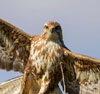 LC
LC
Buteo buteo buteo,Buteo japonicus
The Eurasian buzzard is a bird of the family Accipitridae and the genus Buteo. It is a medium-sized bird of prey with a body lengt···
 LC
LC
European Honey Buzzard、Western Honey-Buzzard
The Cuckoo-headed Honey Buzzard is a bird of the Accipitridae family and the genus Honey Buzzard. It is a medium-sized bird of pre···
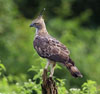 LC
LC
Mountain Hawk-eagle,Spizaetus nipalensis,qadris
The eagle is a medium-to-large raptor that is common in southern my country. It is powerful, fierce, and swift. It can be said to ···
 LC
LC
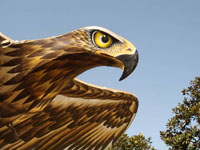
Golden eagle, old eagle, white eagle
The global population of golden eagles is estimated at around 300,000 individuals, equivalent to 200,000 mature adults. The Europe···
 LC
LC
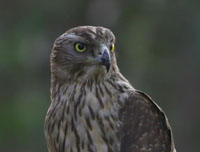
Goshawk, hawk, yellow hawk, harrier hawk
The goshawk is a carnivorous bird of prey in the forest. It has sharp vision and is good at flying. It is active during the day. I···
 LC
LC
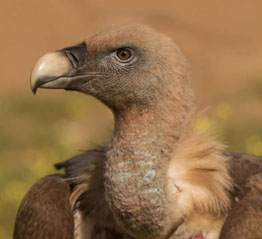
vulture, mountain eagle
Vultures are birds of the genus Griffon, family Accipitridae. Vultures usually hover in warm climates and can endure harsh conditi···
 LC
LC
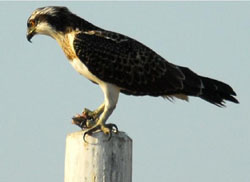
Osprey, fish eagle, fish eagle, fish eagle, fish hawk
Osprey is a relatively large bird of prey that lives near water bodies and likes to eat live fish. The soles of its feet are dense···