Veiled Chameleon (Chamaeleo calyptratus)
The veiled chameleon (Chamaeleo calyptratus), also known as the Yemen chameleon, is one of the most recognizable chameleon species in the world. Famous for its tall casque, independently moving eyes, and rapid color changes, this reptile has become especially well known both in the wild and in captivity.
Native to Yemen and southwestern Saudi Arabia, the veiled chameleon is adapted to warm, dry environments with shrubs, small trees, and elevated perches. Although many people know it as a popular exotic pet, it is also a fascinating wild reptile with highly specialized adaptations for climbing, hunting, and surviving in arid habitats.
Characteristics of the Veiled Chameleon
The veiled chameleon is a medium to large chameleon with a distinctive body shape and several unique features.
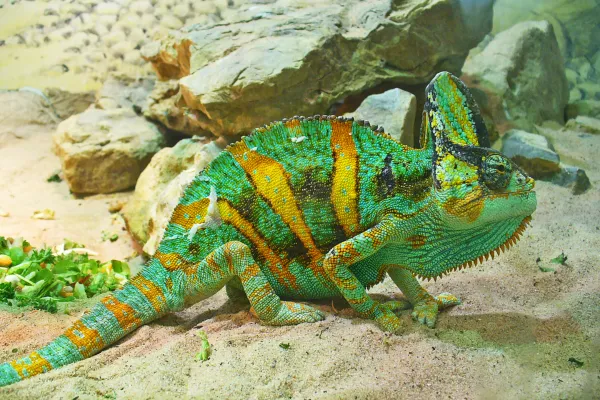
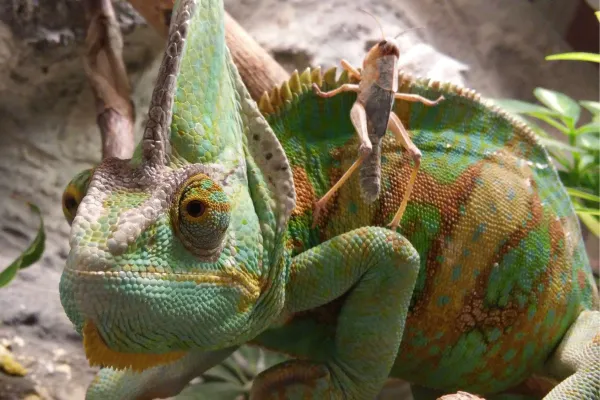
Its most noticeable trait is the tall helmet-like crest, called a casque, on top of its head. This casque is present in both sexes but is much larger and more pronounced in males. Adult males are also considerably bigger than females and can grow to around 40 to 60 cm in total length, while females are usually smaller.
The body color is most often green, but this species may also show bands or patches of yellow, blue, brown, orange, or even darker tones depending on its mood, temperature, light exposure, or social situation. Contrary to popular belief, chameleons do not change color only for camouflage. In the veiled chameleon, color change is also important for communication and thermoregulation.
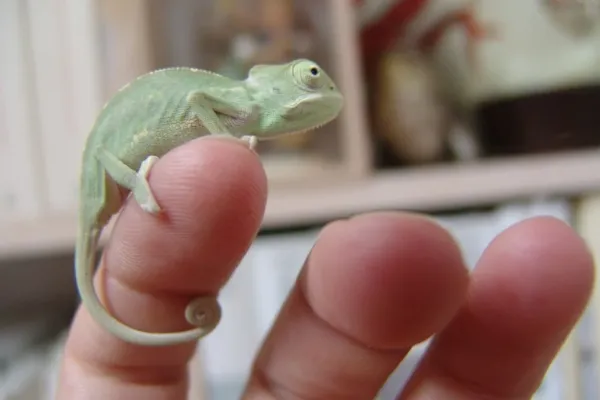
Like other chameleons, it has zygodactyl feet, meaning the toes are grouped into opposing bundles that function like pincers. This allows the animal to grip branches very firmly. Its prehensile tail works like an extra limb and helps it keep balance while climbing.
Another extraordinary feature is its eyes. Each eye can move almost independently, allowing the chameleon to scan different directions at the same time. This gives it excellent awareness of both prey and predators.
Where Does the Veiled Chameleon Live?
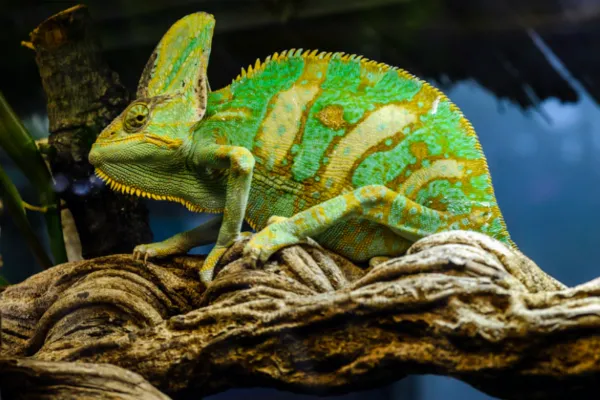
The veiled chameleon is native to parts of the Arabian Peninsula, especially Yemen and southwestern Saudi Arabia. In the wild, it is found in mountain slopes, valleys, plateaus, scrubland, and lightly wooded areas where there is enough vegetation for climbing and hiding.
Although it comes from a region often associated with deserts, this species does not live only on bare sand. It prefers habitats with shrubs, bushes, cultivated plants, and small trees, where it can stay above the ground and bask in the sun. It is mainly an arboreal reptile, spending much of its life perched on branches.
The veiled chameleon is generally solitary. Adults do not usually tolerate close contact with one another except during the breeding season.
Diet of the Veiled Chameleon
The veiled chameleon feeds mainly on insects. Its diet includes prey such as:
crickets
grasshoppers
flies
locusts
beetles
other small invertebrates
It catches prey using its famous long, sticky tongue, which can shoot out with remarkable speed and accuracy.
Unlike some other chameleons, the veiled chameleon may also eat plant material, especially leaves, flowers, and soft vegetable matter. This behavior is more common in this species than in many other chameleons. In some cases, plant matter may also help provide moisture.
Young veiled chameleons need to eat more frequently because they grow quickly, while adults usually eat less often.
Behavior of the Veiled Chameleon
The veiled chameleon is a diurnal reptile, meaning it is active during the daytime. During the day, it spends time basking, climbing, watching its surroundings, and hunting.
It is generally a slow-moving animal, but this does not mean it is weak or passive. It relies on stealth, careful movement, and visual precision. Rather than chasing prey, it waits patiently and strikes when the target comes within range.
Males are especially territorial. When threatened or challenged, they may flatten the body, display brighter colors, open the mouth, and sway to look larger and more intimidating. These displays are designed to avoid direct physical fights.
Because it depends so heavily on sight, the veiled chameleon often stays still for long periods while surveying its environment.
Reproduction of the Veiled Chameleon
The veiled chameleon is oviparous, which means it lays eggs. Females can produce large clutches, often laying 20 to 70 eggs, although very large clutches may occur under some conditions.
After mating, the female digs a hole in soft soil and deposits the eggs underground. Incubation usually lasts 6 to 9 months, depending on temperature and environmental conditions.
This species shows strong sexual dimorphism. Males are larger, more colorful, and have taller casques. They also have a small spur on the back of the hind feet, which helps distinguish them from females even at a young age.
Females can become stressed if they are overbred or if proper nesting conditions are not available, which is one reason wild reproduction depends heavily on suitable habitat.
Lifespan
In captivity, veiled chameleons may live around 5 to 8 years, with males often living longer than females. In the wild, lifespan is usually shorter due to predators, disease, environmental stress, and competition.
Threats and Conservation
The veiled chameleon is currently considered a species of Least Concern on a global level, but that does not mean it faces no threats.
Its natural habitats can be affected by:
habitat loss
land conversion for agriculture
urban expansion
climate-related environmental changes
In addition, because it is widely traded as an exotic pet, the species has become established outside its native range in some areas after escapes or releases.
Even though it is not among the most endangered reptiles, protecting its native habitat is still important for maintaining healthy wild populations.
Why Does the Veiled Chameleon Change Color?
The veiled chameleon changes color for several reasons:
1. Communication
It uses color to signal mood, stress, dominance, or readiness to mate.
2. Temperature Regulation
Darker colors can help absorb more heat, while lighter colors may reflect heat.
3. Camouflage
Although not the only reason, changing color can still help the chameleon blend in better with its surroundings.
Interesting Facts About the Veiled Chameleon
It can move each eye almost independently.
Its tail acts like a fifth limb when climbing.
Its toes are grouped into pincer-like bundles for gripping branches.
The tall casque on its head is one of its most distinctive features.
It is one of the most commonly recognized chameleon species in the world.
Its color changes are linked to mood, temperature, and social signals, not just camouflage.
Conclusion
The veiled chameleon is one of the most fascinating reptiles in the world. With its tall casque, climbing adaptations, rotating eyes, and dramatic color changes, it is perfectly designed for life among branches in warm, dry environments. Whether viewed as a wild reptile of the Arabian Peninsula or as one of the best-known chameleons in captivity, Chamaeleo calyptratus remains an extraordinary example of reptile specialization and survival.
FAQ
What is a veiled chameleon?
A veiled chameleon is a tree-dwelling reptile native to Yemen and southwestern Saudi Arabia. It is known for its tall casque, color-changing ability, and independently moving eyes.
How big does a veiled chameleon get?
Adult males can reach about 40 to 60 cm in total length, while females are usually smaller.
What does a veiled chameleon eat?
It mainly eats insects such as crickets, flies, and grasshoppers, but it may also consume leaves and other plant material.
Why does a veiled chameleon change color?
It changes color for communication, temperature control, and camouflage.
Is the veiled chameleon endangered?
It is currently listed as Least Concern, but habitat loss and environmental change can still affect wild populations.
Where does the veiled chameleon live?
It naturally lives in Yemen and southwestern Saudi Arabia, mainly in shrubland, valleys, and lightly wooded areas.
Bibliography
Brunetti, L., Giandomenico, L., Millefanti, M. (2017). The Chameleons. Spain: De Vecchi Ediciones.
Kieselbach, D., Müller, R., Walbröl, U. (2007). Chameleons. Spain: Editorial Hispano Europea, S.A.