
Achelousaurus
Achelousaurus was a medium-sized horned dinosaur that lived in what is now Montana during the Late Cretaceous. It belonged to the centrosaurine branch of ceratopsians, a group known for deep skull frills, facial ornamentation, and beaked mouths adapted for plant-eating. Unlike some of its more famou...

Apatosaurus
Apatosaurus (Apatosaurus ajax) was one of the best-known long-necked dinosaurs of the Jurassic Period. With a huge body, a thick muscular neck, and a long tail, Apatosaurus represents the classic image of a giant sauropod moving through river floodplains.Time PeriodApatosaurus lived during the Late...

Titanosaurus
Titanosaurus is a famous name linked to the giant long-necked dinosaurs known as titanosaurs. In strict scientific usage, Titanosaurus refers to a historical dinosaur genus described from India in the Cretaceous. However, because the original fossils were fragmentary, many researchers consider Titan...

Iguanodon
Iguanodon (Iguanodon bernissartensis) was a large plant-eating dinosaur from the Cretaceous and one of the most historically important dinosaurs ever discovered. It was among the first dinosaurs described by science, helping shape early understanding of what dinosaurs were and how they lived.Time Pe...

parasaurolophus
Parasaurolophus (Parasaurolophus walkeri) was a large duck-billed dinosaur from the Cretaceous of North America. It is best known for its long, tube-like crest extending backward from the skull—one of the most iconic head structures in dinosaur history.Time PeriodParasaurolophus lived during the La...
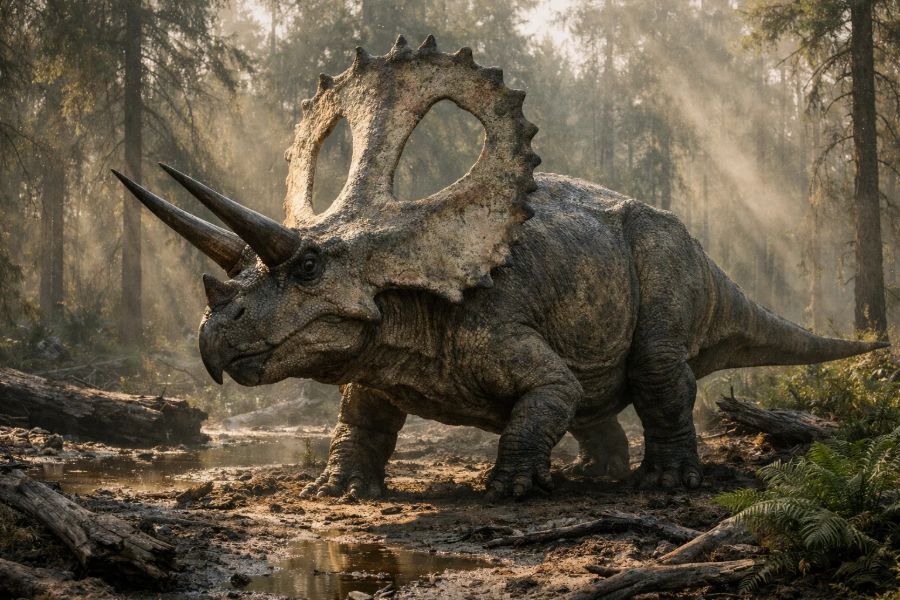
Torosaurus
Torosaurus (Torosaurus latus) was a giant horned dinosaur from the Cretaceous of North America. It is best known for its enormous frill—one of the largest skull ornaments in any ceratopsian—and for its close relationship to the famous Triceratops.Time PeriodTorosaurus lived during the Late Cretace...

Barrosasaurus
Barrosasaurus (Barrosasaurus casamiquelai) was a titanosaur sauropod from the Late Cretaceous of Patagonia, Argentina. Titanosaurs were long-necked, plant-eating dinosaurs that became especially diverse in the Southern Hemisphere near the end of the dinosaur era. Barrosasaurus is known from limited...

Malarguesaurus
Malarguesaurus (Malarguesaurus florenciae) was a titanosauriform sauropod from the Late Cretaceous of Argentina. Like other sauropods, it was a large, long-necked, plant-eating dinosaur that walked on four pillar-like legs. Malarguesaurus is best known from incomplete fossils, but it adds important...

Muyelensaurus
Muyelensaurus (Muyelensaurus pecheni) was a titanosaur sauropod from the Late Cretaceous of Patagonia, Argentina. Unlike many giant titanosaurs, Muyelensaurus is often described as more slender and small-to-medium sized, with a lighter overall build compared with the largest members of the group.Qui...

Pellegrinisaurus
Pellegrinisaurus (Pellegrinisaurus powelli) was a titanosaur sauropod from the Late Cretaceous of Patagonia, Argentina. Titanosaurs were long-necked, plant-eating dinosaurs that became especially diverse in the Southern Hemisphere near the end of the dinosaur era. Although Pellegrinisaurus is known...

Brachiosaurus
Brachiosaurus was a towering long-necked dinosaur from the Jurassic of North America. Its long front legs gave it a giraffe-like posture.SizeWith a huge body and long neck, Brachiosaurus could reach high vegetation that other herbivores could not.DietIt was a herbivore, likely feeding on leaves and...
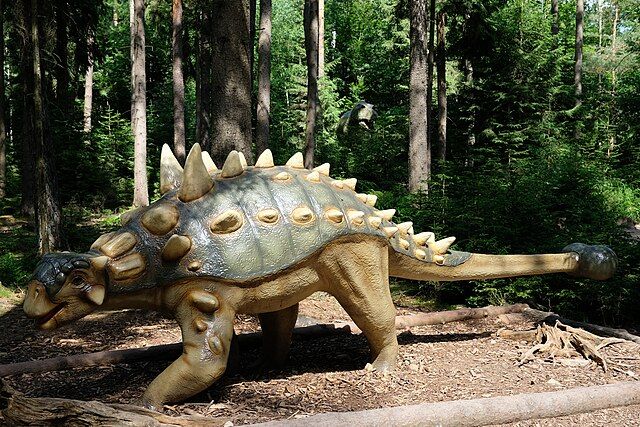
Ankylosaurus
Ankylosaurus was a tank-like armored dinosaur from the Late Cretaceous of North America. Its body was covered in tough armor, and its tail ended in a heavy club.Armor and DefenseArmor plates and spikes protected its back and sides. The tail club could deliver strong defensive blows.DietAnkylosaurus...

Stegosaurus
Stegosaurus is one of the most recognizable dinosaurs thanks to its large back plates and spiked tail. This armored herbivore lived during the Jurassic in North America.AppearanceStegosaurus had a small head, a bulky body, and a double row of plates running down its back. Its tail ended in four long...

Triceratops
Triceratops is one of the most iconic dinosaurs of all time. This large, three-horned herbivore lived in western North America during the Late Cretaceous and is famous for its massive skull, broad frill, and powerful horns.AppearanceTriceratops had a strong body, a parrot-like beak, and a large bony...
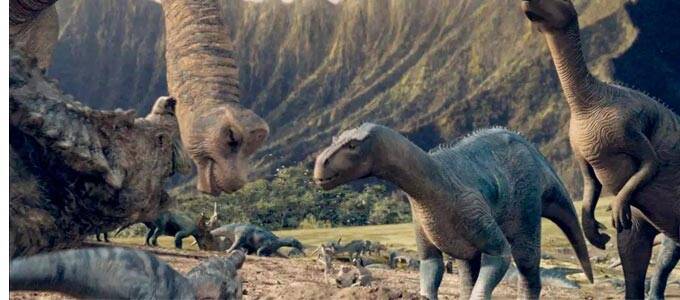
What did dinosaurs usually do_How did dinosaurs usually live?
1. Foraging The plants that herbivorous dinosaurs can eat are limited by their height, so some small herbivorous dinosaurs will stand on their hind limbs in order to eat high plant leaves. Carnivorous dinosaurs fed on herbivorous dinosaurs and other animals. The different...