Skip to content
Animals Top
Home>Animals>Birds>Waterfowl
Animal Profile IUCN: LC

Thalassarche chrysostoma

Thalassarche chrysostoma,Grey-headed Albatross

Thalassarche chrysostoma, Grey-headed Albatross is a species of bird in the genus Thalassarche Chrysostoma.The grey-headed albatross can fly for long periods of time at sea, using the principles of aerodynamics very efficiently to glide over the surface, sometimes for hours without even flapping its

Waterfowl 1003 views
Thalassarche chrysostoma
Scientific Name Thalassarche chrysostoma,Grey-headed Albatross
Length About 81 cm
Weight 2.8-4.4kg
Lifespan Around 47 years
IUCN Status LC
Advertisement

Table of Contents

    Thalassarche chrysostoma, Grey-headed Albatross is a species of bird in the genus Thalassarche Chrysostoma.
    ed63a3f69a44eb6fedaa21082ca996c9_ nine ray image converter. jpg

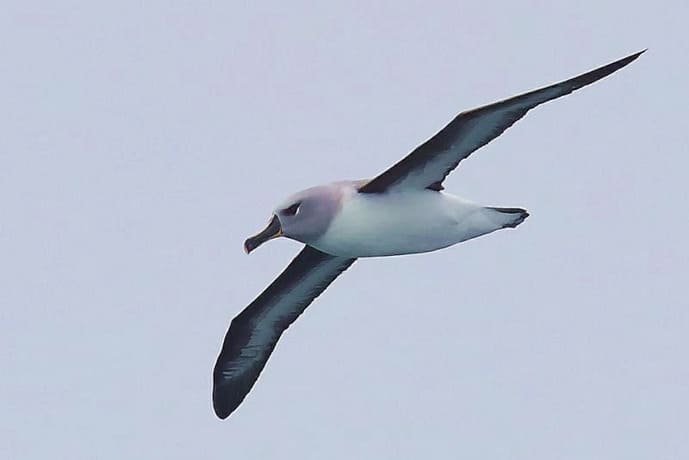
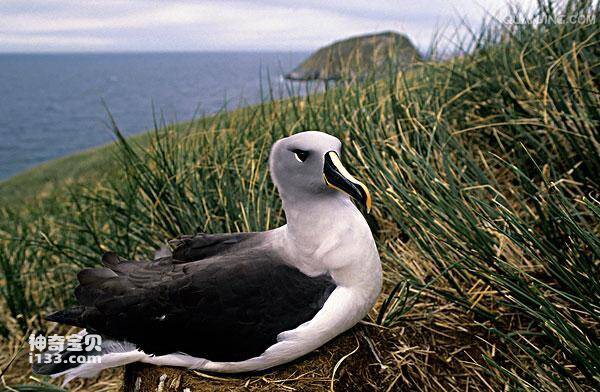
    The grey-headed albatross can fly for long periods of time at sea, using the principles of aerodynamics very efficiently to glide over the surface, sometimes for hours without even flapping its wings. The grey-headed albatross can travel up to 5,000 kilometers in 12 days. Grey-headed albatrosses usually only come ashore when they are young, and they can even sleep on the surface.

    Near Antarctica, their main diet is fish, cuttlefish and shrimp. They also feed on the waste discarded by ships, so they sometimes fly with them.
    e48feeb9de8b2422c73af77ac1aff778_ nine ray image converter. jpg

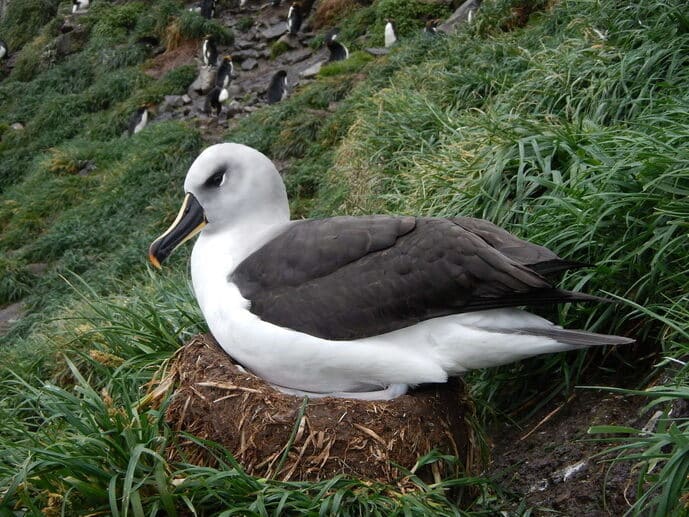
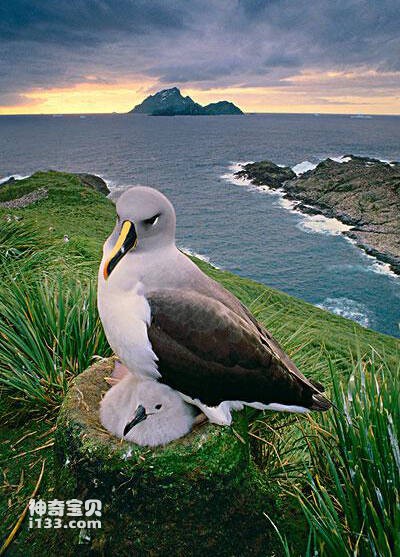
    The grey-headed albatross will land on the island during the breeding season, nesting and laying eggs, and they will not escape when they meet people. Albatrosses reach sexual maturity late, starting to breed at 5-8 years of age. The female lays one or two eggs. Albatrosses are monogamous and take turns being responsible for hatching the eggs. The nesting period is about 70 days, and both parents take turns to incubate the eggs and raise the chicks, which take about 4 months to mature and become independent. The grey-headed albatross can live for 40 to 60 years.

    On 7 August 2018, the IUCN listed the grey-headed albatross as endangered due to the rapid population decline on the subantarctic island of South Georgia, with a total population size of about 250,000, and the primary driver of the decline is likely to be accidental mortality from longline fisheries.


    Protect wild animals and eliminate wild meat.

    Maintaining ecological balance is everyone's responsibility!



    Tags

    At a glance

    Profile Details

    Key characteristics, appearance, and habitat information.

    Traits & Behavior

    The upper and lower beak is orange and has a grey head

    Appearance

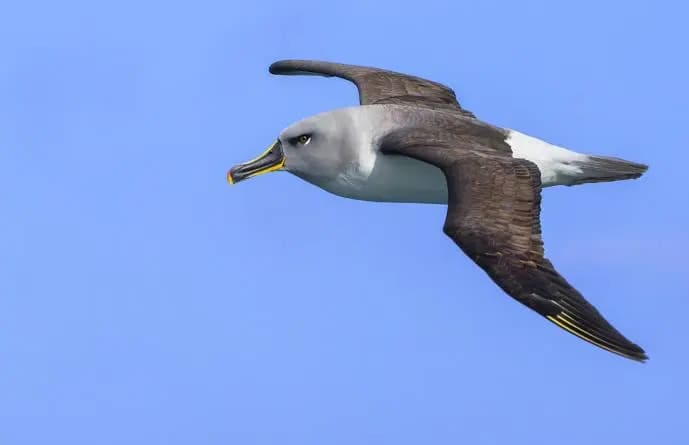
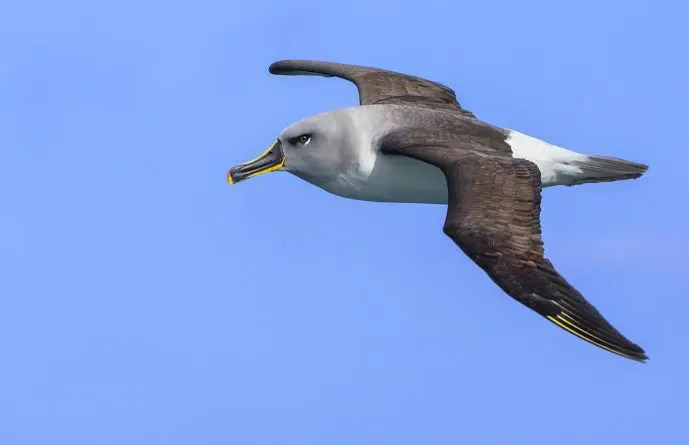
    The grey-headed albatross has narrow, long wings, and its beak is relatively long and powerful, with a downward hook at the end of the upper beak. It grows to about 63 cm tall with a wingspan of 2.2 m. It has an orange-colored upper and lower beak and a gray head. Male albatrosses are generally larger than females.
    The grey-headed albatross is also a large bird, with an average body length of 81 cm (32 in), a wingspan of 220 cm (7.2 ft), and a weight range of 2.8 to 4.4 kg (6.2 to 9.7 lb), with an average weight of 3.65 kg (8.0 lb). Its head, throat, and upper neck are dark gray, and its upper wings, mantle, and tail are almost black. It has a white rump, lower body, a white crescent behind the eyes, a black beak with bright yellow ridges above and below, and a tip that gradually turns pinkish orange. Its underwings are white, with a lot of black on the leading edge and less black on the trailing edge. The young have a black beak and head and a deeper nape. Its crescent eyes were bl

    Distribution & Habitat

    The grey-headed albatross is found on subantarctic islands.
    Petrel Peak on Macquarie Island is the only known grey-headed albatross breeding ground in Australia. It is home to a breeding population of about 80 pairs of grey-headed albatrosses. However, the area has been seriously threatened by an inundation of wild rabbits.
    Advertisement

    Visual guide

    Browse available images of this species.

    Quick answers

    Thalassarche chrysostoma FAQs