 LC
LC
Capito auratus
Capito auratus,Gilded Barbet
Gilded Barbet is known as Capito auratus and gilded barbet. Its specific behavior is unknown.Protect wild animals and eliminate wi···
Explore birds by lifestyle and ecological group, from waterfowl and waders to parrots, raptors, landfowl, and songbirds.

Use these shortcuts to move into more specific animal groups.
A relatively detailed introduction to climbing birds (usually referring to birds with climbing or clinging abilities and zygodactyl or heterodactyl feet), including its traditional concept, modern classification research, and order, family, and genus tables of representative groups. It should be noted in advance that "climbing birds" are often regarded as a collection based on morphology and ecological habits in traditional bird classification, rather than a strict monophyletic group. With the development of molecular systematics, many birds that were previously classified as "climbing birds" are scattered in multiple orders in modern classification systems. Climbing birds are one of the six major ecological groups of birds, covering the traditional bird classification system of Psittaciformes, Cuculiformes, Apomorpha, Mynaeformes, Trogons, Nighthawks, Pseudocranopterygiiformes, and Pipiriformes. Climbing birds include secondary ecological groups such as nighthawks, parrots, cuckoos, swifts, emeralds, kingfishers, woodpeckers, and pseudo-woodpeckers.
Traditional Definition of Climbing Birds
Foot Structure: Many “climbing birds” exhibit zygodactyl feet (toes II and III pointing forward, toes I and IV pointing backward), enabling them to cling to vertical or inclined surfaces. Some (e.g., trogons) have heterodactyl feet (toes III and IV forward, toes I and II backward), serving a similar climbing function.
Climbing / Wood-pecking Habits: Many rely on arboreal foraging or specialized feeding on or within trees. Woodpeckers climb trunks to chisel for insects; parrots often use their feet and curved beaks to grip branches and aid in climbing.
Global Distribution and Diversity: Climbing birds inhabit tropical, subtropical, and temperate forests worldwide—e.g., toucans in South America, mousebirds in Africa, parrots in Oceania, Asia, and Africa, etc.
Not a Single Lineage: Early morphological/ecological groupings classified all zygodactyl or tree-climbing birds together, but molecular research has demonstrated these species belong to distinct evolutionary lineages.
Key Adaptations and Behaviors
Adapted Feet: Zygodactyl or heterodactyl feet facilitate vertical or angled perching; some (e.g., woodpeckers) have stiff tail feathers to support their body against tree trunks.
Bill Diversity: Parrots possess powerful, curved bills to crack seeds and assist climbing; woodpeckers have chisel-like bills; toucans have large bills for reaching fruit in the canopy.
Nesting and Reproduction: Many species nest in tree holes (excavated or natural cavities). Parrots, for instance, may also utilize cliff holes, ground burrows, or even human-made structures.
Traditional (Older) Classifications
In early morphology-based taxonomy, many birds with zygodactyl feet or climbing habits (e.g., parrots, woodpeckers, trogons, mousebirds) were grouped into a “picarian” or “climbing bird” assembly (variously called “Picinae,” “Piciformes” in a broad sense, or “Scansores”).
Like other ecological-morphological groupings (e.g., “wading birds,” “waterfowl”), this approach did not accurately reflect true phylogenetic relationships.
Discoveries Through Modern Molecular Systematics
Genetic evidence shows that parrots (Psittaciformes) are more closely related to the clade that includes swifts and nightjars than they are to woodpeckers; woodpeckers and their allies (Piciformes) are relatively closer to passerines (songbirds) on a different branch; trogons, mousebirds, and rollers each have their own separate evolutionary paths.
As a result, current classifications no longer place all zygodactyl birds in a single “climbing bird” order but rather distribute them among distinct orders—though from an ecological perspective, they can still be introduced collectively as “climbing birds.”
Representative Evolutionary Branches (Brief)
Psittaciformes (Parrots): Includes parrots, macaws, lories, etc.; large, curved bills, high intelligence, found in South/Central America, Oceania, Africa, parts of Asia.
Piciformes (Woodpeckers & Allies): Includes woodpeckers, barbets, toucans, honeyguides, etc., mostly in tropical/subtropical regions, known for varied beak shapes and foraging strategies.
Trogoniformes (Trogons): Heterodactyl feet, typically in tropical/subtropical forests worldwide, known for vivid plumage.
Coliiformes (Mousebirds): Restricted to sub-Saharan Africa, small, crested birds with unique climbing posture and long tails.
Some families in Coraciiformes (like hornbills) or Musophagiformes (like turacos) also exhibit partial climbing adaptations but are usually classified independently according to molecular data.
Below is a modern systematic breakdown of the main orders considered “climbing birds” (in the traditional, ecological sense), highlighting notable families and representative genera. This grouping does not denote a single lineage, but rather a shared adaptation for climbing.
| Family | Representative Genera | Example Species | Distribution & Notes |
|---|---|---|---|
| Psittacidae (True Parrots) | Amazona (Amazon parrots), Ara (Macaws), Cacatua (Cockatoos), etc. | Scarlet Macaw (Ara macao), Blue-fronted Amazon (Amazona aestiva), etc. | Predominantly found in South & Central America, also some in Oceania. Large, curved bills, strong climbing ability, high intelligence. Popular as pets. |
| Loriidae (Lories, Lorikeets) | Trichoglossus (Rainbow Lorikeets), etc. | Rainbow Lorikeet (Trichoglossus moluccanus), etc. | Found mainly in Australia and New Guinea, specialized brush-tipped tongues for feeding on nectar and pollen. |
| Psittaculidae (Old World Parrots)* sometimes merged into above families | Psittacula (Ringneck Parakeets), Agapornis (Lovebirds), etc. | Rose-ringed Parakeet (Psittacula krameri), Black-masked Lovebird (Agapornis personatus), etc. | Native to Africa, Asia, Oceania; many are well-known as aviary or pet birds. |
Note: The exact family structure can differ by source, often distinguished as “New World parrots” vs. “Old World parrots,” etc.
| Family | Representative Genera | Example Species | Distribution & Notes |
|---|---|---|---|
| Picidae (Woodpeckers) | Dendrocopos (Pied Woodpeckers), Picus (Green Woodpeckers), etc. | Great Spotted Woodpecker (Dendrocopos major), European Green Woodpecker (Picus viridis) | Zygodactyl feet + stiff tail feathers aid vertical climbing. Mostly insectivorous, globally distributed except Antarctica. |
| Indicatoridae (Honeyguides)* sometimes merged or considered separate from barbets | Indicator, Prodotiscus, etc. | Greater Honeyguide (Indicator indicator), etc. | Mostly in Africa/Asia; known for guiding mammals or humans to wild bee nests, feeding on wax, larvae, honey. |
| Ramphastidae / Lybiidae / Megalaimidae (Toucans, Barbets, etc.) | Ramphastos (Toucans), Capito (New World barbets), Psilopogon (Asian barbets), etc. | Keel-billed Toucan (Ramphastos sulfuratus), various barbet species (Psilopogon incognitus), etc. | Primarily tropical. Large or specialized bills (e.g., toucans); feed on fruit, insects in the forest canopy. |
Note: Classification within Piciformes can be intricate, with multiple families or subfamilies for barbets, toucans, honeyguides, etc.
| Family | Representative Genera | Example Species | Distribution & Notes |
|---|---|---|---|
| Trogonidae (Trogons) | Trogon, Pharomachrus (Quetzals), etc. | Resplendent Quetzal (Pharomachrus mocinno), various Trogon species | Heterodactyl feet (toes III & IV forward, I & II backward); tropical/subtropical distribution; bright, iridescent plumage. Some (like quetzals) are culturally significant. |
| Family | Representative Genera | Example Species | Distribution & Notes |
|---|---|---|---|
| Coliidae (Mousebirds) | Colius, Urocolius | White-backed Mousebird (Colius colius) etc. | Endemic to sub-Saharan Africa, small birds with serrated bills, strong-grip feet, and long tails. Known for clinging upside-down to branches. |
Coraciiformes (Rollers, Kingfishers, Hornbills): Some hornbills (Family Bucerotidae) show partial zygodactyly, but are generally placed in their own evolutionary branch, not traditionally among “climbing birds.”
Musophagiformes (Turacos): Some can climb adeptly in trees, though their foot structure differs from typical zygodactyl forms; molecular data place them in a separate lineage.
Multiple Evolutionary Origins
“Climbing birds” were historically lumped together due to zygodactyl or climbing-friendly foot structures, but modern research reveals they belong to separate orders (Psittaciformes, Piciformes, Trogoniformes, Coliiformes, etc.).
This showcases multiple, independent adaptations to arboreal niches and vertical surfaces across avian evolution (convergent evolution).
Ecological Functions and Human Interactions
Many climbing birds play crucial ecological roles: for example, woodpeckers control insect pests, while parrots and toucans disperse seeds.
Humans keep parrots as pets, utilize woodpeckers for natural pest control, and have also threatened forest habitats through deforestation. Many species (e.g., rare parrots or quetzals) are endangered due to habitat loss and illegal trade.
Conservation and Research Outlook
Because many climbing birds depend on tropical or specialized forest habitats, they are vulnerable to logging, fragmentation, and poaching. Numerous parrot, toucan, and trogon species are listed under threatened categories.
Ongoing molecular and behavioral studies continue to refine our understanding of their evolutionary relationships, informing more targeted conservation approaches.
By presenting these orders and families, can illustrate how “climbing birds,” though ecologically similar in foot structure and behavior, are distributed across multiple lineages in modern avian systematics. For more in-depth data on identification, distribution, and conservation, refer to specialized ornithological literature, field guides, and the latest phylogenetic research. We hope this provides a clear, in-depth look at the fascinating world of climbing birds.
Search the animals shown on this page or narrow them by IUCN conservation code.
LC
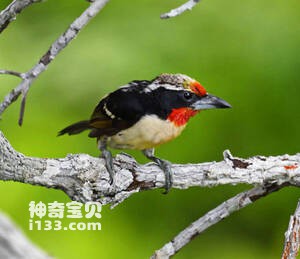
Capito auratus,Gilded Barbet
Gilded Barbet is known as Capito auratus and gilded barbet. Its specific behavior is unknown.Protect wild animals and eliminate wi···
 LC
LC
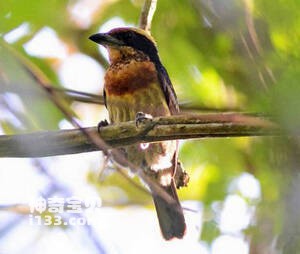
Capito niger,Black-spotted Barbet
The species is known as Capito niger or Black-spotted Barbet, but its behavior is unknown.Protect wild animals and eliminate wild ···
 LC
LC
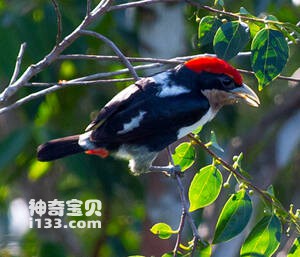
Capito brunneipectus,Cinnamon-breasted Barbet,Brown-chested Barbet
The scientific name of the bird is Capito brunneipectus, and its foreign names are Cinnamon-breasted Barbet and Brown-chested Barb···
 LC
LC
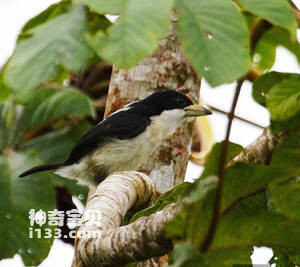
Capito dayi,Black-girdled Barbet
The bird's scientific name is Capito dayi, and its foreign name is Black-girdled Barbet.Protect wild animals and eliminate wil···
 LC
LC
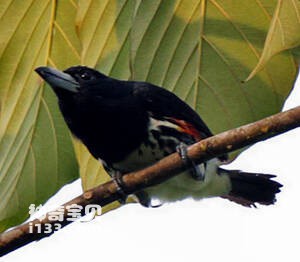
Capito hypoleucus,White-mantled Barbet
The bird's scientific name is Capito hypoleucus, and its foreign name is White-mantled Barbet。Protect wild animals and elimin···
 LC
LC
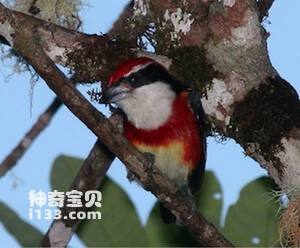
Capito maculicoronatus,Spot-crowned Barbet
The species is known as Capito maculicoronatus and Spot-crowned Barbet。Protect wild animals and eliminate wild meat.Maintaining e···
 LC
LC
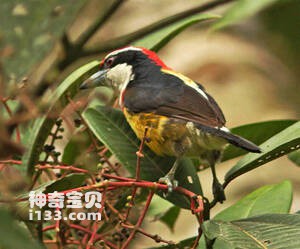
Capito fitzpatricki,Sira Barbet
Capito fitzpatricki (also known as Sira Barbet) is a sister species of pecker with unknown habits.Protect wild animals and elimina···
 LC
LC
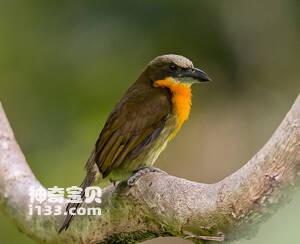
Capito wallacei,Scarlet-banded Barbet
Capito wallacei or Scarlet-banded Barbet, the species is unknown.Protect wild animals and eliminate wild meat.Maintaining ecologic···
 LC
LC
Capito aurovirens,Scarlet-crowned Barbet
The species is Capito aurovirens and Scarlet-crowned Barbet, but its behavior is unknown.Protect wild animals and eliminate wild m···
 LC
LC
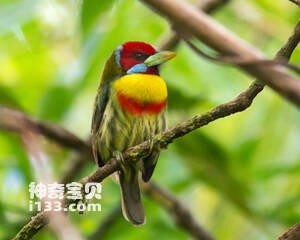
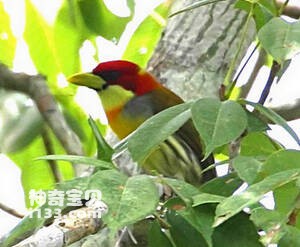
Eubucco versicolor,Versicolored Barbet,Blue-moustached Barbet
Eubucco versicolor, Versicolored Barbet and Blue-moustached Barbet, are not known.Protect wild animals and eliminate wild meat.Mai···
 LC
LC
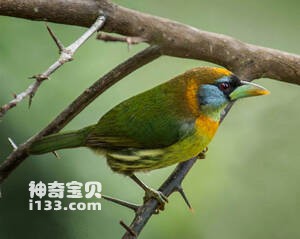
Eubucco tucinkae,Scarlet-hooded Barbet
Eubucco tucinkae (Eubucco Tucinkae) and Scarlet-hooded Barbet (Scarlet hooded Barbet) are unknown.Protect wild animals and elimina···
 LC
LC
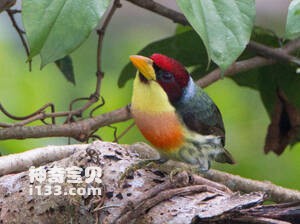
Eubucco bourcierii,Red-headed Barbet
Eubucco bourcierii, or Red-headed Barbet, has not been studied in detail on its diet and reproductive phenology, but it is known t···
 LC
LC
Eubucco richardsoni,Lemon-throated Barbet
Eubucco richardsoni and Lemon-throated Barbet are not known.Protect wild animals and eliminate wild meat.Maintaining ecological ba···
 LC
LC
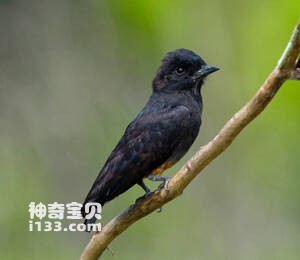
Chelidoptera tenebrosa,Swallow-winged Puffbird
The species is Chelidoptera tenebrosa and swallowing-winged Puffbird.Protect wild animals and eliminate wild meat.Maintaining ecol···
 LC
LC
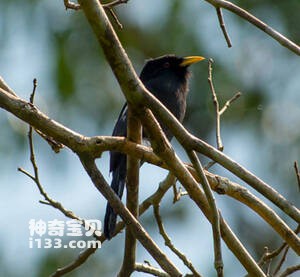
Monasa flavirostris,Yellow-billed Nunbird
The species is known as Monasa flavirostris or Yellow-billed Nunbird.Protect wild animals and eliminate wild meat.Maintaining ecol···
 LC
LC
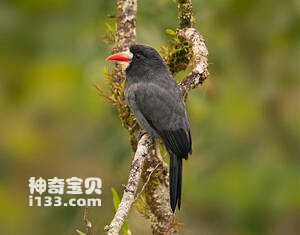
Monasa morphoeus,White-fronted Nunbird
The species is known as Monasa morphoeus or White-fronted Nunbird.Protect wild animals and eliminate wild meat.Maintaining ecologi···
 LC
LC
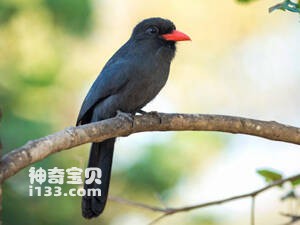
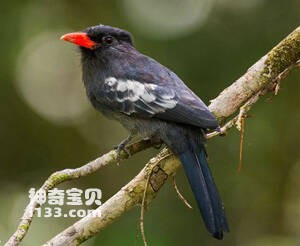
Monasa nigrifrons,Black-fronted Nunbird
The species is known as Monasa nigrifrons or Black-fronted Nunbird.Protect wild animals and eliminate wild meat.Maintaining ecolog···
 LC
LC
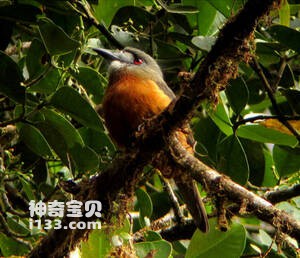
Monasa atra,Black Nunbird
The species is known as Monasa atra or Black Nunbird, but its behavior is unknown。Protect wild animals and eliminate wild meat.Ma···
 LC
LC
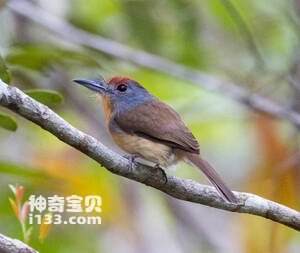
Hapaloptila castanea,White-faced Nunbird
The species is known as Hapaloptila castanea or White-faced Nunbird.Protect wild animals and eliminate wild meat.Maintaining ecolo···
 LC
LC
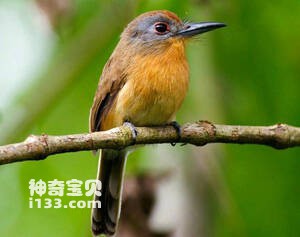
Nonnula ruficapilla,Rufous-capped Nunlet
The bird's scientific name is Nonnula ruficapilla, and its foreign name is Rufous-capped Nunlet.Protect wild animals and elimi···
 LC
LC
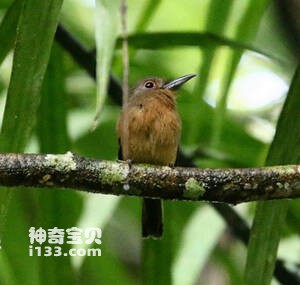
Nonnula frontalis,Grey-cheeked Nunlet
The scientific name Nonnula frontalis and the foreign name Grey-cheeked Nunlet are unknown.Protect wild animals and eliminate wild···
 LC
LC
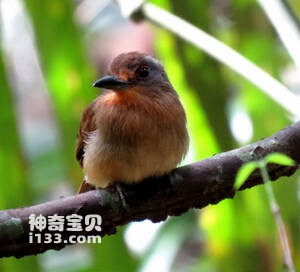
Nonnula brunnea,Brown Nunlet
The scientific name Nonnula brunnea and the foreign name Brown Nunlet are unknown.Protect wild animals and eliminate wild meat.Mai···
 LC
LC
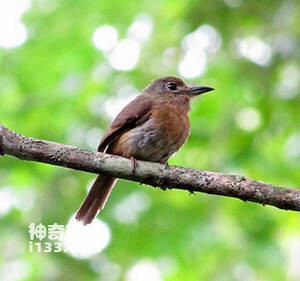
Nonnula sclateri,Fulvous-chinned Nunlet
The scientific name Nonnula sclateri and the foreign name Fulvous-chinned Nunlet are unknown.Protect wild animals and eliminate wi···
 LC
LC
Nonnula rubecula,Rusty-breasted Nunlet
The bird's scientific name is Nonnula rubecula, and its foreign name is rust-breasted Nunlet. Its behavior is unknown.Protect ···