The Australian sea lion (Neophoca cinerea) is one of the world's most range-restricted pinnipeds and the only sea lion species that breeds entirely within Australian waters. Belonging to the family Otariidae, it is a medium-to-large marine mammal best known for its unusual breeding cycle, small total population and highly localised distribution along the southern Australian coast.
Taxonomy and naming
The Australian sea lion is classified within Class Mammalia, Order Carnivora, suborder Pinnipedia, Family Otariidae and Genus Neophoca. It is currently the only recognised species in this genus and is closely related to other Southern Hemisphere otariids such as the New Zealand sea lion, although it differs in morphology, behaviour and range. The species name cinerea refers to its greyish-brown coat, especially in adult animals.
Physical characteristics
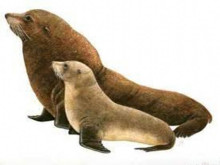
Australian sea lions are robustly built, with the typical otariid features of visible external ear flaps, large muscular fore flippers and hind flippers that can rotate forward to support the body on land. Adult males are substantially larger than females, showing marked sexual dimorphism. Males usually reach about 2.0–2.5 m in length and weigh roughly 200–300 kg or more, with a large head, thick neck and powerful shoulders. Females are smaller and more slender, around 1.3–1.8 m in length and 60–110 kg in weight.
Coat colour varies with sex and age. Adult males are generally dark chocolate-brown or grey-brown with a contrasting pale yellow to cream-coloured crown and nape, giving them a distinctive “blonde-headed” appearance. Females and juveniles are much paler overall, with silvery-grey or light brown backs and flanks and a whitish underside. Newborn pups are born in a dark brown or black natal coat that is gradually replaced by a lighter, sandy or grey pelage within a few months. The long, sensitive vibrissae (whiskers) help the animals detect prey and navigate in turbid water.
Distribution and habitat
The Australian sea lion has a highly restricted distribution, occurring only along the southern and south-western coasts of Australia. Breeding colonies are scattered across some 70 or more islands and offshore reefs in South Australia and Western Australia, with well-known rookeries at sites such as Seal Bay on Kangaroo Island and Dangerous Reef in Spencer Gulf. The species uses remote, relatively undisturbed rocky islands, sandy beaches and shingle shores as breeding and haul-out sites.
At sea, Australian sea lions forage primarily over the continental shelf and slope in waters ranging from tens to a couple of hundred metres deep. Individuals may travel tens or even hundreds of kilometres between haul-out sites and foraging grounds, but typically remain within shelf waters rather than undertaking very long-distance migrations.
Behaviour and lifestyle
Like other otariids, Australian sea lions split their time between land and sea, coming ashore to rest, breed and moult. However, they are unique among sea lions for their extremely unusual breeding cycle: instead of following an annual cycle, they have an asynchronous breeding interval of about 17–18 months, and different colonies may breed at markedly different times of year. This staggered pattern means that pupping and mating are occurring in some colonies at almost any time.
During the breeding season, adult males establish territories on beaches or rocky terraces and compete vigorously for access to females, using vocal displays, posturing and physical fights. Females alternate between nursing their pups on shore and foraging trips at sea, sometimes travelling long distances to find sufficient prey. At sea, Australian sea lions are agile divers; individual dives usually last a few minutes and can reach depths greater than 60–70 m as they search for prey on or near the seabed and in midwater.
Diet
Australian sea lions are mid- to upper-level predators with a varied diet. Stomach-content and scat analyses show that they feed on a wide range of coastal and shelf fishes, including clupeiform, perciform and gadoid species, as well as cephalopods such as squids, cuttlefishes and octopuses. Crustaceans and other benthic invertebrates are also taken in some areas. They forage both in the water column and on or near the sea floor, often targeting patchily distributed but energy-rich prey.
Reproduction and life cycle
The species’ extended and asynchronous breeding cycle is one of its defining features. Instead of a fixed annual breeding season, Australian sea lions reproduce roughly every 17–18 months, and the timing of pupping differs from colony to colony. Females usually give birth to a single pup weighing about 6–8 kg. Pups are born on land and are able to crawl and vocalise soon after birth. Mothers alternate between periods ashore nursing their pups and foraging trips at sea, and pups may continue to suckle for a year or more.
This slow reproductive rate, combined with relatively high pup and juvenile mortality, means that the overall potential for population growth is low. Once numbers have declined, recovery tends to be very slow, making the species especially vulnerable to sustained increases in mortality from human activities or environmental change. Wild Australian sea lions typically live 15–20 years, with some females surviving longer.
Relationship with humans
Historically, Australian sea lions were heavily exploited for their skins and oil, and by the late 19th century many colonies had been reduced or extirpated. Commercial sealing eventually ceased, and the species is now protected under Australian law. Today, Australian sea lions are important for ecotourism, attracting visitors to sites such as Seal Bay and other protected rookeries in South and Western Australia. However, they also interact with coastal fisheries, where they may be accidentally caught in nets or perceived as competitors for fish.
Conservation status and threats
The Australian sea lion is listed as Endangered on the IUCN Red List, with an estimated total population of only tens of thousands of animals and an overall declining trend. Major threats include bycatch and entanglement in gillnet, trawl and longline fisheries; entanglement in lost or discarded fishing gear and other marine debris; disturbance at breeding and haul-out sites from tourism and vessel traffic; and climate-driven changes in ocean conditions and prey availability. Conservation measures focus on reducing fishery bycatch through gear modifications and spatial management, protecting key breeding sites within marine parks and reserves, regulating tourism activities and maintaining long-term monitoring of colony size and demography.