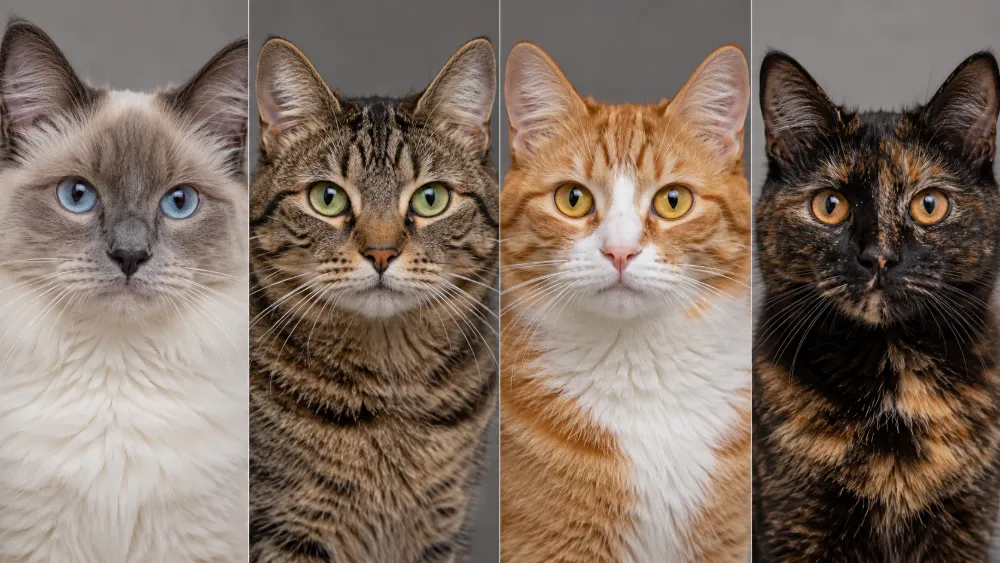
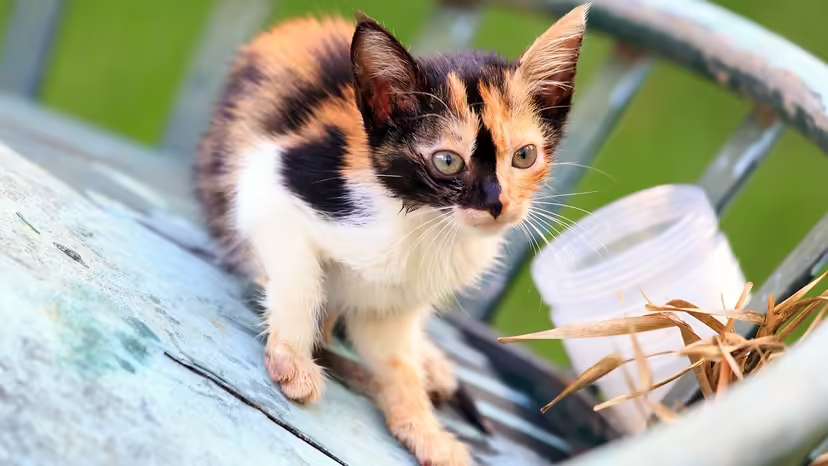
Many people associate striking fur patterns with wild animals like zebras, leopards or tigers. But one of the most recognizable and genetically fascinating coats actually belongs to a domestic cat—the calico. With its vibrant mix of white, black and orange, the calico cat is not a breed but a color pattern, and behind that colorful appearance lies a remarkable genetic story.
Even more intriguing? Calico cats are overwhelmingly female, a fact that has everything to do with how their chromosomes determine coat color. Below, you’ll learn why calico cats look the way they do, why male calicos are so rare, and what pet owners should know about living with these striking animals.
Calico Cats and Their Genetics
A “calico” is defined by its tricolor fur pattern. Most calicos are mostly white with large patches of black and orange, though some may carry diluted shades like gray, cream or chocolate.
But what truly sets calicos apart is the genetic mechanism behind their colors.
Why Calicos Are Almost Always Female
Coat color genes in cats are linked to the X chromosome:
X chromosome contains the gene for black or orange fur.
Female cats (XX) receive one X chromosome from each parent.
Male cats (XY) receive the X chromosome only from the mother.
Because females have two X chromosomes, they can carry two different color genes—one for black and one for orange. Males only have one X, so they typically show only one color.
How the Patchwork Pattern Forms
In early embryonic development, every female kitten undergoes a biological process called X-chromosome inactivation. In every cell:
One X chromosome is switched off at random.
If the X that carries the black gene is active → that area becomes black.
If the orange-carrying X is active → that area becomes orange.
These random “on/off” patches create the familiar calico mosaic. Because this process is random and unique to each embryo, no two calico cats ever have the same pattern—even genetically identical siblings will look different.
Male Calico Cats: Why They’re So Rare
Male calicos are practically genetic accidents. Only around 1 in 3,000 calico cats is male.
What Causes a Male Calico?
A male calico must have:
Two X chromosomes AND a Y chromosome (XXY)
This rare genetic condition is similar to Klinefelter syndrome in humans.
Are Male Calicos Healthy or Fertile?
Male calicos:
Are almost always sterile
May have higher risk of certain health issues due to the extra chromosome
Should still be neutered to prevent behavioral issues like spraying
Despite their rarity, male calicos do not have special personality traits—only unusual genetics.
Are Calico Cats Good Pets?
Calicos are beloved for their striking looks, but what about their temperament?
Is Coat Color Linked to Behavior?
A 2015 University of California–Davis study surveyed more than 1,200 cat owners. The results suggested that calicos, tortoiseshells and torbies (collectively known as “sex-linked orange females”) were reported to:
hiss more often
show more sensitivity during handling
act more feisty during vet visits
However, experts stress that these findings are based on owner perception, not controlled behavior tests.
The Reality
Calico temperament varies widely—just like any other cat.
Their behavior comes from breed, environment and individual personality, not their color pattern.
In short: calicos are fully capable of being affectionate, loyal, playful and wonderful companions.
Calico vs. Tortoiseshell: What’s the Difference?
These two patterns are often confused.
| Trait | Calico | Tortoiseshell |
|---|---|---|
| Colors | Three colors, must include white | Two colors, usually black + orange |
| Pattern | Large, distinct patches | Mixed, mottled, “salt-and-pepper” look |
| White fur | Required | Not required |
A quick rule:
If it has white, orange and black → it’s calico.
If it has orange and black mixed together with little or no white → it’s tortoiseshell.
Why Calico Cats Are Truly Special
Calico cats stand out not just for their gorgeous coats but for the extraordinary genetics behind them. Their tricolor patterns are a product of chromosome behavior seen in very few mammals, making them one of the most scientifically fascinating domestic pets.
Whether you’re drawn to their beauty, their rarity, or simply their cat-like charm, calicos continue to be some of the most beloved and admired cats in the world.