First Steps: Don't Panic
A single episode of clear foamy vomit in an otherwise healthy cat is not always an emergency. Before assuming the worst, carefully observe your cat's overall condition.
Ask yourself the following questions:
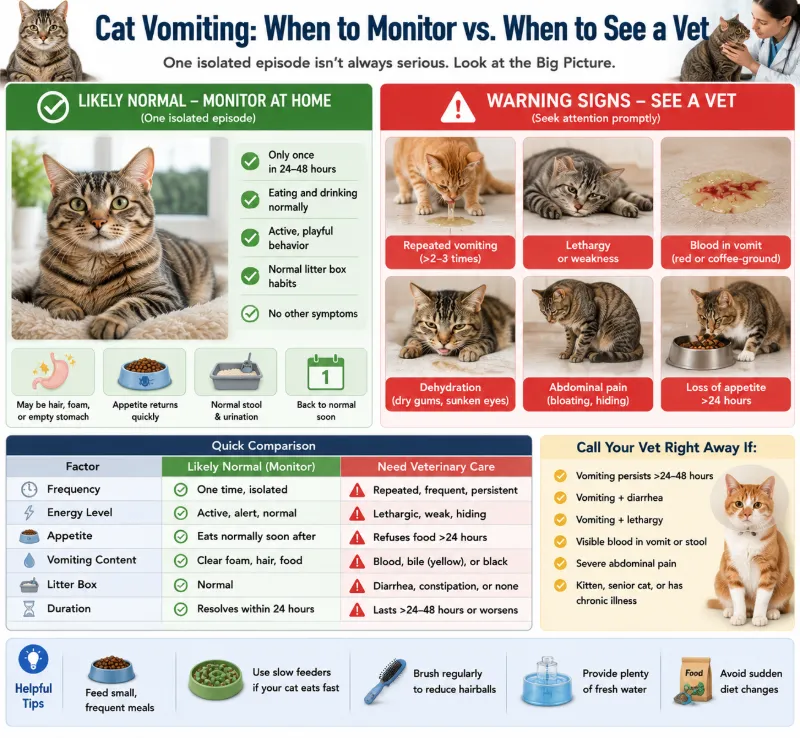
Did your cat vomit only once or multiple times?
Is your cat still alert and responsive?
Is your cat eating and drinking normally?
Is your cat hiding or unusually lethargic?
Is there diarrhea, coughing, or difficulty breathing?
Has your cat recently eaten plants, string, or another unusual object?
The answers to these questions help determine whether simple observation may be reasonable or whether veterinary attention is needed sooner.
What Is Clear Foamy Vomit?
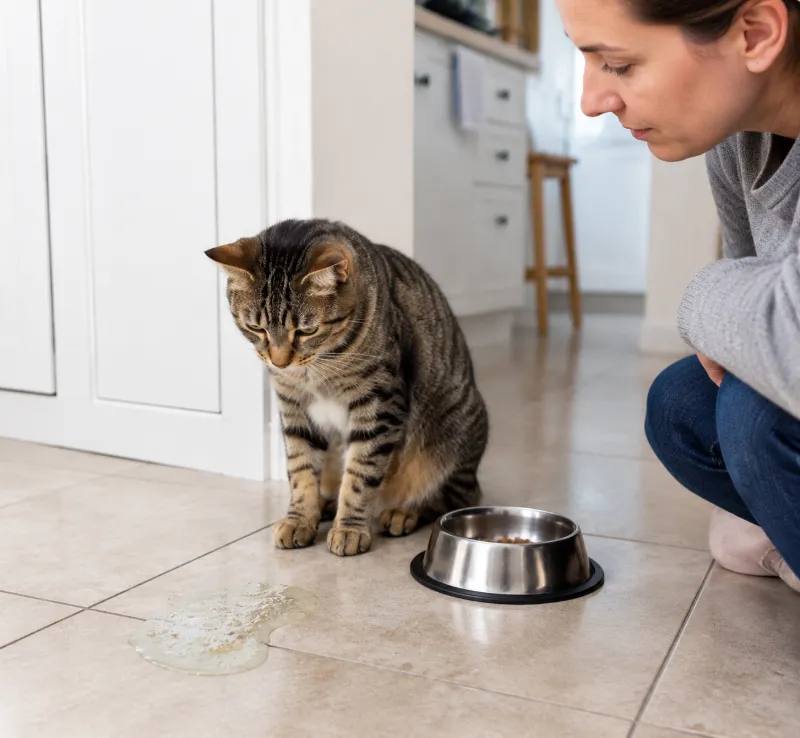
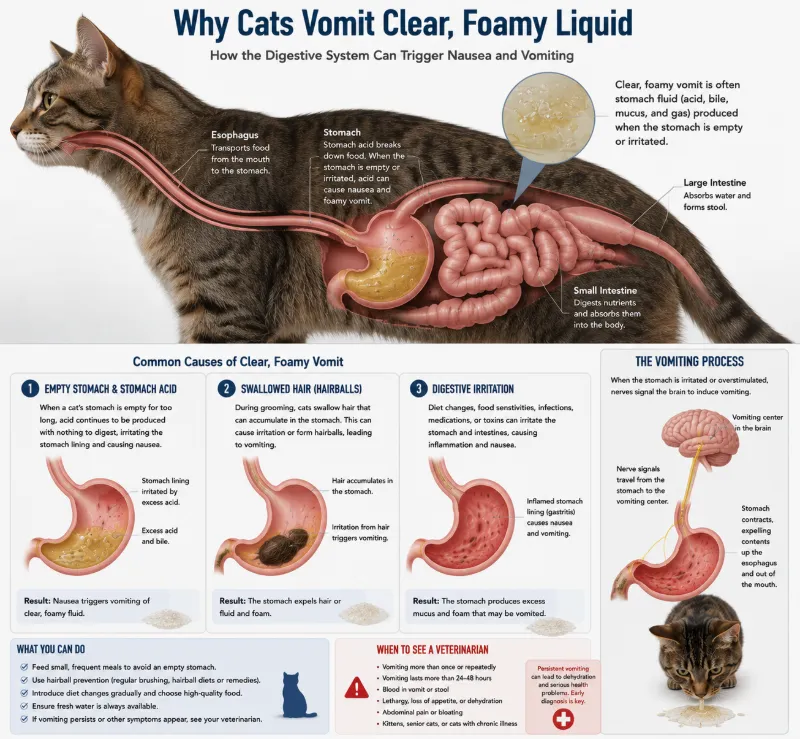
Clear vomit with bubbles usually consists of saliva, mucus, water, and stomach secretions. Unlike vomit containing partially digested food, foamy liquid often appears when the stomach is relatively empty.
The appearance alone cannot identify the exact cause, so it should always be considered together with your cat's behavior and any other symptoms.
5 Common Reasons Cats Vomit Clear Liquid with Bubbles
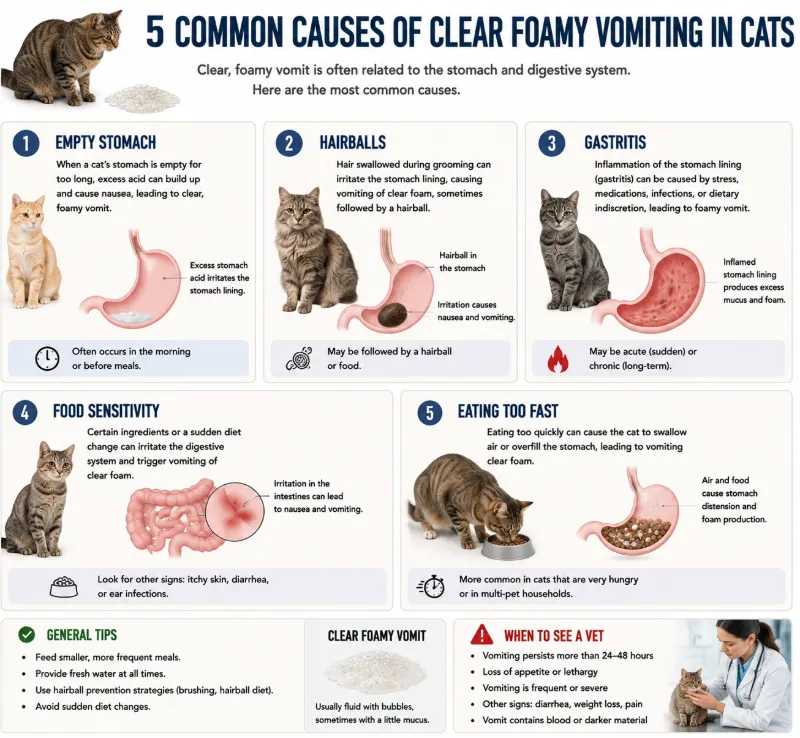
1. Empty Stomach (Bilious Vomiting Syndrome)
One of the most common reasons for clear foamy vomit is an empty stomach.
When a cat goes many hours without eating, stomach acid and digestive fluids may accumulate and irritate the stomach lining. Some cats then vomit clear or slightly yellowish fluid before breakfast or late at night.
Common Signs
Vomiting before meals
Otherwise acting normally
Normal appetite after vomiting
Occurs occasionally rather than continuously
What May Help
Offering smaller meals more frequently throughout the day, or providing a small bedtime meal, may reduce stomach irritation in some cats.
2. Hairballs
Cats swallow loose hair while grooming. Normally, most hair passes through the digestive tract, but some accumulates in the stomach.
Before producing a hairball, a cat may vomit clear foamy fluid repeatedly because the hair is irritating the stomach.
Sometimes no hairball appears immediately. The cat may continue retching before eventually passing one or the hair may move through the intestines instead.
Cats at Higher Risk
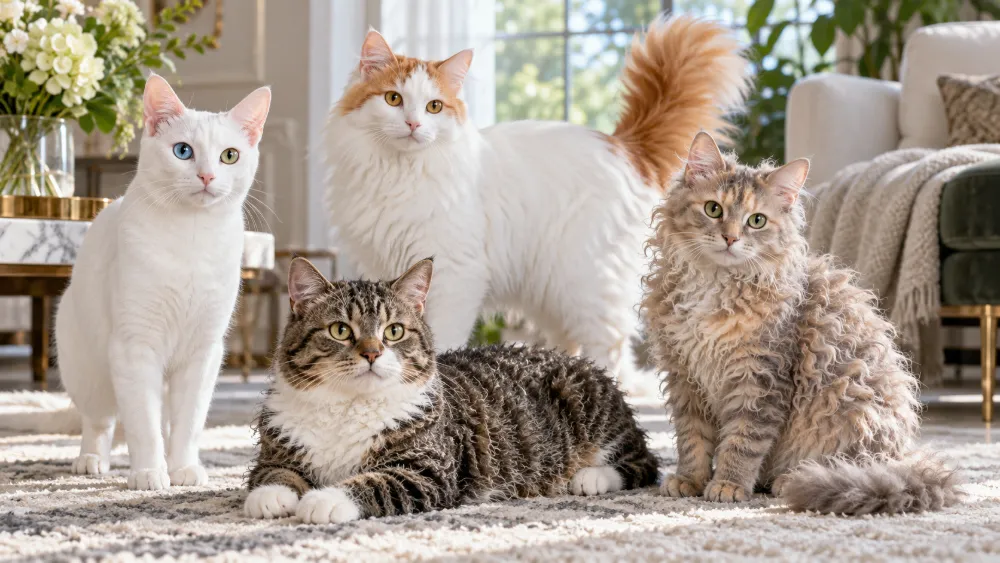
Long-haired breeds
Heavy groomers
Older cats
Cats shedding seasonally
3. Gastritis or Food Sensitivity
Mild inflammation of the stomach (gastritis) may develop after dietary changes, eating spoiled food, sudden treats, or exposure to irritating substances.
Some cats also have food sensitivities that lead to digestive upset.
Possible Signs
Occasional vomiting
Reduced appetite
Licking lips frequently
Nausea
Soft stool or diarrhea in some cases
Persistent vomiting or refusal to eat should always be discussed with a veterinarian.
4. Indigestion or Eating Too Fast
Some cats eat so quickly that they swallow excess air along with their food.
Air trapped in the stomach can contribute to foamy vomit shortly after eating.
This is more common in:
Multi-cat households with food competition
Cats that receive large meals
Highly food-motivated cats
5. Mild Digestive Upset
Temporary digestive irritation may occur after eating grass, catching insects, dietary indiscretion, stress, or minor gastrointestinal disturbances.
If the vomiting is mild and the cat quickly returns to normal, careful observation may be appropriate. However, repeated vomiting should not be ignored.
Less Common but More Serious Causes
| Possible Condition | Why It Can Cause Vomiting |
|---|---|
| Foreign body obstruction | Blocks food or fluid movement through the digestive tract |
| Pancreatitis | Inflammation affecting digestion |
| Kidney disease | Toxin buildup may trigger nausea |
| Liver disease | Digestive disturbances and nausea |
| Hyperthyroidism | May cause increased appetite and vomiting in older cats |
| Toxin exposure | Many household substances irritate the stomach or affect organs |
Only a veterinarian can diagnose these conditions through examination and, when appropriate, laboratory testing or imaging.
Home Care and Prevention
If your cat has vomited only once, remains bright and alert, and has no additional concerning signs, your veterinarian may recommend monitoring at home. However, always seek veterinary advice if you are uncertain or if symptoms worsen.
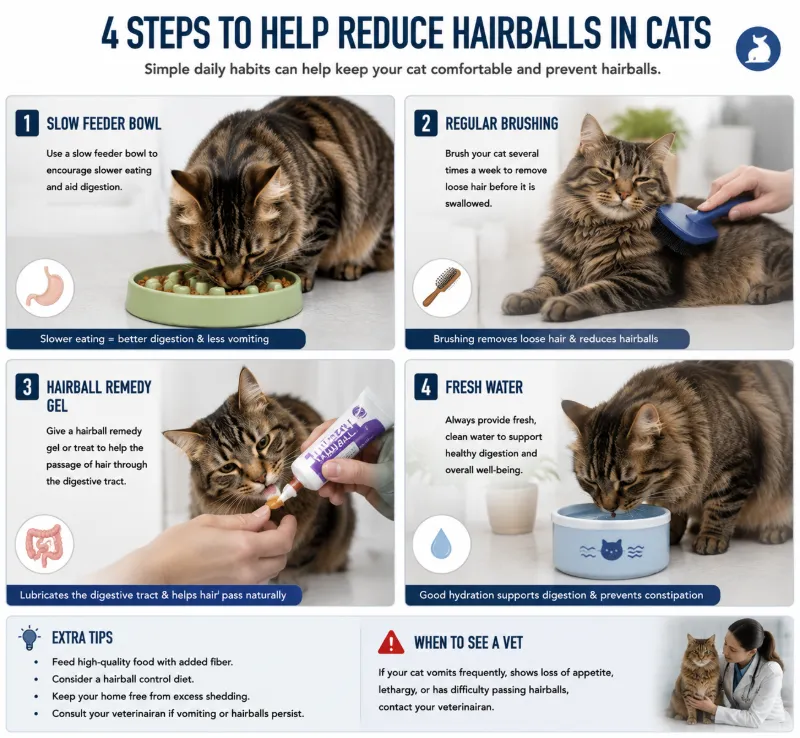
Offer Smaller, More Frequent Meals
Cats prone to vomiting on an empty stomach may benefit from dividing their daily food into several smaller meals.
Automatic feeders can also help maintain more consistent meal timing for cats that spend long periods alone during the day.
Use a Slow Feeder Bowl
A slow feeder bowl or puzzle feeder encourages slower eating and may reduce air swallowing in cats that eat rapidly.
While these products do not treat medical conditions, they can be helpful for cats whose vomiting appears related to rapid eating.
Brush Your Cat Regularly
Routine grooming removes loose hair before it can be swallowed, particularly in long-haired cats during seasonal shedding.
Hairball Remedy Gel
Hairball remedy gels are formulated to help swallowed hair move through the digestive tract. These products should always be used according to the manufacturer's directions and after consulting your veterinarian if your cat vomits frequently.
Probiotics
Veterinary-recommended probiotics may support digestive health in some cats. They are not a substitute for medical treatment but may be useful in certain situations under veterinary guidance.
Provide Fresh Water
Vomiting can contribute to dehydration. Ensure that clean drinking water is always available and monitor your cat's water intake.
Products That May Help
| Product | Potential Benefit |
|---|---|
| Slow feeder bowl | Reduces rapid eating and air swallowing |
| Automatic feeder | Provides smaller meals throughout the day |
| Hairball remedy gel | Helps hair pass through the digestive tract |
| Cat grooming brush | Reduces swallowed loose hair |
| Veterinary probiotic | Supports digestive balance in some cats |
Red Flags: When to See an Emergency Veterinarian
Some situations require immediate veterinary attention rather than home observation.
Vomiting repeatedly over several hours
Vomiting continues for more than 24 hours
Blood in the vomit or coffee-ground appearance
Persistent dry heaving with little or no vomit produced
Severe lethargy or collapse
Difficulty breathing
Fever or marked weakness
Refusal to eat or drink
Signs of dehydration
Painful or swollen abdomen
Suspected ingestion of toxins, string, ribbon, or other foreign objects
Vomiting in very young kittens or medically fragile cats
Prompt veterinary care can be especially important because vomiting is a symptom shared by many different illnesses, ranging from mild stomach irritation to life-threatening conditions.
Helping Your Veterinarian
If your cat needs to be examined, record as much information as possible before the appointment.
When the vomiting began
How many times your cat vomited
Whether food, foam, hair, blood, or bile was present
Recent diet changes
Access to plants, medications, or toxins
Changes in appetite, thirst, urination, or behavior
This information may help your veterinarian narrow the list of possible causes more quickly.
Final Thoughts
Clear foamy vomit is a common symptom in cats and often results from relatively minor digestive irritation, an empty stomach, or hairballs. Nevertheless, vomiting should never be dismissed if it becomes frequent, is accompanied by other signs of illness, or involves blood, severe lethargy, or persistent loss of appetite.
Monitoring your cat carefully, maintaining regular feeding schedules, reducing hair ingestion, and seeking veterinary care when warning signs appear can help protect your cat's health and identify more serious conditions before they progress.
FAQs
Why is my cat vomiting clear liquid with bubbles but acting normal?
A single episode in an otherwise healthy cat is commonly associated with an empty stomach, mild stomach irritation, or an impending hairball. Continue to observe your cat closely, and contact your veterinarian if vomiting recurs or additional symptoms develop.
Is clear foamy vomit different from hairball vomiting?
Yes. Cats often vomit clear foam before producing a hairball because the stomach becomes irritated. Sometimes a hairball is expelled later, while in other cases the hair passes through the digestive tract without being vomited.
Can an empty stomach make a cat vomit?
Yes. Some cats develop stomach irritation after going many hours without food. Offering smaller meals more frequently may help reduce this problem in some individuals.
Should I give my cat food after vomiting?
If your cat appears bright and alert after a single vomiting episode, your veterinarian may advise gradually reintroducing food. If vomiting continues or your cat refuses food, contact a veterinarian for guidance.
Are slow feeder bowls helpful?
They may help cats that eat too quickly by slowing food intake and reducing swallowed air, but they will not treat underlying medical conditions.
Do hairball gels really work?
Hairball remedies may help lubricate swallowed hair and support its passage through the digestive tract. They should be used according to the manufacturer's directions and do not replace veterinary evaluation when vomiting is frequent.
When is vomiting an emergency?
Seek emergency veterinary care if vomiting is repeated, lasts longer than 24 hours, contains blood, is accompanied by fever, severe lethargy, dehydration, abdominal pain, difficulty breathing, or if you suspect your cat swallowed a toxin or foreign object.