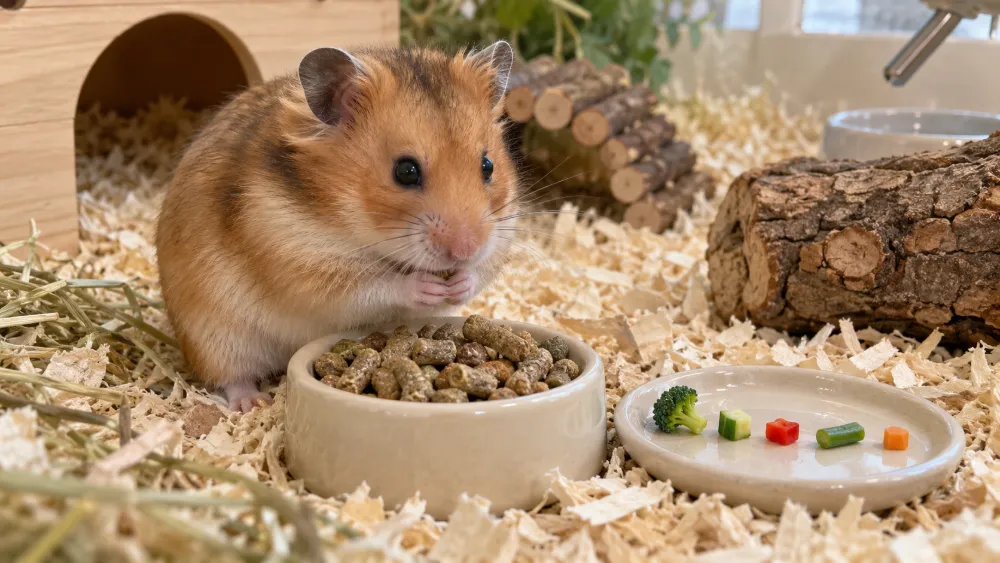
Owning a Savannah cat in 2026 can cost anywhere from roughly $1,500 to $20,000+ just to buy the cat, and the generation matters as much as the price. F1 and F2 Savannahs are the closest to the African serval in ancestry and are usually the most expensive, most demanding and most legally restricted. F4, F5 and later generations are generally easier for private households, but buyers still need to check local laws before paying a deposit.
A Savannah is not simply an expensive spotted house cat. It is a high-energy hybrid breed that needs substantial enrichment, climbing space, interactive play, veterinary care and a long-term budget. Legal rules can also vary by country, state, province, county and city, so ownership should be treated as both a pet decision and a regulatory decision.
Savannah Cat Ownership at a Glance
| Question | Practical 2026 answer |
|---|---|
| Typical purchase price | About $1,500–$20,000+ depending mainly on generation, breeder and pedigree |
| Most expensive generation | Usually F1 |
| Best generation for most private owners | Usually F4, F5 or later |
| Energy level | High |
| Beginner-friendly? | Usually not, especially F1–F2 |
| Legal everywhere? | No |
| Life expectancy | TICA lists about 12–15+ years |
| Important health screening | Routine veterinary care plus breeder health testing; PK deficiency testing is available for Savannahs |
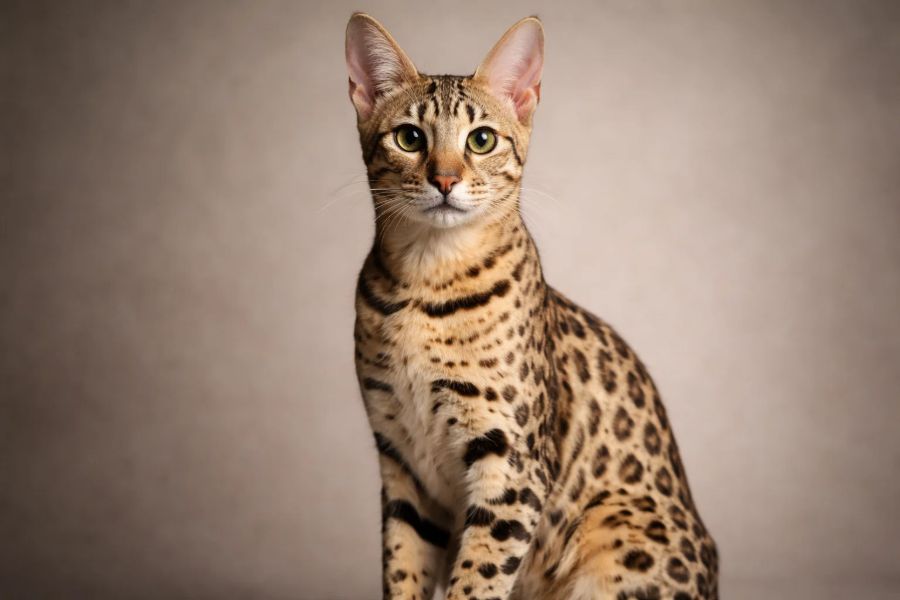
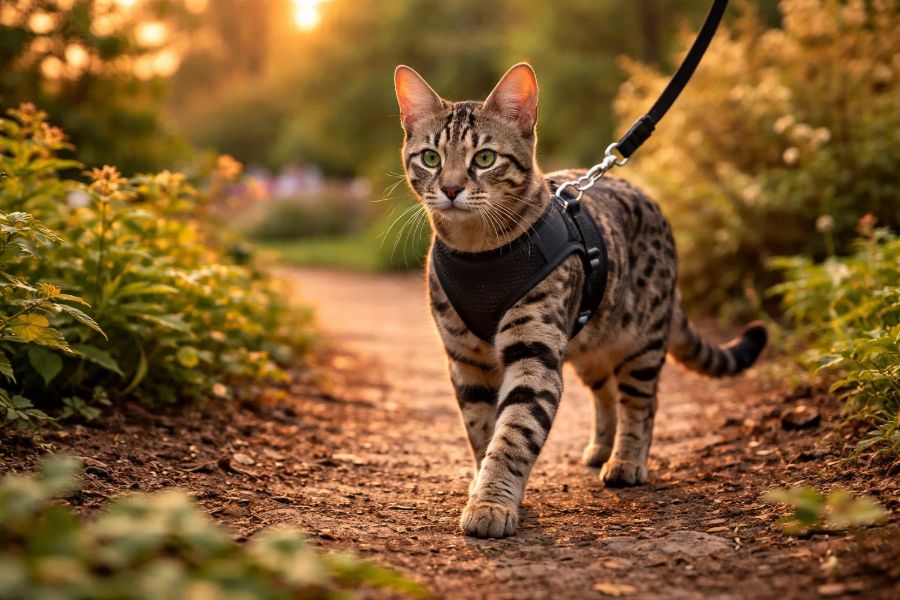
Savannah cats are a recognized domestic breed descended from crosses between domestic cats and the African serval.
What Is a Savannah Cat?
The Savannah is a domestic cat breed developed from crosses between domestic cats and the African serval (Leptailurus serval). TICA records the first known Savannah as a female kitten born on April 7, 1986.
TICA describes the breed as tall, lean, graceful, active and adventurous. The most recognizable traits include:
long legs
large upright ears
a relatively long neck
bold dark spots
a lean athletic body
high activity and curiosity
Later-generation Savannahs are still Savannah cats, even though their serval ancestry is more distant. Generation affects price, behavior, legal status and how practical the cat may be for an ordinary household.
What Do F1, F2, F3, F4 and F5 Mean?
The “F” generation label describes how many generations separate the Savannah from the original serval cross.
| Generation | General meaning | Typical ownership profile |
|---|---|---|
| F1 | First-generation hybrid with one serval parent | Most specialized; usually highest price and legal complexity |
| F2 | Second generation from serval ancestry | Still highly exotic in appearance and demanding |
| F3 | Third generation | Often more manageable than F1–F2, but still very active |
| F4 | Fourth generation | Often a more practical private-owner option |
| F5+ | Fifth generation and later | Usually easier legally and more domestic in everyday management |
Generation labels are useful, but they do not predict every individual cat perfectly. Temperament also depends on breeding, early socialization, environment and the individual animal.
How Much Does a Savannah Cat Cost in 2026?
There is no official national price database for Savannah cats, so any 2026 price table should be treated as a market guide rather than a fixed tariff. Current breeder and breed-community pricing commonly places pet-quality Savannahs roughly in the following ranges:
| Generation | Approximate pet-quality range | Why the price differs |
|---|---|---|
| F1 | $10,000–$20,000+ | Most difficult to produce; strongest serval ancestry; limited availability |
| F2 | $6,000–$10,000 | Still rare and demanding; strong hybrid characteristics |
| F3 | $3,000–$8,000 | Transitional generation with substantial variation |
| F4 | $1,500–$4,500 | More accessible for private households |
| F5 | $1,800–$2,500 | Later generation with fewer ownership complications in many places |
Exceptional kittens, breeding rights, show-quality type, rare lines, location and transport can push prices outside these ranges. A very low advertised price for an “F1” or “F2” should be treated cautiously until pedigree and breeder identity are verified.
Why Are F1 and F2 Savannah Cats So Expensive?
Early-generation breeding is more difficult than producing ordinary domestic-cat litters. Availability is limited, and responsible breeders may invest heavily in veterinary care, genetic testing, registration, neonatal care, nutrition, housing and socialization.
F1 and F2 cats also attract buyers who want the strongest serval-like appearance. Demand plus limited supply can push prices far above those of later-generation Savannahs.
Price alone is not proof of quality. A responsible breeder should be able to discuss pedigree, health testing, socialization, contract terms and the generation of the kitten clearly.
What Makes One Savannah Cat More Expensive Than Another?
Generation: F1–F3 usually cost more than F4–F5+.
Pedigree: established lines and show-quality ancestry can increase price.
Breeder reputation: responsible breeding, testing and socialization add cost.
Appearance: spotting, contrast, ear size, leg length and overall breed type can affect demand.
Sex and breeding rights: breeding-quality cats may cost significantly more than pets sold on a spay/neuter agreement.
Location: transport, scarcity and regional demand change pricing.
Are Savannah Cats Legal in 2026?
Not everywhere. Savannah legality can depend on generation as well as location. Rules may exist at national, state or provincial, county, city and housing levels.
This is one area where old internet lists become outdated quickly, so do not rely on a breeder's sales page or an article that simply says “legal in these states.” Check the current government rules that apply where you actually live.
United States
There is no single nationwide U.S. rule that makes every Savannah generation legal in every location. State and local restrictions differ, and cities can be stricter than their states.
For example, New York City Health Code Article 161 prohibits hybrids between wild cats and domestic cats, which covers Savannah cats. This is a good example of why checking only state-level information is not enough.
Singapore
Singapore's Animal & Veterinary Service states that first- through fourth-generation Savannah crosses are not allowed as pets. For import, documentary proof is required that a Savannah is at least a fifth-generation cross from the ancestral serval stock.
This makes generation documentation especially important for anyone moving a Savannah into Singapore.
Australia
Australia treats Savannah cats as wild-domestic hybrids. The Australian government states that Savannah cats are not on the Live Import List and therefore cannot be legally imported as household pets.
Australia also does not treat registration by an international cat association as proof that a hybrid is legally equivalent to a non-hybrid domestic cat for import purposes.
Before Paying a Deposit
check national import rules
check state or provincial law
check county and city ordinances
check landlord, condominium or HOA rules
confirm the exact generation on the pedigree
ask whether a permit is required
Is an F1 Savannah Cat a Good Pet?
For most households, an F1 is not the most practical Savannah generation. The appearance is dramatic, but the trade-offs are substantial:
highest purchase price
greater legal complexity
more intense activity and environmental needs
potentially greater difficulty with travel or relocation
more limited boarding, housing and veterinary options in some locations
A buyer mainly interested in the Savannah look and interactive personality may find an F4 or F5 far easier to integrate into normal home life.
Are Savannah Cats Good for Beginners?
Usually not for a first-time cat owner, especially in early generations. TICA describes Savannahs as high-energy, active and adventurous.
They often need more daily stimulation than an average adult house cat. A suitable home may need:
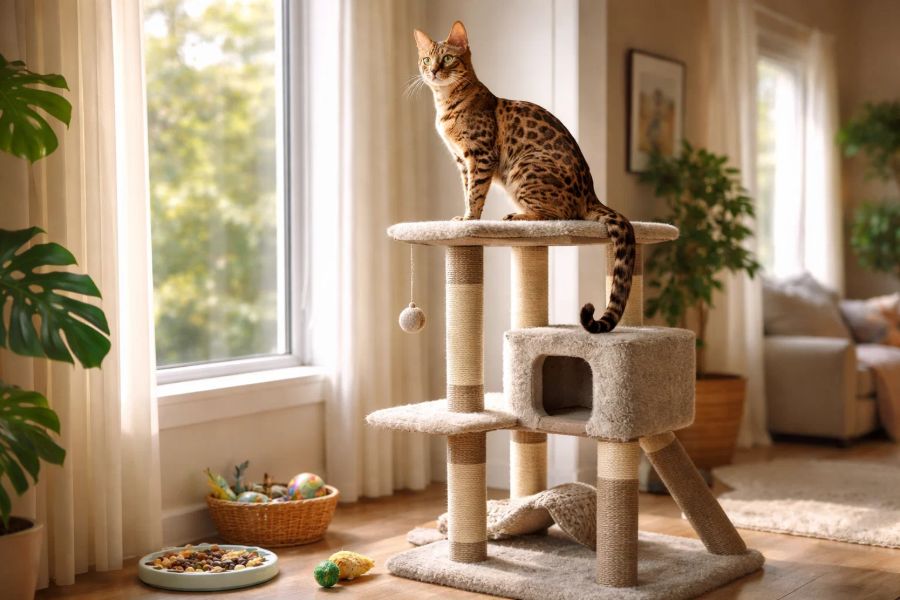
tall cat trees and climbing shelves
interactive wand play
food puzzles
safe exploration
consistent routines
training and socialization
A Savannah that does not receive enough enrichment can become frustrated, destructive or excessively demanding.
How Much Does a Savannah Cat Cost Per Year?
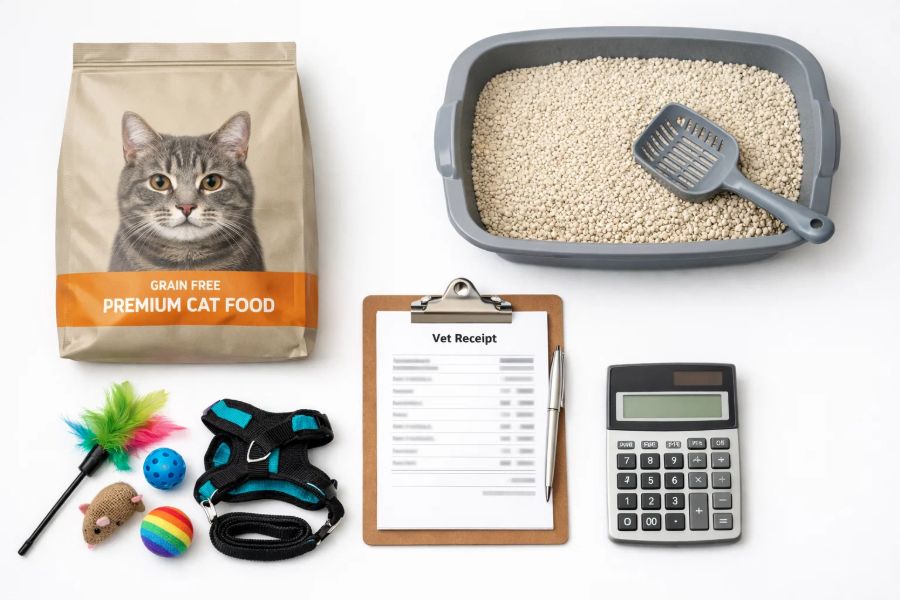
The purchase price is only the beginning. Actual annual spending varies by country, cat size, diet, insurance, veterinary costs and lifestyle, but owners should budget for more than routine food and litter.
| Expense | Typical planning range |
|---|---|
| Food | $500–$1,200+ per year |
| Litter | $200–$500+ per year |
| Routine veterinary care | $200–$600+ before emergencies |
| Insurance | Varies strongly by age, location and policy |
| Enrichment and replacement toys | $150–$500+ per year |
| Other supplies | Carriers, harnesses, climbing furniture, scratching equipment and replacements |
Unexpected illness, emergency treatment or chronic disease can increase costs far beyond these planning ranges.
Savannah Cat Health: What Should a Buyer Ask About?
No breeder can guarantee that a kitten will never become ill, but health screening can reduce avoidable inherited risk.
UC Davis Veterinary Genetics Laboratory lists Savannah cats among breeds appropriate for testing for erythrocyte pyruvate kinase deficiency, an autosomal-recessive condition that can cause hemolytic anemia.
Buyers should ask the breeder which genetic and veterinary screening is performed on the parents and request the actual results rather than accepting a vague statement that the lines are “fully health tested.”
Routine veterinary examinations are also important throughout life. Hypertrophic cardiomyopathy is the most common heart disease in cats generally, so breathing changes, exercise intolerance, collapse or unexplained lethargy require veterinary attention.
How to Avoid Savannah Cat Scams
High prices make Savannah kittens attractive targets for online scams. Before sending a deposit:
verify the breeder's real identity and location
ask for pedigree and registration information
request health-test documentation
use live video to see the actual kitten
ask to see the kitten's living environment
read the sales contract before payment
avoid sellers who pressure you to pay immediately
be cautious of unusually cheap early-generation kittens
confirm local legality yourself
TICA provides breeder listings and buyer resources that can be one useful starting point, although buyers should still perform their own due diligence.
Savannah Cat vs Bengal Cat
| Feature | Savannah | Bengal |
|---|---|---|
| Wild ancestor | African serval | Asian leopard cat |
| Typical early-generation price | Very high | Usually lower than F1–F2 Savannahs |
| Energy | Very high | High |
| Legal complexity | Can be substantial | Usually lower, but hybrid rules may still apply |
| Beginner fit | Usually poor in early generations | Often easier, but still demanding |
The best choice is not necessarily the more exotic-looking cat. Match the breed to your schedule, space, experience and local rules.
Savannah Cat vs Serval
A Savannah and a serval are not interchangeable. A Savannah is a recognized domestic hybrid breed; a serval is a wild African cat.
The serval has wild-species behavioral, housing and legal requirements. A later-generation Savannah is much closer to ordinary domestic-cat ownership, although it can still be unusually athletic and demanding.
Which Savannah Generation Is Best for Most Owners?
For many private households, F4 or F5 is the most practical starting point. These generations usually offer:
the long-legged spotted Savannah appearance
lower purchase prices than F1–F2
more predictable domestic-cat behavior
fewer legal complications in many jurisdictions
This does not mean every F4 or F5 is easy. Individual Savannahs can still be highly active, vocal, curious and demanding.
Frequently Asked Questions
How much is a Savannah cat in 2026?
A typical market range is roughly $1,500 to $20,000+, depending mainly on generation, breeder, pedigree and whether breeding rights are included. F1 cats are usually the most expensive.
How much does an F1 Savannah cat cost?
Many breeder-market guides place F1 Savannahs around $10,000–$20,000 or more. There is no official fixed price, so verify what is included and confirm the kitten's pedigree.
Are Savannah cats legal everywhere?
No. Laws vary by country and local jurisdiction, and some rules depend on generation. Always verify current government rules where you live before buying.
Can I own a Savannah cat in Singapore?
Singapore allows later-generation Savannahs but does not allow first- through fourth-generation Savannah crosses as pets. Importers must provide proof that the cat is at least F5 from the serval ancestor.
Can Savannah cats be imported into Australia?
No under current Australian rules. Savannah cats are wild-domestic hybrids and are not approved on Australia's Live Import List.
Is an F1 Savannah cat good for a first-time owner?
Usually not. F1 cats combine very high cost, intense activity and greater legal complexity. Later generations are generally more practical.
How long do Savannah cats live?
TICA lists Savannah life expectancy at about 12–15+ years. Individual lifespan depends on genetics, veterinary care, nutrition and environment.
Do Savannah cats need special health testing?
Responsible breeders should provide appropriate health-screening records. UC Davis specifically offers PK-deficiency genetic testing for Savannah cats.
Official and Reference Sources
Final Takeaway
Owning a Savannah cat in 2026 requires more planning than simply finding a kitten you like. F1–F2 cats are expensive, intense and legally complicated, while F4–F5 Savannahs are usually more practical for ordinary private owners. Check the law before paying a deposit, verify breeder and health records, and budget for years of enrichment and veterinary care. For most households, the best Savannah is not the generation with the most serval ancestry—it is the one that fits the owner's experience, home and legal situation.