The Estuarine Crocodile (Crocodylus porosus), often called the Saltwater Crocodile or “Saltie”, is the largest living reptile and one of the most powerful predators on Earth. Belonging to the family Crocodylidae and the genus Crocodylus, it is widely distributed across the tropical and subtropical coasts of the Indo–Pacific region. Estuarine Crocodiles inhabit rivers, estuaries, mangrove swamps and coastal waters, and are capable of long-distance movements at sea, making them one of the few crocodilians well adapted to brackish and marine environments.
Taxonomy and naming
The Estuarine Crocodile is classified within Class Reptilia, Order Crocodylia, Family Crocodylidae and Genus Crocodylus. The species name porosus refers to the numerous pits and pores in the skull and bony armour. The common name “Estuarine Crocodile” highlights its association with estuaries, while “Saltwater Crocodile” emphasises its ability to tolerate and live in saline waters. Across northern Australia and parts of Southeast Asia, it is widely known as the archetypal “Saltie” and is both feared and respected as a top predator.
Physical characteristics
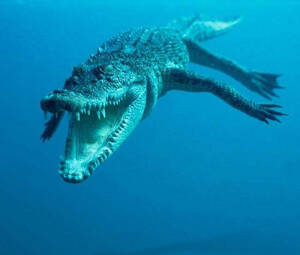
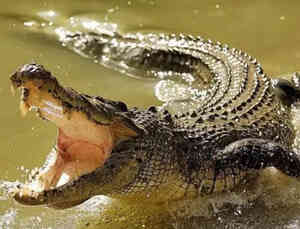
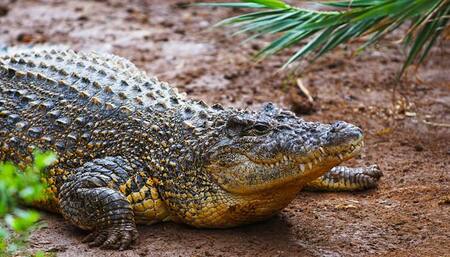
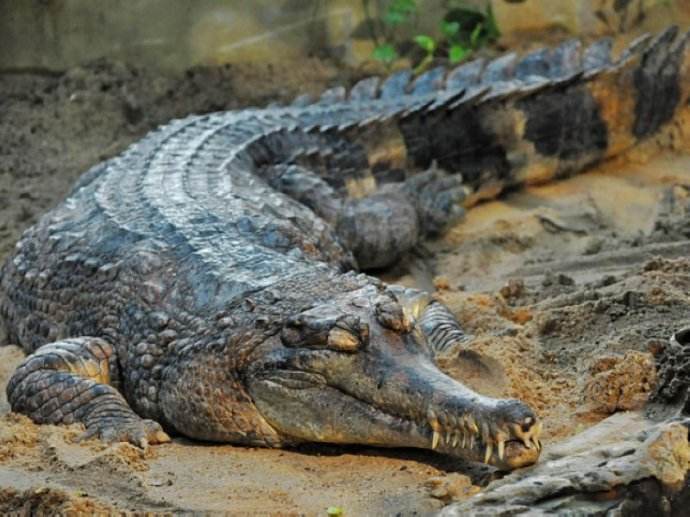
Estuarine Crocodiles are massive, heavy-bodied reptiles, with males far larger than females. Adult males commonly reach 4–5 m in length and can grow even larger, while females usually measure around 2.5–3 m. Large males may weigh several hundred kilograms or more, making this species the heaviest of all living crocodilians. The body is elongated with a very powerful, laterally flattened tail used for propulsion in the water. The head is broad with a relatively wide snout, and the jaws contain numerous sharp, conical teeth driven by an extraordinarily strong bite. The back and tail are covered with thick, ridged scutes forming a protective “armour”. Dorsal colouration is typically dark olive, grey-brown or brown with darker bands and mottling, whereas juveniles are brighter with yellow and black markings. The underside is pale cream to yellowish. The eyes and nostrils are positioned on the top of the head, allowing the crocodile to see and breathe while the rest of the body remains submerged.
Distribution and habitat
This species has a broad distribution across the Indo–Pacific, from the eastern coast of India and the Bay of Bengal through Southeast Asia (including Bangladesh, Myanmar, Thailand, Malaysia, Indonesia and Papua New Guinea) to northern Australia and some Pacific islands. It occupies a wide range of coastal and lowland aquatic habitats, especially estuaries, tidal rivers, mangrove forests, coastal lagoons, delta channels and the lower reaches of large rivers. Estuarine Crocodiles also enter freshwater lakes, floodplains and artificial waterways, and are capable of travelling long distances in offshore and nearshore marine waters, moving between river systems and islands.
Behaviour and lifestyle
Estuarine Crocodiles are primarily ambush predators. They spend much of their time lurking with only their eyes and nostrils above the surface, waiting motionless for suitable prey to approach. When an opportunity arises, they launch explosive attacks, using rapid bursts of speed to seize prey at the water’s edge or in the shallows. They are most active at dawn, dusk and during the night, and often bask along riverbanks or on mudflats during the day to regulate body temperature. Adult males are strongly territorial, particularly during the breeding season, and may display by bellowing, splashing the water with their tails and performing body postures to deter rivals. Their swimming ability is excellent, and they can travel stealthily through rivers and mangrove channels as well as undertake long-range movements along the coast.
Diet
The Estuarine Crocodile is an apex predator with a broad carnivorous diet. Hatchlings and juveniles feed mainly on insects, crustaceans, small fish and amphibians. As they grow, their prey range expands to include larger fish, waterbirds, turtles, other reptiles and medium to large mammals such as wild pigs, deer, cattle and water buffalo. They typically ambush prey in or near the water, seizing it in a powerful bite and dragging it under the surface to drown. Large prey items may be torn apart using the famous “death roll”, in which the crocodile spins violently while holding the victim. Estuarine Crocodiles also scavenge carrion and play a role as “clean-up” agents in aquatic ecosystems.
Reproduction and life cycle
Estuarine Crocodiles are oviparous. Breeding seasons vary regionally but often coincide with wet seasons and rising water levels. Females build mound nests of vegetation and mud on riverbanks, in mangrove clearings or beside freshwater swamps, usually above typical flood levels. Each clutch may contain several dozen eggs. After laying, the female guards the nest area, aggressively defending it from potential predators. Incubation duration depends largely on temperature and humidity. As hatching approaches, the calls of hatchlings prompt the female to open the nest and carry the young in her mouth to the water. Early mortality is high due to predation by birds, large fish and other crocodiles, so only a small fraction of hatchlings survive to adulthood. Growth is slow, but those that survive can live for many decades, with captive individuals known to exceed 60–70 years of age.
Relationship with humans
Because of their great size and strength, Estuarine Crocodiles are considered among the most dangerous crocodilians to humans. Attacks on people have been documented in several countries within their range, particularly where human activities such as fishing, washing and recreation bring people close to crocodile habitat. At the same time, the species is ecologically important as a top predator and scavenger, helping to maintain the health and balance of riverine and coastal ecosystems. Historically, heavy hunting for skins drastically reduced populations in many areas. Today, in countries such as Australia, Estuarine Crocodiles are legally protected, with controlled “crocodile management” programs and ranching/farming operations used both to supply leather and meat and to reduce conflict by removing problem individuals.
Conservation status and threats
On a global scale, the Estuarine Crocodile is generally listed as Least Concern due to its wide distribution and recovering or stable populations in many regions where hunting has been regulated. However, local populations still face threats from habitat loss and degradation, particularly the clearing and conversion of mangroves and wetlands, water pollution, illegal killing and retaliatory culling in response to attacks or perceived danger. Climate change, with associated sea-level rise and increased storm intensity, may influence nesting habitats and hatchling survival. Effective conservation requires strict regulation of hunting and trade, protection and restoration of key wetland and estuarine habitats, robust conflict mitigation strategies and community-based programmes that link crocodile conservation to sustainable livelihoods and ecotourism.