The Freshwater Crocodile (Crocodylus johnstoni), often called Johnstone’s Crocodile or simply the “Freshie”, is a medium-sized crocodilian native to northern Australia. Belonging to the family Crocodylidae and the genus Crocodylus, it is much smaller and more slender-snouted than the formidable Estuarine (Saltwater) Crocodile with which it shares part of its range. Freshwater Crocodiles are largely restricted to inland rivers, creeks and billabongs, where they function as important predators of fish and other aquatic animals.
Taxonomy and naming
The species is classified within Class Reptilia, Order Crocodylia, Family Crocodylidae and Genus Crocodylus. The scientific name Crocodylus johnstoni honours Robert Arthur Johnstone, an early explorer and naturalist associated with northern Australia. The common name “Freshwater Crocodile” highlights its preference for freshwater habitats and distinguishes it from the larger Estuarine or Saltwater Crocodile (Crocodylus porosus), which inhabits estuaries and coastal waters as well as some rivers.
Physical characteristics
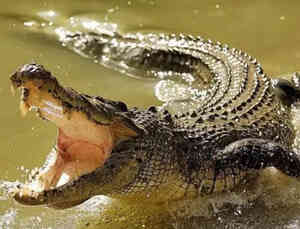
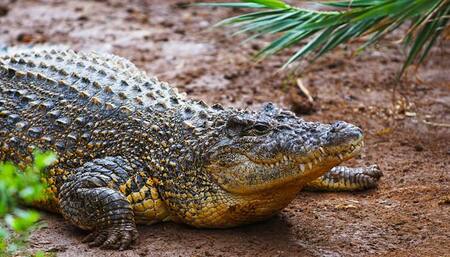
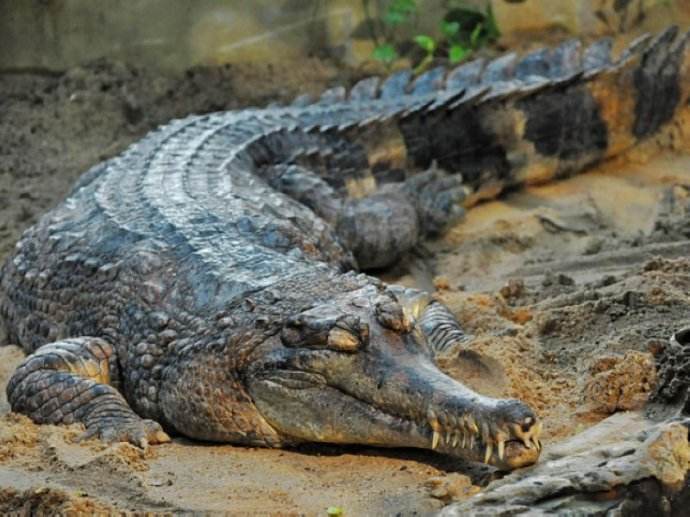
Freshwater Crocodiles are medium-sized compared with their saltwater relatives. Adult individuals typically measure around 2–3 m in total length, with males slightly larger than females. The most distinctive feature is the long, narrow snout, which is more slender and pointed than that of the Estuarine Crocodile and is well suited to catching fish and other small prey. The head and jaws are elongated, with the eyes and nostrils located towards the top of the head so the animal can see and breathe while most of the body remains submerged. The back and tail are covered in tough, ridged scutes forming protective armour. Dorsal colouration is usually olive-brown or grey-brown with darker spots or bands, while the underside is pale yellow or cream. Juveniles have more strongly contrasted patterns with dark bands and blotches.
Distribution and habitat
The Freshwater Crocodile is endemic to Australia and occurs mainly in the northern regions of Western Australia, the Northern Territory and northern Queensland. It inhabits freshwater environments such as slow-flowing rivers, rocky gorges, permanent and seasonal billabongs, floodplain lagoons and reservoirs. In contrast to the Estuarine Crocodile, which commonly uses tidal rivers and coastal habitats, Freshwater Crocodiles are most often associated with inland river systems and gorge pools, although the two species may occur within the same catchments in some areas.
Behaviour and lifestyle
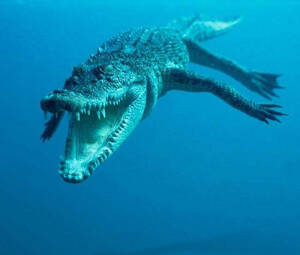
Freshwater Crocodiles combine ambush tactics with short bursts of pursuit. They often lie quietly at the water’s edge or just below the surface, waiting for fish, frogs or other animals to come within reach, then lunge forward with rapid snaps of the jaws and powerful tail strokes. Activity tends to peak at dusk, night and early morning, while during the day they are frequently seen basking on sandbanks, rocks or the edges of pools to regulate body temperature. In general, Freshwater Crocodiles are more wary and shy than Estuarine Crocodiles and usually retreat into the water when people approach, but they will defend themselves vigorously if cornered or handled.
Diet
The Freshwater Crocodile is a carnivorous predator. Hatchlings and small juveniles feed mainly on aquatic insects, crustaceans, small fish and tadpoles. As they grow, their diet broadens to include larger fish, freshwater crustaceans such as crayfish, frogs, reptiles and the occasional small bird or mammal that ventures close to the water. The long, narrow snout is particularly effective for snapping up slippery fish in clear pools and river channels. Freshwater Crocodiles also scavenge dead fish and other carcasses when available, helping to recycle nutrients in freshwater ecosystems.
Reproduction and life cycle
Freshwater Crocodiles are oviparous, laying eggs in nests constructed above typical water levels. Breeding season and nesting times vary with regional climate but are often linked to seasonal patterns of rainfall and river flow. Females dig burrows or scrape out nests in sandy or soft-soil banks, on river terraces or near the margins of billabongs, sometimes incorporating plant material. Clutch size usually consists of a dozen or so eggs, depending on the size and condition of the female. After laying, the female remains in the vicinity of the nest and may defend it against some predators. Incubation length is largely determined by temperature. As hatching approaches, the calls of the young prompt the female to open the nest and assist the hatchlings in reaching the water. As with other crocodilians, early mortality is high due to predation and environmental hazards, and only a small proportion of hatchlings survive to adulthood.
Relationship with humans
Compared with Estuarine Crocodiles, Freshwater Crocodiles are generally considered to pose a lower risk to humans. Most individuals are shy and avoid close contact, and serious attacks are rare. However, they remain wild predators with powerful jaws and sharp teeth and can inflict painful bites if provoked, harassed or handled. In many northern Australian national parks and gorge systems, Freshwater Crocodiles are a major drawcard for visitors, who can view them safely from lookouts, boats or designated swimming areas that are assessed as low risk.
Conservation status and threats
On the IUCN Red List, the Freshwater Crocodile is typically assessed as Least Concern, with populations considered stable across many parts of its range. Historical hunting and habitat disturbance did affect numbers, but legal protection and improved management have allowed substantial recovery in many areas. Present-day threats include changes to river flow regimes due to dams and water extraction, pollution, entanglement in fishing gear, and impacts from invasive species such as Cane Toads, which can poison crocodiles that attempt to eat them. Long-term conservation of the Freshwater Crocodile depends on maintaining natural river and wetland habitats, controlling invasive species, minimising pollution and managing tourism and recreation in ways that respect both human safety and the needs of this unique Australian crocodilian.