The southern brown bandicoot is a small marsupial from southern Australia that forages by probing with its snout and digging rapidly with strong foreclaws. It feeds on a mix of invertebrates, fungi and underground plant parts, leaving many small pits and churned patches that are a distinctive sign of its presence.
Because it turns over soil and leaf litter so frequently, it is often described as a “soil engineer.” This digging can improve aeration, water infiltration and nutrient cycling, and may help seeds and fungi disperse. In parts of mainland Australia, however, habitat fragmentation and predation by introduced foxes and feral cats can place strong pressure on local populations.
Taxonomy and naming
The species belongs to the order Peramelemorphia (bandicoots), family Peramelidae, genus Isoodon. The scientific name is Isoodon obesulus. In south‑western Australia the name “quenda” is often used for related short‑nosed bandicoot forms, and common names and taxonomic usage can vary between regions.
Physical features
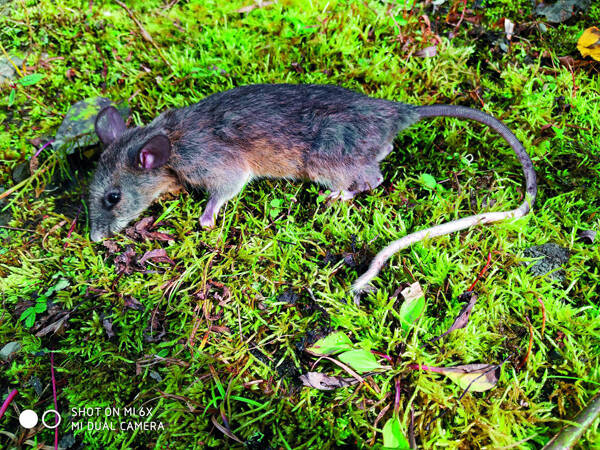
Southern brown bandicoots are compact and slightly humped, with brown to grey‑brown fur that often shows darker streaking on the back and sides and a paler underside. The head is wedge‑shaped with a short, pointed, sensitive snout that probes leaf litter and soil. Ears are rounded and relatively small. The forelimbs are strong and equipped with large digging claws; the tail is fairly short and sparsely furred. Females have a rear‑opening pouch, a useful adaptation that helps keep dirt out during excavation.
Range and habitat
The species occurs across parts of southern and south‑eastern Australia and is relatively common in Tasmania, while many mainland populations are patchy and fragmented. It prefers habitats with dense ground cover—scrub, heathland, forest edges, and understorey‑rich eucalypt woodlands—and it can also use wetland margins with thick grass and sedge cover. Shelter features such as leaf litter, fallen logs, and shrubs are essential for hiding by day and reducing predation risk at night.
Behavior and activity
Southern brown bandicoots are mostly nocturnal. They rest by day in concealed nests within grass tussocks, shrubs, root tangles or under fallen timber, then emerge after dark to forage. Individuals are often solitary and may defend core areas using scent marking and regular travel routes. Their constant foraging leaves many small diggings, which can be useful clues for monitoring.
Diet
They are opportunistic omnivores, commonly eating beetles and larvae, earthworms, spiders and other invertebrates, plus fungi, seeds, berries and underground roots or tubers. Diet composition shifts with season and moisture: fungi and invertebrates are often more available in wetter periods, while underground plant parts can become more important during dry conditions.
Reproduction and life cycle
Bandicoots are known for extremely short pregnancies, and this species is no exception, with gestation of roughly two weeks. Females typically produce 2–4 young per litter. The tiny newborns develop in the pouch first, then remain dependent while learning to forage and use cover within the mother’s home area. Although reproductive potential is high, juvenile survival can be low where predator pressure is intense or cover is limited, so population recovery often depends on good habitat structure and predator management.
Relationship with people
In suburban fringes and garden landscapes, their digging can benefit soil health but may be mistaken for “damage” when small pits appear in lawns. The most significant human‑related risks are vehicle strike and attacks by domestic dogs, especially during night‑time movement. Keeping pets under control, slowing down on roads in known habitat, and retaining native ground cover can reduce these impacts.
Conservation status and threats
Globally the species is commonly assessed as Least Concern (LC), but some mainland subspecies or regional populations can be listed as threatened under national or state frameworks. Key threats include habitat clearing and fragmentation, loss of dense ground cover, road mortality, and predation by introduced foxes and feral cats. Effective conservation focuses on protecting and restoring cover‑rich habitat mosaics, improving connectivity, reducing road‑kill in hotspots, and controlling key predators in priority areas.