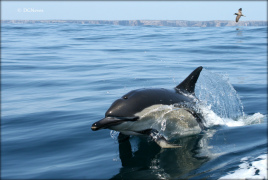
The striped dolphin is one of the most widespread and frequently encountered offshore dolphins. It is famous for its crisp body stripes, fast swimming, and strong social behavior, often bow‑riding, leaping, and surfing in a vessel’s wake. Large groups can appear suddenly in open water, creating dramatic surface displays.
As a mid‑level predator in pelagic food webs, the striped dolphin uses echolocation to locate prey in low light and deeper water. Although the species is generally considered common at a global scale, local pressures such as bycatch, underwater noise, contaminant buildup, and episodic disease events can still affect regional populations.
Taxonomy and naming
The striped dolphin is a toothed whale (suborder Odontoceti) in the oceanic dolphin family Delphinidae, genus Stenella. The scientific name is Stenella coeruleoalba. The common name refers to the bold dark stripes along the flank, and the species is sometimes nicknamed the “blue‑white dolphin” because of its blue‑grey back and pale underside.
Physical features
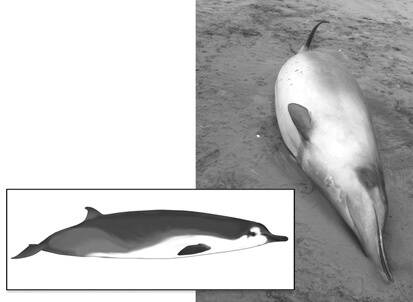
This is a sleek, streamlined dolphin with a long beak and a tall, slightly curved dorsal fin. The defining feature is the striping pattern: a dark band runs from the eye backward along the side, and additional dark stripes help separate the darker back from lighter flanks and a pale belly. The back is typically dark grey to blue‑grey, the sides are lighter, and the underside is whitish or very pale grey. Like many small dolphins, it has numerous small, sharp conical teeth for gripping fish and squid.
Range and habitat
Striped dolphins occur widely in temperate and tropical waters of all major oceans and are common in the Mediterranean. They are primarily offshore animals that favor deep water—continental slopes, seamount regions, and deep basins—where prey is often concentrated. Seasonal movements may track prey availability and oceanographic features such as fronts and upwelling zones. Compared with strictly coastal species, striped dolphins usually spend more time in open water, though they may approach nearshore routes or bay mouths in some regions.
Behavior and activity
Highly social and energetic, striped dolphins form groups that can range from dozens to hundreds of animals. They are fast swimmers and frequently breach, tail‑slap, and bow‑ride. Complex vocal and click repertoires help maintain group cohesion, coordinate movement, and support cooperative foraging. Some populations show repeated use of favored areas, especially where predictable prey and suitable oceanographic conditions occur.
Diet
They mainly eat small pelagic fish and cephalopods such as squid, and may also take crustaceans. Foraging can intensify at dusk or at night when prey migrates upward in the water column. Echolocation is used to detect and track prey in low‑visibility conditions.
Reproduction and life cycle
Breeding timing varies by region. Gestation is around a year and a single calf is typical. Calves remain closely associated with their mothers while learning to swim efficiently, breathe, and forage; nursing can last a year or more. Ages at sexual maturity vary and are influenced by growth rates and local environmental conditions.
Relationship with people
Striped dolphins are well known to sailors and whale‑watchers because they often interact with vessels. The greatest direct human threat is bycatch and entanglement in fishing gear, particularly in offshore fisheries. Underwater noise, pollution (including persistent contaminants and plastics), and disturbance in busy shipping corridors can also affect health and behavior.
Conservation status and threats
Globally, the striped dolphin is assessed as Least Concern (LC), but that does not mean all populations are free of risk. Key pressures include fisheries bycatch, noise and sonar disturbance, contaminant accumulation in blubber, disease outbreaks, and climate‑driven shifts in prey distribution. Effective management typically combines improved bycatch monitoring and mitigation, protection of important areas, noise‑risk reduction in hotspots, and long‑term health and strandings response programs.