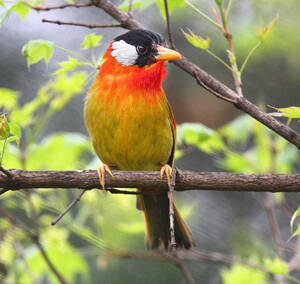
 LC
LC
Leiothrix argentauris
Leiothrix argentauris,Silver-eared Mesia,Yellow-billed Jade, Colorful Lovebird
Silver-eared Mesia has 9 subspecies.Silver-eared Mesia often moves alone or in pairs, and sometimes in groups, especially in autum···
Explore birds by lifestyle and ecological group, from waterfowl and waders to parrots, raptors, landfowl, and songbirds.

Use these shortcuts to move into more specific animal groups.
Songbirds are one of the six major ecological groups of birds. They belong to the order Passeriformes, with a wide variety of species, including 83 families. Birds that are good at singing. They can make melodious and beautiful sounds, so they are called songbirds. Songbirds are the most evolved group of birds, able to adapt to a variety of ecological environments. They are distributed in various provinces and cities in my country, and most of them are beneficial birds. Such as thrush, starling, lark, oriole, lovebird, canary, willow warbler, great tit, house swallow, etc. The entire Passeriformes is the order with the largest and most widely distributed species among birds. More than half of the living bird species in the world belong to songbirds.
Highly Developed Vocal Organs: Also known as “Oscines” or “songbirds,” these birds possess a complex syrinx (voice box) capable of producing varied and elaborate songs.
Perching Foot Structure: They typically have three toes forward and one toe backward (anisodactyl foot arrangement), allowing them to perch on branches and other narrow surfaces.
Body Size and Diversity: Most passerines are relatively small (e.g., finches, warblers, swallows), though some—like ravens in the crow family—are larger. They occupy a vast array of habitats, from forests and grasslands to deserts and urban areas.
Global Distribution: Over 6,500 species (around 50% of all bird species) are classified as passerines, making them the most numerous and geographically widespread of all bird orders (except for extremes like the polar regions and some remote islands).
Songbirds have a specialized syrinx with multiple muscles, enabling them to produce complex and melodic vocalizations.
Males often sing in the breeding season to establish territory and attract mates; in some species, intricate dances or visual displays complement vocal signals.
Passerines dominate many terrestrial bird communities, aiding in seed dispersal, controlling insect populations, and often serving as pollinators.
Many species (e.g., thrushes, orioles, larks) are prized for their songs, leading to their use as companion birds or in aviculture. Others thrive in urban or agricultural landscapes, becoming part of everyday human environments.
Origins and Radiation
The earliest ancestral forms of modern birds date to the late Cretaceous or early Paleogene (around 65–50 million years ago). Passerines diverged from these early lineages and rapidly diversified during the Paleogene and Neogene.
Through adaptive radiations, they evolved a huge range of feeding strategies, nesting habits, and ecological specializations across different continents.
Old World vs. New World Groups
Continental drift and climatic changes throughout the Cenozoic shaped passerine evolution. Many families diversified in Asia/Africa (Old World), while others emerged in the Americas (New World).
Molecular phylogenetics has revealed that birds once grouped under a single family on morphological grounds may, in fact, represent distinct families that diverged long ago under geographic isolation.
Suboscines vs. Oscines
Historically, passerines were divided into two broad categories: Suboscines (Tyranni) and Oscines (Passeri).
Suboscines generally have less complex syrinx musculature, producing relatively innate calls, whereas oscines (“true songbirds”) learn and refine their songs. Some classifications also highlight a small, distinct group from New Zealand (Acanthisitti).
Below is a simplified version of the modern molecular classification for songbirds. Since Passeriformes include numerous families, only major or representative families are highlighted for clarity. Note that ongoing research frequently revises relationships and taxonomic boundaries.
Primarily found in the Americas, with some exceptions in Africa/Asia. Their vocal apparatus is simpler; many have calls that are genetically fixed rather than learned.
| Family | Representative Genera | Example Species | Distribution & Notes |
|---|---|---|---|
| Tyrannidae (Tyrant Flycatchers) | Tyrannus (Kingbirds), Empidonax, etc. | Eastern Kingbird (Tyrannus tyrannus), etc. | The largest New World suboscine family, often called “flycatchers,” feeding mainly on flying insects. |
| Menuridae (Lyrebirds) | Menura (Lyrebirds) | Superb Lyrebird (Menura novaehollandiae), etc. | Endemic to Australia; famous for intricate vocal mimicry. Males have ornate, lyre-shaped tail feathers. |
| Oxyruncidae (Sharpbill) | Oxyruncus, etc. | Sharpbill (Oxyruncus cristatus), etc. | Rare, found in Central and South American rainforests; distinct, unusual calls. |
| Thamnophilidae (Typical Antbirds) | Thamnophilus, Myrmotherula, etc. | Barred Antshrike (Thamnophilus doliatus), etc. | A diverse Neotropical group often following army ant swarms to capture insects driven out by the ants. |
| (Other large suboscine families, e.g., Cotingidae, Pipridae, Formicariidae, etc., are not listed individually here due to their abundance.) |
More complex vocal apparatus, with males often learning elaborate songs. This is by far the largest group of passerines.
Pycnonotidae (Bulbuls)
Genera: Pycnonotus, Hypsipetes, etc.
Examples: Light-vented Bulbul (Pycnonotus sinensis), Red-whiskered Bulbul (Pycnonotus jocosus).
Primarily in Asia and Africa, known for varied vocal calls and adaptability to gardens, farmland, and forests.
Phylloscopidae (Leaf Warblers)
Genus: Phylloscopus (typical leaf warblers)
Examples: Pallas’s Leaf Warbler (Phylloscopus proregulus), Arctic Warbler (Phylloscopus borealis).
Small, insectivorous birds with strong migratory behavior across Eurasia.
Corvidae (Crows, Jays, Magpies)
Genera: Corvus (crows, ravens), Garrulus (Old World jays), Pica (magpies), etc.
Examples: Common Raven (Corvus corax), Eurasian Jay (Garrulus glandarius), Black-billed Magpie (Pica hudsonia).
Large, intelligent oscines, often with complex social structures; found worldwide.
Laniidae (Shrikes)
Genus: Lanius (typical shrikes)
Examples: Great Grey Shrike (Lanius excubitor), Red-backed Shrike (Lanius collurio).
Notable for predatory habits, impaling prey on thorns or barbed wire for storage.
Leiothrichidae / Timaliidae (Laughingthrushes, Babblers)
Genera: Garrulax, Leiothrix, etc.
Examples: Hwamei or Melodious Laughingthrush (Garrulax canorus), Red-billed Leiothrix (Leiothrix lutea).
Most diverse in tropical/ subtropical Asia; many have loud, varied vocalizations. Some are popular cage birds.
Hirundinidae (Swallows, Martins)
Genera: Hirundo, Delichon, Petrochelidon, etc.
Examples: Barn Swallow (Hirundo rustica), House Martin (Delichon urbicum).
Aerial insectivores with narrow wings, often nesting in colonies near human dwellings.
Fringillidae (Finches) / Emberizidae (Buntings) / Icteridae (New World Blackbirds) / Thraupidae (Tanagers), etc.
This vast complex includes many seed-eating passerines like goldfinches, crossbills, canaries, sparrows, and more.
Their taxonomy is frequently revised (e.g., Old World sparrows in Passeridae, American sparrows in Passerellidae, etc.) due to ongoing molecular studies.
Passeridae (Old World Sparrows)
Genus: Passer (typical sparrows)
Examples: House Sparrow (Passer domesticus), Eurasian Tree Sparrow (Passer montanus).
Closely associated with human settlements worldwide; feed mainly on seeds and grains.
(Additional large families not fully listed here include Sturnidae [Starlings], Muscicapidae [Old World flycatchers], Motacillidae [Wagtails & Pipits], Alaudidae [Larks], etc.)
Extensive Adaptive Radiation
Passerines underwent multiple waves of adaptive radiation from the early Paleogene onward, producing a vast variety of forms and lifestyles.
Molecular phylogenetics continues to refine our understanding of how these families relate to each other, often leading to the splitting or reassigning of traditional “large” families.
Ecological Importance and Conservation
As the most numerous avian order, songbirds play vital roles in seed dispersal, pollination, and insect regulation. They are also the most visible birds in urban and agricultural areas.
Habitat loss, climate change, and pollution (e.g., pesticides) threaten certain passerine populations. Some species (e.g., certain bulbuls, larks) are experiencing declines and require targeted conservation.
Close Ties with Humans
Many species are cherished for their songs or plumage, influencing literature, art, and the global birdwatching hobby.
Familiar urban dwellers like House Sparrows and Barn Swallows exemplify how human activity and avian ecology closely interact.
| Suborder | Family | Representative Genera (Example Species) | Distribution & Characteristics |
|---|---|---|---|
| Suboscines (Tyranni) | Tyrannidae (Tyrant Flycatchers) | Tyrannus, Empidonax, Myiarchus | New World distribution, “flycatchers” feeding on insects in flight |
| Thamnophilidae (Antbirds) | Thamnophilus, Myrmotherula | Neotropical forests, follow army ant swarms | |
| Menuridae (Lyrebirds) | Menura | Australian endemics, extreme vocal mimicry, ornate male tail feathers | |
| Oscines (Passeri) | Pycnonotidae (Bulbuls) | Pycnonotus, Hypsipetes | Asia & Africa, broad habitat tolerance, diverse calls |
| Corvidae (Crows, Jays, Magpies) | Corvus, Garrulus, Pica | Worldwide distribution, often large-bodied & intelligent | |
| Laniidae (Shrikes) | Lanius | Predatory perching birds that impale prey | |
| Leiothrichidae/Timaliidae (Babblers) | Garrulax, Leiothrix, etc. | Mainly tropical Asia; loud, varied songs | |
| Hirundinidae (Swallows, Martins) | Hirundo, Delichon, Petrochelidon | Aerial insectivores with forked tails, colonial nesters | |
| Fringillidae/Emberizidae/etc. | Fringilla, Carduelis, Passer (also see Passeridae) | Seed-eating birds like finches, sparrows, canaries, buntings; global variety | |
| Passeridae (Old World Sparrows) | Passer (typical sparrows) | Strong human association; feed on seeds and grains, widespread in towns & cities |
Through the above classification and introduction, you can have a clearer understanding of the overall status of "songbirds" in the modern bird system, representatives of each family and evolutionary history, and understand their important value in the ecosystem and human society. If you need to further refine the detailed information of each family, genus and species, it is recommended to refer to professional ornithology, molecular phylogenetic papers and regional bird watching manuals. I hope this information can present you with a detailed "songbird" classification.
Search the animals shown on this page or narrow them by IUCN conservation code.
LC
Leiothrix argentauris,Silver-eared Mesia,Yellow-billed Jade, Colorful Lovebird
Silver-eared Mesia has 9 subspecies.Silver-eared Mesia often moves alone or in pairs, and sometimes in groups, especially in autum···
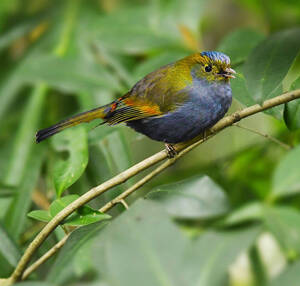 LC
LC
Liocichla omeiensis,Omei Shan Liocichla
The foreign name of the Gray-breasted Bush Babbler is Omei Shan Liocichla, and there is no subspecies.Deignan (1964) believed that···
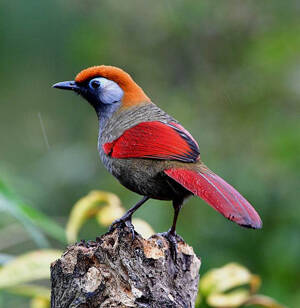 LC
LC
Garrulax milnei,Red-tailed Laughingthrush,Trochalopteron milnei,Red-tailed Laughing Babbler
Red-tailed Laughingthrush, also known as Red-tailed Laughingthrush, has 4 subspecies.Red-tailed Laughingthrush often moves in pair···
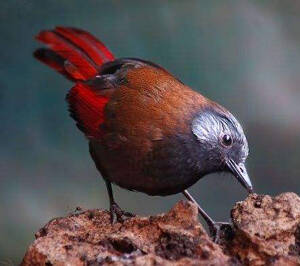 LC
LC
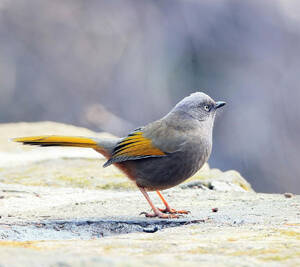
Garrulax formosus,Red-winged Laughingthrush
Red-winged Laughingthrush has two subspecies.Red-winged Laughingthrush often moves in pairs or small groups of several individuals···
 LC
LC
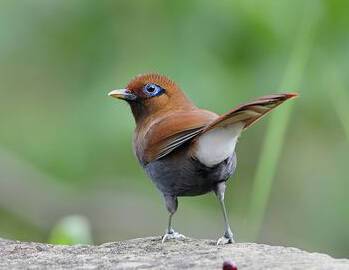
Trochalopteron elliotii,Elliot's Laughingthrush,Garrulax elliotii (Verreaux, 1870)
The orange-winged laughingthrush is also known as Elliot's Laughingthrush in English. It has two subspecies.In 2016, the Orang···
 LC
LC
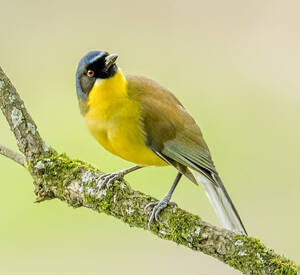
Pterorhinus berthemyi,Rusty Laughingthrush,Bamboo bird, Eight-tone bird
The foreign name of the brown babbler is Rusty Laughingthrush, and there are three subspecies. Dickinson (2003) divided the brown ···
 LC
LC
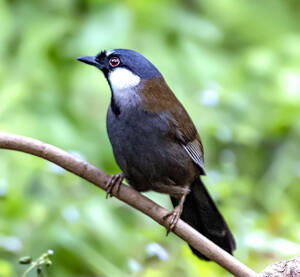
Pterorhinus courtoisi,Blue-crowned laughingthrush,Chinese Yellow-throated Laughingthrush, Blue-crowned Laughingthrush, Wuyuan Yellow-throated Laughingthrush, Blue-throated Laughingthrush
Blue-crowned laughingthrush is a small-bodied bird of the family Timalis, with no subspecies.There are dozens of species of Laughi···
 LC
LC
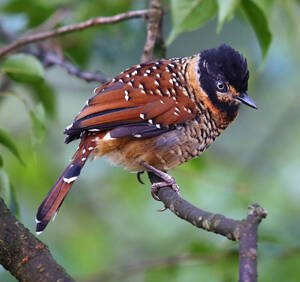
Garrulax chinensis,Pterorhinus chinensis,Black-throated Laughingthrush,,Dryonastes chinensisBlack-throated Laughing Thrush, Mountain Bird, Coral Bird
Black-throated Laughingthrush, also known as Black-throated Laughingthrush, has 5 subspecies.Black-throated Laughingthrush is a re···
 LC
LC
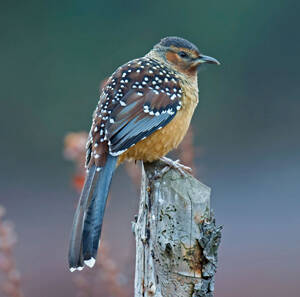
Ianthocincla ocellata,Garrulax ocellatus,Spotted Laughingthrush
Spotted Laughingthrush, also known as Spotted Laughingthrush, has 4 subspecies.Eye-striped Laughingthrush often moves in pairs or ···
 LC
LC
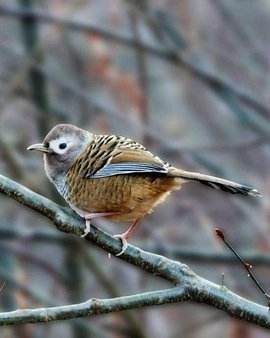
Ianthocincla maxima,Giant Laughingthrush,Garrulax maximus,Flower-backed Laughing Babbler
Giant Laughingthrush, foreign name, no subspecies.The Great Laughingthrush is smaller than the similar species, the Eye-striped La···
 LC
LC
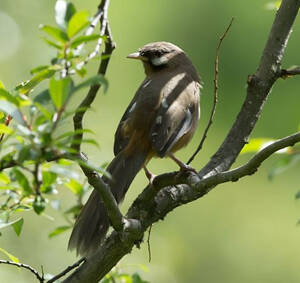
Garrulax lunulatus,Barred Laughingthrush,Ianthocincla lunulata
Barred Laughingthrush, also known as Barred Laughingthrush in English, is a medium-sized bird of the family Noctuidae and the genu···
 LC
LC
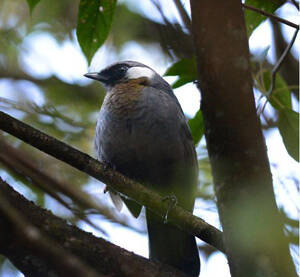
Garrulax sukatschewi,Snowy-cheeked Laughingthrush
Snowy-cheeked Laughingthrush, no subspecies.Black-cheeked Laughingthrush often moves in pairs, mostly foraging in the leaf litter ···
 LC
LC
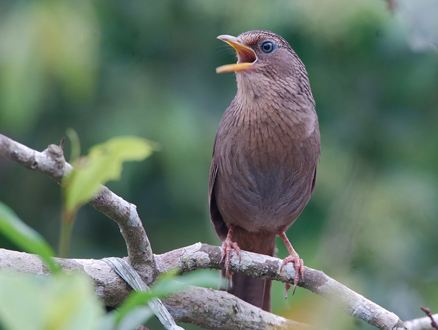
Garrulax maesi,Grey Laughingthrush,Red-eared Laughingthrush
Grey Laughingthrush is known as Grey Laughingthrush in English and has 3 subspecies.Grey Laughingthrush often hides in the dense u···
 LC
LC
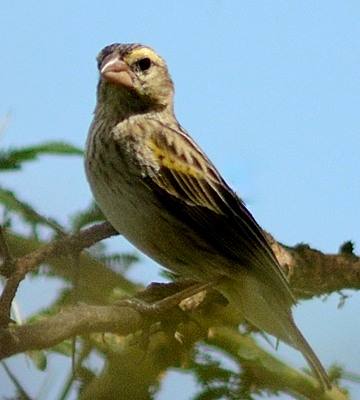
Garrulax taewanus,Taiwan Hwamei
Taiwan Hwamei, no subspecies.Taiwan Hwamei males are very territorial, and the territory they occupy will not be invaded by males ···
 LC
LC
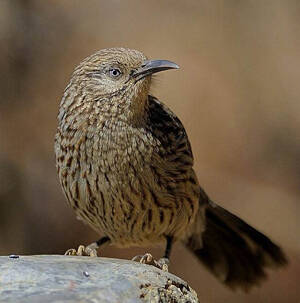
Babax koslowi,Tibetan Babax,Pterorhinus koslowi
The brown babbler's foreign name is Tibetan Babax, and there are two subspecies.The brown meadowlark and the speared meadowlar···
 LC
LC
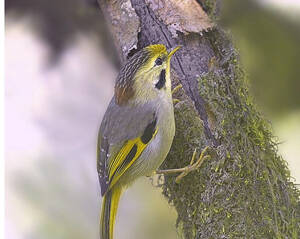
Babax waddelli,Giant Babax
Giant Babax, also known as Giant Babax, has two subspecies.Except during the breeding season, Giant Babax often moves in small gro···
 LC
LC
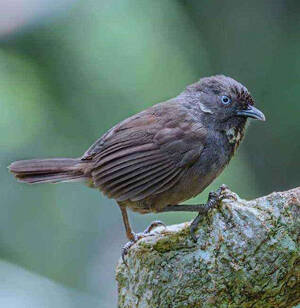
Pseudominla variegaticeps,Gold-fronted Fulvetta,Schoeniparus variegaticeps
Gold-fronted Fulvetta is a species endemic to central and southern China.Gold-fronted Fulvetta was discovered and named by Mr. Ren···
 LC
LC
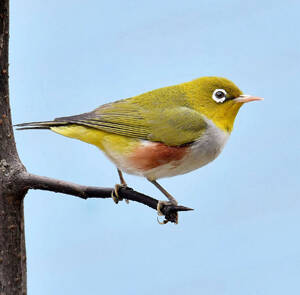
Stachyris nonggangensis,Nonggang Babbler,
Nonggang Babbler, with no subspecies.In 2004, Professor Zhou Fang of the College of Animal Science and Technology of Guangxi Unive···
 LC
LC
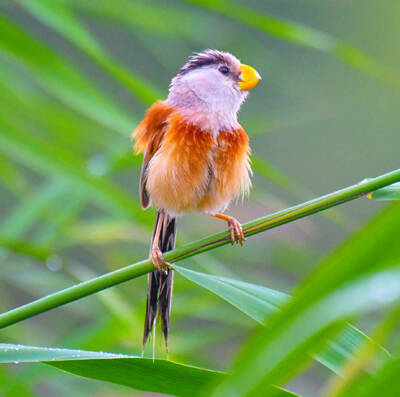
Zosterops erythropleurus,Chestnut-flanked White-eye,White eyes, pink eyes, brown eyes, red eyes with white eyes, red eyes with pink eyes
Chestnut-flanked White-eye, no subspecies.Chestnut-flanked White-eye often moves alone, in pairs or in small groups. They like to ···
 LC
LC
Calamornis heudei,Reed Parrotbill,Paradoxornis heudei David, 1872
The Chinese Parrotbill is a rare bird species in China with 2 subspecies.The Chinese Parrotbill is a bird with great research valu···
 LC
LC
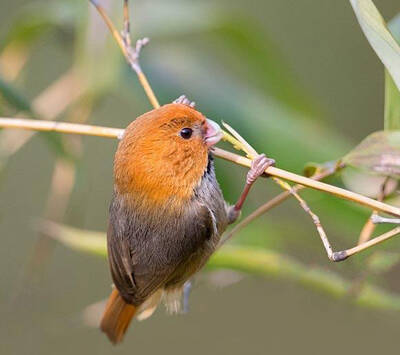
Neosuthora davidiana,Short-tailed Parrotbill,Paradoxornis davidianus,Hanging mound parrot
Short-tailed Parrotbill is a small bird of the Warbler family and Parrotbill genus. It has three subspecies.The similar species of···
 LC
LC
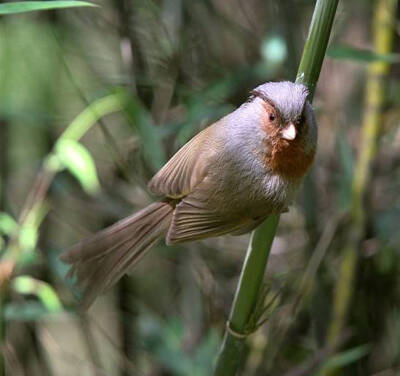
Sinosuthora przewalskii,Rusty-throated Parrotbill,Paradoxornis przewalskii
Rusty-throated Parrotbill is a small bird of the family Oriole and the genus Parrotbill, with no subspecies. The Grey-crowned Parr···
 LC
LC
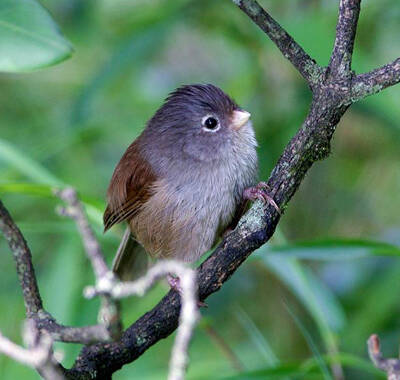
Sinosuthora zappeyi,Grey-hooded Parrotbill,Paradoxornis zappeyi
Grey-hooded Parrotbill is a small bird of the Parrotbill family and Parrotbill genus. It has two subspecies.The main difference be···
 LC
LC
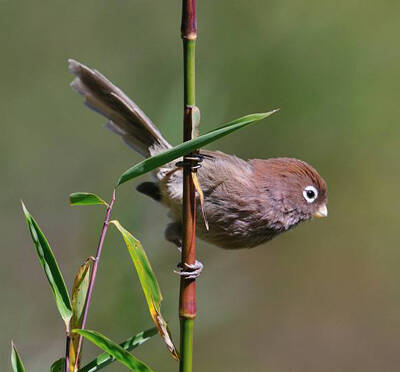
Sinosuthora conspicillata,Spectacled Parrotbill,Paradoxornis conspicillatus
Spectacled Parrotbill, also known as Spectacled Parrotbill in English, is a small bird of the Warbler family and Parrotbill genus,···