 LC
LC
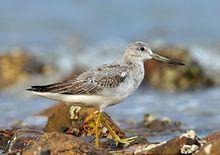
Tringa guttifer
Tringa guttifer,Spotted Greenshank,Nordmann's GreenshankNordstrom's Snipe
Spotted Greenshank is a small wading bird with no subspecies.The little greenshank is a rare traveler in China. Spring is more tha···
Explore birds by lifestyle and ecological group, from waterfowl and waders to parrots, raptors, landfowl, and songbirds.

Use these shortcuts to move into more specific animal groups.
Wading birds are one of the six major ecological groups of birds, including Gruiformes, Ciconiiformes, Phoenicopterus and Charadriiformes. They refer to birds that are adapted to living by the water (all wetland water birds), and belong to one of the six major ecological groups of birds. When resting, they often stand on one foot, and most of them get food from the bottom of the water, mud or the ground. They include cranes, storks, ibis, bustards, spoonbills, etc.
Shallow-Water Activity: Wading birds typically inhabit shallow water, mudflats, wetlands, or marshes, using relatively long legs to walk and forage in shallow areas.
Morphological Adaptations: They often have elongated legs, necks, and bills, enabling them to hunt or feed on fish, crustaceans, mollusks, insects, or vegetation in shallow water or wetland habitats.
Wide Distribution: Wading birds appear worldwide, found in lakes, estuaries, tidal flats, and even salt lakes. Many species undertake long-distance migrations, occurring on multiple continents.
Breeding and Behavior: Most nest in shoreline areas, marshes, or mudflats; some breed in colonies. Certain species have unique courtship displays, calls, or gregarious habits.
Many well-known groups such as storks, herons, cranes, plovers, sandpipers, and flamingos can be considered waders (or at least show wader-like habits).
They fulfill vital roles in wetland and coastal ecosystems (e.g., controlling invertebrate populations, dispersing seeds, and forming important links in the food web).
Broader Avian Context
Birds originated from theropod dinosaurs and had diversified substantially by the Late Cretaceous. Over geological time, various lineages adapted to shallow water or wetland environments.
Long legs, long bills, specialized feeding/breeding behaviors, and other wader-like traits evolved multiple times independently (convergent evolution).
Dispersed Across Multiple Orders
Storks (Family Ciconiidae) are typically placed in Ciconiiformes.
Herons and ibises (Ardeidae, Threskiornithidae) are now often placed in Pelecaniformes alongside pelicans, rather than with storks.
Cranes (Gruidae) belong to Gruiformes, not closely related to storks/herons, yet they occupy similar wetland niches.
Some members of Charadriiformes (plovers, sandpipers, avocets) are also classic waders.
Flamingos (Phoenicopteridae) constitute Phoenicopteriformes, recognized as a distinct lineage yet often called waders because of their shallow-water feeding style.
Traditional classifications grouped storks, herons, cranes, etc., under orders like “Ciconiiformes” or “Pelecaniformes.” Flamingos were sometimes placed in a separate order.
With advances in molecular data, many of these families have been reclassified. For example:
Relationship with Wetlands and Humans
Wetlands are crucial for wader breeding and foraging. Human activities such as draining wetlands, pollution, or overharvesting resources pose serious threats to these birds.
Many wading species are migratory, requiring international cooperation for their conservation (e.g., partnerships in the East Asian–Australasian Flyway).
Below is a summary of key orders and families commonly labeled as “waders,” with prominent genera and example species. Note that some families once grouped together have been rearranged according to modern molecular studies. Nonetheless, their similar ecology and morphology justify listing them here for reference.
| Family | Representative Genera | Example Species | Notes |
|---|---|---|---|
| Ardeidae (Herons, Egrets, Bitterns) | Ardea (Herons), Egretta (Egrets), Nycticorax (Night Herons), etc. | Grey Heron (Ardea cinerea), Great Egret (Egretta alba), Black-crowned Night Heron (Nycticorax nycticorax), etc. | Long legs and necks, typically hunt fish/amphibians in shallow water; may form nesting colonies (“heronries”). |
| Threskiornithidae (Ibises, Spoonbills) | Threskiornis (Ibises), Plegadis (Glossy Ibises), Platalea (Spoonbills) | Sacred Ibis (Threskiornis aethiopicus), Glossy Ibis (Plegadis falcinellus), Black-faced Spoonbill (Platalea minor), etc. | Often have curved or spatulate bills for probing in shallow waters. Many nest colonially in wetland habitats. |
Note: Historically, herons and ibises were sometimes placed in “Ciconiiformes.” Modern molecular data commonly group them in Pelecaniformes.
| Family | Representative Genera | Example Species | Notes |
|---|---|---|---|
| Ciconiidae (Storks) | Ciconia (Storks), Mycteria (Wood Storks), Leptoptilos (Marabou Storks), etc. | White Stork (Ciconia ciconia), Painted Stork (Mycteria leucocephala), Lesser Adjutant (Leptoptilos javanicus), etc. | Large-bodied waders with strong bills, foraging in wetlands/grasslands; nest on treetops or cliffs. |
Note: Some classifications once placed storks, herons, and ibises all under one order. In current systems, storks (Ciconiidae) are often recognized as a distinct order (Ciconiiformes), with herons and ibises now under Pelecaniformes.
| Family | Representative Genera | Example Species | Notes |
|---|---|---|---|
| Phoenicopteridae (Flamingos) | Phoenicopterus (e.g., Greater Flamingo) | American Flamingo (Phoenicopterus ruber), Chilean Flamingo (Phoenicopterus chilensis), etc. | Long legs and necks; specialized bent bills for filter-feeding on algae and invertebrates in saline lagoons. |
| Family | Representative Genera | Example Species | Notes |
|---|---|---|---|
| Gruidae (Cranes) | Grus (Cranes), Anthropoides, etc. | Red-crowned Crane (Grus japonensis), Common Crane (Grus grus), etc. | Large waders with long legs/necks, living in wetlands/grasslands; many are migratory and some are endangered. |
| Rallidae (Rails, Coots)*semi-aquatic | Gallinula (Moorhens), Fulica (Coots), Rallus (Rails), etc. | Eurasian Coot (Fulica atra), White-breasted Waterhen (Amaurornis phoenicurus), etc. | Generally small to medium-sized wetlands birds, adept at moving through dense vegetation, sometimes called “marsh birds.” |
| Family | Representative Genera | Example Species | Notes |
|---|---|---|---|
| Charadriidae (Plovers) | Charadrius (Plovers), Pluvialis (Golden Plovers), etc. | Kentish Plover (Charadrius alexandrinus), Grey Plover (Pluvialis squatarola), etc. | Small to medium-sized waders with short bills, often feeding on invertebrates in mudflats/shallow water. Highly migratory. |
| Scolopacidae (Sandpipers, Snipes, Phalaropes) | Tringa (Shanks), Calidris (Stints), Gallinago (Snipes), etc. | Common Redshank (Tringa totanus), Ruddy Turnstone (Arenaria interpres), Semipalmated Sandpiper (Calidris pusilla), etc. | A diverse family of long-billed, long-legged waders frequenting coasts, wetlands, and river edges. |
| Recurvirostridae (Avocets, Stilts) | Recurvirostra (Avocets), Himantopus (Stilts) | Pied Avocet (Recurvirostra avosetta), Black-winged Stilt (Himantopus himantopus) | Notable for very long legs and upward-curved or straight slender bills; often seen in shallow salt ponds. |
| Phalaropodidae (Phalaropes)* sometimes merged in Scolopacidae | Phalaropus (Phalaropes) | Red-necked Phalarope (Phalaropus lobatus), etc. | Unique small waders that often spin on the water’s surface to stir up food; found in high latitudes and coastal areas. |
Note: Phalaropes are sometimes treated as a subfamily within sandpipers (Scolopacidae) or as a separate family.
Multiple Origins and Convergence
“Waders” do not represent a single evolutionary lineage; rather, many avian orders independently adapted to shallow-water habitats, converging on features such as long legs/neck/bill.
This demonstrates how different lineages fill similar ecological niches in wetland habitats around the globe.
Ecological Importance and Conservation
Many waders help regulate invertebrate populations, recycle nutrients, and disperse seeds in aquatic environments.
Wetland loss, drainage, pollution, and climate change pose significant threats. Because many waders undertake long migrations, international cooperation is critical for conservation.
Dynamic Taxonomy and Birdwatching Significance
Advances in molecular phylogenetics frequently revise the classification of these families and orders. New data clarify true evolutionary relationships among “wading birds.”
For birders and educators, recognizing key family traits and habitat requirements aids in appreciating wetland ecology and promoting the protection of these water-associated species.
This summary offers a preliminary classification framework and evolutionary background for the ecological grouping we call “wading birds.” For further details on specific families, genera, or species, consult specialized ornithological guides, scientific publications, or regional bird-monitoring data.
Search the animals shown on this page or narrow them by IUCN conservation code.
LC
Tringa guttifer,Spotted Greenshank,Nordmann's GreenshankNordstrom's Snipe
Spotted Greenshank is a small wading bird with no subspecies.The little greenshank is a rare traveler in China. Spring is more tha···
 LC
LC
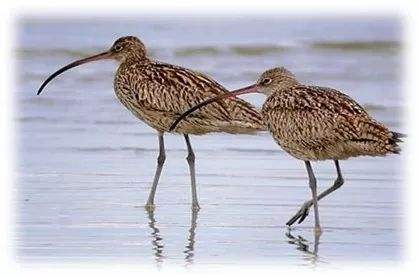
Numenius madagascariensis,Far Eastern Curlew,Redback Snipe, Redback Snipe, 黦 Snipe, Hausen
The foreign name is Far Eastern Curlew, and there are no subspecies.Curlews are mainly travellers in China. Some breed in northeas···
 LC
LC
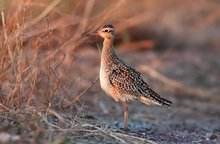
Numenius minutus,Little Curlew,Little old oil can
Little Curlew is a small wading bird with no subspecies.The curlew usually moves mostly alone or in small groups, but it also join···
 LC
LC
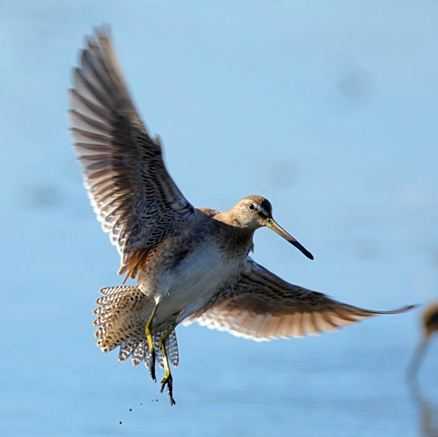
Limnodromus semipalmatus,Asian Dowitcher, Asiatic Dowitcher,Limnodrome semipalmé
The semi-webbed snipe (ban p Giryu), also known as Asian Dowitcher, is a small wading bird.They live alone or in small groups. Sex···
 LC
LC
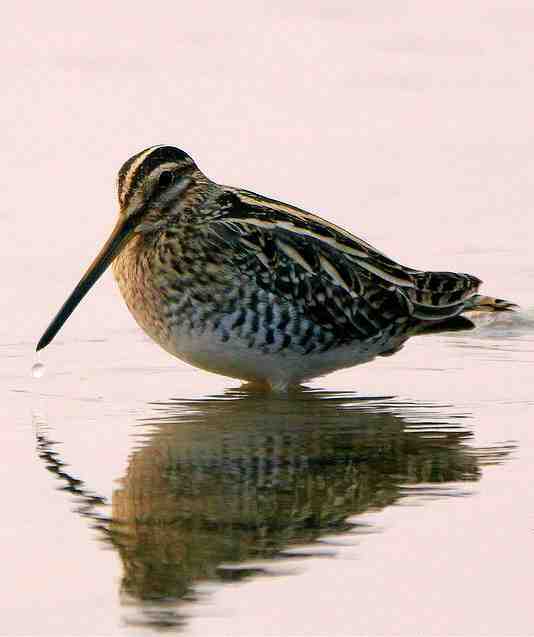
Gallinago nemoricola,Wood Snipe
Wood Snipe, small wading bird, no subspecies.It is timid and withdrawn, often living alone on the banks of forests and rivers and ···
 LC
LC
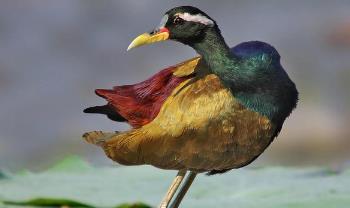
Metopidius indicus,Bronze-winged Jacana
Bronze-winged Jacana is a small wading bird with no subspecies.Copper-winged pheasant is a resident bird, active during the day, m···
 LC
LC
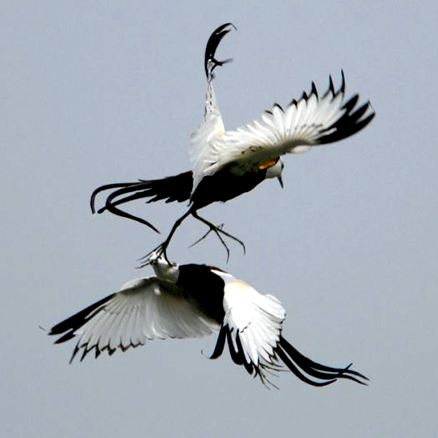
Hydrophasianus chirurgus,Pheasant-tailed Jacana,Pheasant-tailed pheasant-tailed pheasant
Pheasant-tailed Jacana is a small to medium sized bird with no subspecies.Water pheasants prefer to live alone or in small groups,···
 LC
LC
Vanellus gregarius,Sociable Lapwing, Sociable Plover,Vanneau sociable,Chettusia gregaria ssp. gregaria,lar and Andrew,Chettusia gregaria ssp. gregaria,amp and Simmons,Long legged lapis
The Sociable Lapwingm is a medium-sized wading bird.Yellow-cheeked laphens are migratory birds with great flying abilities. They i···
 LC
LC
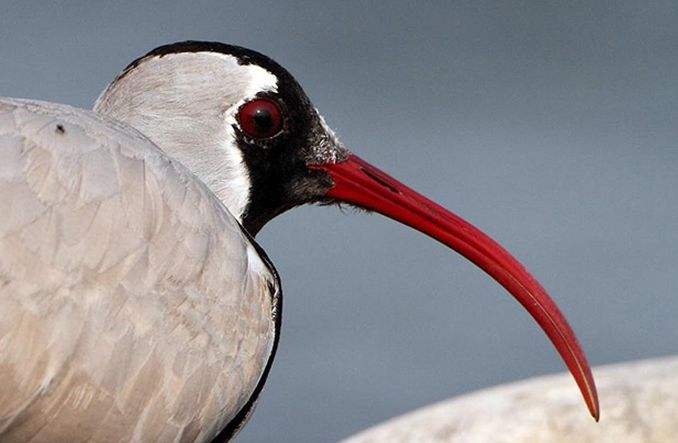
Ibidorhyncha struthersii,Ibisbill
Ibisbill is a gray, black and white sandpiper with no subspecies.Ibisbill is a resident and vertical migratory bird. They often mo···
 LC
LC
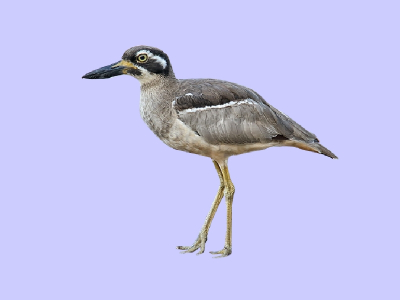
Esacus magnirostris,Great Thick-knee
Great Thick-knee is a medium-sized wading bird with no subspecies.Great Thick-knee is a coastal bird that usually moves alone or i···
 LC
LC
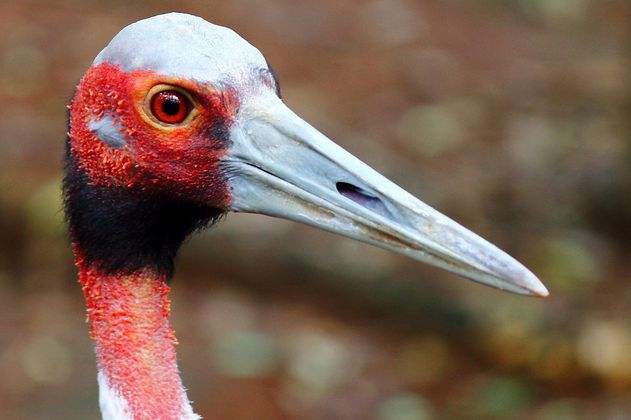
Grus antigone,Sarus Crane
Sarus Crane is a large wading bird with three subspecies.Sarus Crane often moves alone or in pairs or family groups. In autumn and···
 LC
LC
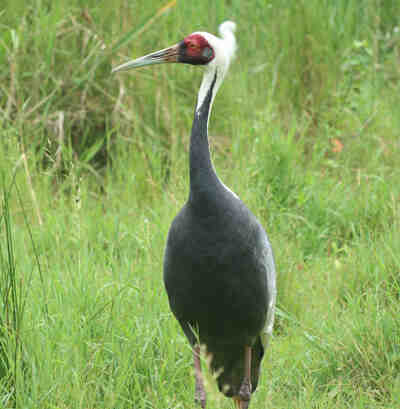
Grus vipio,White-naped Crane, red-faced crane, white-crowned crane, native crane
White-naped Crane is a large wading bird with no subspecies.White-naped Crane mainly feeds on plant seeds, grass roots, young leav···
 LC
LC
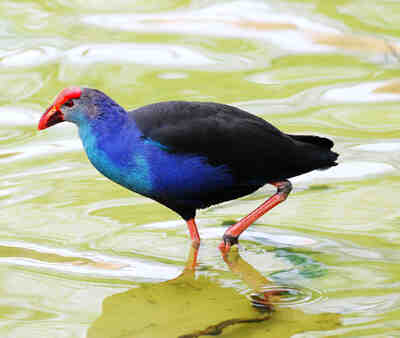
Porphyrio porphyrio,Purple Swamphen, Purple Gallinule, Purple Swamp-Hen,Poule sultane
Purple moorhen is called pukeko in foreign language. It is a medium-sized wading bird with 13 subspecies.Purple moorhen often move···
 LC
LC
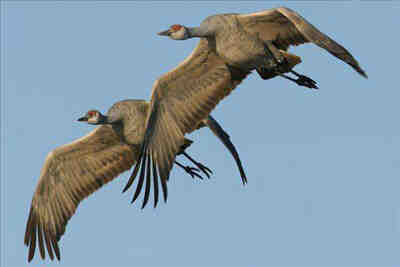
Grus canadensis,Brown Crane, Canada Crane
Sandhill Crane is a large wading bird with the largest number of cranes in the world. It is divided into 6 subspecies with a total···
 LC
LC
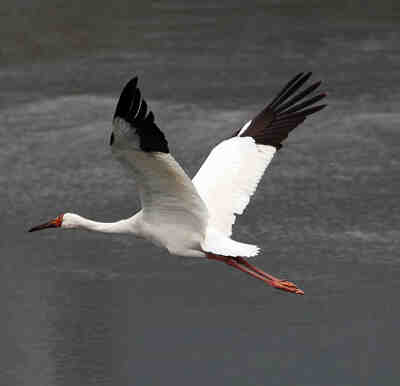
Grus leucogeranus,Siberian Crane ,Siberian White Crane, Snow Crane,Siberian Crane, Nun Crane, Snow Crane
The Siberian Crane is a large wading bird. Although it is divided into three populations, namely the eastern, central and western ···
 LC
LC
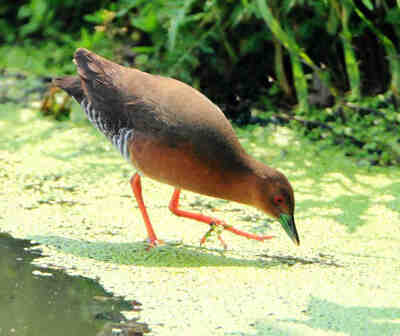
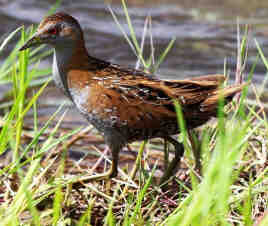
Porzana paykullii,Band-bellied Crake
Band-bellied Crake, whose foreign name is Band-bellied Crake, is a small wading bird with no subspecies.Spotted frogs migrate to N···
 LC
LC
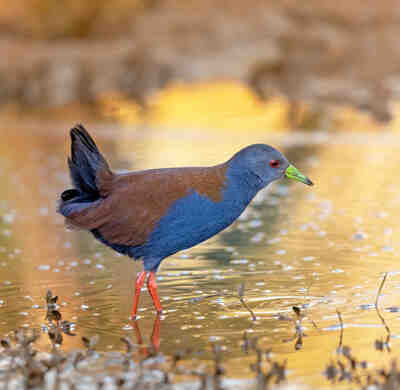
Zapornia parva,Porzana parva,Little Crake
Little Crake is a small wading bird with no subspecies.The frog often moves alone or in family groups. It is good at swimming and ···
 LC
LC
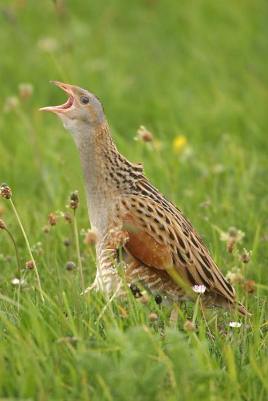
Zapornia bicolor,Black-tailed Crake,Amaurornis bicolor,Porzana bicolor,Black-tailed bittern
The brown-backed frog is called Black-tailed Crake in foreign language, and has no subspecies.The brown-backed frog is a resident ···
 LC
LC
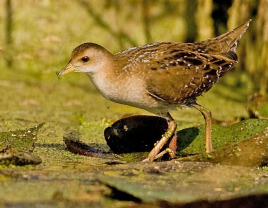
Crex crex,Corncrake, Corn Crake
The foreign name of the long-legged rail is Corncrake, Corn Crake, which is a small wading bird with no subspecies.The long-legged···
 LC
LC
Coturnicops exquisitus,Swinhoes Yellow Rail
The foreign name of the Swinhoes Yellow Rail is Swinhoes Yellow Rail, and there is no subspecies.Some of the Swinhoes Yellow Rail ···
 LC
LC
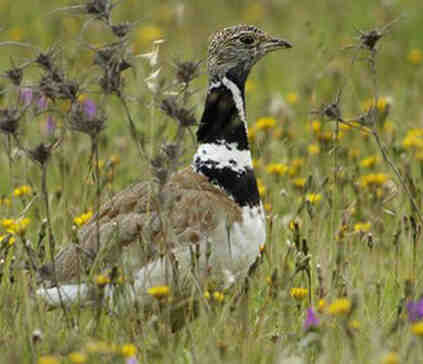
Tetrax tetrax, Little Bustard,Outarde canepetière, Sisón,Ground
Little Bustard, also known as Little Bustard in English, is a large bird of the family Bustard, with no subspecies.Little Bustards···
 LC
LC
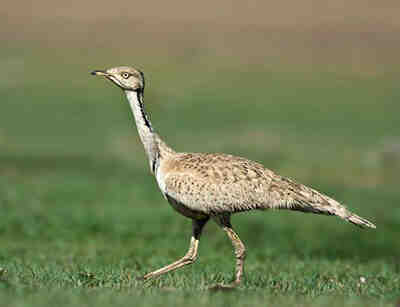
Spotted Bustard、Chlamydotis macqueeni,Macqueen's Bustard
Houbara Bustard, also known as Macqueen's Bustard, has no subspecies. A large ground-dwelling bird, once a subspecies of the R···
 LC
LC
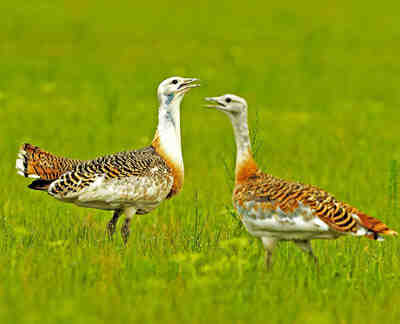
Otis tarda,Great Bustard,Avutarda, Avutarda Común,Додук, Մեծ արոս, Дуадақ,Ground quail, old brocade, lone leopard, wild goose
The Great Bustard has two subspecies, both of which are distributed in China. The common subspecies breeds in Qiqihar, Heilongjian···
 LC
LC
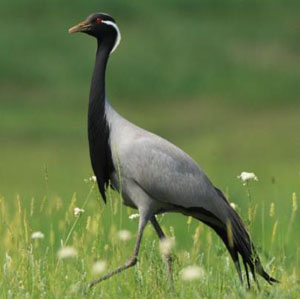
Anthropoides virgo,Demoiselle Crane,Lady Crane
The Demoiselle Crane is the smallest crane. It is blue-gray in color, with black eyes, sides of the head, throat and front neck. T···