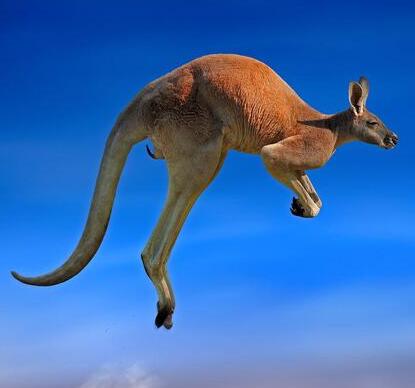
 LC
LC
kangaroo
Kangaroo (English: kangaroo, ganguro) is a mammal belonging to the genus Macropodidae, family Macropodidae, order Diprotodonta. Th···
Explore mammals from tiny bats and rodents to primates, carnivores, ungulates, whales, and elephants. Each profile connects core facts with habitat, lifespan, traits, and conservation information.

Use these shortcuts to move into more specific animal groups.
Soricomorpha was once a commonly used classification unit in mammal classification, including shrews, moles and other animals. However, with the in-depth study of molecular phylogenetics in recent years, the traditional "Shrews" has been confirmed to be a paraphyletic group (i.e., from multiple different evolutionary branches), and its classification has been basically integrated into the more recognized "Eulipotyphla" today.
The context of historical classification changes:
Old classification (Insectivora): In the past, mammals had the "Insectivora" (Insectivora), including hedgehogs, shrews, moles, springtails, and beautiful mice. However, molecular studies have found that the Insectivora is a highly paraphyletic group, not a valid group of monophyletic origin.
The proposal of "Soricomorpha" (Soricomorpha): In order to correct the paraphyletic problem within the Insectivora, some taxonomists separated the hedgehogs into the "Erinaceomorpha" (Erinaceomorpha), while the shrews, moles, rock moles, fluke hedgehogs, and big-toed shrews were merged into the "Soricomorpha" (Soricomorpha). However, further molecular studies still show that the order Shrews is not strictly monophyletic.
Current classification (Eulipotyphla): Recent widely supported molecular systematic studies (such as Roca et al. and other molecular biological studies) have reclassified hedgehogs as a monophyletic group with shrews, moles, and shrews (Solenodontidae), namely "Eulipotyphla". This means that the traditional Soricomorpha is no longer an independent and valid order-level taxonomic unit, but is incorporated into Eulipotyphla, which includes the family Erinaceidae.
I. Introduction to Eulipotyphla (formerly including “Soricomorpha”)
1. General Characteristics:
Members are typically small to medium-sized, primarily insectivorous mammals with a generally elongated snout.
Many have poor eyesight but rely on acute hearing and smell. Some species have unique foraging adaptations, such as the tactile star-shaped nasal appendage in star-nosed moles.
They inhabit a wide range of environments including forests, grasslands, underground burrows, and island ecosystems.
2. Diversity and Distribution:
Eulipotyphla comprises around 450 species worldwide.
Except for Antarctica, Australia, and parts of South America, these animals are found on most continents and numerous islands.
3. Evolutionary History:
Historically, many small, insect-eating mammals were grouped together in the order Insectivora, which was later found to be polyphyletic.
“Soricomorpha” was proposed to separate hedgehogs (Erinaceomorpha) from shrews, moles, and relatives. However, further molecular studies revealed that hedgehogs, shrews, moles, and solenodons form a single clade: Eulipotyphla.
Fossil records trace these lineages back to the Paleogene, and the group likely experienced widespread adaptive radiation following the Cretaceous-Paleogene boundary.
The Modern Consensus:
Under current taxonomy, the families traditionally associated with Soricomorpha (Soricidae, Talpidae, Solenodontidae) are included within the Eulipotyphla, together with hedgehogs (Erinaceidae). This unified group better represents their evolutionary history as supported by DNA evidence.
II. Classification Overview (Eulipotyphla)
While “Soricomorpha” is no longer widely recognized as a valid order, the following families (previously included in it) are now placed within Eulipotyphla. This order generally includes:
| Family | Representative Genera/Species | Notes |
|---|---|---|
| Erinaceidae (Hedgehogs and Gymnures) | Erinaceus (European hedgehogs), Atelerix, Hemiechinus | Hedgehogs with spines and gymnures without spines. Primarily Old World distribution. |
| Soricidae (Shrews) | Sorex, Crocidura, Neomys | One of the largest families of mammals, shrews are small, insectivorous, and widely distributed. |
| Talpidae (Moles and Desmans) | Talpa (European moles), Condylura (star-nosed mole), Scalopus (eastern mole) | Primarily fossorial (burrowing) mammals; star-nosed mole uses specialized nasal appendages to detect prey. |
| Solenodontidae (Solenodons) | Solenodon (Cuban and Hispaniolan solenodons) | Rare, venomous, and primitive mammals restricted to the Caribbean. Critically endangered. |
| Extinct: Nesophontidae (West Indian shrews) | Nesophontes (extinct genus) | Formerly inhabited the West Indies, now extinct. |
Note: Families such as the Soricidae and Talpidae were once part of Soricomorpha. With current taxonomy, they and the Solenodontidae, along with Erinaceidae, are recognized as part of Eulipotyphla.
III. Summary
The once recognized “Soricomorpha” is no longer considered a valid order. Instead, modern molecular data place shrews, moles, solenodons, and hedgehogs together in the order Eulipotyphla. This revised classification reflects a more accurate understanding of their evolutionary relationships.
From their early origins in the Paleogene, these small insectivorous mammals diversified across the Northern Hemisphere, adapting to various ecological niches. Today, whether it’s the widespread shrews, the specialized star-nosed mole, the spiny hedgehog, or the rare Caribbean solenodon, these mammals represent a fascinating lineage that has survived and adapted through millions of years of evolutionary change.
Search the animals shown on this page or narrow them by IUCN conservation code.
LC
Kangaroo (English: kangaroo, ganguro) is a mammal belonging to the genus Macropodidae, family Macropodidae, order Diprotodonta. Th···
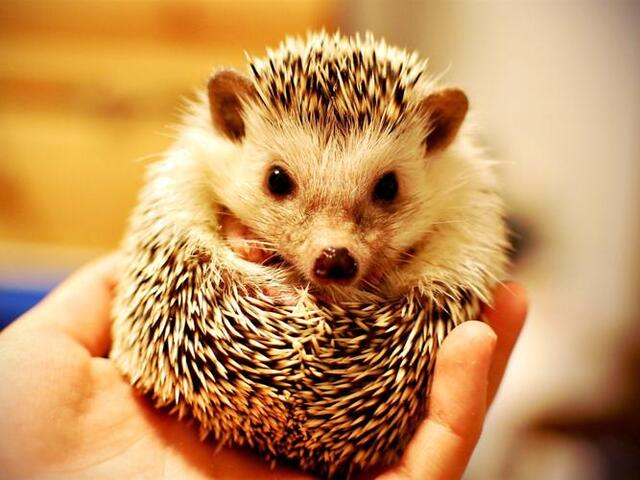 LC
LC
rinaceus,Prickly pig, hedgehog, hedgeho
Hedgehog (scientific name: Erinaceus) is the common name for the Erinaceus subfamily, also known as the thorn ball, thorn pig, hed···
 LC
LC
Tree shrew,Sino-Burmese tree shrew,northern tree shrew
The northern tree shrew (scientific name: Tupaia belangeri) is a tree shrew native to Indochina, the northeastern part of the Sout···
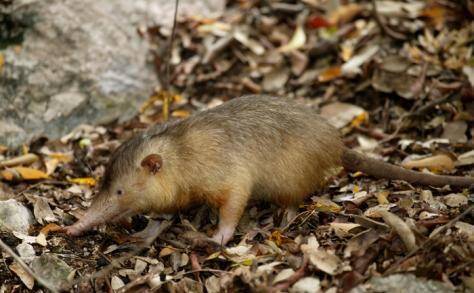 LC
LC
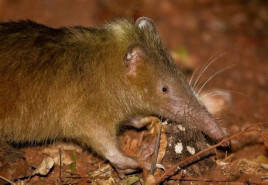
Solenodon marcanoi
Solenodon marcanoi is a species of furrow toothed shrew. Nocturnal, living in caves. Sensitive sense of touch, use the sense of to···
 LC
LC
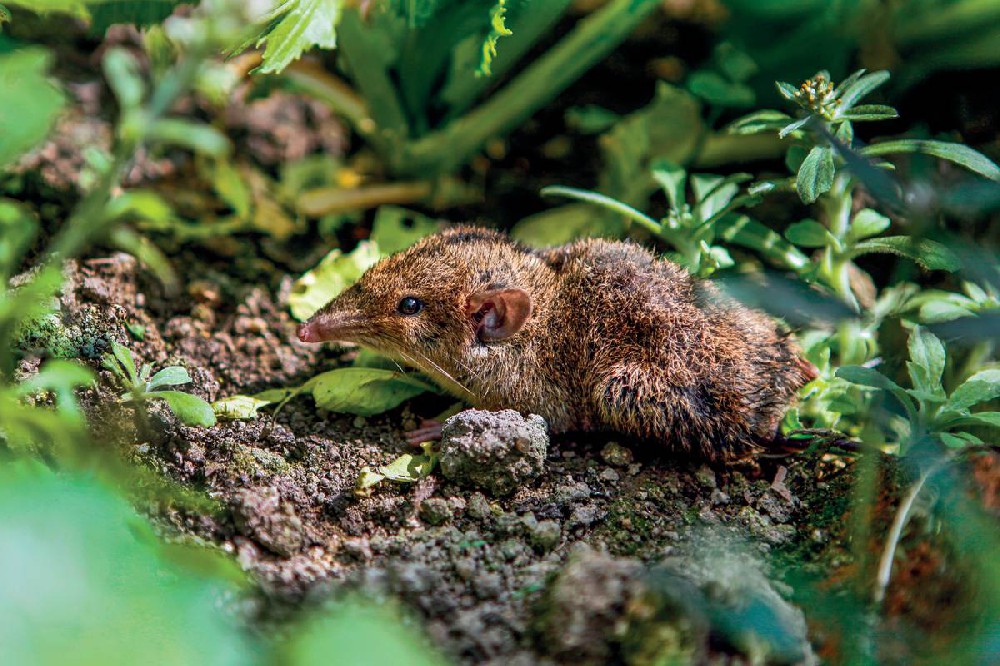
Solenodon paradoxus
Solenodon paradoxus is a mammal that lives on the island of Hispaniola in the Caribbean (Dominican Republic and Haiti).The shrew s···
 LC
LC
Hainan hedgehog
The Hainan New Hairy Hedgehog is similar in appearance to the hairy hedgehog and the shrew hedgehog, and similar to the species of···