 LC
LC
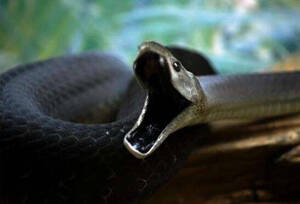
Dendroaspis polylepis
Dendroaspis polylepis,Black Mamba
Black Mamba (scientific name: Dendroaspis polylepis): It is a venomous snake of the family Elapidae and the genus Black Mamba, wit···
Explore mammals from tiny bats and rodents to primates, carnivores, ungulates, whales, and elephants. Each profile connects core facts with habitat, lifespan, traits, and conservation information.

Use these shortcuts to move into more specific animal groups.
The Pangolins only includes the genus Pangolinidae, with 7 species of living animals, 3 in Asia and 4 in Africa. The body is covered with horny scales, and the scales are interspersed with sparse stiff hairs. The head is small, without teeth, with a pointed snout, a well-developed tongue, and long front claws, which are adapted to digging ant nests and licking insects such as ants. Pangolins live in forests, dense bushes, open areas or prairies.
I. Introduction to the Order Pangolins
1. Key Characteristics:
Unique Body Covering: Pangolins are the only mammals covered in tough, keratinous scales.
Edentulous with Specialized Tongues: They have no teeth; instead, they rely on a long, sticky tongue to extract ants and termites from nests.
Defensive Curling: When threatened, pangolins roll into a ball, using their hardened scales as armor against predators.
Habitat and Activity: Pangolins may be nocturnal, inhabiting forests, savannas, and grasslands. Some species are arboreal, while others are terrestrial or burrow-dwellers.
2. Diversity and Distribution:
The order Pholidota currently includes a single family, three genera, and eight extant species, found in Africa and Asia.
African species include both arboreal and ground-dwelling pangolins; Asian species are generally ground-dwelling or semi-arboreal.
II. Evolutionary History
1. Origins and Fossil Record:
Pangolin-like ancestors date back to the Late Eocene (around 50 million years ago). Fossils show that early pangolin relatives already possessed some distinctive features seen in modern species.
During the Paleogene and Neogene periods (Oligocene to Miocene), pangolins were more widespread across Eurasia. Climate changes and geographic isolation later restricted their range and drove diversification into the lineages we see today.
2. Phylogenetic Relationships:
Historically, pangolins were sometimes grouped with “insectivores” or thought to be related to xenarthrans (like armadillos and anteaters).
Modern molecular studies reveal that pangolins are more closely related to carnivorans (order Carnivora) than to the previously associated insectivorous or edentate mammals. Together, pangolins and carnivorans form a clade known as Ferae.
3. Ecology and Conservation:
Pangolins play a crucial ecological role by controlling ant and termite populations.
Unfortunately, due to illegal hunting and habitat loss, pangolins are among the most heavily trafficked and threatened mammals worldwide. All eight species are now protected under international regulations, with several classified as endangered or critically endangered.
III. Classification Overview
Order: Pholidota (Pangolins)
Family: Manidae (the only extant pangolin family)
Genera and Species:
There are three extant genera containing eight known pangolin species.
| Family (Manidae) | Genus | Example Species | Distribution and Notes |
|---|---|---|---|
| Manidae | Manis (Asian pangolins) | Chinese pangolin (Manis pentadactyla), Sunda pangolin (Manis javanica), Indian pangolin (Manis crassicaudata), Philippine pangolin (Manis culionensis) | Found in Asia (South, Southeast, East Asia), mostly terrestrial or semi-arboreal, inhabiting forests and shrublands. |
| Phataginus (African tree pangolins) | Long-tailed pangolin (Phataginus tetradactyla), African white-bellied pangolin (Phataginus tricuspis) | Smaller, arboreal pangolins in Central and West African forests, adept at climbing. | |
| Smutsia (African ground pangolins) | Giant ground pangolin (Smutsia gigantea), Temminck’s ground pangolin (Smutsia temminckii) | Larger, ground-dwelling pangolins found in Central and Southern Africa’s savannas and woodlands. |
Extinct Families and Genera:
Several extinct families (e.g., Eomanidae, Patriomanidae) are known from the fossil record, indicating pangolins once had a more extensive and varied distribution. Today, only Manidae survives.
IV. Summary
Pholidota (pangolins) occupy a unique niche in mammalian evolution. Their distinctive scales, toothless jaws, and specialized diet of ants and termites set them apart from other mammals. Fossil evidence traces their ancient origins, while modern genetic studies show closer ties to carnivorans. Regrettably, overexploitation and habitat destruction now place pangolins among the world’s most threatened mammals, underscoring the urgent need for conservation action.
This classification and historical overview can help your website’s users gain a clear understanding of pangolin evolution, taxonomy, and the critical conservation challenges they face today.
Search the animals shown on this page or narrow them by IUCN conservation code.
LC
Dendroaspis polylepis,Black Mamba
Black Mamba (scientific name: Dendroaspis polylepis): It is a venomous snake of the family Elapidae and the genus Black Mamba, wit···
 LC
LC
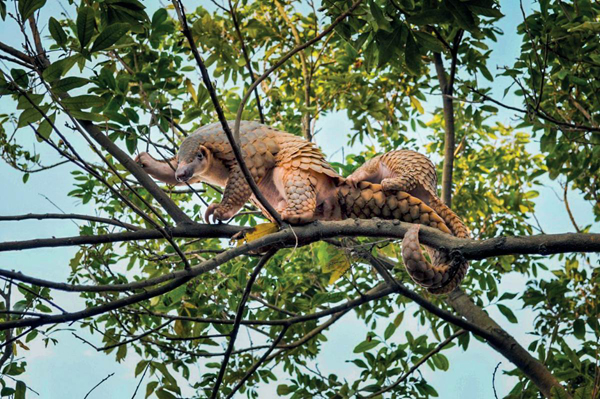
Manis javanica, pangolin, dace carp
Malayan pangolins are nocturnal animals that rest during the day curled up in tree holes or burrows and come out to forage through···
 LC
LC
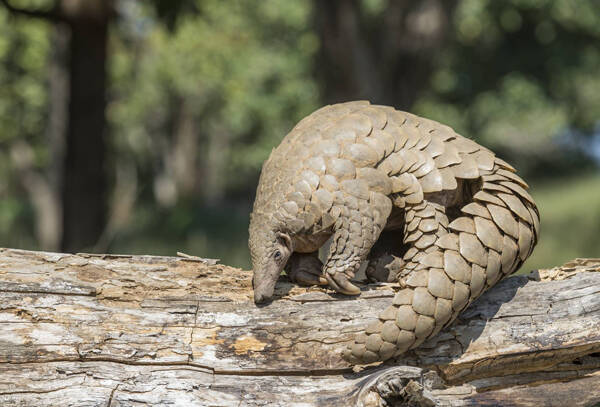
Manis crassicaudata,Thick-tailed pangolin, scaly anteater
Although it is a ground-dwelling animal, it is good at climbing using its prehensile tail. It lives alone most of the time, except···
 LC
LC
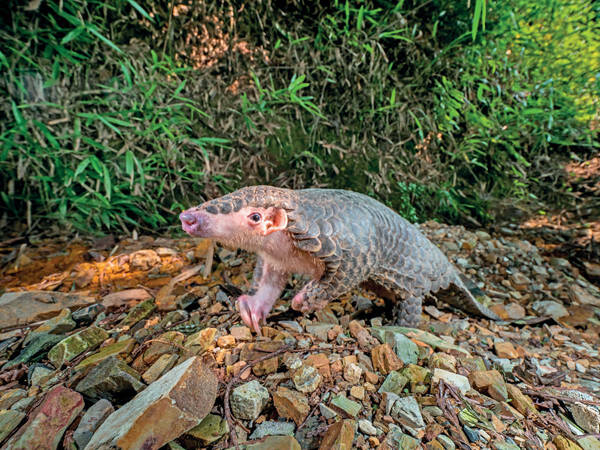
Manis pentadactyla,Pangolin, anteater
The Chinese pangolin is a specialized species with basically degenerated vision and a particularly keen sense of smell. The pangol···