 CR
CR
Sumatran Elephant
Elephas maximus sumatranus
Sumatran elephant (Elephas maximus sumatranus) is the smallest living Asian elephant, confined to the island of Sumatra.Rapid conv···
Explore mammals from tiny bats and rodents to primates, carnivores, ungulates, whales, and elephants. Each profile connects core facts with habitat, lifespan, traits, and conservation information.

Use these shortcuts to move into more specific animal groups.
The Proboscidea contains only one living family, the Elephantidae, or elephants. There were many now extinct species during the Ice Age, including the woolly mammoths (mammoths), mastodons, Deinotherium, shovel-toothed elephants, and Elasmodon, which were similar to elephants. The earliest known Proboscidea animal was Pilgrimella, followed by Archelon. Proboscidea animals live in forests, savannas, and river valleys. They all like to live in groups. They feed on plant foods.
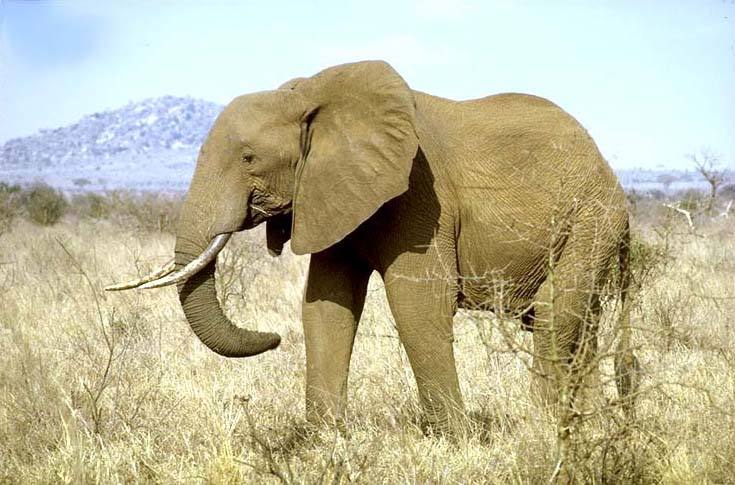
Elongated Trunk: The most distinctive feature of proboscideans is the trunk (a fusion of the upper lip and nose), which serves multiple purposes such as feeding, sucking up water, grasping objects, and smelling.
Specialized Incisors: Their upper incisors are greatly enlarged into tusks composed largely of dentin (“ivory”). These tusks grow continuously and are used for foraging, digging, social display, or defense.
Gigantic Body Size: Modern elephants rank among the largest land mammals, sometimes weighing several tonnes. Historically, even larger or more varied species existed (e.g., mammoths, mastodons).
Thick Skin: Elephants have thick skin that aids in thermoregulation and environmental perception; some extinct forms (like mammoths) also had dense body hair.
Social Behavior and Intelligence: Living elephants typically form matriarchal herds with complex social structures. They exhibit advanced cognitive abilities, including memory, emotional expression, and tool use.
Today, only one family (Elephantidae) and three extant species remain: the African savanna elephant, African forest elephant, and Asian elephant.
In the past, proboscideans were much more diverse and widespread throughout Africa, Eurasia, and the Americas, especially during the Neogene and Quaternary periods. Extinct forms include mastodons, mammoths, gomphotheres, and more.
Origins and Early Ancestors
Proboscideans originated in Africa, dating back to the Eocene epoch. Early “pre-elephant” genera like Moeritherium were relatively small and had only modestly elongated snouts.
During the Oligocene and Miocene, numerous lineages emerged, such as the deinotheres (Deinotheriidae) and gomphotheres (Gomphotheriidae).
Adaptive Radiation and Global Expansion
As Africa connected to Eurasia and climates shifted, proboscideans migrated into Eurasia and the Americas, diversifying into various habitats (forests, grasslands, tundra).
In the Quaternary ice ages, the genus Mammuthus (mammoths) adapted to cold northern regions, while ancestral forms of modern elephants persisted in tropical and subtropical zones.
Extinctions and Survivors
Many proboscidean lineages went extinct by the end of the Pleistocene and into the Holocene, due to climate changes and human pressures (e.g., overhunting).
Now, only the family Elephantidae remains, restricted to Africa and Asia. Even these living elephants face threats such as habitat loss and poaching.
Today, only Elephantidae (the elephant family) survives within the order Proboscidea. Historically, numerous families and genera evolved and later went extinct. The table below outlines some major families (extinct and extant), genera, and representative species.
Note: There can be some variation in how fossil genera are classified in different studies. The following provides a commonly referenced taxonomy for educational purposes.
| Family | Representative Genera | Example Species | Notes |
|---|---|---|---|
| Moeritheriidae (extinct) | Moeritherium | – | Lived from the Eocene to Oligocene in Africa, smaller in size, semi-aquatic/wetland habitat, and only a modestly elongated snout. |
| Deinotheriidae (extinct) | Deinotherium | – | Existed from the Miocene to Pliocene; large-bodied with downward-curving tusks in the lower jaw; distributed in Africa and Eurasia. |
| Mammutidae (extinct) | Mammut | American mastodon (Mammut americanum) | Commonly called “mastodons”; lived in North America. Although visually similar to mammoths, they differ in tooth structure. |
| Gomphotheriidae (extinct) | Gomphotherium, Anancus, etc. | Gomphotherium productum, Anancus arvernensis, etc. | Ranged across North & South America, Africa, and Eurasia from the Miocene to Pleistocene; possessed diverse jaw and tusk morphologies. |
| Stegodontidae (extinct) | Stegodon | – | Widespread in Asia from the Pliocene to Pleistocene, featuring high-crowned molars and distinct ridges. Considered closely related to modern elephants. |
| Elephantidae (extant) | 1. Elephas (Asian elephants) | Asian elephant (Elephas maximus) | Found in South and Southeast Asia. The males typically have tusks (in some females, tusks can be small or absent). |
| 2. Loxodonta (African elephants) | African savanna elephant (Loxodonta africana), African forest elephant (Loxodonta cyclotis) | Native to sub-Saharan Africa; the savanna elephant is larger with bigger ears, while the forest elephant is smaller with straighter tusks. | |
| 3. Mammuthus (mammoths, extinct) | Woolly mammoth (Mammuthus primigenius) | Iconic Ice Age giants adapted to cold climates with thick fur; roamed Eurasia and North America until the Holocene. | |
| 4. Palaeoloxodon (straight-tusked elephants, extinct; classification debated) | Palaeoloxodon antiquus, dwarf island forms | Some species were gigantic, others evolved dwarfism on islands. Often grouped with Elephas; taxonomy remains debated. |
Note:
Elephantidae is the only surviving family. Loxodonta (African) and Elephas (Asian) are the two extant genera. Mammuthus (mammoths) and Palaeoloxodon are extinct.
Families like Deinotheriidae, Mammutidae, and Gomphotheriidae included multiple genera and species, reflecting the diverse evolutionary history of proboscideans.
Proboscideans represent one of the most distinctive and historically significant mammalian lineages. From their Eocene origins in Africa, they underwent extensive adaptive radiations, producing an array of species such as deinotheres, mastodons, gomphotheres, and mammoths. Following the ice ages, most lineages vanished, leaving only Elephantidae in Africa and Asia.
Today, the surviving elephants face serious threats from habitat loss, human-elephant conflicts, and illegal ivory trade. Understanding the systematics, fossil record, and current status of proboscideans highlights their unique role in Earth’s ecological heritage and underscores the importance of conservation efforts.
Search the animals shown on this page or narrow them by IUCN conservation code.
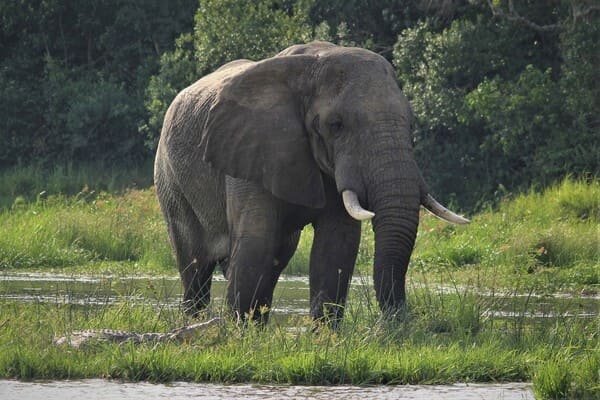
CR
Elephas maximus sumatranus
Sumatran elephant (Elephas maximus sumatranus) is the smallest living Asian elephant, confined to the island of Sumatra.Rapid conv···
 CR
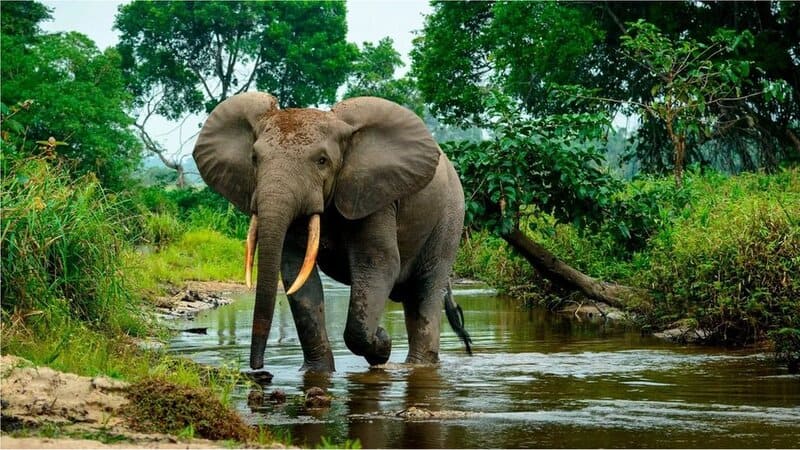
CR
Loxodonta cyclotis
I. Physical CharacteristicsAfrican forest elephants are smaller and more compact than savanna elephants, with rounder ears and a r···
 EN
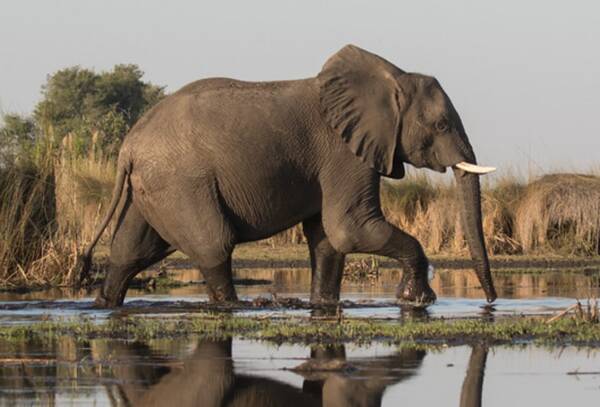
EN
Loxodonta africana
The name of the African elephant was given by Baron George Couvier (Johann Friedrich Blumenbach) in 1825. Because its molars have ···
 NT
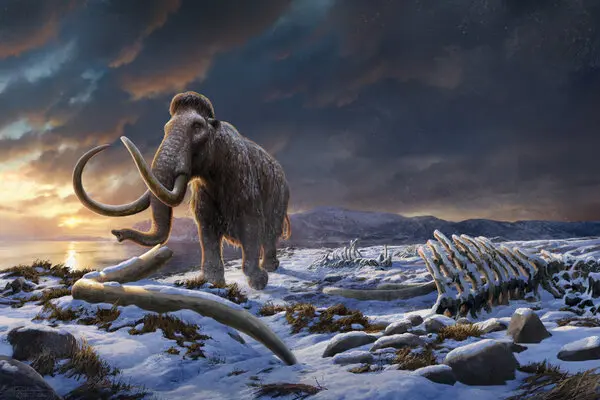
NT
Table of ContentsIntroduction: The Woolly Mammoth’s LegacyWhat is a Woolly Mammoth?Physical Characteristics of the Woolly Mammoth···
 LC
LC
Elephas maximus
Asian elephants are giant herbivoresFood,The staple food is bamboo shoots, young leaves, wild plantains and palm leaf reeds, etc. ···