 LC
LC
Striped Dolphin
Stenella coeruleoalba
The striped dolphin is one of the most widespread and frequently encountered offshore dolphins. It is famous for its crisp body st···
Explore mammals from tiny bats and rodents to primates, carnivores, ungulates, whales, and elephants. Each profile connects core facts with habitat, lifespan, traits, and conservation information.

Use these shortcuts to move into more specific animal groups.
Cetacea is an order of mammals, including about 90 existing fish-like, naked-skinned aquatic mammals and their extinct early relatives, collectively known as whales or cetaceans. The larger ones are usually called whales, and the smaller ones are called dolphins. Most of them live in shallow seas, and a few live in fresh water.
I. Introduction to Cetacea
1. Defining Characteristics:
Cetaceans are fully aquatic mammals with streamlined, fusiform bodies.
Forelimbs are modified into flippers; hind limbs are absent externally.
They possess a thick layer of blubber for insulation, and most have a dorsal fin or ridge.
Breathing is through a blowhole (or pair of blowholes in baleen whales) located on top of the head.
Reproduction, birth, and nursing occur entirely in the water.
2. Diversity and Distribution:
About 90 extant species of cetaceans inhabit all the world’s oceans and some rivers.
They range from the enormous blue whale (the largest animal ever known) to small porpoises and dolphins.
II. Evolutionary History
1. Origins:
Cetaceans evolved from terrestrial ancestors during the Eocene epoch (around 50 million years ago). Early fossils like Pakicetus indicate that their ancestors were land-dwelling, wolf-sized mammals. Over millions of years, these ancestors adapted to increasingly aquatic lifestyles.
The discovery of transitional fossils (e.g., Ambulocetus, Rhodocetus) shows the gradual modification from land locomotion to aquatic propulsion using tail flukes and forelimbs as flippers.
2. Transition to Full Aquatic Life:
By the late Eocene, early cetaceans were fully aquatic. Two major lineages diverged: the baleen whales (Mysticeti) and the toothed whales (Odontoceti).
Molecular and morphological data confirm that cetaceans share a close common ancestor with even-toed ungulates (Artiodactyla), especially hippopotamuses. This discovery led to the combined grouping known as Cetartiodactyla.
3. Adaptive Radiations:
Mysticetes adapted filter-feeding apparatuses (baleen plates) to exploit large amounts of small prey (krill, zooplankton).
Odontocetes developed echolocation abilities to navigate and hunt in often murky underwater environments, feeding on fish, squid, and sometimes marine mammals.
III. Classification Overview of Cetacea
Cetacea is traditionally divided into two suborders:
Suborder Mysticeti (Baleen Whales): Characterized by baleen plates instead of teeth, used to filter small prey from the water. They generally have two blowholes.
Suborder Odontoceti (Toothed Whales): Possess teeth (in varying numbers and shapes) and echolocation abilities. They have a single blowhole.
Below are the major families and some representative genera:
| Family | Representative Genera/Species | Notes |
|---|---|---|
| Balaenidae (Right and Bowhead Whales) | Eubalaena (Right whales), Balaena (Bowhead whale) | Large heads, long baleen plates, slow-moving filter feeders. |
| Balaenopteridae (Rorquals) | Balaenoptera (Blue whale, Fin whale), Megaptera (Humpback whale) | Streamlined, often pleated throats, gulp-feeding strategy. |
| Eschrichtiidae (Gray Whale) | Eschrichtius (Gray whale) | Bottom-feeder, short baleen, migratory along coastal routes. |
| Cetotheriidae (Pygmy Right Whale) | Caperea (Pygmy right whale) | Rare and enigmatic family; smallest baleen whale. |
| Family | Representative Genera/Species | Notes |
|---|---|---|
| Physeteridae (Sperm Whales) | Physeter (Sperm whale) | Large head with spermaceti organ, deep divers feeding on squid. |
| Kogiidae (Pygmy Sperm Whales) | Kogia (Pygmy and Dwarf sperm whales) | Small, elusive whales with squid-based diet. |
| Ziphiidae (Beaked Whales) | Ziphius (Cuvier's beaked whale), Mesoplodon (various species) | Deep-diving, elusive, many species poorly known. |
| Monodontidae (Narwhal, Beluga) | Monodon (Narwhal), Delphinapterus (Beluga) | Arctic whales with unique features (tusk in narwhal, white beluga). |
| Phocoenidae (Porpoises) | Phocoena (Harbor porpoise), Neophocaena (Finless porpoise) | Small, robust, lacking a prominent beak, spade-shaped teeth. |
| Delphinidae (Dolphins) | Tursiops (Bottlenose dolphin), Orcinus (Killer whale), Delphinus (Common dolphin) | Highly diverse, social, and intelligent; largest Odontoceti family. |
| Iniidae (New World River Dolphins) | Inia (Amazon river dolphin) | Freshwater habitats in South America, long beaks, poor vision. |
| Pontoporiidae (La Plata Dolphin) | Pontoporia (La Plata dolphin) | Coastal and estuarine waters of eastern South America. |
| Platanistidae (South Asian River Dolphins) | Platanista (Ganges and Indus river dolphins) | Nearly blind, rely on echolocation in muddy river waters. |
(Additional notes: The family Lipotidae, representing the Yangtze River dolphin (Lipotes vexillifer), is functionally extinct. Classification may vary slightly as some taxonomists treat river dolphins differently.)
IV. Summary
Cetaceans represent a remarkable evolutionary journey from land to water. Their extensive adaptive radiation has produced giants like the blue whale as well as highly social and intelligent dolphins and elusive deep-diving beaked whales. Modern molecular studies have situated cetaceans within the order Cetartiodactyla, reaffirming their close kinship with terrestrial ungulates such as hippos. Yet, historically and for the sake of clarity, Cetacea remains a well-recognized grouping for whales, dolphins, and porpoises, illustrating one of the most extraordinary transitions in mammalian evolution.
Search the animals shown on this page or narrow them by IUCN conservation code.
LC
Stenella coeruleoalba
The striped dolphin is one of the most widespread and frequently encountered offshore dolphins. It is famous for its crisp body st···
 LC
LC
Physeter macrocephalus
The sperm whale is the largest living toothed whale and one of the ocean’s most formidable deep‑sea predators. It is instantly r···
 LC
LC
Eubalaena australis
The southern right whale is one of the Southern Hemisphere’s most iconic baleen whales. It is massive and thick‑bodied, lacks a ···
 LC
LC
Balaenoptera acutorostrata (common/northern minke whale) / Balaenoptera bonaerensis (Antarctic minke whale)
“Minke whale” is a widely used common name for the smallest and most widespread rorquals in the family Balaenopteridae. In many ···
 LC
LC
Indopacetus pacificus
Longman’s beaked whale (Indopacetus pacificus)—also called the “tropical bottlenose whale” or “Indo‑Pacific beaked whale”—···
 LC
LC
Orcinus orca
The killer whale (Orcinus orca), also known as the orca, is the largest member of the oceanic dolphin family and one of the ocean’···
 LC
LC
Megaptera novaeangliae
The humpback whale (Megaptera novaeangliae) is one of the best‑known large baleen whales, famous for its very long pectoral fins,···
 LC
LC
Mesoplodon hectori
Hector’s beaked whale (Mesoplodon hectori) is one of the least-known whales on Earth. It is a deep‑diving beaked whale from the ···
 LC
LC
Mesoplodon ginkgodens
The ginkgo-toothed beaked whale (Mesoplodon ginkgodens) is an elusive deep-diving toothed whale in the beaked whale family (Ziphii···
 LC
LC
Pseudorca crassidens
The false killer whale (Pseudorca crassidens) is a large oceanic dolphin with a sleek dark body, a blunt rounded head and no obvio···
 LC
LC
Ziphius cavirostris
Cuvier’s beaked whale (Ziphius cavirostris) is one of the world’s most widespread—and most elusive—beaked whales. It is strong···
 LC
LC
Delphinus delphis
The common dolphin usually refers to the short-beaked common dolphin, Delphinus delphis. It is famous for its speed, spectacular l···
 LC
LC
Tursiops truncatus
The bottlenose dolphin (most commonly referring to the common bottlenose dolphin, Tursiops truncatus) is one of the best-known dol···
 LC
LC
Mesoplodon densirostris
Blainville's beaked whale (Mesoplodon densirostris) is a medium-sized deep-diving toothed whale in the family Ziphiidae. It is···
 LC
LC
Berardius arnuxii
Arnoux's beaked whale (Berardius arnuxii) is a large beaked whale in the family Ziphiidae and one of the least-known cetaceans···
 LC
LC
Mesoplodon bowdoini
Andrews' beaked whale (Mesoplodon bowdoini) is a medium-sized, extremely poorly known beaked whale in the family Ziphiidae. It···
 CR
CR
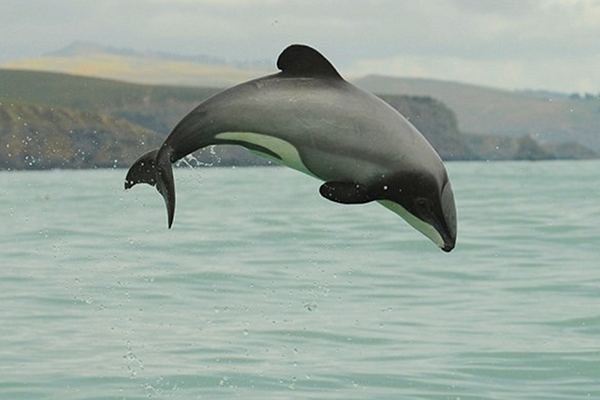
Cephalorhynchus hectori maui
Māui dolphin (Cephalorhynchus hectori maui) is a tiny coastal subspecies of Hector’s dolphin,restricted to the west coast of New···
 LC
LC
Hydrochoerus hydrochaeris,Paraguayan capybara, Uruguayan capybara
水豚这种动物我们虽然不常见,但是水豚的长相很可爱,而且对人类很友好,水豚喜欢生活在比较潮湿的地方,因为它们离不开水,而它们可爱的外···
 LC
LC
The porpoise (Phocoena phocoena in Latin), also known as porpoise, is the most common toothed whale in the North and Baltic Seas.P···
 LC
LC
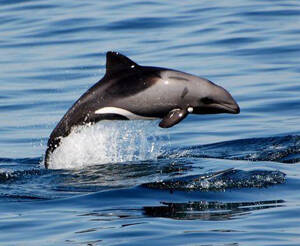
South American long-beaked dolphin, Amazon River white-sided dolphin
Tucuxi dolphin (scientific name: Sotalia fluviatilis) is also known as tucuxi in English. There is no subspecies.Although they may···
 LC
LC
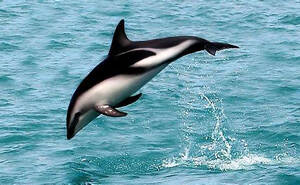
Cephalorhynchus heavisidii
Haviside's dolphin (scientific name: Cephalorhynchus heavisidii) is called Haviside's dolphin in foreign language, and has···
 LC
LC
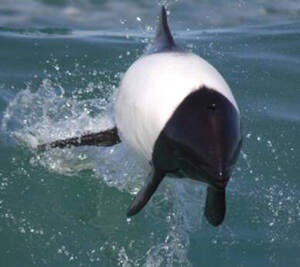
black dolphin, black dolphin, Chilean dolphin
Chilean dwarf dolphin (scientific name: Cephalorhynchus eutropia) is also known as Chilean Dolphin and Black dolphin in foreign la···
 LC
LC
Black and white dolphin, panda dolphin, Connor's dwarf dolphin
The spotted beaked dolphin is the common name of Commerson's dolphin (scientific name: Cephalorhynchus commersonii), also know···
 LC
LC
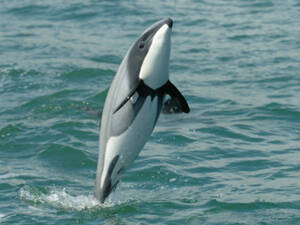
Hector's dolphin, Atlantic black and white dolphin, white-headed dolphin, New Zealand dolphin, white-headed beaked dolphin, Hector's dwarf dolphin
New Zealand black and white dolphins (scientific name: Cephalorhynchus hectori) are called Hector's Dolphin and Dolphin in for···