 LC
LC
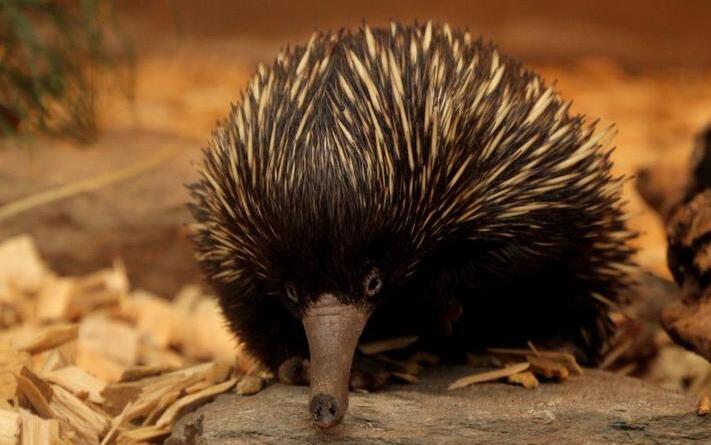
Short-beaked Echidna
Tachyglossus aculeatus
The short‑beaked echidna is one of Australia’s most iconic animals: a mammal that lays eggs, wears a coat of spines, and feeds m···
Explore mammals from tiny bats and rodents to primates, carnivores, ungulates, whales, and elephants. Each profile connects core facts with habitat, lifespan, traits, and conservation information.

Use these shortcuts to move into more specific animal groups.
Monotremes are the lowest mammals. They lay eggs. The intestine and urogenital duct open into the cloaca and pass through a common hole to the outside of the body, hence the name "monotreme". The mammary duct opens into the mammary gland area on both sides of the abdomen without nipples; the body is covered with hair; the body temperature is relatively low but has the ability to regulate body temperature. Such as the platypus and echidna, distributed in Australia and New Guinea.
Egg-Laying Mammals: Monotremes are the only living mammals that lay eggs rather than giving birth to live young. They include the platypus and echidnas.
Cloaca: Like reptiles and birds, monotremes have a single opening (cloaca) for excretion and reproduction, giving rise to the name “monotreme” (“one hole”).
Lower, Less Stable Body Temperature: Compared to marsupial and placental mammals, monotremes generally maintain a slightly lower and more variable body temperature.
Special Sensory Organs: Platypuses possess electroreceptors on their bills that detect faint electric fields generated by prey; echidnas also have some degree of electroreception in their snouts.
Distribution and Ecology: Monotremes are found exclusively in Australia, Tasmania, and parts of New Guinea, inhabiting diverse environments such as rivers, forests, and alpine regions.
There are very few monotreme species—only two families, three genera, and around five or six recognized living species (depending on taxonomic interpretation).
They play unique roles within their ecosystems, retaining a combination of ancient mammalian traits alongside specialized adaptations.
Relationship with Other Mammals
Mammals are traditionally divided into three major groups: Monotremata (monotremes), Marsupialia (marsupials), and Placentalia (placentals).
Molecular studies confirm that monotremes diverged early in mammalian evolution. They are not closely related to marsupials and placentals but represent a surviving lineage from a basal branch.
Fossils and Origins
The earliest confirmed monotreme fossils date to the Early Cretaceous (about 120 million years ago) in Australia, including extinct genera like Steropodon.
Other fossil finds (e.g., Teinolophos, Obdurodon) further indicate that monotremes split off from the ancestors of marsupials and placentals very early, evolving their unique features in relative isolation in Gondwanan Australia.
Geography and Paleoenvironment
Shifting continental plates separated Australia (and Antarctica, South America) from other landmasses, allowing monotremes to persist without direct competition from most placental mammals.
Climatic changes, including glaciations and habitat shifts, also influenced monotreme distribution. Today, extant species remain restricted to Australia, Tasmania, and parts of New Guinea.
Modern monotremes are typically divided into two families: the Ornithorhynchidae (platypus) and the Tachyglossidae (echidnas). The table below lists the main families, genera, and representative species, along with key notes.
| Family | Genus | Living Species | Distribution & Notes |
|---|---|---|---|
| Ornithorhynchidae (Platypus) | Ornithorhynchus | Platypus (Ornithorhynchus anatinus) | The only extant species in this family, found in eastern Australia and Tasmania. Uses electroreception to detect aquatic prey; males have venomous spurs on their ankles. |
| Tachyglossidae (Echidnas) | Tachyglossus | Short-beaked echidna (Tachyglossus aculeatus) | Found across mainland Australia, Tasmania, and New Guinea; covered in spines, uses a long, sticky tongue to feed on ants and termites. |
| Zaglossus | Long-beaked echidnas (Zaglossus bruijnii, Z. bartoni, Z. attenboroughi) | Restricted to New Guinea; larger than short-beaked echidnas, with longer snouts. Most species are endangered and feed primarily on earthworms and other soil invertebrates. |
Note: The exact species count of long-beaked echidnas (genus Zaglossus) can vary in different taxonomic references (some recognize two species, others three or more).
Steropodon, Teinolophos, Obdurodon, among others, are extinct monotreme genera, showing that both platypus-like and echidna-like lines once had greater morphological diversity. Obdurodon species retained functional adult dentition (modern platypuses lose functional teeth in adulthood).
Monotremes hold a pivotal place in mammalian evolution. They combine certain “reptilian/bird-like” features (egg laying, cloaca) with classic mammalian traits (hair, lactation). Over tens of millions of years, they have survived in the Australian region with limited competition from placental mammals.
Today, monotremes face ecological threats such as habitat destruction, invasive predators (e.g., foxes, cats), and pollution. Understanding their classification, ancient origins, and biological characteristics emphasizes the need to protect these “living fossils,” safeguarding their role in Australia’s rich and unique ecosystems.
Search the animals shown on this page or narrow them by IUCN conservation code.
LC
Tachyglossus aculeatus
The short‑beaked echidna is one of Australia’s most iconic animals: a mammal that lays eggs, wears a coat of spines, and feeds m···
 LC
LC
Ornithorhynchus anatinus
The platypus is one of Australia’s most iconic animals and one of the very few living mammals that lays eggs. It is semi‑aquatic···
 EN
EN
Spiny Anteater,echidna
Echidna, or Tachyglossidae, is commonly known as the spiny anteater. It is a surviving monotreme along with the platypus. There ar···
 LC
LC
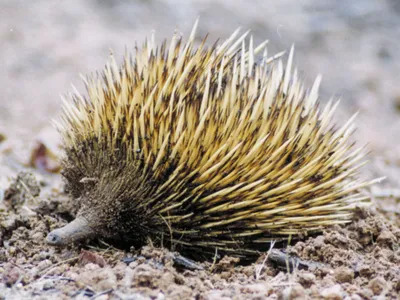
Spiny Anteater
Echidna (Tachyglossidae), one of four peculiar egg-laying mammals found in Australia, Tasmania and New Guinea. They eat and breath···
 LC
LC
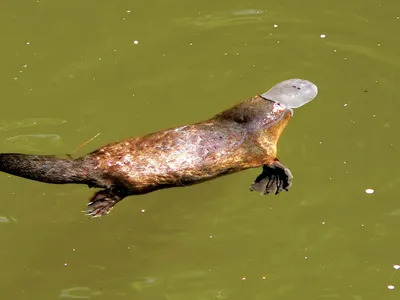
Ornithorhynchus anatinus
The platypus (Ornithorhynchus anatinus) is a small Australian amphibian mammal known for its strange combination of primitive feat···
 LC
LC
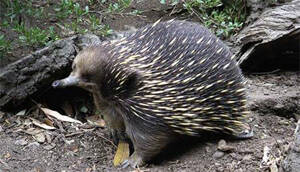
Zaglossus bartoni
The Great long-robed echidna (Zaglossus bartoni) is a species of proto-echidna found in New Guinea, with four subspecies. They cur···
 LC
LC
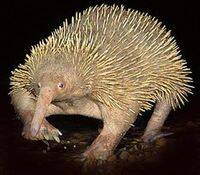
Zaglossus attenboroughi
Attenborough's scientific name is Zaglossus attenboroughi, after David Attenborough. Like to dig holes, harm crops, harmful to···
 LC
LC
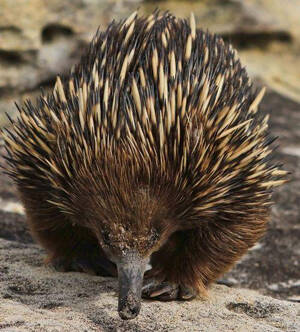
Western Long-beaked Echidna,Long-nosed Spiny Anteater,New Guinea Long-nosed Echidna,Long-beaked Echidna,Long-nosed Echidna,Zaglossus bruijnii
Echidna long-rostris Zaglossus bruijnii) Western Long-beaked Echidna, Long-nosed Spiny Anteater, New Guinea Long-nosed Echidna, Lo···
 LC
LC
Tachyglossus aculeatus
The Australian echidna Tachyglossus aculeatus is adapted to an ant-eating lifestyle and lives in rocky, sandy and scrub areas, liv···