The Corn Snake (Pantherophis guttatus) is one of the best-known snakes in North America. Slender, adaptable and generally non-dangerous to people, it is commonly found in forest edges, grasslands and farmland mosaics, and it often turns up near barns, woodpiles and old structures where rodents are plentiful. Corn Snakes are non-venomous constrictors: they subdue prey by gripping and coiling before swallowing it whole. In many landscapes they play a useful ecological role by helping regulate rodent populations.
The name “corn snake” is often linked to their frequent association with cornfields and grain storage areas, and the checkered belly pattern is sometimes compared to kernels on a corn cob. It is also important to separate wild ecology from the pet trade: captive breeding has produced many dramatic colour and pattern morphs, while wild-type individuals typically show orange to reddish tones with dark saddle blotches. At a broad scale the species is commonly treated as Least Concern, but local threats still include habitat fragmentation, road mortality and persecution.
Taxonomy and naming
The Corn Snake belongs to the family Colubridae and the genus Pantherophis. Older references may place it in Elaphe, but modern classifications commonly use Pantherophis. The common name “corn snake” is widely used in English.
Physical features
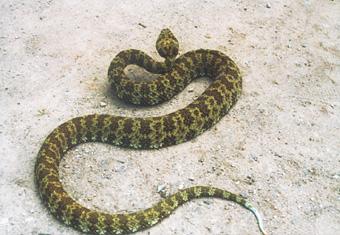
Adults are typically slim-bodied with a fairly narrow head and round pupils. Wild-type patterning usually includes a row of dark, saddle-shaped blotches on an orange or reddish ground colour, plus smaller side blotches. The underside is often strikingly black-and-white checkered. Because colour and pattern can vary by region—and captive morphs are extremely variable—geographic context is important when identifying snakes in the wild.
Range and habitat
The species is native to the eastern and southeastern United States. It is highly adaptable and uses forests, forest edges, shrublands, grasslands and agricultural landscapes. Corn Snakes often exploit human structures and debris for shelter, especially where rodents are common. Key microhabitats include logs, rock piles, leaf litter and burrows, which provide cover and temperature buffering.
Behaviour and ecology
Corn Snakes are often most active at dusk and at night in warm seasons, while they may bask or move during the day in cooler conditions. When threatened, they typically attempt to escape and hide. If cornered they may hiss, strike defensively, or vibrate the tail against dry leaves, producing a buzz that can deter predators and is sometimes described as defensive mimicry.
Diet
Diet consists mainly of small mammals such as mice, along with birds (including nestlings), lizards and frogs depending on availability. Juveniles tend to take smaller prey. Like other constrictors, Corn Snakes kill by constriction rather than venom, then swallow prey whole. Their feeding ecology makes them important mid-level predators in many farmland and woodland-edge ecosystems.
Reproduction and life history
Corn Snakes are egg-laying. Breeding typically follows spring warming, and females deposit eggs in warm, moist, concealed sites such as decaying logs, organic debris piles or underground cavities. Incubation time depends strongly on temperature. Hatchlings are independent immediately but experience high early mortality from predators and environmental hazards.
Relationship with people
Corn Snakes are popular in education and captive breeding because they are generally calm and relatively easy to keep. In the wild, however, they are native wildlife and should not be captured or disturbed. If a Corn Snake is found near a home or barn, the best approach is usually to give it space and allow it to leave. Keeping yards tidy, sealing gaps and reducing rodent attractants can reduce repeat encounters.
Conservation status and threats
At a broad scale the Corn Snake is commonly treated as Least Concern, but local populations can be affected by habitat fragmentation, road mortality, pollution and persecution. In some places, collecting can add pressure. Habitat connectivity, roadkill mitigation and public education are practical measures that help maintain healthy populations.