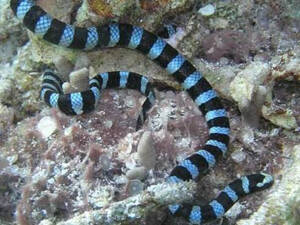
The Yellow-faced Whip Snake (Demansia psammophis) is a slender, fast-moving elapid native to Australia and a member of the genus Demansia. It is one of the more common small to medium-sized daytime snakes in eastern and southern Australia and is named for the distinctive pale yellow stripe behind the eye and along the side of the head.
Taxonomy and naming
The Yellow-faced Whip Snake belongs to Class Reptilia, Order Squamata, Suborder Serpentes, Family Elapidae and Genus Demansia. Species in this genus are slim, active, visually oriented predators with relatively small heads and long, whip-like bodies. Demansia psammophis is often treated as a species complex, with several geographic forms differing slightly in colour and body proportions. The common English name highlights the characteristic yellowish facial stripe.
Physical characteristics
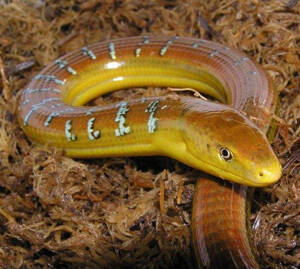
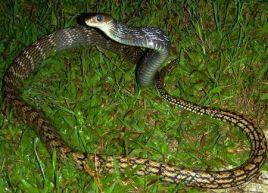
Yellow-faced Whip Snakes are slender and moderately sized. Adults typically reach about 80–120 cm in total length, with some individuals growing slightly longer. Dorsal colouration varies from olive-green and grey-green to brownish or grey, sometimes with subtle crossbands or speckling. The head is narrow and slightly flattened with relatively large eyes and round pupils. A prominent pale yellow or cream stripe runs from behind the eye toward the neck, often accompanied by a paler lateral line along the body, contrasting with the darker back. The belly is lighter, usually cream, pale grey or slightly greenish. Overall, the species appears as a sleek, agile, brownish-green snake with a distinctive yellow facial stripe.
Distribution and habitat
The Yellow-faced Whip Snake is endemic to Australia and has a broad distribution across much of eastern and southern parts of the continent. It occurs from eastern Queensland and most of New South Wales through Victoria and into parts of South Australia, with records from some southern and inland areas of Western Australia as well. The species occupies a wide range of habitats, including open forests, woodlands, shrublands, rocky hillsides, grasslands, farm edges, roadsides and urban and rural gardens. It frequently shelters under rocks, logs, fallen branches and human debris such as sheets of metal or timber piles.
Behaviour and lifestyle
The Yellow-faced Whip Snake is primarily diurnal and is most active on warm, sunny days. It is renowned for its speed and alertness; when disturbed it usually darts away rapidly into nearby cover. The species forages actively on the ground, weaving through leaf litter, grass and low shrubs, and may occasionally climb low vegetation or rock piles. At night it retreats to burrows, rock crevices or man-made refuges to rest. Although generally shy and inclined to flee, it may bite defensively if cornered, grabbed or otherwise provoked.
Diet
This snake is a visually oriented predator that feeds mainly on small reptiles, especially skinks and other lizards, as well as small snakes and frogs. It will also take small mammals and large insects on occasion. Yellow-faced Whip Snakes actively search for moving prey during the day, using their keen eyesight to detect potential targets, then striking rapidly to inject venom and subdue them before swallowing them whole.
Reproduction and life cycle
The Yellow-faced Whip Snake is oviparous. Breeding generally occurs from late spring into summer. Males actively search for females and may engage in combat with rivals. After mating, females lay clutches of several to a dozen or more soft-shelled eggs in sheltered sites such as burrows, rock crevices or among surface rubble. Incubation lasts several weeks to a couple of months depending on temperature and humidity. Hatchlings emerge fully independent, feeding on very small lizards and other tiny prey. Wild lifespan is not well documented but individuals are believed to live for several years and potentially close to a decade in favourable conditions.
Relationship with humans
Because it is common around farms, bushland edges and suburban gardens, the Yellow-faced Whip Snake is one of the snakes most frequently observed by people in parts of eastern and southern Australia. Its venom is potent for small reptiles but is generally regarded as of moderate medical significance for humans: bites can cause local pain and swelling, headache, nausea and muscle discomfort, but serious systemic effects and fatalities are uncommon with prompt treatment. Nevertheless, any bite from a potentially venomous Australian snake must be treated seriously. First aid using the pressure immobilisation technique and rapid transport to hospital are strongly recommended for suspected bites.
Conservation status and threats
At a broad scale, the Yellow-faced Whip Snake is considered widespread and relatively common, corresponding to a Least Concern status in terms of overall conservation outlook. Its ability to utilise a variety of habitats, including modified agricultural and peri-urban landscapes, has helped it remain secure compared with more specialised species. Local populations may, however, be impacted by road mortality, predation by cats and dogs and persecution driven by fear of snakes. Conservation of the species is best supported by maintaining diverse woodland and shrubland habitats, retaining ground cover and shelter sites in rural and suburban areas and promoting public education about the ecological role of native snakes and safe ways to coexist with them.