The Fence Skink (commonly referring to species such as Cryptoblepharus virgatus) is a small, fast-moving skink in the family Scincidae and the genus Cryptoblepharus. It is a familiar sight on garden fences, walls, rocks and tree trunks in parts of eastern Australia, where it darts about in short bursts of speed and vanishes quickly into cracks and crevices. Because of its close association with human structures, the Fence Skink is one of the most noticeable “backyard lizards” in many suburban and urban areas.
Taxonomy and naming
The Fence Skink belongs to Class Reptilia, Order Squamata, Family Scincidae and Genus Cryptoblepharus. Members of this genus are sometimes called “snake-eyed skinks” because their eyes are covered by a transparent scale rather than having moveable eyelids, giving them a snake-like appearance. The common name “Fence Skink” is used for small, wall- and fence-dwelling skinks in this group; in this profile, Cryptoblepharus virgatus is treated as a representative species often associated with fences and walls in eastern Australia.
Physical characteristics
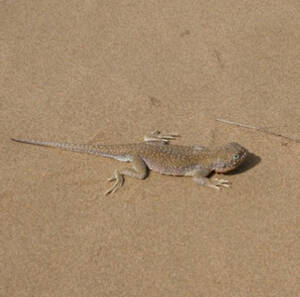
Fence Skinks are slender, small-bodied lizards with relatively long tails. Adult snout–vent length is usually only a few centimetres, and the tail can be as long as or longer than the body. The head is slightly triangular with a pointed snout, and the eyes are small with a fixed, transparent “spectacle” in place of eyelids. Dorsal colouration is typically grey-brown, brown or olive-brown, often with pale longitudinal stripes along the sides bordered by darker edges; some individuals show rows of small spots or flecks along the flanks. The underside is much paler, usually white or light grey. The scales are small and smooth, contributing to the lizard’s sleek appearance and ability to slip swiftly through narrow gaps.
Distribution and habitat
Represented here by Cryptoblepharus virgatus, the Fence Skink occurs in parts of eastern Australia, particularly in coastal and near-coastal regions. It occupies a variety of habitats, including forest edges, rocky slopes, coastal grasslands and, very prominently, human-modified environments around houses and gardens. Fence Skinks are especially fond of vertical or near-vertical surfaces such as timber and metal fences, brick and stone walls, tree trunks and rocky outcrops. Rough textures and crevices provide both basking sites and safe refuges from predators and extreme weather, allowing these tiny lizards to thrive in built-up areas.
Behaviour and lifestyle
Fence Skinks are diurnal and strongly heliothermic, basking in sunlight to raise their body temperature before actively foraging. They typically rest and bask on exposed sections of fences, walls, posts or tree trunks, then dash rapidly to nearby cracks or around corners when disturbed. Their movements are quick and agile, often involving short bursts of running and occasional small jumps between surfaces. Individuals occupy small home ranges centred on suitable basking and hiding spots. During colder months, activity levels drop sharply, and the skinks spend more time concealed in crevices, under bark or among leaf litter.
Diet
The Fence Skink is primarily insectivorous, feeding on a wide variety of small arthropods. Its diet includes ants, small beetles, flies, aphids, moths and their larvae, spiders and other tiny invertebrates found on walls, fences, tree trunks and the ground. Prey is usually detected visually and captured in rapid, short-distance lunges. Around houses and gardens, Fence Skinks can help reduce the numbers of some small insects and are therefore beneficial residents, even if their activities often go unnoticed.
Reproduction and life cycle
Fence Skinks are oviparous. Breeding generally takes place in the warmer months of spring and summer. Males roam within and around their small territories in search of receptive females, sometimes engaging in brief chases and display postures. After mating, females lay small clutches of eggs—typically a few per clutch—in moist, sheltered locations such as under rocks, within wall or fence crevices, beneath loose bark or in soil cavities. Incubation is entirely dependent on environmental temperature and humidity. Hatchlings emerge as tiny replicas of adults and quickly begin hunting very small insects. Growth is relatively rapid, and individuals can reach sexual maturity within a few years, with wild lifespans usually spanning several years.
Relationship with humans
Fence Skinks are harmless to humans. They are non-venomous and so small that any defensive bites are minor. Most people encounter them only as fleeting movements on fences or walls as the skinks dash away from approach. By consuming ants, flies, small beetles and other arthropods, they contribute modestly to invertebrate control around homes and gardens. Their presence is often an indicator of at least some structural complexity and vegetation in urban environments, and they can be enjoyable subjects for quiet observation.
Conservation status and threats
In general, Fence Skinks and related snake-eyed skinks remain relatively common and are not considered globally threatened, though formal assessments may vary by species and region. They benefit from the availability of fences, walls and other artificial structures, but can be locally impacted by excessive habitat simplification, removal of vegetation and rocks, heavy pesticide use that reduces prey abundance and predation by domestic cats. Conservation-friendly actions in gardens and urban areas include retaining some shrubs, rocks and rough surfaces, limiting pesticide application, and keeping cats indoors or under supervision. Such measures help maintain small but important populations of these unobtrusive urban reptiles.