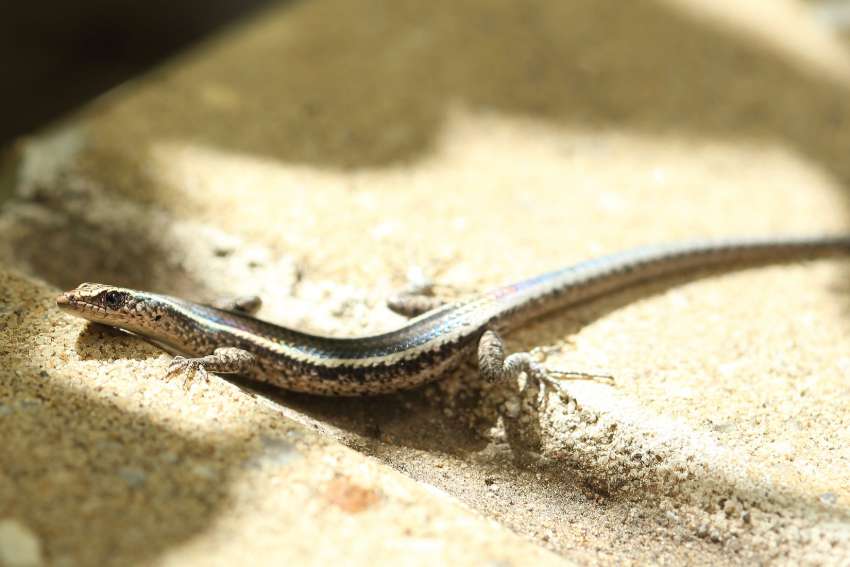
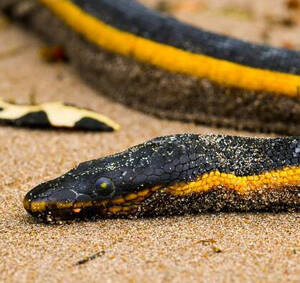
The Gidgee Skink (Egernia stokesii), also known as Stokes’s Skink, is a robust, heavily armoured skink in the family Scincidae and the genus Egernia. It is native to arid and semi-arid regions of central and western Australia, where it inhabits rocky outcrops and gidgee woodlands. With its chunky body, spiny tail and strongly textured scales, the Gidgee Skink is well adapted to life among rock piles and crevices. Unlike many lizard species that live largely solitary lives, this skink is notable for forming stable family groups, making it one of the best-known examples of social behaviour in reptiles.
Taxonomy and naming
The Gidgee Skink belongs to Class Reptilia, Order Squamata, Family Scincidae and Genus Egernia. Species in this genus are often characterised by sturdy bodies, relatively short limbs and rough, keeled scales, especially on the tail. The scientific name Egernia stokesii commemorates the 19th-century explorer and naturalist Stokes. The common name “Gidgee Skink” comes from its association with gidgee woodlands and shrublands, while “Stokes’s Skink” reflects the species epithet.
Physical characteristics
Gidgee Skinks are medium-sized, stocky lizards. Adults have a relatively broad, flattened body with short but powerful limbs and a thick, cylindrical tail covered in sharp, spiny scales. The tail is used both as a defensive barrier when the lizard wedges itself into rock crevices and as a deterrent to predators that may strike at the tail rather than the body. Dorsal colouration is typically grey-brown, olive-brown or yellowish-brown, often patterned with darker and lighter blotches or bands that provide camouflage among rocks and leaf litter. The underside is paler, usually cream or light yellow. The head is blunt and broad, with a short snout and medium-sized eyes, giving the animal a “armoured, tough” appearance suited to harsh inland environments.
Distribution and habitat
The Gidgee Skink is endemic to Australia and occurs mainly in arid and semi-arid parts of Western Australia, South Australia and central regions. It favours rocky habitats such as boulder piles, rocky ridges, low outcrops and stone heaps within gidgee woodland, acacia shrubland and open arid scrub. Typical microhabitats include rock crevices, gaps under large stones, old stone fences and piles of timber or debris. Family groups often occupy a shared system of crevices and retreat sites, using the same shelter over many years. In some pastoral landscapes, Gidgee Skinks may also persist around farm infrastructure where suitable rock or rubble piles remain.
Behaviour and lifestyle
This species is diurnal and most active on warm, sunny days. Gidgee Skinks bask on rocks, logs or at the entrances of crevices in the morning and late afternoon to regulate body temperature. They typically make short excursions from their shelter to forage and quickly retreat when disturbed. A defining feature is their social system: individuals frequently live in stable family groups composed of adults and offspring of various ages that share refuges and a small home range. Long-term associations and kin-based group structure have been documented, making the Gidgee Skink an important model for the study of reptile sociality. When threatened, individuals rush into crevices and jam their spiny tails against the rock, making extraction difficult and protecting their more vulnerable head and body.
Diet
The Gidgee Skink is an omnivore with a flexible diet. It feeds on a variety of invertebrates, including beetles, ants, spiders, crickets and caterpillars, as well as plant material such as leaves, flowers, fruits and seeds from arid-zone shrubs and succulents. In dry environments, moisture obtained from plant foods can be particularly important. Foraging usually involves active searching among rocks, leaf litter and low shrubs near the group’s refuge, with individuals seizing prey visually detected on the ground or vegetation. This mixed diet helps the species cope with the highly variable food resources typical of arid Australia.
Reproduction and life cycle
Unlike many egg-laying lizards, the Gidgee Skink is viviparous (or ovoviviparous), giving birth to live young rather than laying eggs in a nest. Breeding seasons are influenced by regional climate and rainfall patterns, with births typically occurring in the warmer months. Litter sizes are modest, often consisting of a few to a dozen or so young, but the newborns are relatively large and well developed. Juveniles commonly remain within the parents’ home range and join the family group, reinforcing the social structure and providing opportunities to study kin-based behaviour. Growth is moderate, and it can take several years for individuals to reach full maturity. In the wild, Gidgee Skinks can live for many years, with lifespans exceeding a decade under favourable conditions.
Relationship with humans
Gidgee Skinks are non-venomous and generally shy, posing no direct threat to humans. When approached, they retreat rapidly into rock crevices or under debris rather than attempting to bite. By consuming insects and other invertebrates, they contribute to ecological balance in arid and semi-arid landscapes. In some regions they have become subjects of ecological research and environmental education, illustrating not only the diversity of Australian reptiles but also the existence of complex social behaviour in lizards. For landholders, maintaining rocky refuges and shrub cover benefits Gidgee Skinks without conflicting with grazing or other land uses.
Conservation status and threats
Overall, the Gidgee Skink is generally assessed as Least Concern or low threat at the species level, although the status of particular subspecies or local populations may differ. Key threats include habitat loss and fragmentation caused by mining, road construction, intensive grazing and land clearing, as well as the removal or disturbance of rock piles and other refuge structures. Predation by introduced species such as feral cats and foxes can also impact populations, especially in heavily modified landscapes. Climate change, with more frequent and intense droughts, may further stress arid-zone habitats. Conservation measures that benefit Gidgee Skinks include retaining rocky outcrops and log piles in land management plans, establishing buffer zones around key habitat features, controlling feral predators and promoting community awareness of the ecological importance of these “spiny-tailed” skinks.
References
Cogger, H. G. 2000. Reptiles and Amphibians of Australia. Reed New Holland, Sydney
Ehmann, H. 1992. Encyclopaedia of Australian Animals: Reptiles. Angus & Robertson. Pymble.
Fyfe, G. Skinks, Family Scincidae. From Swan, M. (ed.) 2008. Keeping and Breeding Australian Lizards. Mike Swan Herp Books. Lilydale.
Greer, A. E. 1990. The Biology and Evolution of Australian Lizards. Surrey Beatty & Sons.
Greer, A. E. 2006. Encyclopedia of Australian Reptiles – Scincidae. Australian Museum