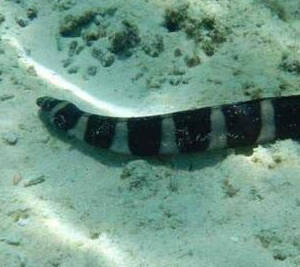
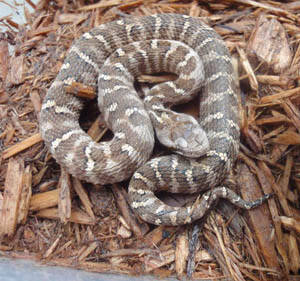
The Small-eyed Snake (Cryptophis nigrescens) is a medium-sized, highly secretive elapid snake endemic to eastern Australia. As its name suggests, it is characterised by relatively small eyes compared with head size, and a predominantly dark body. The species is strongly nocturnal and commonly shelters under logs, rocks, leaf litter and human debris, emerging at night to hunt small vertebrates.
Taxonomy and naming
The Small-eyed Snake belongs to Class Reptilia, Order Squamata, Suborder Serpentes, Family Elapidae and Genus Cryptophis. The genus comprises several small to medium-sized elapids found in Australia and New Guinea, typically with rather plain colouration and proportionally small eyes. Cryptophis nigrescens has a somewhat complex taxonomic history and was once placed in other genera (such as Rhinoplocephalus), but modern systematics recognises it as a member of Cryptophis. The common English name “Small-eyed Snake” directly reflects its most conspicuous morphological feature.
Physical characteristics
The Small-eyed Snake is slender and moderately long, with adults usually reaching 50–90 cm in total length and some individuals approaching 1 m. The dorsal colour is generally uniform dark grey, blackish-brown or nearly black, sometimes with a subtle purplish or steel-blue sheen and little or no obvious patterning. The belly is typically pale pink, grey-pink or light grey, often giving a two-tone appearance when the snake is viewed from the side. The head is slightly flattened but not broad, and the eyes are notably small with round pupils; the labial scales and sides of the head are similar in colour to the body, making the eyes visually inconspicuous. Overall, it presents as a dark, slender snake with a neat, plain head and small eyes.
Distribution and habitat
This species is endemic to eastern Australia, occurring from eastern Queensland south through much of New South Wales to parts of eastern Victoria. It occupies a variety of habitats, including moist and dry sclerophyll forests, open woodlands, forest edges, rocky hillsides, heaths and coastal scrub, as well as farmland edges and suburban green spaces. Small-eyed Snakes rely heavily on shelter and are most often found under fallen logs, rocks, sheets of bark, deep leaf litter, animal burrows and discarded building materials. Their adaptability allows them to persist in modified landscapes where sufficient cover and prey remain.
Behaviour and lifestyle
The Small-eyed Snake is strongly nocturnal. During the day it usually remains hidden in cool, sheltered microhabitats and only occasionally appears on the surface in overcast or cool conditions. At night it moves through leaf litter, grass, rocks and other ground cover in search of prey. The species is generally shy and secretive, retreating quickly when disturbed, but if cornered or repeatedly harassed it will defend itself by adopting an S-shaped posture and striking. Although not large, it is a medically significant venomous snake and should be treated with great caution.
Diet
This species is a carnivorous predator that feeds primarily on small vertebrates. Its diet includes skinks and other small lizards, small snakes, frogs and occasionally small mammals. Small-eyed Snakes actively forage on the ground at night, using chemosensory cues to locate prey before striking and injecting venom through their fixed front fangs. After envenoming, they typically release the prey and wait for it to weaken or die before swallowing it. By consuming a range of small reptiles and amphibians, the Small-eyed Snake plays an important role in regulating their populations in forest and woodland ecosystems.
Reproduction and life cycle
The Small-eyed Snake is viviparous, giving birth to live young rather than laying eggs, as is typical of many Australian elapids. Breeding takes place in the warmer months, with males seeking out females for mating. Embryos develop within the female’s body for several months, and she subsequently gives birth to a litter usually comprising several to around a dozen neonates, depending on her size and condition. Newborn snakes are small but fully equipped with functional venom glands and fangs and are capable of independent feeding and defence soon after birth. Longevity in the wild is not well documented but is thought to be on the order of a decade or more, with several years needed to reach sexual maturity.
Relationship with humans
Because the Small-eyed Snake occurs in populated regions of eastern Australia and often shelters under objects in gardens, farmyards and bushland edges, it can occasionally come into contact with people. Its venom is considered medically important and is associated particularly with myotoxic (muscle-damaging) effects, which can lead to muscle pain, weakness and dark urine. Any suspected bite from a dark, medium-sized elapid in its range should therefore be treated as a medical emergency, with immediate application of a pressure immobilisation bandage and urgent hospital assessment. As with all native Australian snakes, the Small-eyed Snake is legally protected, and attempts to kill or capture it greatly increase the risk of envenomation.
Conservation status and threats
At a broad scale, the Small-eyed Snake is generally regarded as a widespread species with a stable overall population and is often treated as being of Least Concern in terms of conservation status. Nonetheless, local populations may be impacted by habitat loss and fragmentation from land clearing and urban expansion, road mortality, deliberate killing driven by fear of venomous snakes and predation by domestic and feral animals such as cats and dogs. Conservation of the species and other native snakes benefits from retaining forest and woodland habitats with abundant ground cover, providing wildlife-friendly green spaces in urban and rural landscapes and promoting public understanding of the ecological importance of snakes.