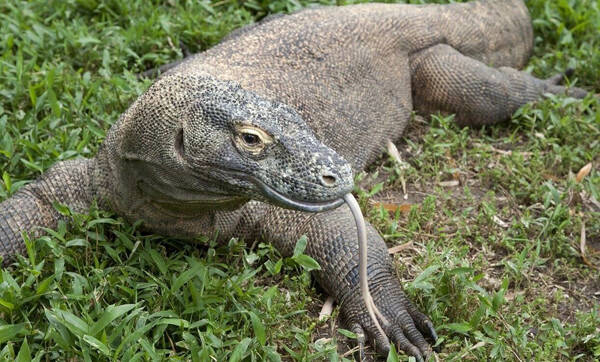
The Australian Water Dragon (Intellagama lesueurii) is a large, semi-aquatic, tree- and ground-dwelling lizard native to eastern Australia. Belonging to the family Agamidae, it is a familiar sight along rivers, creeks and ornamental lakes in both natural and urban environments.
Taxonomy & Names
Common names: Australian Water Dragon, Eastern Water Dragon (for the eastern subspecies);
Scientific name: Intellagama lesueurii (formerly placed in Physignathus);
Family: Agamidae (dragon lizards);
Genus: Intellagama.
Appearance
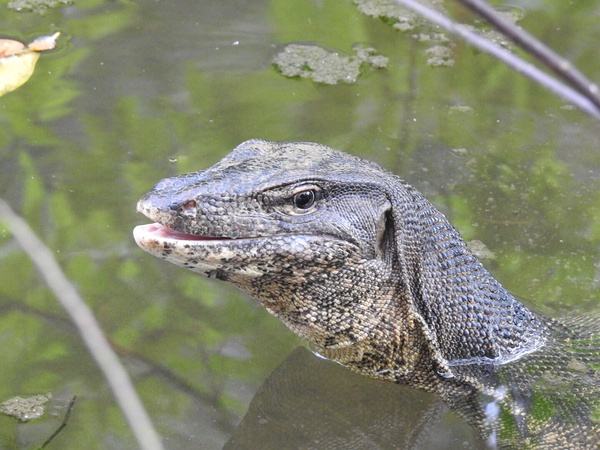
The Australian Water Dragon is an impressive, long-bodied lizard:
Size: adults can reach a total length of 80–90 cm, with the tail making up most of the length;
Head & body: large, somewhat flattened head with a sturdy neck and laterally compressed body that aids in swimming;
Crest & spines: a row of spiny scales runs from the back of the head down the spine and along the upper tail, giving a “dragon-like” profile;
Colouration: overall grey, brown or olive tones with darker bands along the body and tail; some individuals show reddish or yellowish patches on the chest or flanks;
Tail: long, muscular and slightly flattened side-to-side, used as a powerful rudder and propeller in water;
Sexual dimorphism: males are generally larger with bulkier heads and more intense colour contrasts, especially during the breeding season.
Distribution & Habitat
The Australian Water Dragon occurs along the eastern seaboard of Australia:
from south-eastern Queensland through New South Wales into parts of Victoria;
found in both natural and human-modified landscapes where freshwater and basking sites are available.
Typical habitats include:
rivers, creeks, forested streams and rainforest edges;
lakes, ponds, garden water features and urban waterways in parks and campuses;
banks with rocks, logs, trees and other structures used for basking and quick escape into the water.
Behaviour
The Australian Water Dragon is a diurnal, semi-aquatic lizard with notable behaviours:
spends much of the day basking on rocks, logs or branches near water to regulate body temperature;
when alarmed, commonly leaps straight into the water and swims away or hides underwater, where it can remain for several minutes;
climbs well and may rest on overhanging branches above water or on tree trunks along the banks;
activity levels decrease in cooler months, and in some regions individuals may enter a period of brumation (winter dormancy).
Diet
The species is omnivorous, with diet shifting somewhat as individuals grow:
Juveniles: feed mainly on insects, spiders and other small invertebrates;
Adults: take a mixture of insects, small crustaceans, fish, tadpoles and other small vertebrates, as well as fallen fruit, flowers and some plant material;
in urban areas, individuals may opportunistically eat food scraps, which is not ideal for their long-term health.
Reproduction & Life Cycle
The Australian Water Dragon is oviparous (egg-laying), with reproduction linked to warmer seasons:
breeding usually occurs in spring and summer, when males display head-bobbing, body postures and chasing to court females and defend territories;
females dig nests in soft, sunny soil near water and lay clutches of several to a dozen or more eggs;
eggs incubate in the soil, with development time strongly influenced by temperature;
hatchlings emerge and disperse independently, receiving no parental care; in the wild, many individuals may live for several years, and in captivity lifespans beyond 10 years are possible.
Interactions with People
In many cities and towns, Australian Water Dragons are now well-known residents of public parks and riversides:
they are generally wary but tolerant of people, often allowing quiet observers to approach fairly closely;
their conspicuous size and behaviour make them popular subjects for wildlife photography and environmental education;
regular feeding by people can encourage unnatural boldness and poor diet, so hand-feeding is discouraged.
Conservation Status & Threats
The Australian Water Dragon is considered a common species over much of its range and is generally classified as Least Concern or Not Evaluated in broad conservation assessments.
Nevertheless, local populations can be affected by:
loss and hardening of natural riparian vegetation and basking sites;
predation by domestic dogs and cats, as well as introduced predators;
pollution and litter in waterways, affecting both habitat quality and prey availability;
inappropriate feeding and disturbance by people.
Protecting riparian vegetation, keeping waterways clean and avoiding feeding wild lizards are simple ways to help maintain healthy populations of Australian Water Dragons in both natural and urban settings.