How Does an Automatic Chicken Coop Door Work?
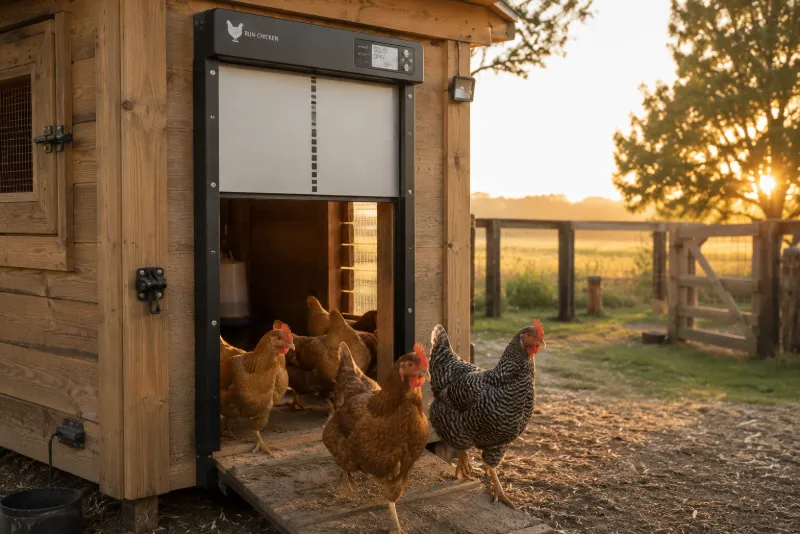
Automatic chicken coop doors typically operate using one or more control methods. Some open and close according to daylight detected by a light sensor, while others follow a programmable timer. More advanced models may include Wi-Fi, Bluetooth, temperature monitoring, or smartphone controls.
Most systems consist of four main components:
Door panel
Motor or actuator
Controller
Power source (battery, solar panel, or AC adapter)
If any of these components fail or become obstructed, the door may not function correctly.
Common Automatic Chicken Coop Door Problems
| Problem | Possible Cause | Typical Solution |
|---|---|---|
| Door will not open | Dead battery, power loss, motor failure | Check power supply and battery voltage |
| Door will not close | Obstacle, dirty tracks, sensor interference | Remove obstruction and clean tracks |
| Door opens at the wrong time | Incorrect timer or light sensor settings | Adjust controller settings |
| Motor runs but door does not move | Loose cable or stripped gear | Inspect drive mechanism |
| Door stops halfway | Ice, debris, or excessive friction | Clean and inspect moving parts |
| Door opens and closes repeatedly | Fluctuating light or faulty sensor | Reposition or replace sensor |
Problem 1: The Door Won't Open
If the automatic door remains closed in the morning, begin with the simplest checks.
Possible Causes
Battery is discharged.
Power cable is disconnected.
Solar panel is not charging properly.
Motor has failed.
Timer settings are incorrect.
Light sensor is blocked.
Recommended Checks
Confirm that power is reaching the controller.
Replace or recharge the battery if necessary.
Inspect wiring for loose or damaged connections.
Test the manual override function.
Check whether the motor produces any sound.
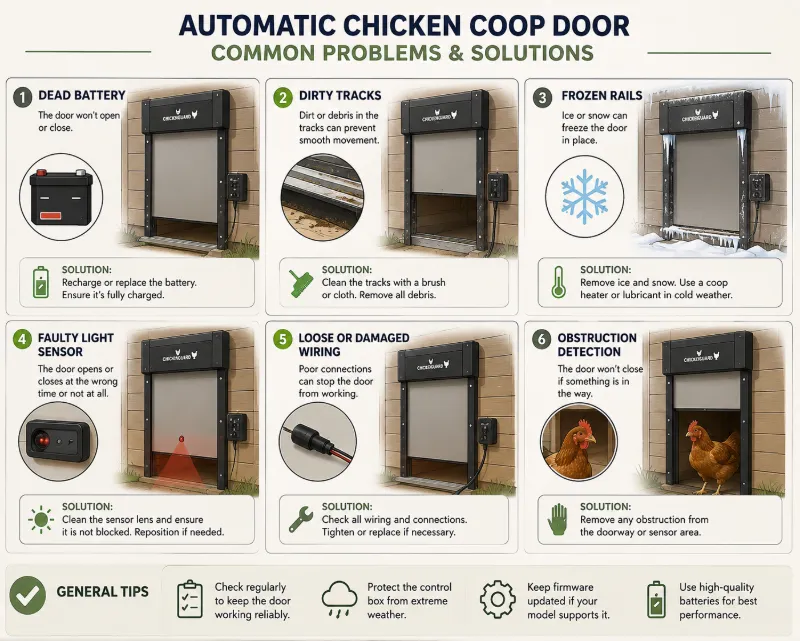
Problem 2: The Door Won't Close
A door that fails to close can leave chickens vulnerable to predators such as foxes, raccoons, or other local wildlife.
Common reasons include:
Bedding or feathers caught in the tracks.
Dirt buildup preventing smooth movement.
Ice during winter.
A chicken standing in the doorway.
Faulty obstruction detection.
Always ensure the doorway is clear before testing the closing cycle.
Problem 3: The Door Gets Stuck
Doors that move only partway often experience mechanical resistance.
Inspect for:
Warped wooden frames
Bent aluminum tracks
Loose screws
Rust
Accumulated mud
Frozen moisture
Cleaning and lubricating moving parts with a lubricant appropriate for outdoor equipment may improve operation. Avoid excessive lubrication, which can attract dust and debris.
Problem 4: Incorrect Opening and Closing Times
Many automatic coop doors rely on light sensors or programmable timers.
If the door opens too early or closes too late, check:
Time settings after power interruption.
Seasonal daylight changes.
Artificial lighting inside the coop.
Sensor placement.
Outdoor lights positioned near the coop can sometimes confuse light-sensitive controllers.
Problem 5: Battery Problems
Battery performance naturally declines over time, especially in cold weather.
Signs of battery-related issues include:
Slow motor movement
Door stopping before fully opening
Intermittent operation
Controller restarting unexpectedly
Many manufacturers recommend replacing rechargeable batteries after several years of service, depending on usage and environmental conditions.
Problem 6: Sensor Malfunctions
Some automatic doors use safety sensors to detect obstacles or monitor ambient light.
Problems may occur when sensors become:
Dirty
Covered with cobwebs
Misaligned
Damaged by moisture
Blocked by snow or leaves
Regular cleaning with a soft cloth can help maintain reliable sensor performance.
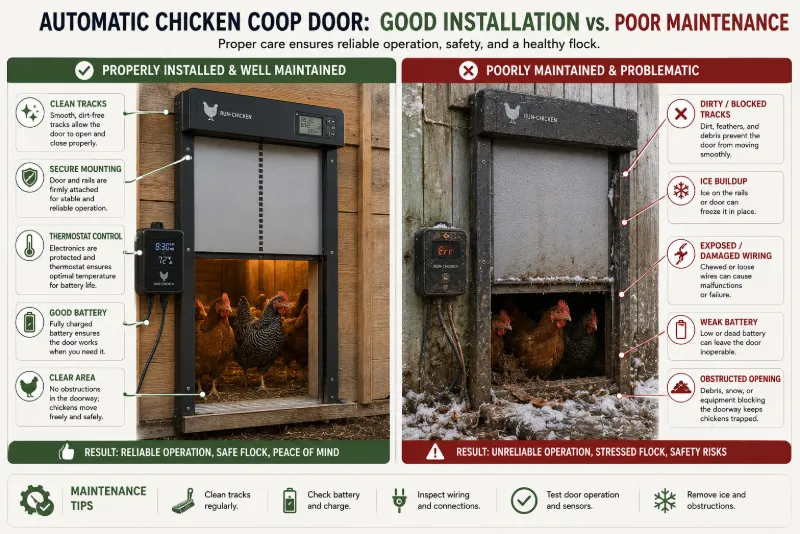
Seasonal Problems
Winter
Frozen tracks
Ice buildup
Reduced battery efficiency
Snow covering sensors
Summer
Dust accumulation
Overheating electronics
Solar glare affecting light sensors
Rainy Seasons
Water entering electrical components
Mud in sliding tracks
Corrosion on connectors
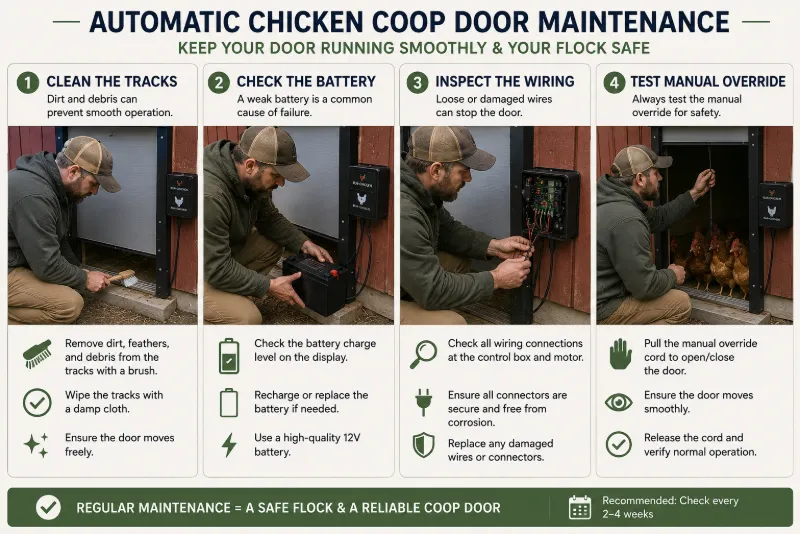
Preventive Maintenance Checklist
| Maintenance Task | Recommended Frequency |
|---|---|
| Inspect battery | Monthly |
| Clean door tracks | Weekly |
| Remove feathers and bedding | Weekly |
| Inspect wiring | Monthly |
| Test manual override | Monthly |
| Check mounting screws | Every 2–3 months |
| Inspect sensors | Monthly |
Safety Tips
Automatic coop doors are designed to improve convenience, but they should not replace routine flock checks.
Observe the door periodically to confirm it opens and closes fully.
Keep emergency manual access available.
Follow the manufacturer's maintenance instructions.
Replace damaged electrical components promptly.
Protect wiring from rodents whenever possible.
When Should You Replace an Automatic Coop Door?
If repeated repairs fail to restore reliable operation, replacement may be more practical than continued maintenance. Persistent motor failures, cracked housings, severe corrosion, or unavailable replacement parts may indicate that the system has reached the end of its service life.
When selecting a new automatic coop door, consider weather resistance, reliable obstacle detection, battery backup options, and compatibility with your coop size and local climate.
FAQs
Why won't my automatic chicken coop door open?
The most common causes are a discharged battery, disconnected power supply, incorrect timer settings, blocked light sensor, or a motor problem. Start by checking the power source and controller before inspecting mechanical components.
Why does my coop door stop halfway?
A door may stop midway because of dirt, ice, warped tracks, excessive friction, or an obstruction in the guide rails. Cleaning the tracks and checking for mechanical damage often resolves the issue.
How often should I clean my automatic chicken coop door?
Cleaning the door tracks and removing feathers, bedding, and dirt at least once a week can help maintain reliable operation. More frequent cleaning may be needed in dusty or muddy environments.
Can cold weather affect an automatic coop door?
Yes. Low temperatures can reduce battery performance, freeze door tracks, and affect moving parts. Regular winter inspections can help minimize these problems.
How long do automatic chicken coop doors typically last?
The lifespan varies by manufacturer, climate, maintenance, and usage. With regular care and timely replacement of worn components such as batteries, many automatic coop doors can provide reliable service for several years.