Why the Chicken Run Floor Is a Major Weak Point
Many poultry keepers focus on the walls and roof of a run but overlook the ground beneath it. Unfortunately, digging predators usually search for the easiest route rather than attacking the strongest part of an enclosure.
A fox or coyote may begin digging directly beside the fence. Raccoons and skunks can enlarge small gaps, while rats may use existing tunnels beneath boards, stones, or shallow foundations.
Once a predator discovers food, eggs, or vulnerable birds inside a run, it may return repeatedly. A successful attack can also attract other scavengers to the same location.
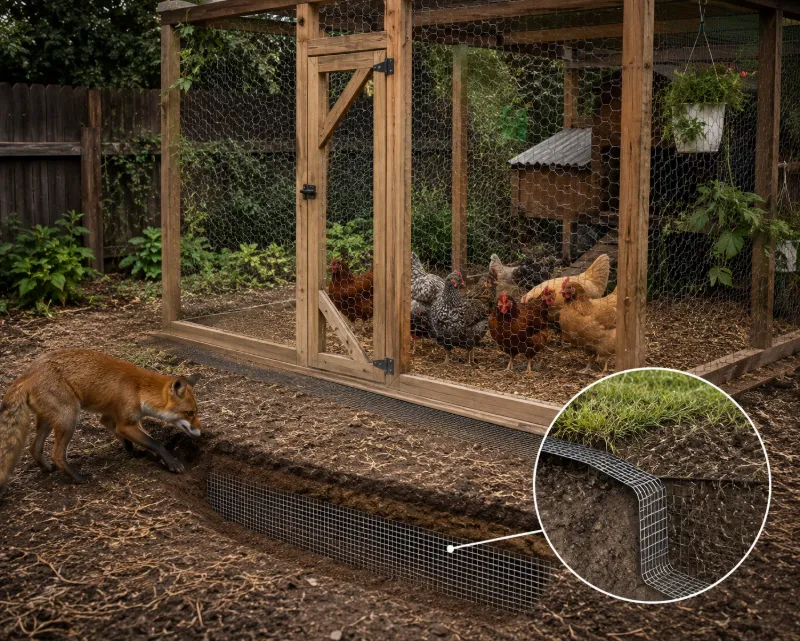
Common Animals That Dig Under Chicken Runs
| Predator | Typical Entry Method | Main Risk |
|---|---|---|
| Foxes | Dig directly beside the fence | Can kill several chickens during one attack |
| Coyotes | Dig, push, or exploit weak fencing | Powerful enough to damage lightweight materials |
| Raccoons | Dig, climb, reach through mesh, and manipulate latches | May pull birds through openings or enter through doors |
| Skunks | Dig beneath shallow fencing | Often target eggs, chicks, and feed |
| Rats | Burrow through small gaps and weak soil | Steal feed, damage structures, and threaten chicks |
| Weasels and mink | Enter through surprisingly small openings | May kill multiple birds quickly |
| Domestic dogs | Dig, push, bite, or tear weak fencing | Can cause severe injury even without hunting for food |
Why Standard Chicken Wire Fails
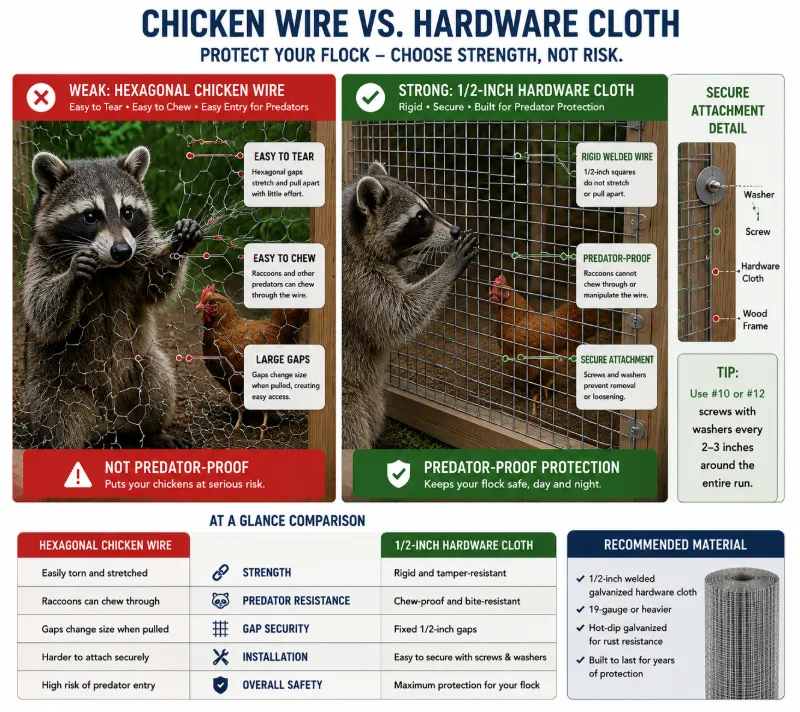
Chicken wire is lightweight hexagonal mesh originally intended to keep chickens from wandering. It is inexpensive and easy to install, but those same qualities make it a poor primary predator barrier.
The Wire Is Too Thin
Determined dogs, raccoons, foxes, and other strong animals may bend, bite, pull, or tear lightweight poultry netting. Rust and repeated movement can make the wire even weaker over time.
The Openings Are Too Large
The hexagonal openings may allow:
Raccoon paws to reach through
Snakes or rodents to enter
Weasels to squeeze through damaged areas
Predators to grab a chicken resting beside the fence
Staples Can Pull Out
Thin wire attached only with light staples may separate from a wooden frame when a predator pushes or pulls against it.
It Does Not Stop Digging
Even intact chicken wire on the walls provides little protection when it ends at ground level. A predator can simply dig beneath it.
Chicken wire may still be useful as a secondary internal divider or overhead bird barrier, but it should not be the main material protecting chickens from predators.
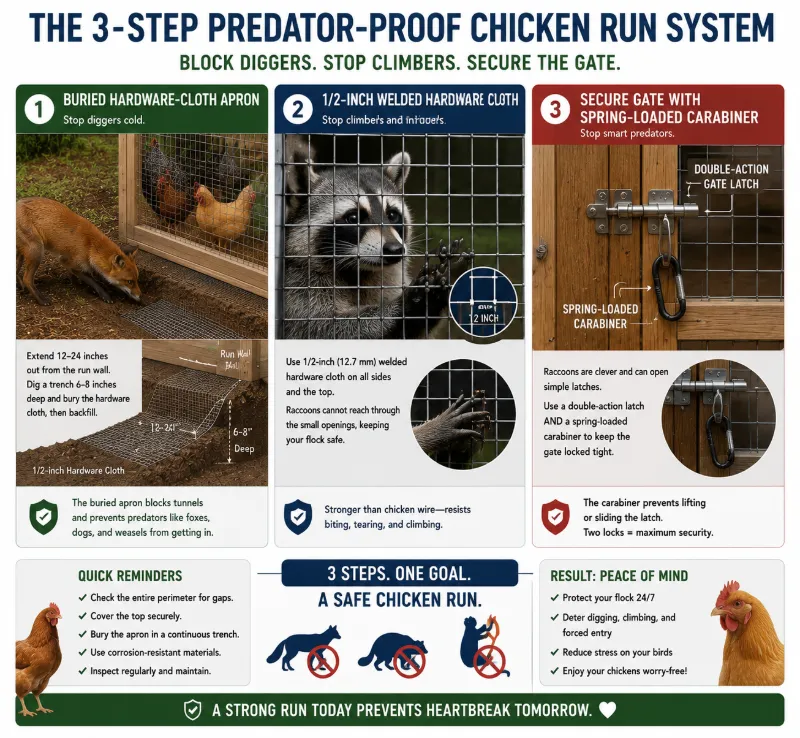
The Three-Step Predator-Proofing Strategy
A dependable chicken run should prevent predators from digging under the perimeter, reaching through the walls, or opening the access doors.
| Protection Layer | Purpose |
|---|---|
| Hardware-cloth apron | Stops animals from digging beneath the perimeter |
| 1/2-inch hardware cloth | Blocks paws, teeth, and small-bodied predators |
| Double-action locks | Prevents raccoons and other animals from opening doors |
Step 1: Install a Hardware-Cloth Apron
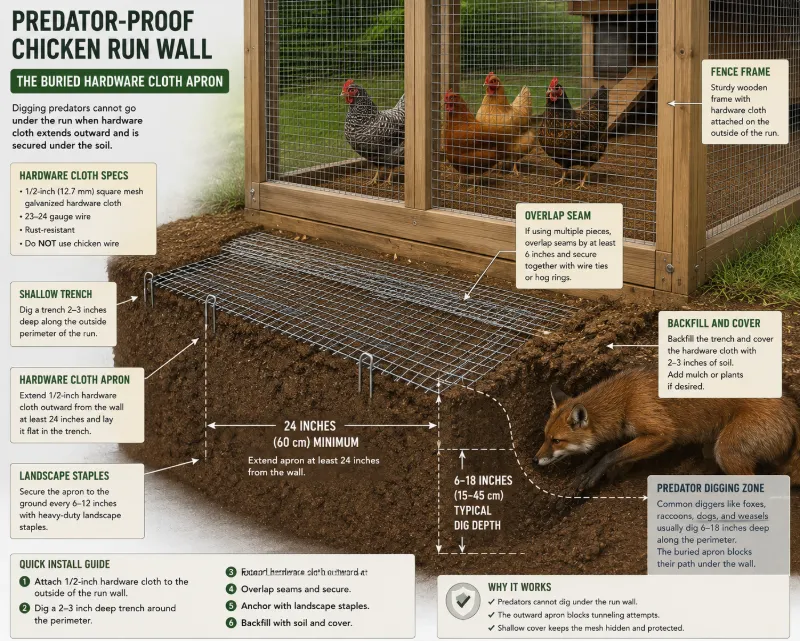
The apron method is one of the most practical ways to stop digging predators. Instead of burying fencing several feet straight down, galvanized hardware cloth is extended outward from the base of the run.
When a predator begins digging beside the wall, it encounters the horizontal mesh. Most animals continue digging at the fence line rather than backing away far enough to reach the outer edge of the apron.
How Wide Should the Apron Be?
A typical apron extends approximately 12–24 inches outward from the run. In areas with persistent foxes, coyotes, dogs, or loose soil, using the wider end of that range provides greater protection.
Surface Apron vs. Buried Apron
| Method | Advantages | Limitations |
|---|---|---|
| Surface apron | Fast to install and easy to inspect | Must be securely pinned and covered to prevent tripping |
| Shallow buried apron | Neater appearance and protected from foot traffic | Requires more digging and is harder to inspect |
| Vertical buried fence | Useful beside concrete or narrow boundaries | Requires deep trenching and may be bypassed beneath the bottom |
How to Install an Apron
Remove vegetation, stones, and loose debris from the perimeter.
Cut 1/2-inch galvanized hardware cloth into manageable lengths.
Attach one edge firmly to the lower frame of the chicken run.
Extend the mesh outward approximately 12–24 inches.
Overlap adjoining sections by at least several inches.
Join overlaps with heavy-duty wire, hog rings, or exterior-rated metal fasteners.
Secure the outer edge with landscape staples or ground anchors.
Cover the apron with soil, gravel, mulch, pavers, or turf.
Inspect the full perimeter for gaps, raised corners, and weak seams.
Keep the Mesh Flat
A wavy or raised apron may create spaces where an animal can begin digging. Level the soil first and secure the mesh frequently enough that it remains in close contact with the ground.
Pay Extra Attention to Corners
Corners are common failure points because pieces of mesh may not overlap completely. Fold continuous mesh around corners whenever possible, or use a generous overlap secured with multiple fasteners.
Should You Put Wire Across the Entire Run Floor?
Covering the entire floor with exposed hardware cloth may stop digging, but it is not always the best choice for the chickens.
Wire directly beneath their feet can interfere with natural scratching and dust bathing. Rough, damaged, or exposed edges may also contribute to foot injuries.
For many permanent runs, a perimeter apron provides effective protection while preserving a natural soil, sand, or deep-litter surface inside.
A full mesh floor may be considered for small mobile enclosures or extreme rodent pressure, but it should usually be covered with a sufficiently deep, dry substrate so birds are not standing directly on wire.
Step 2: Upgrade to 1/2-Inch Galvanized Hardware Cloth
Hardware cloth is not actually fabric. It is a rigid welded-wire mesh with square or rectangular openings.
For most backyard chicken runs, 1/2-inch galvanized hardware cloth offers a useful balance of predator resistance, ventilation, visibility, and cost.
Why 1/2-Inch Openings Matter
Smaller openings help prevent raccoons from reaching through the fence and make it harder for rats, snakes, weasels, and other small predators to enter.
In areas with very small rodents or young snakes, some keepers use 1/4-inch mesh around lower sections, brooders, feeding areas, or vulnerable ventilation openings.
What Gauge Should You Buy?
Wire gauge describes thickness, but gauge numbers can be confusing because lower numbers generally indicate thicker wire.
Choose a product described as heavy-duty and suitable for outdoor enclosures. Avoid extremely thin decorative mesh that bends easily by hand.
The ideal product should:
Resist pulling and bending
Have consistent welded intersections
Use a durable galvanized coating
Have no broken welds or sharp protrusions
Be wide enough to reduce unnecessary seams
Galvanized Before Welding vs. Galvanized After Welding
Galvanized-after-welding mesh is coated after the wire intersections are welded, which can provide additional corrosion protection over the joints. Galvanized-before-welding mesh may still perform well when it is manufactured properly and used in a suitable environment.
For humid climates, coastal areas, and ground-contact applications, corrosion resistance should be a major buying consideration.
How to Attach Hardware Cloth Correctly
Strong mesh is only effective when the attachment system is equally strong.
Better Fasteners for Wooden Frames
Exterior screws with large washers
Poultry fencing washers
Heavy fencing staples driven securely into sound wood
Wooden battens screwed over the mesh edges
Small office-style staples and light craft fasteners should not be trusted as the only attachment method.
Better Fasteners for Metal Frames
Stainless-steel or galvanized wire
Hog rings
UV-resistant heavy-duty cable ties as secondary fasteners
Bolts with washers where the frame permits
Plastic zip ties can deteriorate in sunlight and may be chewed. They are useful for temporarily positioning mesh but should not be the only long-term structural connection.
Overlap Every Seam
Two pieces of hardware cloth should overlap rather than merely meet edge to edge. Secure the overlap at short intervals so a predator cannot pull the pieces apart.
Step 3: Install Double-Latch Locks
A predator-proof floor will not help if a raccoon can open the door.
Raccoons have highly mobile front paws and can manipulate simple slide bolts, hooks, handles, and loose latches. A secure chicken run therefore needs a lock that requires more than one deliberate action to open.
Safer Locking Options
Spring-loaded carabiners through latch holes
Two-step gate latches
Locking snap hooks
Padlocks where frequent access is not required
Latch-and-carabiner combinations
Use Two Security Points on Large Doors
Tall or flexible doors may bow outward even when the central latch remains closed. A top and bottom latch can prevent a predator from pulling open a corner.
Check Door Gaps
Inspect the entire frame after locking the door. There should be no gap large enough for a paw, nose, or small predator to enter.
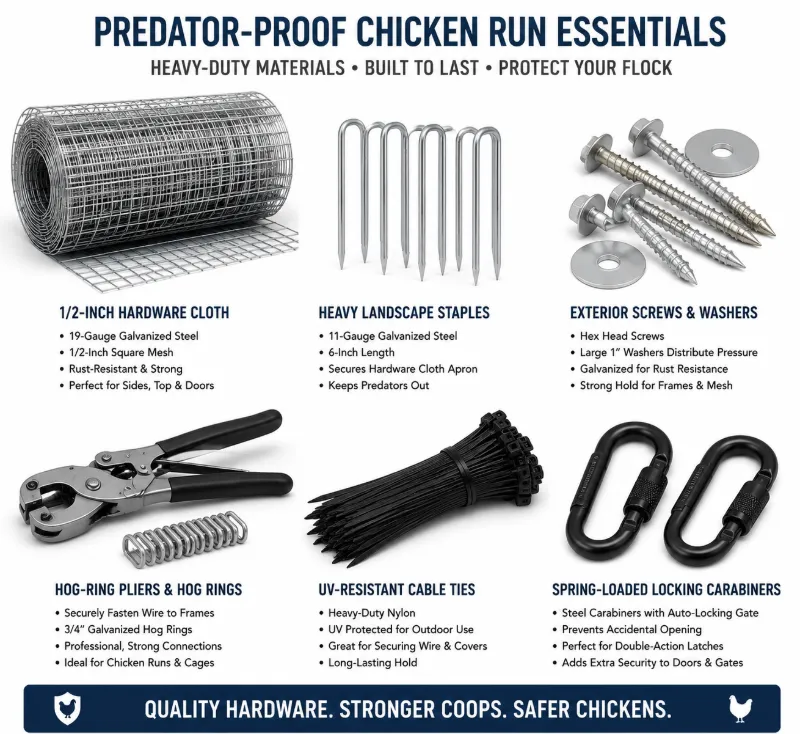
Recommended Heavy-Duty Materials
The following product categories are useful for building or upgrading a predator-resistant chicken run. Exact brands and dimensions should be selected according to the size of the enclosure and local predator pressure.
1. Heavy-Duty Galvanized Hardware Cloth
Best use: Run walls, ventilation openings, floor aprons, windows, and vulnerable lower sections.
Look for:
1/2-inch openings
Heavy welded wire
Galvanized or corrosion-resistant finish
Roll widths that match your frame height
Consistent customer reports of strong welds
Secure packaging without badly crushed edges
Buying a larger roll is often more economical for a complete run because it reduces the number of seams and leftover unusable pieces.
2. Boundary or Hardware-Cloth Repair Rolls
Best use: Patching damaged sections and reinforcing corners, doorways, and ventilation gaps.
Keep a smaller repair roll available so holes can be covered immediately rather than waiting for a full rebuild.
3. Heavy-Duty UV-Resistant Cable Ties
Best use: Holding mesh in position during installation or reinforcing areas already secured with metal fasteners.
Choose exterior-rated ties rather than lightweight indoor versions. Inspect them regularly for cracking, fading, and looseness.
For permanent predator protection, combine cable ties with galvanized wire, hog rings, screws, or fencing staples.
4. Hog Rings and Hog-Ring Pliers
Best use: Joining overlapping hardware-cloth sections.
Hog rings can create strong, closely spaced connections more quickly than twisting individual pieces of wire by hand.
5. Large Washers and Exterior Screws
Best use: Attaching hardware cloth to wooden frames.
The washer spreads pressure across the mesh and makes it much more difficult for a predator to pull the wire over the screw head.
6. Spring-Loaded Carabiners
Best use: Securing slide bolts and gate latches against raccoons.
Select a size that fits the latch hole without leaving enough room for easy manipulation.
7. Landscape Staples or Ground Anchors
Best use: Holding a hardware-cloth apron flat before it is covered.
Long, heavy staples are generally more secure in soft soil than short, thin pins. Additional anchors may be needed at corners and seams.
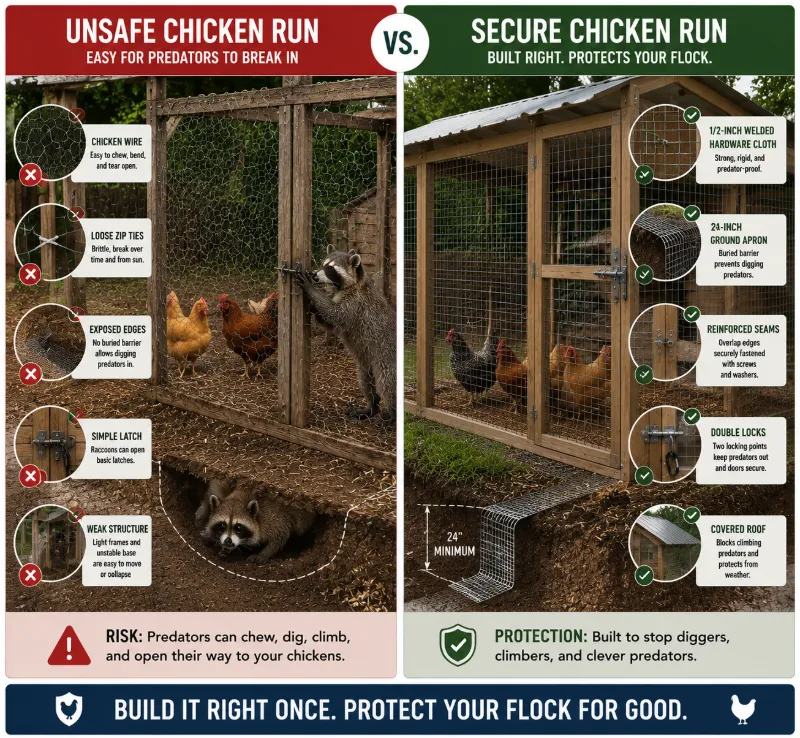
Predator-Proofing Shopping Checklist
| Material | Recommended Role | Quantity Planning Tip |
|---|---|---|
| 1/2-inch galvanized hardware cloth | Walls and apron | Measure the perimeter and add extra for overlaps |
| Exterior screws and washers | Attach mesh to wood | Plan for closely spaced attachment points |
| Hog rings | Join seams | Buy enough for every overlap and repair |
| Heavy landscape staples | Secure apron to soil | Use extra at corners and uneven ground |
| UV-resistant cable ties | Temporary alignment and secondary reinforcement | Do not rely on them as the only fastener |
| Spring-loaded carabiners | Lock doors and access panels | Use one on every simple latch |
| Replacement mesh roll | Emergency repairs | Store indoors to reduce corrosion |
How Much Hardware Cloth Do You Need?
Measure the full outside perimeter of the run and multiply it by the apron width.
For example, a rectangular run measuring 10 feet by 20 feet has a perimeter of 60 feet. A two-foot-wide apron would require approximately 120 square feet of mesh before allowing for overlaps, corners, cutting waste, and repairs.
Always purchase extra material. Running short near the final corner may create a weak patchwork seam exactly where protection is most important.
Floor Designs for Different Chicken Runs
Natural Soil Floor
A natural soil floor supports scratching and dust bathing but requires a well-secured perimeter apron. Regularly inspect for tunnels, erosion, and gaps around posts.
Sand Floor
Sand can make manure removal easier in some climates, but digging predators may move through loose material quickly. The apron and lower wall must be firmly anchored.
Deep-Litter Floor
Deep litter provides enrichment and produces compostable material, but it may conceal small holes near the perimeter. Pull litter back periodically to inspect the lower frame.
Concrete Floor
A correctly constructed concrete base provides strong protection from digging animals and rodents. However, it costs more, is permanent, and should be covered with appropriate bedding to support foot health and natural behavior.
Paver Perimeter
Heavy pavers placed over a hardware-cloth apron can protect the mesh, improve drainage, and discourage digging at the fence line.
Do Electric Fences Help?
An appropriately designed electric poultry fence can add an outer deterrent against foxes, coyotes, dogs, and some climbing predators. However, it does not replace secure hardware cloth, a covered run, or reliable nighttime housing.
Vegetation, soil conditions, weather, fence voltage, and installation quality all affect performance. Follow local regulations and the manufacturer's safety instructions.
Protect the Roof and Upper Walls Too
Digging protection is only one part of a complete system. Raccoons, cats, foxes, and some mustelids can climb, while hawks and owls can attack from above.
A secure run should ideally include:
Hardware-cloth walls
A covered roof
Protected ventilation openings
Secure doors
No overhanging branches touching the enclosure
No gaps where the roof meets the walls
Common Predator-Proofing Mistakes
Stopping the Mesh at Ground Level
This leaves a clear digging route beneath the wall.
Using Chicken Wire as the Main Barrier
Its thin wire and large openings are inadequate against many predators.
Leaving Loose Apron Edges
A predator may lift a corner and begin digging beneath it.
Using Zip Ties Alone
Sunlight, chewing, and age can weaken plastic fasteners.
Failing to Reinforce Doors
Doors and access panels are often weaker than the fixed walls.
Ignoring Small Openings
Vent gaps, roof edges, drainage spaces, and corners may admit snakes, rats, or weasels.
Leaving Chickens in the Run Overnight
Even a strong daytime run may be less secure than a solid coop. Chickens should generally be locked inside a well-built sleeping house after dark.
How to Inspect a Chicken Run for Weaknesses
Conduct a slow inspection from both inside and outside the enclosure.
Pull gently on every mesh seam.
Check for rust, broken welds, and bent wire.
Look for disturbed soil around the perimeter.
Inspect corners and door frames for gaps.
Test every latch with one hand.
Confirm that roof panels remain securely attached.
Search for tracks, droppings, hair, or claw marks.
Inspect after storms, construction, and landscaping work.
Signs a Predator Has Tested the Run
Shallow holes directly beside the fence
Bent or pulled mesh
Loose fasteners
Scratch marks around doors
Missing feathers near the perimeter
Tracks in mud or snow
Moved stones or landscape staples
Chickens refusing to enter part of the run
Repair damage immediately. Predators often return to a location where they have already found a possible entry route.
Final Recommendation
The most dependable way to protect a chicken run floor is to install a 12–24-inch outward-facing apron made from heavy-duty 1/2-inch galvanized hardware cloth. Attach it securely to the run, overlap every seam, anchor it flat, and cover it with soil, gravel, turf, or pavers.
Continue the same strong mesh up the lower walls, reinforce it with metal fasteners, and secure every door with a two-step latch or spring-loaded carabiner. Ordinary chicken wire and simple slide bolts are not sufficient protection against determined predators.
Predator-proofing is most successful when the floor, walls, roof, doors, and nighttime coop function as one connected security system. Eliminating a single weak point can mean the difference between a safe flock and a preventable nighttime attack.
FAQs
How deep should fencing be buried around a chicken run?
Instead of digging a very deep vertical trench, many poultry keepers install a horizontal hardware-cloth apron extending approximately 12–24 inches outward. This blocks predators that begin digging at the fence line.
Is 1/2-inch hardware cloth strong enough for a chicken run?
Heavy-duty 1/2-inch galvanized hardware cloth is suitable for many backyard runs when securely fastened to a strong frame. Wire thickness, weld quality, corrosion resistance, seams, and attachment methods also affect protection.
Can raccoons tear through chicken wire?
Raccoons can pull, bend, and exploit lightweight wire, particularly where it is rusted or poorly attached. They may also reach through large openings and pull chickens toward the fence.
Should hardware cloth go inside or outside the chicken run frame?
Mounting it on the predator-facing exterior often prevents animals from pushing the mesh away from the frame. Large washers, screws, battens, or heavy fencing staples should secure it firmly.
Is a buried apron better than a wire floor?
An apron usually preserves a more natural internal floor while blocking predators at the perimeter. A complete wire floor can provide additional protection but should not remain exposed beneath the chickens' feet.
How wide should a predator apron be?
Approximately 12–24 inches is commonly used. Wider aprons may be appropriate where large digging predators, loose soil, or repeated attacks are present.
Can I use plastic poultry netting?
Plastic netting is not a dependable barrier against chewing, clawing, pushing, or digging predators. Welded metal hardware cloth is generally much stronger.
Are zip ties strong enough to attach hardware cloth?
Zip ties are useful during installation and as secondary reinforcement, but they should not be the only permanent fastener. Combine them with screws, washers, metal wire, hog rings, or heavy fencing staples.
What lock stops raccoons from opening a chicken run?
Use a latch requiring at least two deliberate actions, such as a slide bolt secured with a spring-loaded carabiner. Simple hooks and one-step latches may be manipulated by raccoons.
Should the chicken run have a roof?
Yes. A strong roof helps prevent attacks by hawks and owls and stops climbing predators from entering over the walls. Ensure the roof-to-wall seams are also closed.