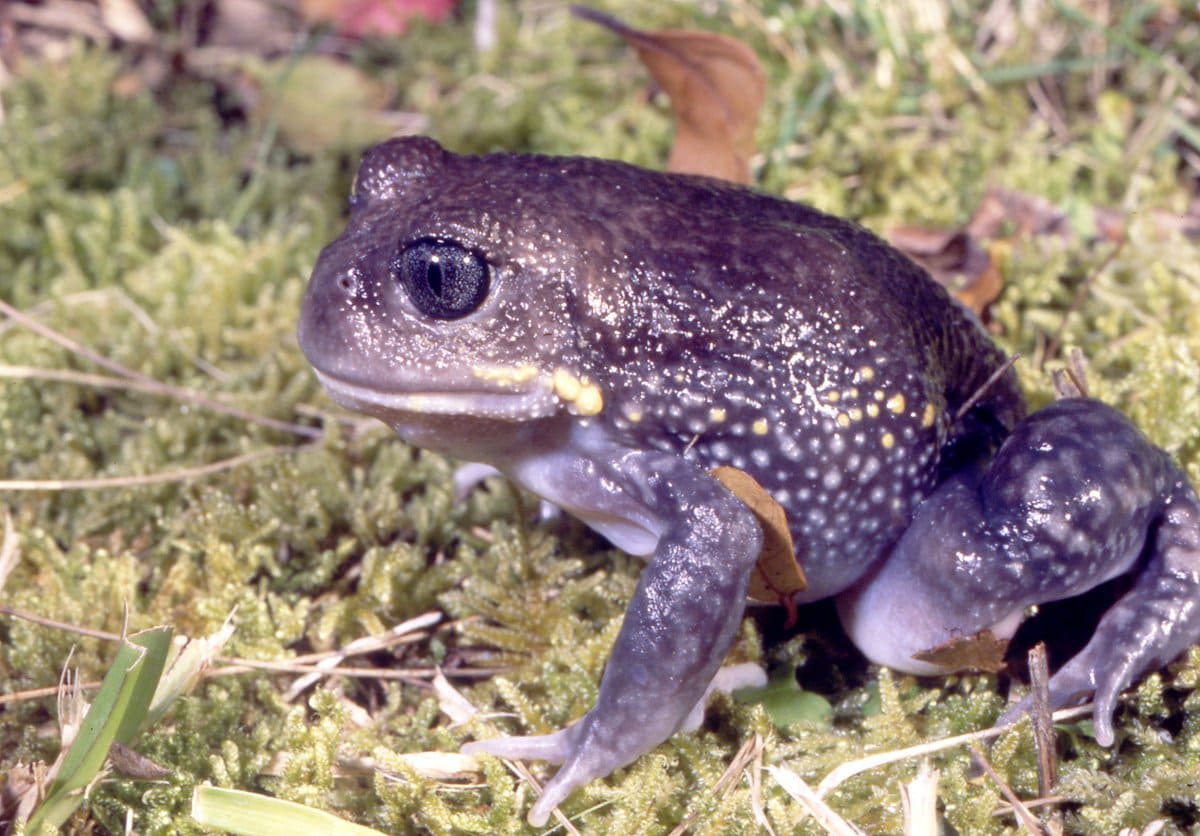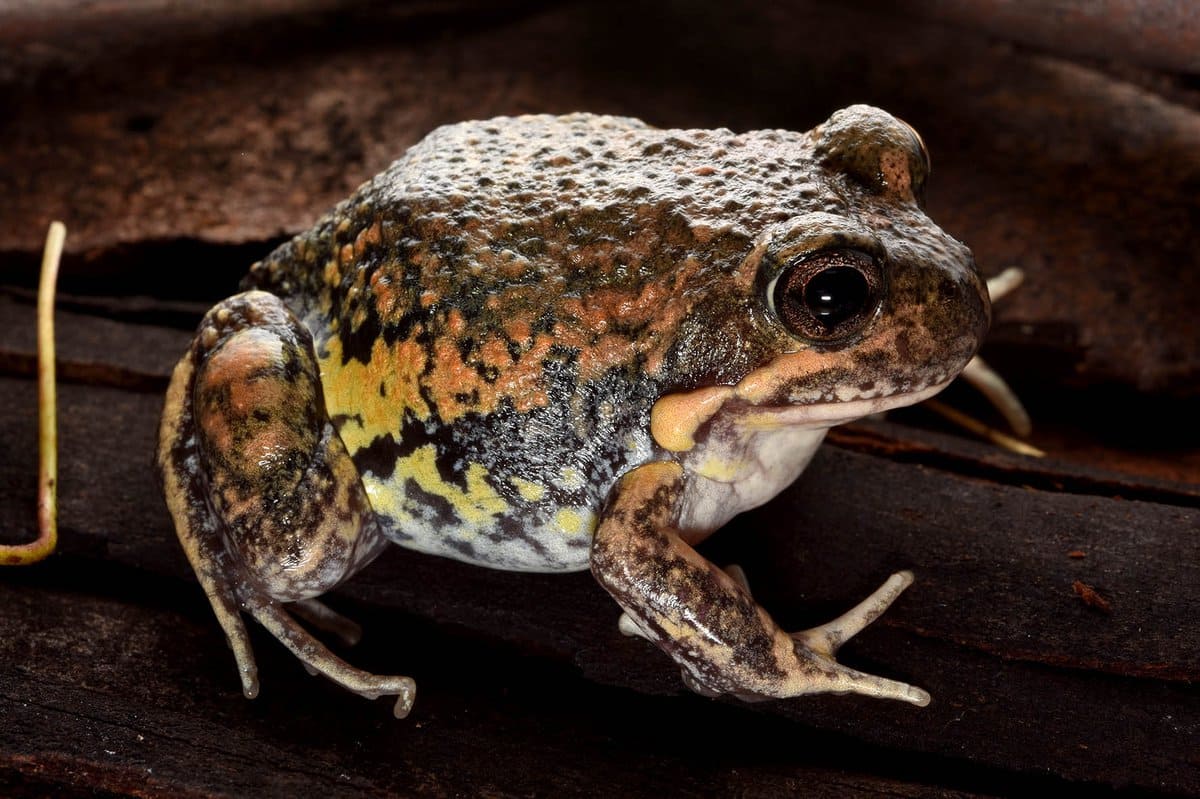
The Eastern Banjo Frog (Limnodynastes dumerilii) is a medium-sized, burrowing frog native to south-eastern Australia. It is famous for the males’ loud “bonk… bonk…” call, which sounds like a plucked banjo string and has earned the species the nickname Pobblebonk.
Taxonomy & Names
English names: Eastern Banjo Frog, Pobblebonk
Scientific name: Limnodynastes dumerilii
Family: Limnodynastidae
Genus: Limnodynastes
Appearance
The Eastern Banjo Frog is a stocky, ground-dwelling frog well adapted for digging:
Body size: adults are typically about 6–8 cm in length, with females usually larger than males;
Build: a robust, broad-bodied frog with a wide head and strong limbs, particularly powerful hind legs for burrowing;
Dorsal colour: brown, grey-brown or olive with irregular darker blotches or mottling;
Flank and thigh markings: yellow or orange patches are often present along the sides and on the backs of the thighs, which help distinguish it from some other similar species;
Belly: the underside is pale cream or white, sometimes with fine grey speckling;
Skin texture: the back is slightly rough or finely granular but not as warty as a toad.
Distribution & Habitat
The Eastern Banjo Frog is widespread in south-eastern Australia:
found in New South Wales, Victoria, Tasmania and parts of South Australia;
occurs from coastal lowlands to foothills and lower mountain slopes.
It occupies a wide range of moist habitats where both water and suitable soils for burrowing are available:
natural wetlands, swamps, ponds, slow-flowing streams and river floodplains;
farm dams, irrigation channels, roadside drains and urban ponds;
adjacent grasslands, open woodlands and farmland with loose or sandy soils for digging retreat burrows.
Behaviour & Call
The species is mainly nocturnal and spends much of the day hidden:
by day frogs rest in self-dug burrows, under logs, rocks or thick leaf litter near water;
they emerge at dusk and at night to feed and, during the breeding season, to call and breed;
males call from the edges of ponds, dams and flooded areas, producing the characteristic, resonant “bonk” notes that sound like a plucked banjo string.
During wet, warm periods the combined chorus of many males can be heard over long distances around wetlands and farm dams.
Diet
The Eastern Banjo Frog is a carnivorous predator of small animals:
ground-dwelling insects such as beetles, cockroaches, crickets and moths;
ants, spiders, slugs and other invertebrates found in damp soil and vegetation;
occasionally, small frogs or tadpoles may also be consumed.
It hunts at night, moving slowly along the ground or waiting in ambush and using its sticky tongue to capture passing prey.
Breeding & Development
Breeding is closely linked to rainfall and standing water:
breeding typically occurs in warmer, wetter months, often after substantial rain;
males gather at still or slow-moving water bodies such as ponds, dams and flooded paddocks to call;
females lay eggs in floating foam nests on the water surface or attached to vegetation;
tadpoles develop in the water and can tolerate a range of conditions, though they must complete metamorphosis before temporary pools dry out;
after metamorphosis, the young froglets leave the water and take up a burrowing, terrestrial lifestyle.
Conservation Status & Threats
On the IUCN Red List the Eastern Banjo Frog is currently listed as Least Concern (LC), reflecting its wide distribution and generally stable populations.
Local populations, however, may be affected by:
wetland drainage and pollution, including pesticide runoff;
habitat fragmentation through urban expansion and land clearing;
changes in rainfall patterns and increased frequency of drought associated with climate change.
Protecting a network of clean ponds, farm dams and wetlands, and retaining natural vegetation and suitable soils around them, benefits this species as well as many other amphibians.