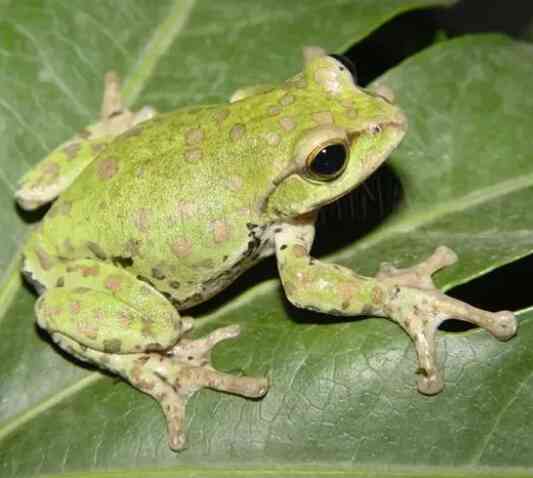
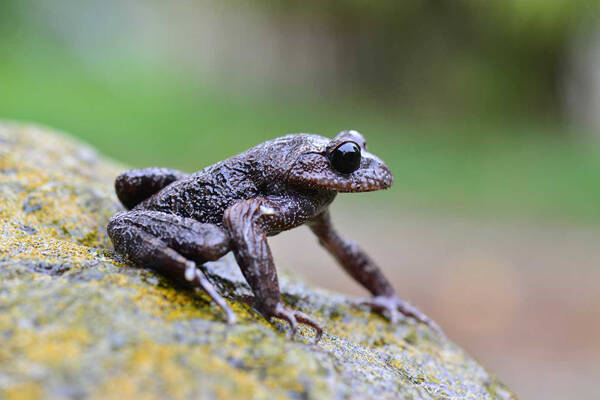
The Red-eyed Tree Frog (Agalychnis callidryas) is one of the most iconic frogs of Central American rainforests. Belonging to the family Hylidae and the genus Agalychnis, it is instantly recognisable by its bright red eyes, vivid green back, blue and yellow flanks and orange or red-orange toes. Its striking appearance has made it a symbol of tropical rainforest wildlife worldwide.
Taxonomy & Names
Common name: Red-eyed Tree Frog;
Scientific name: Agalychnis callidryas;
Family: Hylidae (tree frogs);
Genus: Agalychnis.
Appearance
The Red-eyed Tree Frog is small to medium in size but extremely colourful:
Body size: adults are typically about 4–7 cm in snout–vent length, with females usually larger than males;
Eyes: large, bright red or red-orange eyes with vertical pupils are the most distinctive feature;
Dorsal colour: the back is usually a vivid leaf-green that blends well with foliage during the day;
Flank pattern: the sides of the body show blue or blue-green bands with yellow or orange vertical stripes;
Limbs & toes: long slender limbs with enlarged toe pads for gripping leaves and branches, often coloured orange or red-orange;
Belly: underside pale, whitish to light yellow;
Body shape: a slender, agile tree frog adapted to life among leaves and branches.
Distribution & Habitat
This species is native to Central America:
occurs from southern Mexico through Guatemala, Honduras, Nicaragua and Costa Rica to Panama;
inhabits lowland and lower montane tropical rainforests.
Key habitat features include:
warm, humid forests with dense vegetation;
proximity to ponds, temporary pools or slow-moving streams used for breeding;
arboreal lifestyles in the shrub and lower canopy layers, especially on broad leaves over or near water.
Behaviour
The Red-eyed Tree Frog is a nocturnal, arboreal frog:
by day, it rests on the underside or upper surface of leaves, tucking its bright flanks and toes under the body and closing its eyes so that it appears mostly green and well camouflaged;
when disturbed, it can suddenly open its red eyes and unfold its limbs, flashing the blue and yellow flank stripes and orange toes to startle predators – a “startle display” that may give it time to escape;
at night, it moves actively among branches and leaves, feeding and searching for mates.
Diet
The species is carnivorous and feeds mainly on small invertebrates:
spiders and other arthropods;
occasionally very small frogs or other soft-bodied prey.
Reproduction & Life Cycle
Breeding is closely tied to the rainy season:
males call from vegetation near water, often from leaves overhanging ponds or temporary pools;
females lay clutches of eggs on the upper or lower surface of leaves that hang above the water;
eggs develop in a gelatinous mass, and when the embryos are ready, the tadpoles hatch and drop into the water below;
tadpoles continue their development in the water until metamorphosis, when they transform into small froglets that climb into the surrounding vegetation.
Conservation Status & Threats
On the IUCN Red List, Agalychnis callidryas is currently classified asLeast Concern (LC), reflecting its relatively wide distribution and generally stable populations.
However, local populations may be affected by:
deforestation and fragmentation of tropical rainforest habitat;
agricultural expansion, pesticides and pollution affecting breeding sites and surrounding vegetation;
changes in rainfall patterns and extreme weather events linked to climate change;
collection for the pet trade, although captive breeding and regulations have reduced some pressures.
Conserving rainforest habitat and regulating trade in wild frogs are important for maintaining healthy populations of the Red-eyed Tree Frog.