The blue dragon (Glaucus atlanticus) is a small marine invertebrate that lives in the open ocean. It is pelagic, meaning it typically stays far from shore rather than living on the seafloor or near coastal reefs. Despite its beautiful metallic-blue coloration, this tiny “sea slug” can be dangerous to humans because it can store and use toxins from the venomous animals it eats. Below is an improved English guide to its key characteristics, habitat, behavior, diet, sting, reproduction, and conservation status.
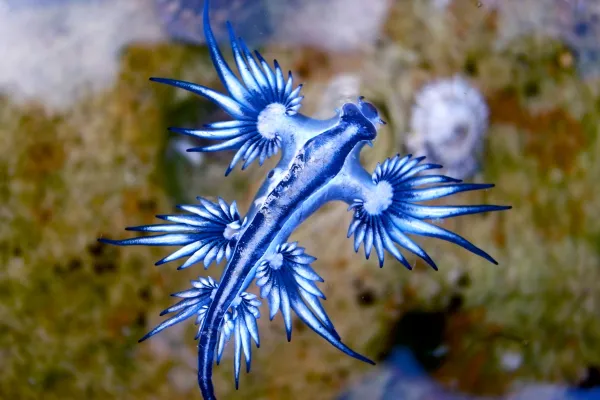
Table of Contents
Characteristics of the Blue Dragon
Classification: Glaucus atlanticus is a nudibranch gastropod (a type of shell-less sea slug) in the family Glaucidae.
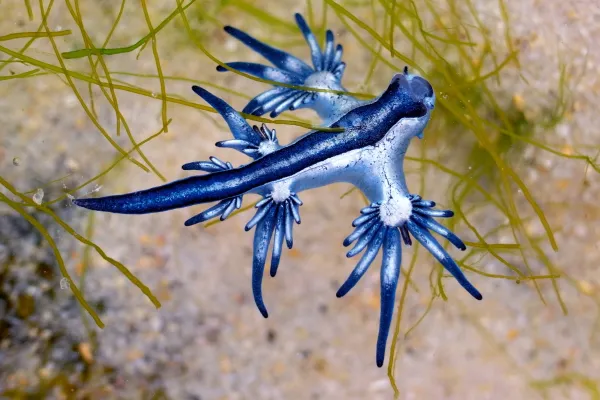
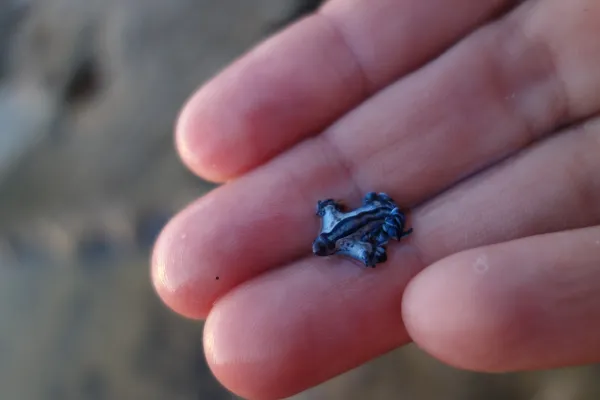
Coloration: It is typically silvery-blue on the upper side, while the underside can be very pale blue or even whitish.
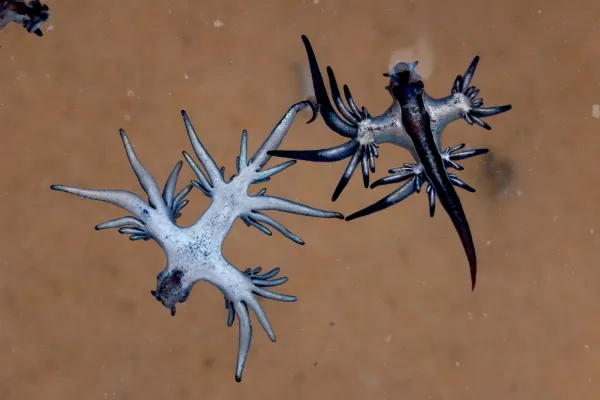
Body shape: Its body is flattened and elongated, often marked with darker blue or blackish striping.
Camouflage: The blue tones help it blend with the ocean’s shimmer. Whether it is oriented “up” or “down,” it can be hard for predators to spot.
Size: Adults are usually only 3–5 cm long, though rare individuals close to 6 cm have been reported.
Why it’s called a sea slug: It is a mollusk without a shell, which is why it’s commonly described as a slug-like animal.
Habitat and Distribution
The blue dragon occurs in temperate, warm, and tropical seas. Reports commonly include waters near:
parts of southern and eastern Africa (including regions such as South Africa and Mozambique)
Australia
some European coasts
Open-ocean lifestyle (pelagic)
Although it can occasionally wash up on beaches, Glaucus atlanticus is usually found offshore. It is often seen floating at the sea surface, drifting with currents and wind-driven surface movement. Observations suggest it spends much of its time carried by the ocean rather than actively “swimming” like a fish.
Behavior
Even though it is small, the blue dragon behaves like a capable predator—and an impressive chemical “recycler.” It can feed on venomous prey and then store and concentrate toxins for its own defense.
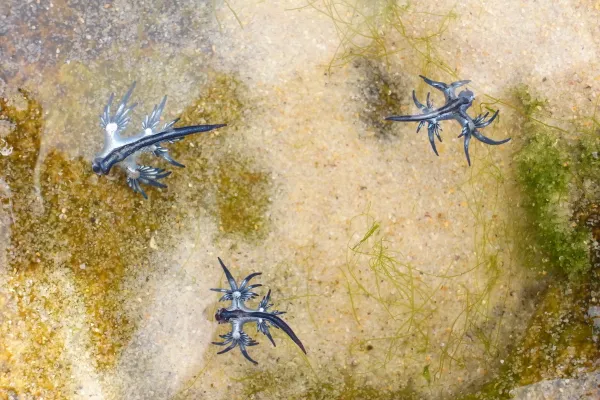
Solitary most of the time
Blue dragons are generally solitary. They are more likely to be found in proximity to others primarily during mating and egg-laying, when individuals may gather in the same floating zones where prey is available.
What Does Glaucus atlanticus Eat?
The blue dragon mainly preys on drifting, stinging marine animals—especially cnidarians. Its diet is often described as including:
Sea anemones
other floating cnidarians
Famous prey: the Portuguese man o’ war
One of the most striking facts about this species is that it can feed on the Portuguese man o’ war (Physalia physalis), which is highly venomous to humans.
Another venomous food source: Velella velella
It may also eat the “by-the-wind sailor” (Velella velella), another stinging floating cnidarian.
How it uses stolen venom
Rather than being harmed by the stinging cells of its prey, Glaucus atlanticus can retain the venomous components and store them in specialized structures. In simple terms, it turns the prey’s toxins into a defensive weapon—often becoming more potent than the organisms it consumed.
Is the Blue Dragon Venomous? What About Its Sting?
Yes—while the blue dragon does not “sting” like a bee, it can cause a painful envenomation through contact with its venom-storing structures. Because it concentrates toxins from its prey, exposure can be very unpleasant and potentially serious.
What happens if you touch a blue dragon?
Reactions vary by person, sensitivity, and overall health. Possible symptoms may include:
sharp pain
redness and swelling
nausea or vomiting
general discomfort
in some cases, blistering
allergic-type reactions in susceptible individuals
Safety warning
Do not touch it—even if it appears dead on the beach. Venom-delivery structures can remain effective, and the animal may still be alive. Because it stores toxins in its outward “fingers” (cerata-like extensions), it can cause a fast, painful reaction on contact.
First-aid note (general guidance)
If contact occurs, seek local medical advice—especially if symptoms are severe. Some sources mention measures like rinsing carefully and using warm water approaches for certain marine stings, but recommendations can differ depending on the specific organism and local protocols. The safest approach is prevention: never handle a blue dragon.
Reproduction
Blue dragons are hermaphrodites, meaning each individual has both male and female reproductive organs. However, they generally cannot self-fertilize, so they still require a partner to reproduce.
Mating and egg-laying
During mating, two individuals align their bodies (often ventral side to ventral side), after which fertilization occurs. They then lay a chain or ribbon of eggs, which must be attached to something floating that acts like an anchor.
Where the eggs are placed
Egg strands may be attached to floating materials such as:
pieces of driftwood
remains of marine organisms
other debris that can serve as a stable “anchor” at sea
This reproductive strategy—combined with hermaphroditism—can make finding a compatible mate more efficient when individuals are widely dispersed across the ocean surface.
Threats and Conservation
At present, the blue dragon’s conservation status is often described as not formally assessed in many summaries, meaning population trends and risk level are not clearly quantified. Even so, it is regularly observed floating at the surface in suitable regions, and there is no widely cited evidence in the source text of a clear decline.
Interesting Facts
Glaucus atlanticus eats venomous animals and can store their toxins.
It is a shell-less mollusk—a nudibranch (sea slug).
It can float thanks to a gas bubble in its body that helps it remain at the surface.
It may use floating remains (including animal remnants or debris) as egg-laying anchors for its offspring.
Bibliography
Lalli, C. M., & Gilmer, R. W. (1989). Pelagic Snails: The Biology of Holoplanktonic Gastropod Mollusks. Stanford University Press.
Gershwin, L. (2023). Criaturas de formas cambiantes: El asombroso mundo de las medusas. Blume.