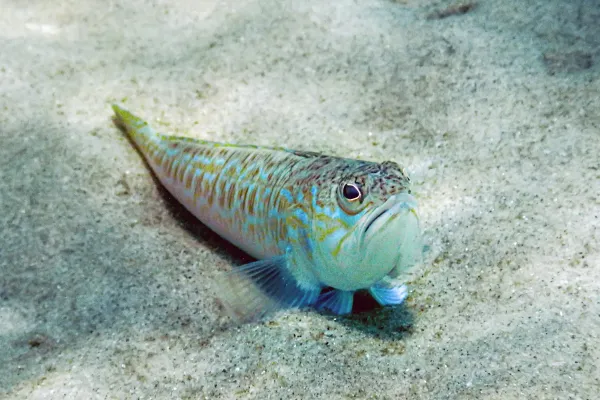
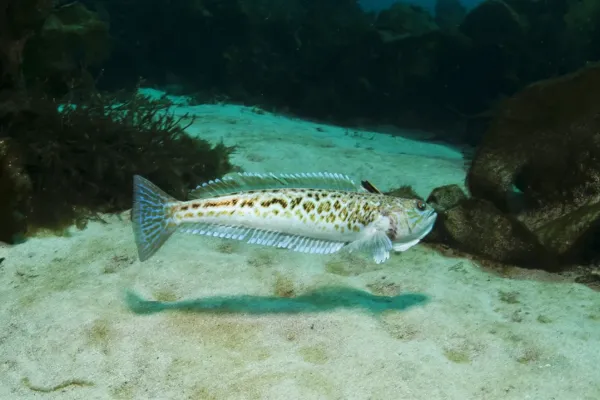
Trachinus draco, commonly known in English as the greater weever fish, is a small coastal fish famous for its venomous spines and extremely painful sting. In Spanish it’s often called pez araña (“spider fish”) or sometimes “pez escorpión” in popular writing because it can inject venom. It may also be known locally by names such as salvario, faneca brava, sabirón, or escarapote.
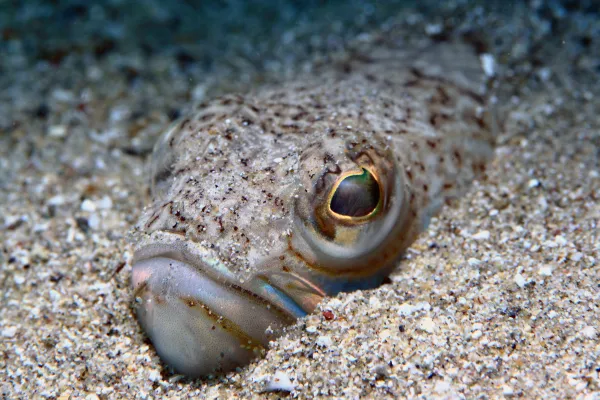
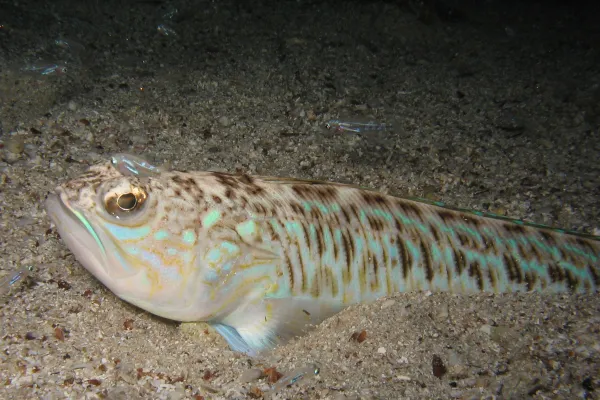
What makes this species important for beachgoers is its behavior: it often buries itself in sandy shallows, leaving only the eyes (and sometimes the first dorsal fin) visible. People most commonly get stung when they step on it in ankle-deep water.
Quick Facts
Scientific name: Trachinus draco
Common English name: Greater weever
Average length: ~30 cm (can vary by region and age)
Main risk to humans: venomous spines on the first dorsal fin and gill cover (operculum)
Where it hides: buried in sand near the shoreline
When it feeds: mostly at night
What Does the Greater Weever Fish Look Like?
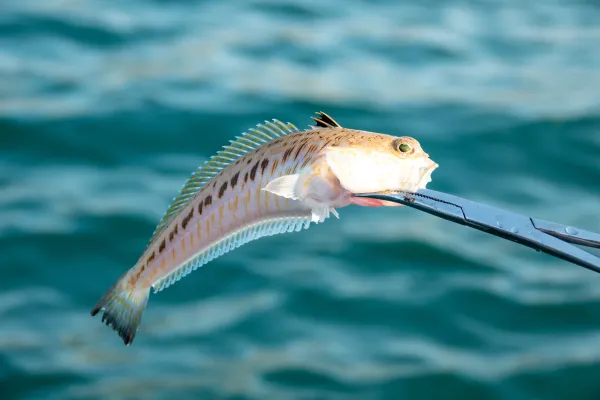
If you’re trying to recognize a weever fish, these features are helpful:
Elongated body, typically around 30 cm long
Large mouth (a predatory fish adapted for grabbing prey)
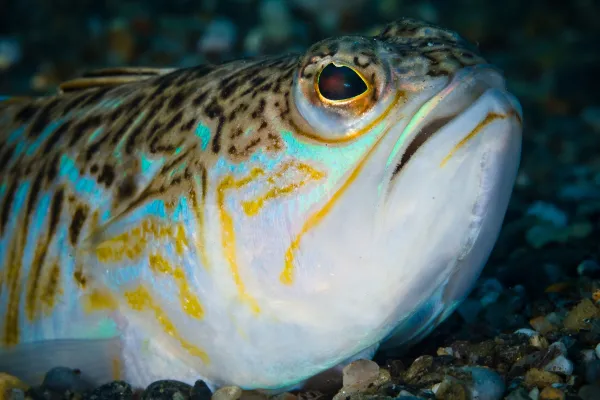
First dorsal fin is small, dark, and spine-rich (often appears almost black)
Eyes positioned close together and angled upward, helpful for watching while buried
Coloration: brownish tones with darker markings, plus yellowish oblique lines and sometimes bluish tints
White belly
A dark spot is often visible near/over the first dorsal fin area
Because it spends so much time in sand, you may only see two eyes peeking out, or a slight ridge where the dorsal fin sits.
Where Is the Venom?
The weever fish’s venom is delivered through sharp spines:
First dorsal fin spines
This is the primary venom “weapon.”
Operculum spine (gill cover spine)
The operculum is the bony flap covering the gills in many bony fish; in weevers it has a spine that can also inject venom.
When stepped on or handled, the spines puncture the skin and introduce venom into the wound.
What Is a Weever Fish Sting Like?
A weever sting is often described as immediate and unmistakable:
Sudden, severe pain at the puncture site
A visible wound (often a small but deep puncture)
Swelling and redness that can spread
Pain can remain intense for hours, and the area may take days to weeks to fully settle depending on severity and whether spine fragments remain.
Why the venom hurts so much
In many popular explanations, weever venom is described as having strong effects on blood vessels (including vasoactive effects that can affect circulation). The result is intense pain and significant local inflammation. In rare extreme situations—especially with complications or vulnerable individuals—serious outcomes can occur, which is why medical evaluation is recommended.
Symptoms of a Greater Weever Sting
Commonly reported symptoms include:
Very strong pain at the sting site
Headache
Dizziness
Confusion or disorientation
Muscle cramps
Sweating
Low blood pressure (hypotension)
In more severe cases, symptoms can escalate to:
Abnormal heart rhythm (arrhythmia)
Muscle weakness or paralysis-like symptoms
Collapse/fainting
Severity depends on the person, sting location, depth, and venom dose.
What To Do If You Get Stung (First Aid)
Because weever venom is heat-sensitive in many cases, the most widely recommended first-aid approach is heat application plus medical assessment.
1) Apply heat as soon as possible
Use hot water immersion or hot compresses.
If the sting is on a foot, soaking it in a bucket of hot (but not scalding) water is often the easiest method.
Keep applying heat in cycles as needed for pain control.
Water should be hot but safe—avoid burns. If you can’t comfortably keep the area in the water, it’s too hot.
2) Check for spine fragments
If spines are visible and easily removable, use tweezers carefully.
If you’re not sure, don’t dig—leave removal to medical professionals to avoid breaking the spine and causing deeper injury.
3) Clean the wound gently
Rinse gently (clean water is fine). Avoid aggressive scrubbing.
4) Seek medical care urgently
Go to a clinic/emergency unit, especially if:
pain is extreme or not improving
swelling spreads quickly
you feel dizzy, faint, short of breath, or unwell
the sting is on the face/hand joints
you suspect spines remain embedded
the person is a child, elderly, pregnant, or has heart/kidney conditions
A clinician may provide pain management, wound care, tetanus updates, antibiotics if needed, and evaluation for systemic effects.
How to Avoid Being Stung
Weever fish stings are usually defensive, not predatory. The fish stings when it feels threatened—most often when stepped on.
Practical prevention steps:
Wear water shoes on sandy beaches with weever presence.
Do the “stingray shuffle”: shuffle your feet through the sand rather than taking big steps—this can scare buried fish away.
Watch for eyes or a small dorsal fin tip breaking the sand surface.
Never try to pick up an unknown fish by hand, even if it looks stuck or harmless.
Where Is the Greater Weever Found?
This species is commonly reported in:
the Mediterranean Sea
the eastern Atlantic Ocean
the Bay of Biscay / Cantabrian Sea region
Typical habitat
Sandy bottoms close to shore
Especially in shallow water where people wade
Often buried during the day, then moving out to hunt at night
Behavior
Sedentary and spends long periods buried in sand
Typically leaves only the eyes and sometimes the first dorsal fin exposed
Often described as nocturnal in feeding habits
Uses camouflage and ambush rather than chasing prey in open water
Diet
The greater weever is a predator that mainly eats:
small fish
small cephalopods (like tiny squid/cuttlefish)
crustaceans, especially those near the shoreline
Reproduction
Oviparous (egg-laying)
Spawning is commonly described as occurring June to August, often in very shallow waters
Sexual maturity may be reached around one year in some accounts
Eggs are very small (often reported around ~1 mm)
Because spawning can bring more fish into shallow water, summer is often when beach stings are reported most frequently.
Conservation Status and Threats
This species is generally described as Least Concern, with no major conservation actions typically required. It is not usually a highly targeted commercial fish in many places, and much of its predation pressure comes from natural predators rather than intense fishing.
FAQ
Is the greater weever the same as “scorpionfish”?
Not in strict scientific terms. True scorpionfish belong to different groups (e.g., Scorpaenidae). “Scorpion fish” here is a popular nickname referring to venom, not taxonomy.
Can a weever sting be dangerous?
Most stings are mainly extremely painful but manageable with proper first aid and medical care. Severe reactions can occur, so medical assessment is recommended.
Why do people usually get stung on the feet?
Because the fish often buries itself in sand in very shallow water, and people accidentally step on it.