Carukia barnesi is a tiny box jellyfish (class Cubozoa) widely discussed in connection with Irukandji syndrome, a potentially severe envenomation syndrome characterized by delayed intense systemic symptoms. Irukandji syndrome is a clinical syndrome and can be associated with more than one small cubozoan species. C. barnesi is one of the best-studied and historically well-known species linked to this syndrome, especially in tropical northern Australia.
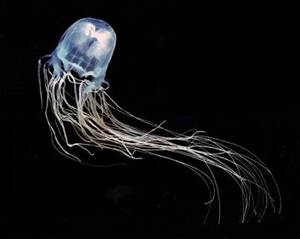
Unlike many drifting jellyfish, cubozoans often show more active swimming and sensory capability in shallow coastal environments. Carukia barnesi has a small transparent bell that is difficult to see in the water, but its tentacles carry dense nematocysts that inject venom. A sting may start with mild local discomfort, then progress over time to severe muscle and back pain, headache, nausea, sweating, anxiety and elevated blood pressure. Suspected Irukandji syndrome requires prompt medical assessment and treatment according to local authoritative guidance.
Taxonomy and naming
Carukia barnesi is a cnidarian in the class Cubozoa, family Carukiidae, and genus Carukia. In common language it is often grouped under the label Irukandji jellyfish, although that term can refer broadly to multiple small cubozoans depending on region.
Physical features
The bell is clear to translucent and roughly cube-shaped. Adult bell size is commonly around 1–2 cm across. The animal typically has four long tentacles, and nematocyst-rich structures near the tentacle bases may be visible at close range. The combination of small size and transparency makes it hard to spot in the ocean.
Range and habitat
Beach-safety monitoring and medical reports most often associate this species with tropical northern Australia and reef-influenced coastal waters. It can occur in shallow nearshore areas, bay entrances and reef-lagoon settings, with distribution influenced by tides, winds and surface currents. Seasonal peaks are reported in some regions.
Behaviour and ecology
Cubozoans can swim directionally and may track prey in shallow water. Activity may vary with light, tides and prey availability. Because C. barnesi is small and difficult to detect, presence is often inferred from monitoring programs and sting incidents rather than direct observation.
Diet
It feeds on small fish and crustaceans. Tentacle nematocysts immobilize prey, which is then transferred to the mouth for ingestion. As part of the nearshore surface food web, it may be preyed upon by animals that tolerate cnidarian stings.
Reproduction and life history
Like other box jellyfish, it typically alternates between a benthic polyp stage and a free-swimming medusa stage. Polyps can reproduce asexually and later produce juvenile medusae, which mature and reproduce sexually. Many cubozoans have relatively short life cycles, often completing a generation within months to about a year depending on conditions.
Relationship with people
This species is significant for public safety because it can be associated with Irukandji syndrome. In risk areas, follow local beach warnings, wear protective stinger suits when advised, and avoid swimming during high-risk seasons. If a sting is suspected and systemic symptoms develop, seek urgent medical care immediately. First-aid procedures vary by region, so follow local authoritative guidance.
Conservation status and threats
Carukia barnesi is generally listed as Not Evaluated by the IUCN. Abundance and encounter risk may shift with temperature, currents and climate variability. Coastal development, pollution and habitat change may also influence local ecology and human exposure patterns. Monitoring, reporting and public education remain key management tools.