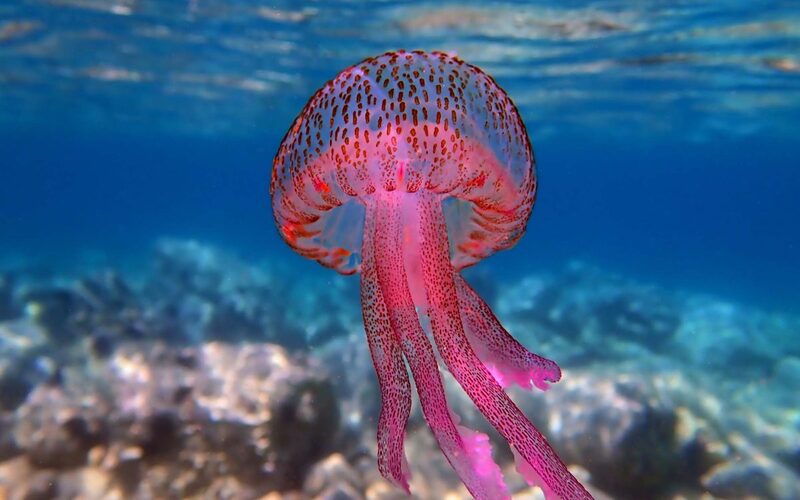
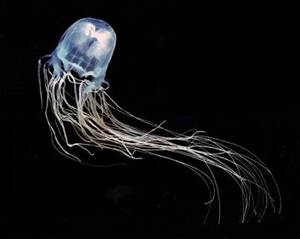
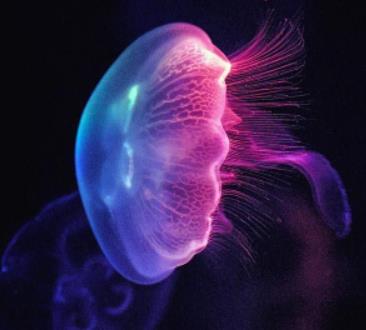
The Australian Blubber Jellyfish (Catostylus mosaicus), sometimes casually called “jelly blubber,” is a common large scyphozoan jellyfish in Australian coastal waters. It is especially familiar in bays and estuaries, where its thick rounded bell and clustered oral arms create a bulky, opaque look compared with many delicate, thread-tentacled jellyfish. Compared with highly venomous box jellyfish, blubber jellyfish stings are generally mild for most people, though contact can still cause irritation and should be avoided.
Ecologically, C. mosaicus is a nearshore predator that feeds on zooplankton and small drifting organisms. Using its oral arms and mucus, it captures prey and moves it to the mouth for digestion. Abundance often varies seasonally, and under favorable conditions (warm water, high plankton, suitable currents) it can form noticeable aggregations or blooms. In coastal food webs, it also serves as potential prey for animals such as sea turtles.
Taxonomy and naming
This species is a cnidarian in the class Scyphozoa and the rhizostome jellyfish group. The scientific name is Catostylus mosaicus. Common English names include Blubber Jellyfish and Australian blubber jellyfish.
Physical features
The bell is dome-shaped to disk-like and relatively thick. Colours range from milky white to pale blue and sometimes brownish, with occasional mottling. Under the bell, the animal carries multiple short thick oral arms with frilly, cauliflower-like tips. Long trailing tentacles are not prominent, which helps distinguish it from many other jellyfish types.
Range and habitat
It occurs mainly in Australian coastal waters, particularly in shallow nearshore habitats such as bays, lagoons and estuaries. It prefers calmer waters where plankton is abundant. Individuals can shift position with tides and wind-driven currents, and seasonal peaks are often linked to warmer periods and local oceanographic conditions.
Behaviour and ecology
Blubber jellyfish drift and pulse-swim slowly in the upper water column. They can form surface slicks or localized aggregations when currents converge. Environmental factors such as temperature, salinity shifts after rainfall, nutrient levels and plankton availability can influence both distribution and bloom intensity.
Diet
They feed on zooplankton, small crustaceans, larvae and other tiny drifting animals. Prey is trapped by mucus and stinging cells on the oral arms and then transported to the mouth. While their sting is usually mild to humans, it is effective for capturing small prey.
Reproduction and life history
Like many scyphozoan jellyfish, the life cycle typically includes a benthic polyp stage and a free-swimming medusa stage. Polyps can reproduce asexually and later release juvenile medusae. Many populations show strong seasonality, and the overall cycle is often close to a year, though timing varies by region and conditions.
Relationship with people
Because it occurs near shore, blubber jellyfish can affect swimming, tourism and sometimes fishing operations during blooms. Stings are usually mild, but it is still best not to touch or handle jellyfish. If irritation occurs, rinse gently with seawater and avoid rubbing; follow local first-aid advice and seek medical help if symptoms are significant or worsening.
Conservation status and threats
The species is generally listed as Not Evaluated by the IUCN. As a coastal jellyfish, its local abundance may respond to environmental change, including nutrient enrichment, altered freshwater inflow and climate-driven shifts in temperature and currents. Monitoring blooms can help manage beach safety and understand coastal ecosystem trends.