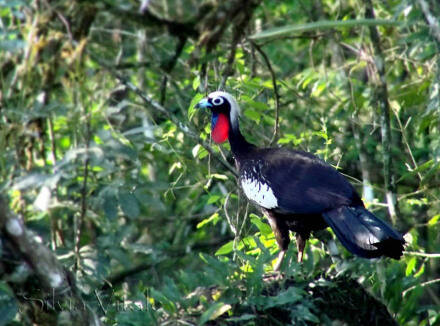
 LC
LC
Aburria pipile
Aburria pipile
Aburria pipile, also known as the common pheasant, is a type of crested pheasant.Songguan used to be a subspecies that included al···
Explore birds by lifestyle and ecological group, from waterfowl and waders to parrots, raptors, landfowl, and songbirds.

Use these shortcuts to move into more specific animal groups.
Landfowl usually refers to birds that mainly move on the ground, forage and breed on land) A more detailed introduction and classification overview. It should be noted that "landfowl" is not a strict monophyletic group, but an "eco-morphological" collection formed based on ecological and morphological characteristics (such as feeding, running or perching on the ground). Modern bird phylogenetic studies show that these ground-dwelling birds are scattered in multiple different orders and have no single common ancestor. Landfowl is one of the six major ecological groups of birds. Landfowl refers to birds in the Galliformes and Columbidae in the class Aves. There are 52 species of birds in these two orders in Yunnan. These birds mainly live on land, so they are called landfowl. Grouse, pheasants, peacocks, etc. all belong to this category. Most landfowl are resident birds, and a small number are migratory birds.
Primarily Ground-Dwelling: Most terrestrial birds spend significant time foraging, nesting, or resting on the ground. Some (like ostriches and emus) have entirely lost the ability to fly, while others (e.g., many galliform birds) can fly short distances but generally stay on land.
Body and Limb Adaptations: They often have strong leg musculature for running, scratching, or digging in the soil. Certain groups specialize in endurance running (e.g., ostriches), while others rely on short, explosive flights for escape (e.g., pheasants).
Ecological Diversity: They inhabit a range of environments—tropical savannas, temperate deserts, montane scrublands, and agricultural grasslands. Their diets can be herbivorous, omnivorous, or carnivorous (e.g., eating seeds, insects, small invertebrates).
Close Relationship with Humans: Many terrestrial birds have been domesticated (chicken, turkey, guineafowl) or hunted (pheasants, quail). They hold substantial economic and cultural significance.
Terrestrial birds span flightless “ratites” (e.g., ostriches, rheas, emus) to ground-adapted fowl that can still fly short distances (e.g., galliform birds like chickens and pheasants).
In wild ecosystems, they act as seed dispersers, vegetation controllers, or key links in the food web. In human societies, they provide meat, eggs, and cultural value (e.g., game birds, ornamental species).
Origins and Radiation
Birds emerged from theropod dinosaurs in the Mesozoic era and diversified extensively by the end of the Cretaceous. Some lineages adopted primarily ground-based lifestyles, developing running, scratching, or ground-nesting traits.
During the Paleogene and Neogene, geographic isolation and varied habitats spurred further specialization, such as flightless ratites in the Southern Hemisphere and galliforms in the Northern Hemisphere.
Single or Multiple Losses of Flight
Large, flightless birds (e.g., ostriches, emus, cassowaries, rheas) exemplify parallel evolution, having independently reduced or lost their flying abilities.
Although scattered in different orders/families, they share similar adaptations for terrestrial living (large bodies, powerful legs).
Co-Evolution with Humans
Humans have domesticated chickens, turkeys, guineafowl for centuries and hunted many species of pheasants and quail.
Several terrestrial birds have significant economic value in agriculture and ecotourism, but habitat loss and hunting threaten some wild populations.
Below is a list of notable ground-dwelling bird orders and families according to modern avian taxonomy. As “terrestrial birds” are not a monophyletic clade, these orders differ widely in phylogeny but share a ground-based ecological lifestyle.
These birds typically have lost the ability to fly, are large-bodied, and mostly found in the Southern Hemisphere and Africa, sometimes collectively called “ratites.”
| Order | Family | Representative Genus | Example Species | Distribution & Notes |
|---|---|---|---|---|
| Struthioniformes (Ostriches) | Struthionidae (Ostrich) | Struthio (ostrich) | Common Ostrich (Struthio camelus) | Largest living bird, native to African savannas/deserts; cannot fly, runs at high speed. |
| Rheiformes (Rheas) | Rheidae (Rheas) | Rhea (rhea) | Greater Rhea (Rhea americana) | Found in South American grasslands; flightless, smaller than ostriches. |
| Casuariiformes (Emus, Cassowaries) | Dromaiidae (Emu), Casuariidae (Cassowary) | Dromaius (emu), Casuarius (cassowary) | Emu (Dromaius novaehollandiae), Southern Cassowary (Casuarius casuarius) | Endemic to Australia/New Guinea; large, flightless, known for speed (emus) or powerful kicks (cassowaries). |
| Tinamiformes (Tinamous)* or included within Paleognathae | Tinamidae (Tinamous) | Tinamus, Crypturellus | Great Tinamou (Tinamus major), etc. | Central & South America; can fly short distances but mostly ground-based. Considered “primitive” among ground birds. |
Note: Some classifications treat Tinamous as a separate order (Tinamiformes), while others group them with ratites under Paleognathae, depending on molecular studies.
Galliform birds are quintessential “land birds”: usually of medium size, with short, rounded wings for bursts of flight but spending most time on the ground.
| Family | Representative Genera | Example Species | Distribution & Notes |
|---|---|---|---|
| Phasianidae (Pheasants, Chickens, Partridges, Quail, etc.) | Gallus (Junglefowl), Phasianus (True pheasants), Coturnix (Old World quail), etc. | Domestic Chicken (Gallus gallus domesticus), Ring-necked Pheasant (Phasianus colchicus), Common Quail (Coturnix coturnix), etc. | Very diverse, found across Eurasia, Africa, parts of the Americas. Many species are domesticated or important game birds. |
| Numididae (Guineafowl) | Numida (Helmeted Guineafowl), etc. | Helmeted Guineafowl (Numida meleagris) | Native to Africa, known for “pearl-like” spots on feathers, also domesticated in some regions. |
| Meleagrididae (Turkeys) | Meleagris (turkeys) | Wild Turkey (Meleagris gallopavo) | Native to North America. Large ground birds, source of domestic turkey; males exhibit colorful wattles and tail fans. |
| Tetraonidae (Grouse, Ptarmigan)* sometimes included in Phasianidae | Tetrao (Capercaillies), Lagopus (Ptarmigan) | Western Capercaillie (Tetrao urogallus), Willow Ptarmigan (Lagopus lagopus), etc. | Typically in cooler Northern Hemisphere regions or high mountains. Feathers can change seasonally for camouflage. |
| Odontophoridae (New World Quail) | Colinus (Bobwhites), Odontophorus (Wood Quail), etc. | Northern Bobwhite (Colinus virginianus), etc. | Found in the Americas, resembling Old World quail in body form and ground-based habits. |
Note: Family boundaries within Galliformes vary; some sources merge grouse into Phasianidae.
Beyond the “ratites” and “gamefowl,” several other orders have predominantly ground-based families or genera. A few key examples:
Otidiformes (Bustards)
Otididae (Bustards): e.g., Great Bustard (Otis tarda), African bustards; large, flight-capable but strongly ground-oriented birds in Eurasian and African grasslands.
Gruiformes (Cranes, Rails, and Allies)
Rallidae (Rails, Coots): e.g., Common Coot, various rails. Primarily live in wetlands or marshy ground.
Gruidae (Cranes): Though cranes migrate via flight, they feed and nest on the ground in marshes or grasslands.
Columbiformes (Pigeons, Doves)
Many species are strong fliers, but certain doves and ground-doves spend much time pecking seeds on the ground.
Passeriformes (Perching Birds) partial ground-dwellers
Families such as Alaudidae (Larks) and some Motacillidae (Wagtails, Pipits) forage extensively on open ground, though they remain capable of sustained flight.
Multiple Origins and Convergent Adaptations
“Terrestrial birds” do not form a single evolutionary lineage; rather, multiple avian orders independently evolved ground-based lifestyles—strong legs, ground nesting, and foraging.
From large flightless ratites to ground-frequenting galliforms and bustards, they illustrate repeated occupation of terrestrial niches.
Ecological and Human Importance
Many ground birds serve crucial functions in grassland or desert ecosystems, dispersing seeds, controlling insect populations, etc.
Humans have domesticated chickens, turkeys, guineafowl, and more. Hunting and wildlife tourism also focus on species like pheasants and bustards.
Conservation Concerns
Habitat loss, agriculture expansion, and overhunting threaten many terrestrial bird populations (e.g., ostriches, cassowaries, great bustards).
Species with limited ranges or migratory needs require international collaboration and protected areas for survival.
Through the above classification and introduction, your website users can have a preliminary understanding of the diverse distribution and evolution of the ecological-morphological group "land birds" in the modern bird system. If you need to further understand the morphological characteristics, ecological habits and conservation status of each species, it is recommended to refer to professional ornithology, regional field manuals and the latest molecular systematics research.
Search the animals shown on this page or narrow them by IUCN conservation code.
LC
Aburria pipile
Aburria pipile, also known as the common pheasant, is a type of crested pheasant.Songguan used to be a subspecies that included al···
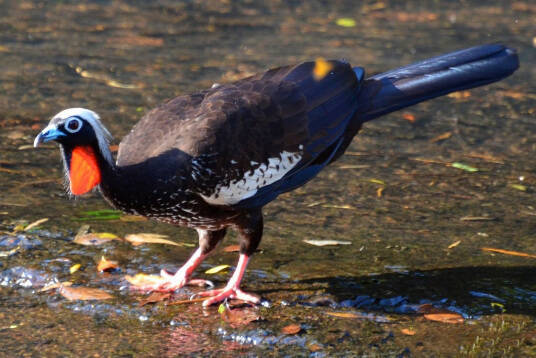 LC
LC
Aburria jacutinga
The black-fronted crested pheasant is known as Pipile jacutinga or Aburria jacutinga, which was previously classified as one of tw···
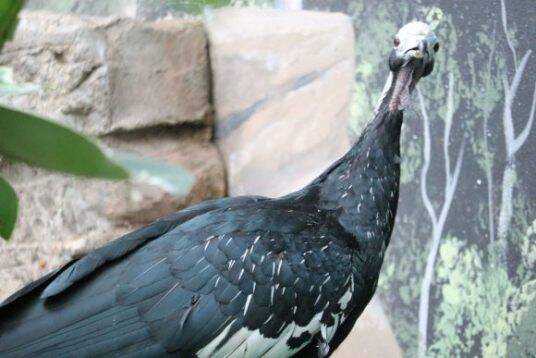 LC
LC
Pipile cumanensis,Blue-throated Piping Guan
The Blue-throated Piping Guan is known as Pipile cumanensis and blue-throated piping guan.Protect wild animals and eliminate wild ···
 LC
LC
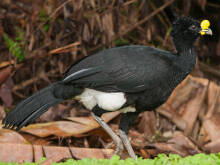
Pipile cujubi,Red-throated Piping Guan
The pheasant is known as Pipile cujubi and Red-throated Piping Guan.Red List Protection level: Non-threatened species of Least Con···
 LC
LC
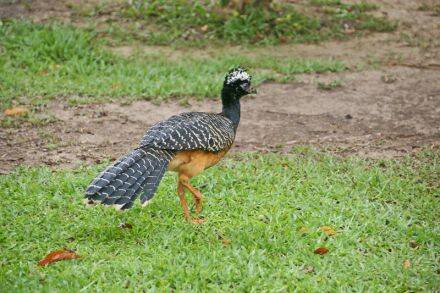
Great Curassow,Crax rubra
The Great Curassow (Crax rubra) has two subspecies. The Great Crested pheasant is mixed with the blue-billed pheasant and the blac···
 LC
LC
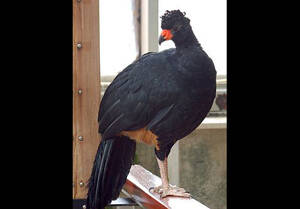
Crax pinima,Belem Curassow
Crax pinima, also known as Belem Curassow, was once a subspecies of bare-faced crested pheasant, but was classified as a separate ···
 LC
LC
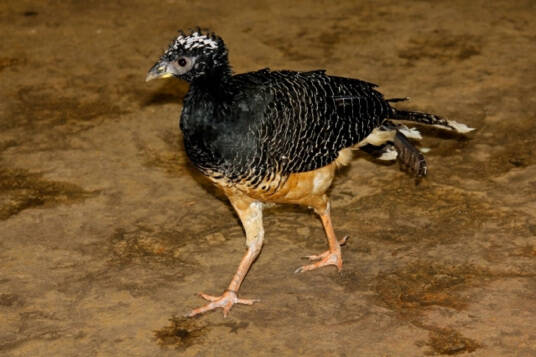
Crax globulosa,Wattled Curassow
It is known as Crax globulosa and Wattled Curassow. Specific habits are unknown.Listed in Appendices I, II and III of the Conventi···
 LC
LC
Crax fasciolata,Bared-faced Curassow
Crax fasciolata and Bared-faced Curassow are unknown.Protect wild animals and eliminate wild meat.Maintaining ecological balance i···
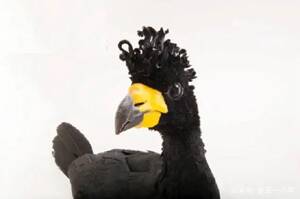 LC
LC
Crax daubentoni
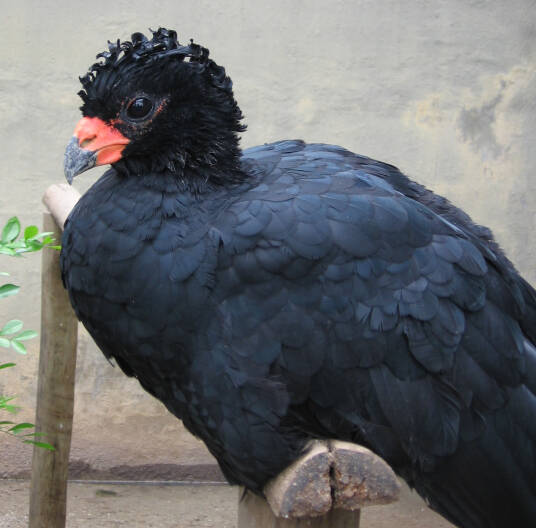
Crax daubentoni feeds primarily on the ground and flies up into trees when threatened. An animal that eats fruits, leaves, seeds, ···
 LC
LC
Crax blumenbachii
The red-billed official bird (Crax blumenbachii), also known as the red-billed pheasant, is a type of crested pheasant endemic to ···
 LC
LC
Crax alector,Black Curassow
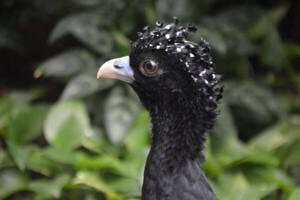
The Black Curassow (Crax alector) spends much of its day on the ground in search of insects, fruit and other plant matter.Listed o···
 LC
LC
Craxalberti
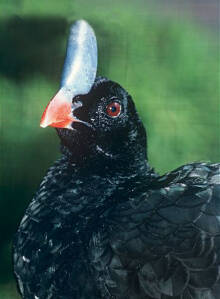
The blue-billed pheasant (Crax alberti) is a species of pheasant endemic to Colombia.Blue-billed crested pheasants like to eat see···
 LC
LC
Pauxi unicornis,Horned Curassow
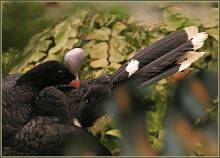
The Horned Curassow (Pauxi unicornis) was once divided into two subspecies, the named subspecies and the Peruvian subspecies. In 2···
 LC
LC
Pauxi pauxi,Helmeted Curassow
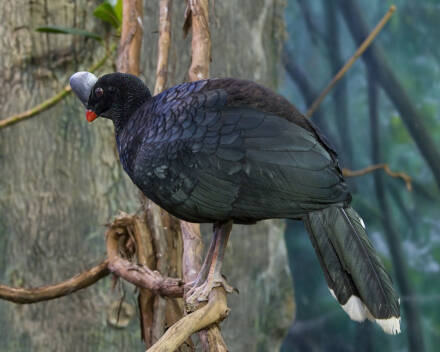
The common crested pheasant (Pauxi pauxi) is known by its foreign name Helmeted Curassow.Listed on the International Union for Con···
 LC
LC
Pauxi koepckeae,Sira Curassow
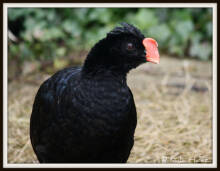
Sira Curassow (Pauxi koepckeae) was once a subspecies of the horned helmeted pheasant (Pauxi unicornis) in Peru, and was classifie···
 LC
LC
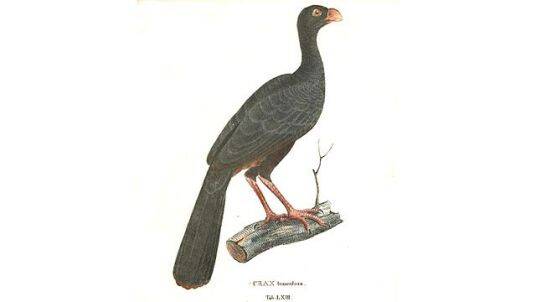
Mitu tuberosa,Razor-billed Curassow
Its scientific name is Mitu tuberosa and its foreign name is Razor-billed Curassow.Protect wild animals and eliminate wild meat.Ma···
 LC
LC
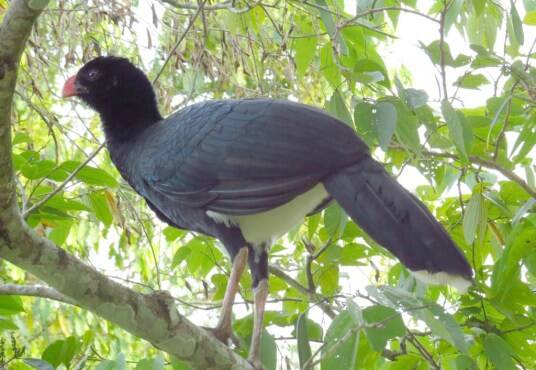
Crestless Curassow,Mitu tomentosa
It is known as Mitu tomentosa and Crestless Curassow, but its behavior is unknown.Protection level: Near critical.Protect wild ani···
 LC
LC
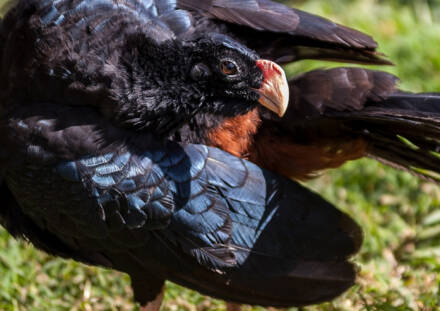
Mitu salvini,Salvin’s Curassow
The pheasant's scientific name is Mitu salvini and its foreign name is Salvin's Curassow.Protect wild animals and eliminat···
 LC
LC
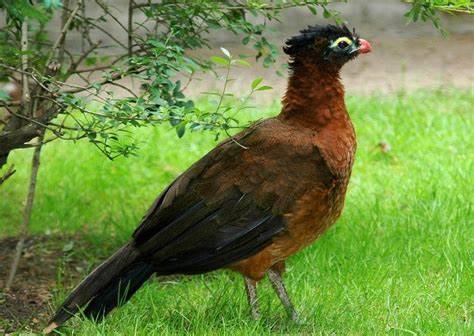
Mitu mitu,Alagoas Curassow
The Alagosian Curassow (Mitu mitu) is a relatively large black bird.The Alagoan helmet-billed pheasant was described in the early ···
 LC
LC
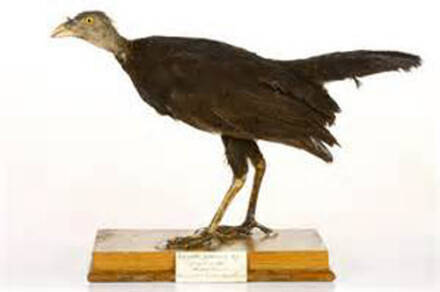
Nothocrax urumutum,Nocturnal Curassow
Its scientific name is Nothocrax urumutum and its foreign name is Nocturnal Curassow. Its specific habits are unknown.Protect wild···
 LC
LC
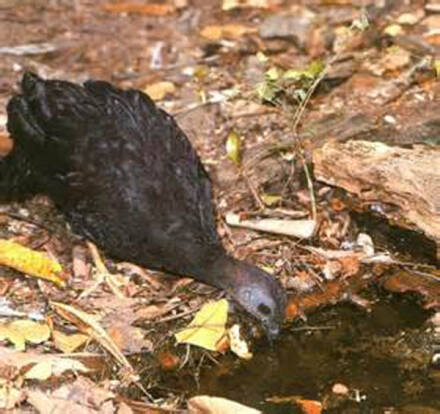
Talegalla jobiensis,Collared Brush-turkey
Talegalla jobiensis (Collared Brush-turkey) has two subspecies.Brown collar camp Megacanth alone and in pairs. Omnivorous, eating ···
 LC
LC
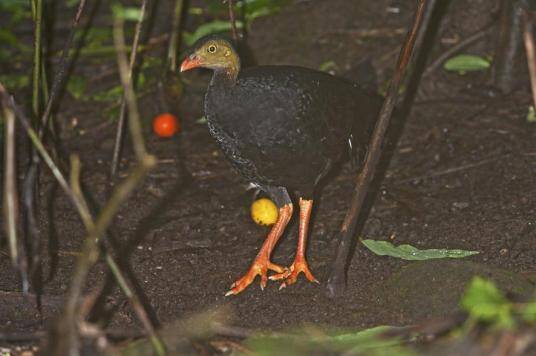
Talegalla fuscirostris,Black-billed Brush-turkey
Talegalla fuscirostris (Black-billed Brush-turkey) has four subspecies.The black-billed camp Megacanth acts alone and in pairs. Om···
 LC
LC
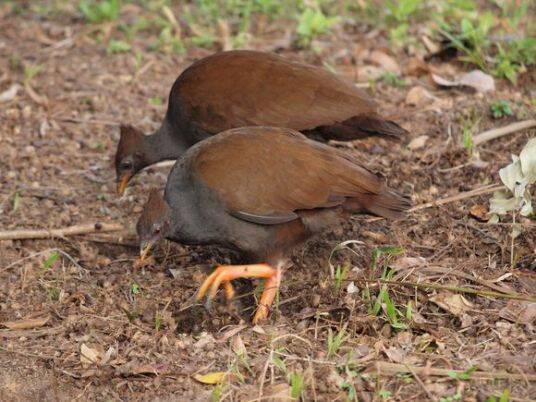
Talegalla cuvieri,Red-billed Brush-turkey
Talegalla cuvieri (Red billed Brush-turkey) has two subspecies.Red billed Camp Pheasants act alone and in pairs. Omnivorous, eatin···
 LC
LC
Orange-footed Scrub Fowl,Megapodius reinwardt
The pheasant is known as the Megapodius reinwardt or Orange-footed Fowl; its specific habitat is unknown.Protect wild animals and ···