Quiet Reef Tank Return Pumps at a Glance
| Return Pump | Best For | Key Quiet-Operation Features | Relative Price Level |
|---|---|---|---|
| EcoTech Marine Vectra | Premium smart reef systems | QuietDrive motor control, adjustable flow, app-based programming | Premium |
| Neptune Systems COR | Apex-controlled aquariums | Brushless DC motor, vector control, intelligent monitoring | Premium |
| Jecod/Jebao DCP Series | Budget-conscious reef keepers | Sine-wave controller, adjustable speed, soft start | Budget to mid-range |
These recommendations are based on motor design, control features, aquarium suitability, and manufacturer specifications rather than a standardized independent noise test. Actual sound levels vary considerably between installations.
Why Is Your Reef Tank Humming?
A noisy return pump is not always a defective return pump. In many aquariums, the sound heard outside the cabinet is caused by vibration traveling from the pump into the sump, plumbing, cabinet, wall, or floor.
The pump motor creates small mechanical movements as the impeller rotates. When those movements transfer into a rigid surface, the surrounding structure may amplify them. This is known as resonance.
A mildly audible pump can therefore become surprisingly loud when it touches:
The glass or acrylic wall of the sump
A rigid PVC return pipe
The aquarium cabinet
Another pump or piece of equipment
A poorly fitted lid or removable panel
The resulting sound may be described as humming, buzzing, rattling, droning, or pulsing.
AC Pumps vs. DC Pumps: Which Is Quieter?
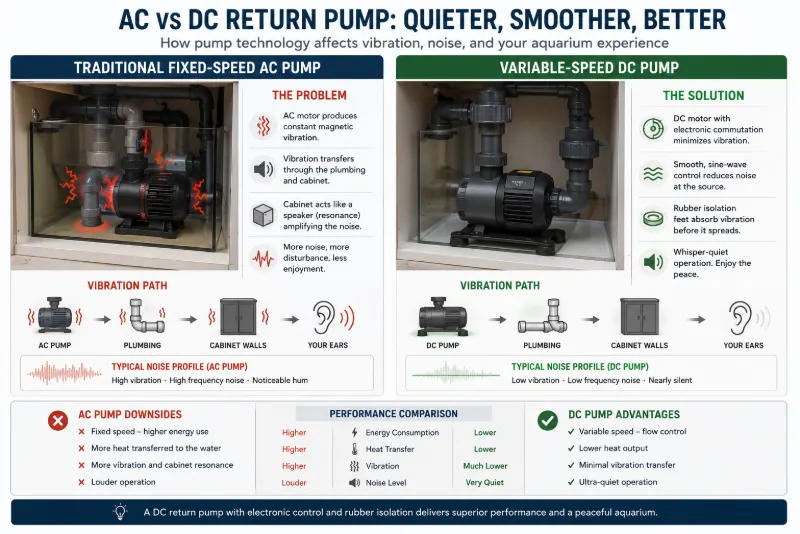
Traditional AC return pumps operate directly from alternating household current. Many are durable, dependable, and capable of running for years, but fixed-speed models provide limited control over motor speed.
If an AC pump produces more flow than the aquarium requires, the aquarist may need to restrict the outlet with a valve. This can increase turbulence and may introduce additional plumbing noise.
DC return pumps convert household power to low-voltage direct current and use an electronic controller to manage motor speed. Their adjustable output allows the pump to be matched more precisely to the aquarium's overflow and plumbing system.
| Feature | Traditional AC Pump | Variable-Speed DC Pump |
|---|---|---|
| Speed control | Often fixed | Usually adjustable |
| Feed mode | Usually requires external control | Commonly built in |
| Soft start | Not always available | Common on modern models |
| Flow adjustment | Often controlled with plumbing valves | Electronically controlled |
| Noise potential | Can be quiet but may transmit more fixed-frequency vibration | Often easier to tune for quiet operation |
This does not mean every DC pump is automatically quieter than every AC pump. Build quality, impeller balance, plumbing, maintenance, and installation remain extremely important.
What to Look for in a Quiet Reef Tank Pump
1. Variable-Speed DC Technology
A controllable DC pump allows you to reduce output until it matches the realistic needs of the reef system. Running an oversized pump at maximum speed often creates unnecessary turbulence, heat, overflow noise, and vibration.
Variable speed is particularly valuable when:
The aquarium is close to a bedroom or workspace.
The overflow has a limited operating range.
The return line includes several bends or fittings.
The system requires a low-noise nighttime setting.
The pump also supplies reactors or a manifold.
2. Sine-Wave or Advanced Motor Control
Some modern DC pumps use sine-wave control or other sophisticated motor-driving systems to deliver power more smoothly to the motor. Smoother control can reduce abrupt electromagnetic switching, motor vibration, and audible whining.
Terms such as sine-wave control, vector control, and QuietDrive describe different manufacturer approaches. They are not necessarily identical technologies, but all aim to improve motor smoothness, efficiency, or controllability.
3. Rubber Feet or a Vibration-Isolating Base
Soft rubber feet help prevent the pump housing from transferring vibration directly into the sump floor.
Even when a pump includes factory-installed rubber feet, placing it on a separate aquarium-safe silicone or rubber pad may further reduce resonance.
4. Correct Pump Size
A return pump should be selected according to the flow needed after accounting for vertical head height and plumbing resistance—not simply the pump's advertised maximum flow.
A pump that is far too large may need to be throttled heavily, while an undersized pump may need to operate continuously at maximum output. Either situation can increase noise and reduce efficiency.
5. A Removable, Serviceable Impeller
Calcium deposits, sand, snail shells, algae, and other debris can make an otherwise quiet pump noisy. A removable impeller and accessible volute make routine maintenance easier.
6. Soft Plumbing Compatibility
A short section of flexible silicone or vinyl hose between the pump and rigid return plumbing can prevent vibration from traveling into the cabinet and aquarium stand.
Top 3 Quietest DC Return Pumps Reviewed
1. EcoTech Marine Vectra – Best Premium Smart Return Pump
Best for: Advanced reef aquariums, app-controlled systems, and aquarists seeking premium integration.
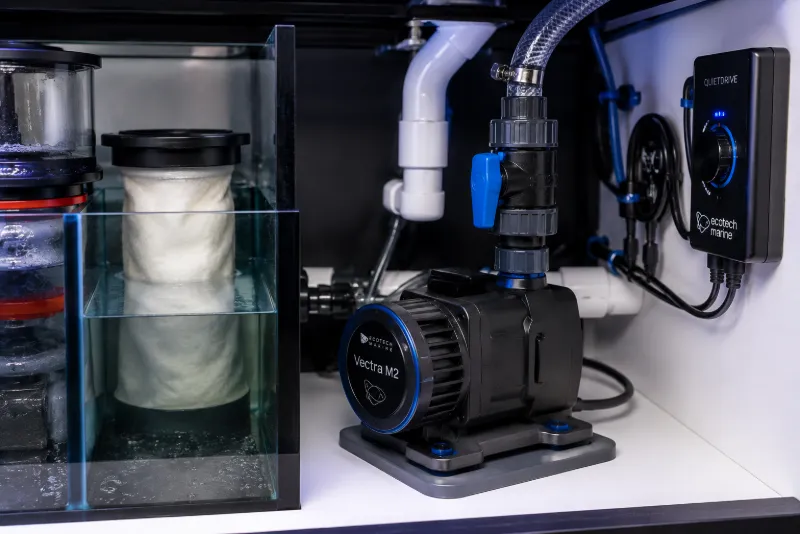
The EcoTech Marine Vectra series is a premium line of controllable DC pumps designed for return-pump and, on supported models, closed-loop applications. Its electronic driver allows the flow rate to be adjusted rather than controlled only through a restrictive plumbing valve.
Notable Features
QuietDrive motor-control technology
Variable flow adjustment
Return-pump calibration
Feed-mode functionality
Mobius-compatible wireless programming on current compatible versions
Submersible or inline operation, depending on model and installation requirements
Calibration is especially useful in a reef aquarium because it allows the operating range to be matched to the overflow and return plumbing. This can reduce surging, drain noise, and excessive flow.
Advantages
Highly adjustable
Strong smart-control ecosystem
Suitable for sophisticated reef installations
Available in multiple sizes
Designed with noise reduction in mind
Limitations
Premium purchase price
Replacement parts and accessories may cost more than budget alternatives
Some smart features may be unnecessary for a simple aquarium
Verdict: The Vectra is a strong premium choice for aquarists who want a refined return pump with advanced programming, calibration, and ecosystem integration.
2. Neptune Systems COR – Best for Apex-Controlled Reef Tanks
Best for: Aquarists already using, or planning to use, a Neptune Apex aquarium controller.
The Neptune Systems COR is a variable-speed, brushless DC return pump designed to work closely with the Apex ecosystem. The COR-20 can also operate independently, while the COR-15 is intended for connection to a compatible Apex system.
Notable Features
Brushless DC motor
Whisper Drive vector-control technology
Adjustable flow
Feed mode
Obstruction detection
Internal temperature monitoring
Apex alerts and operational feedback when connected
The pump can report certain operating problems rather than simply stopping without explanation. This is valuable in a reef tank, where return-pump failure can interrupt filtration, heating distribution, gas exchange, and sump circulation.
Advantages
Excellent Apex integration
Monitoring and warning functions
Adjustable speed
Designed for low-vibration operation
COR-20 can operate without an Apex
Limitations
High purchase price
Most attractive to aquarists invested in the Neptune ecosystem
The COR-15 requires compatible Apex connectivity
Verdict: The COR is particularly compelling for an Apex-controlled aquarium in which monitoring, automation, and fault notifications are as important as low noise.
3. Jecod/Jebao DCP Series – Best Budget-Friendly Quiet DC Pump
Best for: Reef keepers seeking variable-speed DC performance at a more accessible price.
The Jecod/Jebao DCP range includes multiple pump sizes for different aquariums and plumbing requirements. These pumps use an electronic sine-wave controller and provide adjustable flow settings, soft-start behavior, feed mode, and protection against certain motor obstructions or dry-running conditions.
Notable Features
Sine-wave motor controller
Multiple adjustable speed levels
Soft start
Feed mode
Controller memory
Models available for small and large systems
The DCP series may not offer the same smart-home integration or monitoring ecosystem as premium alternatives, but it provides the main feature many reef keepers need: controllable return flow without a premium price.
Advantages
Strong value for money
Wide choice of flow capacities
Electronic speed control
Generally simple to install and operate
Useful as a primary pump or an affordable backup
Limitations
Less sophisticated app and controller integration
Warranty support may vary by seller and region
Long-term consistency may depend heavily on maintenance and product source
Verdict: The DCP series is a practical option for reef keepers who prioritize controllable, relatively quiet operation over advanced connectivity.
How to Choose the Correct Pump Size
Maximum advertised flow is measured under conditions with little or no vertical lift. Once water must travel upward from the sump, through elbows, valves, unions, and narrow pipe, the actual flow may be substantially lower.
Before selecting a pump, consider:
Display-tank volume
Desired sump turnover
Vertical distance from pump to return outlet
Pipe diameter
Number of elbows and fittings
Whether the pump will also power reactors or sterilizers
Many reef systems do not need extremely high turnover through the sump. Internal wavemakers usually provide most of the high-volume water movement required by corals, while the return pump moves water through filtration and back to the display.
An oversized return pump does not automatically create a healthier reef. It may instead produce more noise, microbubbles, power consumption, overflow turbulence, and unnecessary wear.
Quick Hacks to Reduce Pump Vibration
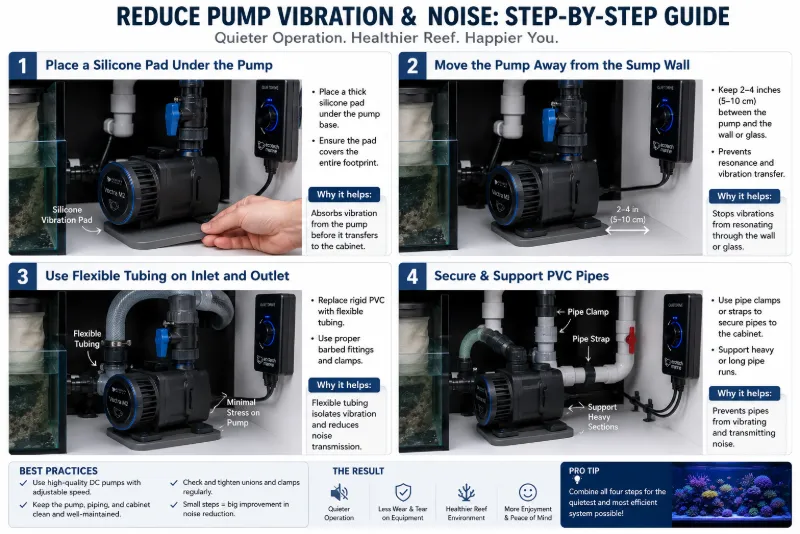
Place a Silicone Pad Under the Pump
Position the pump on a flat, aquarium-safe silicone or rubber mat. This separates the pump from the hard sump floor and absorbs part of the vibration before it enters the glass or acrylic.
Do not use foam that may deteriorate, trap excessive debris, or contain unknown additives.
Add a Short Flexible Hose Section
Connecting the pump directly to rigid PVC can turn the entire plumbing system into a sound transmitter.
Install a short length of suitably rated flexible hose between the pump outlet and the rigid plumbing. Secure it with saltwater-compatible fittings and clamps.
Make Sure the Pump Is Not Touching the Sump Wall
A pump resting against the side of the sump can create an amplified buzzing sound. Leave a small clearance around the housing and cable.
Reduce the Pump Speed Slightly
A small speed reduction can sometimes produce a large decrease in noise. Test several settings while watching the overflow level, sump level, and return flow.
Support Long Plumbing Runs
Pipes that are poorly supported may vibrate against the stand. Use proper pipe clamps with soft isolation material rather than allowing the pipe to rest loosely against wood or metal.
Check Cabinet Doors and Panels
Sometimes the pump is reasonably quiet, but a loose cabinet door vibrates in response to it. Felt pads or soft cabinet bumpers can eliminate this secondary rattle.
Why a Previously Quiet Pump Becomes Loud
A sudden increase in sound often indicates contamination, wear, or a change in water supply to the pump.
| Noise | Possible Cause | Suggested Check |
|---|---|---|
| Grinding | Sand, shell fragment, or damaged impeller | Disconnect and inspect the impeller chamber |
| Rattling | Loose fitting or worn rotor component | Inspect the volute, rotor, and plumbing connections |
| Pulsing | Restricted intake or unstable water level | Check the sump level and intake clearance |
| Gurgling | Air entering the pump | Look for low water level, vortex formation, or loose fittings |
| High-pitched whine | Controller setting, motor resonance, or electrical issue | Test another speed and inspect the controller |
| Low cabinet hum | Structural resonance | Isolate the pump and flexible plumbing |
How to Clean a Reef Tank Return Pump
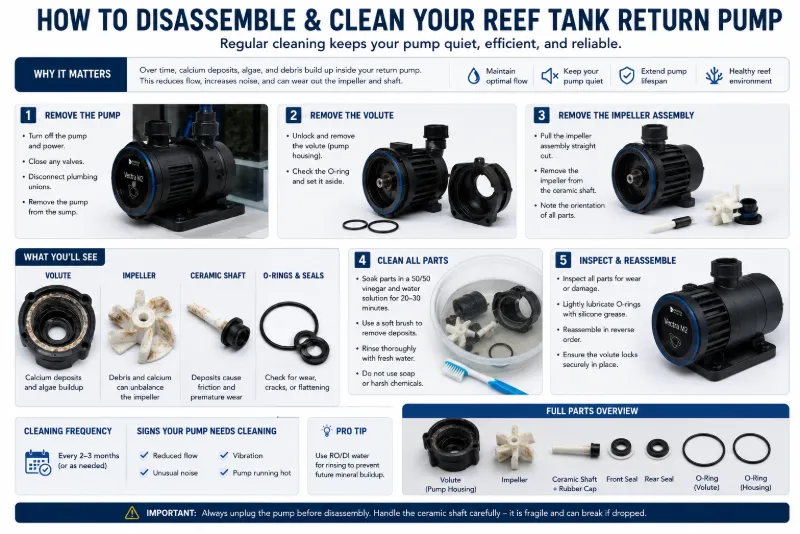
Mineral buildup can gradually reduce efficiency and make the impeller less balanced.
Turn off the pump and isolate the return line.
Disconnect the pump according to the manufacturer's instructions.
Remove the volute and impeller assembly.
Rinse away sand, algae, snail shells, and loose debris.
Soak removable mineral-coated components in a pump-safe cleaning solution.
Use a soft brush to clean the impeller chamber.
Rinse all components thoroughly.
Inspect seals, bushings, ceramic shafts, and the impeller for wear.
Reassemble and test the pump in clean water before returning it to service.
Never allow cleaning chemicals to enter the reef aquarium, and never operate a pump dry unless the manufacturer specifically permits it.
Safety and Reliability Matter More Than Absolute Silence
A return pump is a critical part of many marine aquarium systems. It supports water movement between the display and sump, distributes heated water, carries water through filtration, and contributes to surface agitation and gas exchange.
For this reason, pump selection should consider more than sound alone. Also evaluate:
Correct flow at the required head height
Electrical and thermal protection
Availability of replacement parts
Warranty and regional support
Ease of maintenance
Compatibility with battery backup or emergency plans
A slightly audible but dependable pump may be safer than a nearly silent unit with inadequate flow or uncertain support.
Final Recommendation
For a premium smart reef aquarium, the EcoTech Marine Vectra offers advanced control, calibration, and a strong aquatic-equipment ecosystem. The Neptune Systems COR is the natural premium choice for aquarists who want deep Apex integration, monitoring, and intelligent alerts.
For reef keepers seeking quiet variable-speed operation at a lower cost, the Jecod/Jebao DCP series offers excellent practical value.
Whichever pump you choose, remember that a quiet model can still sound loud when rigidly connected to the sump and cabinet. Correct sizing, a silicone isolation pad, flexible tubing, clean plumbing, and regular impeller maintenance are often what transform a good return pump into a genuinely whisper-quiet reef tank setup.
FAQs
What is the quietest type of return pump for a reef tank?
A high-quality variable-speed brushless DC pump is often the easiest type to operate quietly. Adjustable speed and smoother electronic motor control can reduce vibration, but installation quality is equally important.
Are DC return pumps quieter than AC pumps?
DC pumps are often quieter or easier to tune because their speed can be adjusted electronically. However, a well-built and properly installed AC pump may be quieter than a poorly installed DC pump.
Why is my return pump humming through the cabinet?
The pump may be transferring vibration into the sump, rigid PVC plumbing, cabinet panels, or aquarium stand. A rubber pad and a flexible hose connection often reduce this structural resonance.
Can I place a silicone mat under a submersible return pump?
Yes, provided the material is aquarium-safe, stable in saltwater, and does not obstruct the pump intake. The mat should be cleaned periodically so detritus does not accumulate beneath it.
How often should I clean a reef tank return pump?
Inspection every few months is appropriate for many systems, but the ideal schedule depends on calcium buildup, debris, livestock, and operating conditions. Clean the pump sooner if flow declines or noise increases.
Should a return pump run at full power?
Not necessarily. It should run at the output needed to overcome head pressure and provide suitable circulation through the sump. Running an oversized pump at maximum output may increase noise and turbulence without improving coral health.
Is the EcoTech Vectra better than the Neptune COR?
Neither is universally better. Vectra suits aquarists who prefer EcoTech's control ecosystem, while COR offers especially strong integration with Neptune Apex monitoring and automation.
Are Jebao return pumps reliable enough for reef tanks?
Many reef keepers use Jebao or Jecod pumps because they provide adjustable DC operation at an accessible price. Purchase from a reputable seller, maintain the pump regularly, confirm warranty support, and consider keeping a backup pump for critical systems.