Fish care starts with clean, stable water, the right tank size, suitable food, proper filtration, and choosing species that fit the same environment. Most fish health problems come not from bad luck, but from poor water quality, overcrowding, overfeeding, or incompatible tank conditions. If you keep the tank stable, feed appropriately, and match the fish to the setup, aquarium fish are much more likely to stay healthy and behave naturally.
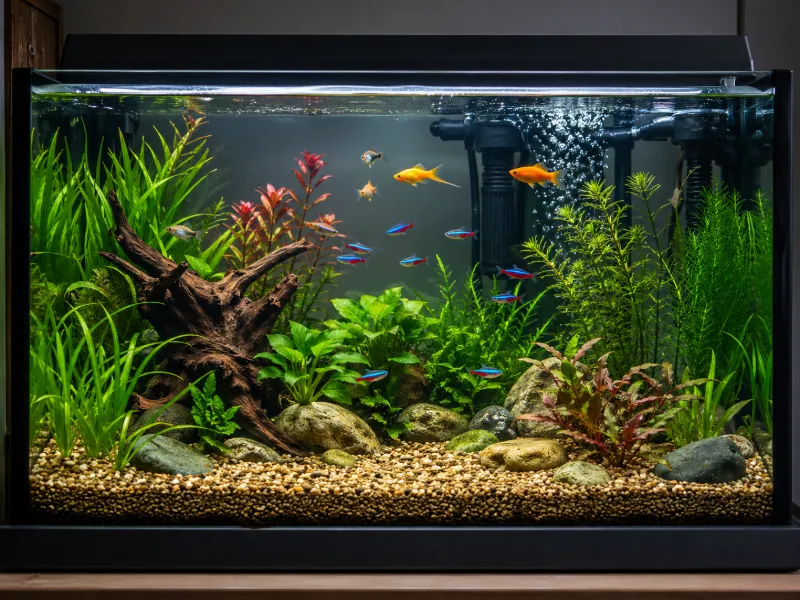
Many people think fish are simple pets because they do not bark, scratch furniture, or need walks. In reality, fish are highly sensitive animals whose health depends on the environment around them every hour of the day. Unlike a dog or cat that can leave an uncomfortable space, a fish lives completely inside the water you provide.
In this guide, you will learn the essentials of fish care, including tank setup, water quality, feeding, compatibility, daily maintenance, and the common mistakes that cause problems in home aquariums.
Quick answer
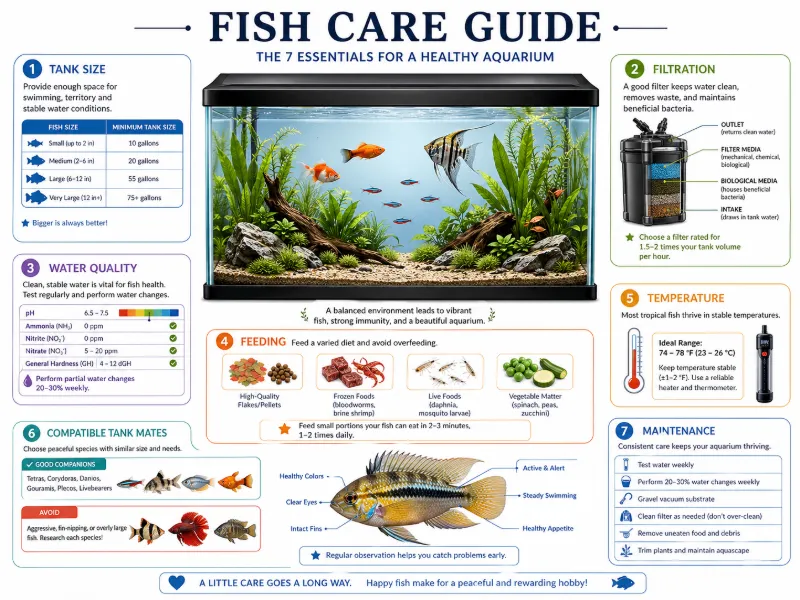
| Fish care topic | Best basic advice |
|---|---|
| Tank size | Choose a tank large enough for the species and future adult size |
| Water quality | Keep water clean, cycled, and chemically stable |
| Filtration | Use a filter suitable for the tank and species |
| Temperature | Match the water temperature to the needs of the fish |
| Feeding | Feed species-appropriate food in small amounts |
| Tank mates | Keep only compatible fish with similar needs |
| Maintenance | Do regular water changes and monitor the tank consistently |
| Most common mistake | Overcrowding or overfeeding in an unstable tank |
What fish care really means
Good fish care is not just about putting fish in water and giving them food. It means creating and maintaining an environment where they can breathe, digest, grow, rest, and interact normally without constant stress.
Fish depend on water the way land animals depend on air, shelter, and climate combined. If the water chemistry is wrong, the temperature swings too much, or waste builds up, the fish cannot simply escape. This is why aquarium care is really environmental care.
A healthy fish tank is not just a container. It is a small life-support system that needs balance, stability, and observation.
Choosing the right fish is the first step
One of the biggest mistakes beginners make is buying fish before understanding what those fish need. Different species vary enormously in size, temperament, water temperature, swimming style, and social behavior.
Some fish stay small and peaceful. Others grow large, become territorial, or need to live in groups. Some prefer warm tropical water, while others do better in cooler conditions. A fish that looks tiny in the store may eventually become much too large for a small aquarium.
Good fish care begins by choosing species that match your tank size, your experience level, and the kind of setup you can realistically maintain.
Tank size matters more than many beginners expect
Small tanks are often sold as easy options, but they are usually less stable than larger tanks. In a very small aquarium, temperature, waste levels, and water chemistry can change quickly. That makes mistakes more dangerous.
A larger tank gives fish more swimming space and gives the keeper more margin for stability. It is usually easier to maintain consistent conditions in a larger volume of water than in a tiny bowl or nano tank.
This does not mean every fish needs a giant aquarium, but it does mean that tank size should be chosen around the needs of the fish rather than around shelf space alone.
Why clean water is the foundation of fish health
Water quality is the core of fish care. Fish release waste, uneaten food breaks down, and organic matter accumulates over time. Without proper biological balance and maintenance, toxic substances can build up in the tank.
Even if the water looks clear, it may still be unsafe. Fish are affected by invisible changes in ammonia, nitrite, nitrate, pH, and oxygen levels. Because of this, a visually attractive aquarium is not always a healthy one.
Healthy fish usually come from water that is not only clean to the eye, but also chemically stable and appropriate for the species.
Understanding the nitrogen cycle
One of the most important concepts in fish care is the nitrogen cycle. In a healthy aquarium, beneficial bacteria help break down waste products. Fish waste and decaying food first produce ammonia, which is highly toxic. Beneficial bacteria convert ammonia into nitrite, which is also dangerous, and then into nitrate, which is less toxic and can be managed through water changes and plant uptake.
A new tank that has not developed this biological system is often unstable. Adding fish too quickly to an uncycled aquarium can lead to poisoning even if the water looks perfectly normal.
This is why cycling a tank before or during the early stocking phase is so important. It allows the aquarium to develop the microbial support system that fish need to survive.
Filtration is more than just water movement
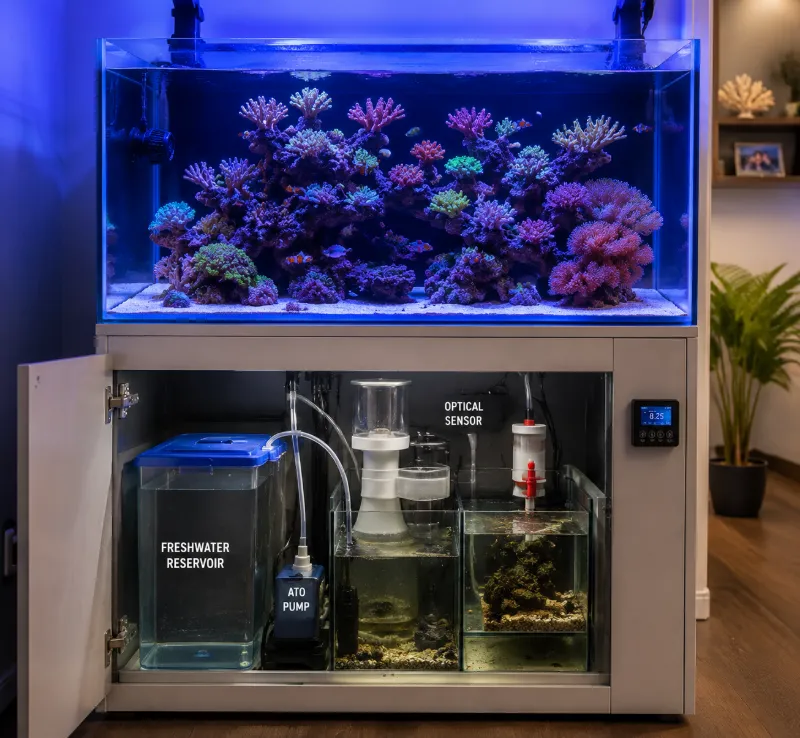
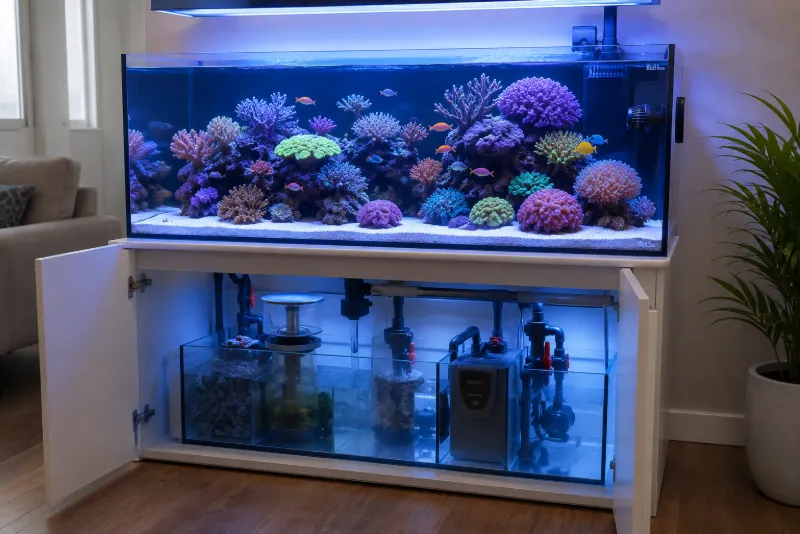
A good filter does several jobs at once. It moves water, traps particles, and most importantly provides surface area for beneficial bacteria. In many aquariums, the filter is one of the main biological engines of the entire system.
Different filters suit different tanks. Some provide strong flow, while others are gentler and better for delicate species. A filter that is too weak may fail to support water quality. A filter that is too forceful may stress fish that prefer calm water.
Fish care means choosing filtration that matches the tank volume and the behavior of the fish, not simply buying the smallest or cheapest device.
Temperature must match the species
Not all fish want the same water temperature. Tropical fish usually need warm, stable water, while some goldfish and temperate species prefer cooler conditions. Sudden changes can be stressful even when the average temperature is technically acceptable.
A heater is essential for many tropical aquariums, but it must be reliable and correctly sized. In warmer climates, overheating can also become a problem, especially in smaller tanks.
Stable temperature is often more important than chasing a perfect number. Fish generally cope better with a correct, steady range than with constant daily swings.
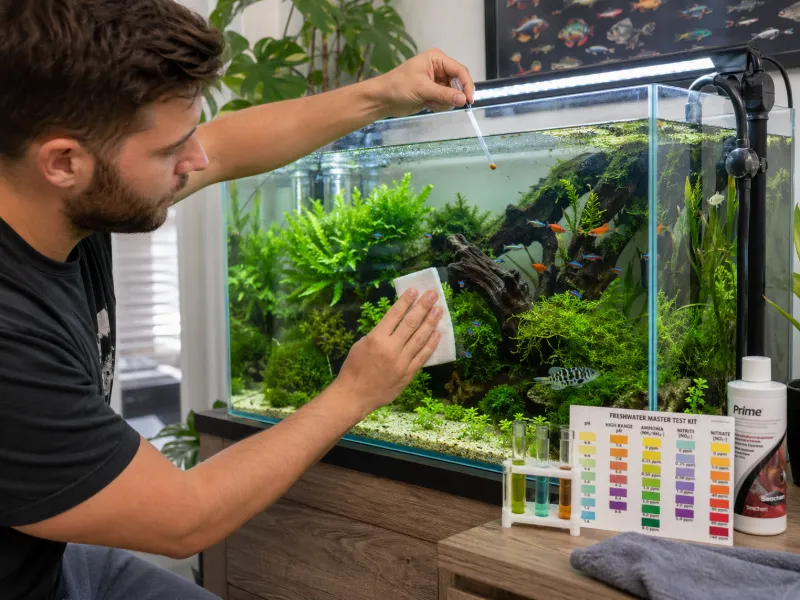
Fish need the right kind of food, not just any food
Fish feeding is another area where beginners often go wrong. Different fish have different diets. Some are carnivorous, some herbivorous, and many are omnivorous. Surface-feeding fish, bottom-feeding fish, and grazers may all need food presented in different ways.
Good fish care means feeding a diet appropriate to the species, the size of the fish, and the level of activity in the tank. Flakes may work for some community fish, while pellets, wafers, frozen foods, vegetable matter, or live foods may suit others better.
No single food is ideal for every species. Matching the food to the animal is one of the simplest ways to improve health.
Overfeeding is one of the most common mistakes
Many aquarium problems begin with too much food. Fish often seem eager to eat, but that does not mean they need large meals. Extra food sinks, decomposes, pollutes the water, and places stress on the biological system.
Overfeeding can also lead to obesity, digestive trouble, and dirtier substrate. In many home aquariums, fish are healthier when fed smaller portions than their owners first expect.
A good rule is to feed only what the fish can eat in a short period, while adjusting for the species and food type. Consistency matters more than excess.
Fish need compatible tank mates
Not all fish can live together peacefully. Some species nip fins, some defend territory, some need schools, and some see smaller fish as food. Even if two species survive in the same water chemistry, they may still be poor companions behaviorally.
Good fish care includes thinking about size, temperament, swimming zone, and social structure. A peaceful schooling fish may become stressed if kept alone. A territorial species may bully calm tank mates. A large active fish may overwhelm smaller quieter species.
A community tank works best when the inhabitants have similar environmental needs and a reasonable social match.
Fish need places to hide and rest
Aquarium fish are not decorations. They need structure, cover, and territory just like wild fish do. Plants, rocks, driftwood, caves, and visual barriers help fish feel secure and behave more naturally.
Without cover, shy fish may remain stressed all the time. Even active visible fish often benefit from having shelter nearby. Hiding places can also reduce aggression by breaking line of sight between territorial individuals.
A well-designed aquarium should provide both swimming space and secure areas for retreat.
Lighting should be appropriate, not excessive
Fish need a normal day-night rhythm. Constant light can stress fish and encourage nuisance algae, while a completely dark setup may prevent normal viewing and plant growth. In most home aquariums, moderate daily lighting works best.
The ideal lighting level depends partly on whether live plants are present and what kinds of fish are being kept. Some species appreciate dimmer environments, especially those from blackwater or heavily shaded habitats.
Good fish care includes managing light as part of the whole environment rather than leaving the aquarium brightly lit at all hours.
Regular maintenance keeps problems small
Healthy tanks usually stay healthy because small maintenance tasks are done regularly. Water changes, substrate cleaning, glass cleaning, filter checks, and testing basic water parameters can prevent larger problems later.
The goal is not to sterilize the aquarium but to keep waste under control and conditions stable. Replacing part of the water on a routine schedule is one of the most effective habits in fish care.
Neglected tanks often fail slowly at first and then suddenly. Consistent maintenance is what keeps ordinary stress from turning into disease outbreaks.
How to tell if fish are healthy
Healthy fish usually swim normally for their species, eat with interest, maintain stable coloration, and show no obvious signs of distress. Their fins should not appear heavily clamped, their bodies should not be bloated or sunken, and their breathing should not look unusually labored.
Behavior is often the earliest clue that something is wrong. A fish hiding more than usual, gasping at the surface, scraping against objects, refusing food, or showing torn fins may be signaling stress or illness.
Because fish cannot vocalize pain the way mammals do, observation is one of the most important parts of fish care.
Common signs of trouble
Several warning signs deserve attention: rapid breathing, flashing or rubbing against objects, loss of appetite, white spots, fuzzy growths, bloating, frayed fins, sudden isolation, unusual floating, or repeated aggression.
These signs do not always point to a single cause. Poor water quality, parasites, bacterial infection, injury, stress, or incompatibility may all produce overlapping symptoms. That is why checking water conditions is often the first step when fish seem unwell.
In many cases, fixing the environment is just as important as treating the fish itself.
Quarantine can protect the whole tank
New fish can bring disease, parasites, or stress into an established aquarium. A quarantine setup allows observation before introducing newcomers to the main tank.
This is especially useful in valuable, heavily stocked, or delicate aquariums. It also gives a new fish time to settle, recover from transport, and begin eating well before facing competition from established tank mates.
Quarantine may feel like extra work, but it often prevents much larger problems later.
Different fish need different care styles
A goldfish aquarium is not the same as a betta setup. A planted tropical community tank is not the same as a cichlid tank. Marine fish care is far more complex than most beginner freshwater care. Even within freshwater aquariums, species needs vary widely.
This is why broad fish care advice should always be adjusted to the actual fish being kept. General principles matter, but species-specific needs matter too.
The more closely a tank matches the natural needs of its fish, the more stable and rewarding it usually becomes.
Why bowls are usually a poor choice
Fish bowls are often marketed as simple homes, but they are usually poor environments for most fish. They provide little swimming space, limited gas exchange, unstable temperature, and usually inadequate filtration.
Bowls also encourage the false idea that fish are low-maintenance pets that can live anywhere. In reality, most common aquarium fish do much better in filtered tanks with enough volume to stay stable.
Good fish care means giving fish a real aquarium, not just a container that holds water.
Final takeaway
Good fish care depends on stable water, proper tank size, suitable filtration, species-appropriate food, compatible tank mates, and regular maintenance. Fish are not simple decorations but living animals whose health depends completely on the environment around them. If you choose the right fish, cycle the tank properly, feed in moderation, and keep water conditions stable, you create the foundation for healthy, active, long-lived aquarium fish.
FAQs
What is the most important part of fish care?
Water quality is usually the most important part of fish care because fish live entirely within the environment you create.
How often should I feed aquarium fish?
Most aquarium fish do well with small, controlled feedings once or twice a day, though the exact schedule depends on the species.
Do fish need a filter?
Most aquarium fish do much better with proper filtration because filters help support water movement, waste control, and beneficial bacteria.
Why do fish die in new tanks?
Fish often struggle in new tanks because the aquarium has not completed the nitrogen cycle and toxic waste can build up quickly.