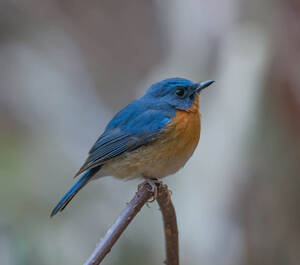
Tarsiger hyperythrus
Rufous-breasted Bush Robin, also known as Rufous-breasted Bush Robin, is a bird of the family Cyprinidae, similar to the Red-flanked Blue-tailed Robin.The call of the brown-bellied robin is duk-duk-duk-squeak; the song is a vague trembling zeew…zee…zwee…zwee. It breeds in southeastern Tibet and w...

Luscinia megarhynchos
Xinjiang Nightingale is a small bird of the family Flycatcher and the genus Nightingale, with 3 subspecies.Xinjiang Nightingale is called "Nightingale" in English, because it is good at singing and is often heard at night. In literary works and Chinese-English dictionaries, this bird is of...

Luscinia svecica
Bluethroat, also known as Bluethroat in English, has 10 subspecies.Bluethroat is timid and often runs short distances underground, stopping for a while, twisting or spreading its tail feathers from time to time. It likes to hide under reeds or low bushes, flying very low, usually only for short dist...

Luscinia pectardens
The Firethroat, also known as the Golden-breasted Robin, is a species of bird in the family Firethroat, and is endemic to China.The Golden-breasted Robin hides in dense bushes and bamboo forests. It feeds on insects on the forest floor. Its tail often twitches.The long call of the golden-breasted ro...

Luscinia obscura
Blackthroat, foreign name Blackthroat, no subspecies.Regarding the taxonomic status of the black-throated robin, previous scholars such as Goodwin and Vaurie (1956), Zheng Zuoxin (1958), and Vaurie (1959) all believed that the black-throated robin was just a different color form of the golden-breast...

Calliope calliope
The Siberian Rubythroat is a songbird of the class Aves and family Flycatchers, with no subspecies.The Siberian Rubythroat is a migratory bird that breeds in the northernmost part of China in summer and migrates to the southernmost part of China in late autumn to spend the winter. It passes Qingdao...
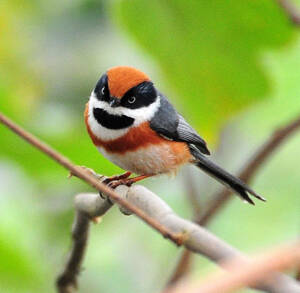
Luscinia ruficeps
The Rufous-headed Robin is a very rare endangered species.The Rufous-headed Robin sings more in May. It is very good at singing. The song is loud and melodious, like other robins. The song is loud and powerful, with a heavy guttural sound, pleasant and intermittent, with a short interlude at the beg...

ulvetta striaticollis
Mountain Tit Babbler, also known as Mountain Tit Babbler, has long been classified as a genus of the family Timalis.Mountain Tit Babbler likes to live in small groups in thorny oak woods and forests, and migrate down in winter.Listed in the second level of the "List of National Key Protected Wi...
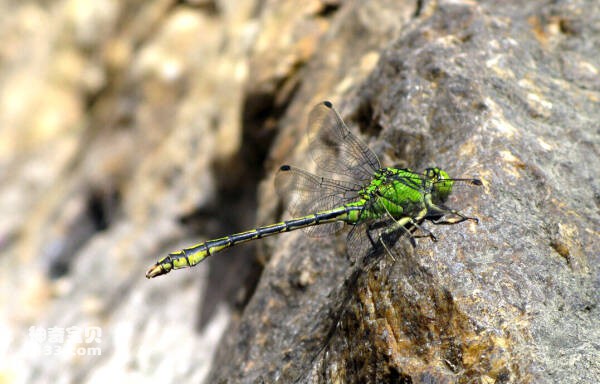


Pterodactylus
Pterodactylus was a small flying reptile from the Late Jurassic of Europe. It was not a dinosaur, although it lived at the same time as many dinosaurs and is often grouped with them in popular media. As a pterosaur, it belonged to a different branch of reptile evolution specialized for powered fligh...

What are some insects that look like flowers? Uncovering the secrets of insect mimicry and ecologica
In nature, insects have developed various camouflage abilities to survive and adapt to the environment. Among them, insects that mimic flowers are a particularly eye-catching group of creatures, with their shapes, colors, and even behaviors being very similar to flowers. The mimicry of these insects...
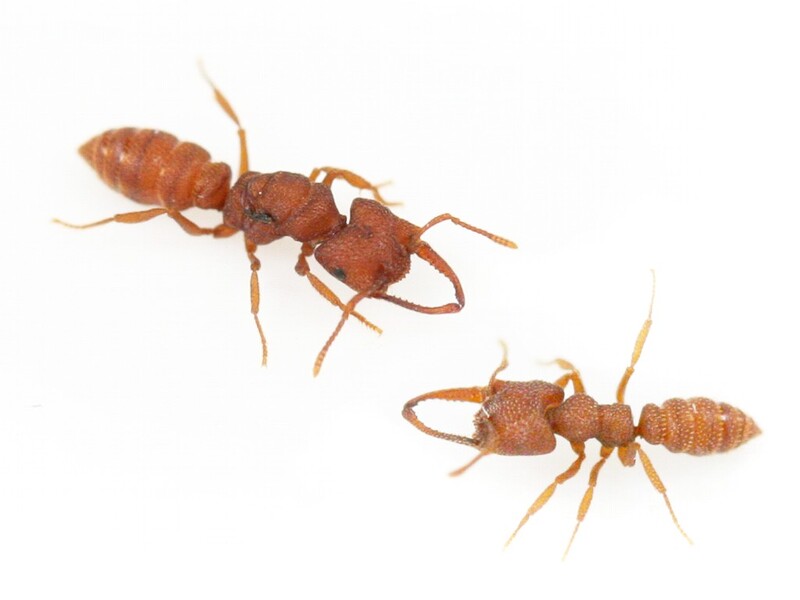
Top 10 most sensitive animals in the world
Untrained humans usually have a reaction time of 200 to 300 milliseconds, while humans blink at about 100 milliseconds. However, many animals are much faster than humans. Today, I have compiled a list of the top ten most responsive animals in the world, including Camilla ants, splay-necked spiders,...

The World's Biggest Fly Tipula gigantea: Everything You Need to Know
If you're curious about the fascinating world of insects, you might have come across the term "world's biggest fly." This phrase often sparks curiosity, and it refers to a giant fly species that’s both awe-inspiring and slightly intimidating. In this article, we’ll dive deep into...
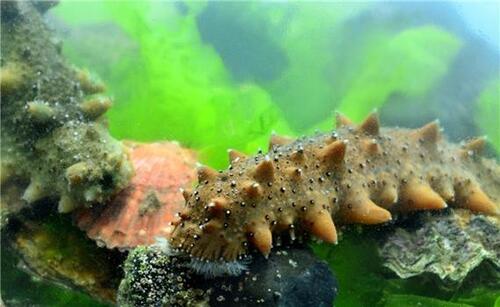
Sea Animals That Breathe Through Their Rear Ends
Cloacal respiration is not limited to land-based animals. Several marine and freshwater creatures have also evolved this method to cope with low oxygen levels in aquatic environments.1. Sea Cucumbers (Class Holothuroidea)Habitat: Ocean floors worldwideBreathing Mechanism: Sea cucumbers, slow-moving...

Animals with the coolest defense mechanisms: Nature's masters of self-preservation
Animals with the coolest defense mechanisms: Masters of self-protection in natureIn nature, the competition for survival is extremely fierce. In order to protect themselves from predators, many animals have evolved unique defense mechanisms to cleverly deal with threats. The following are several an...

Difference Between Butterflies and Moths
Butterflies and moths are two similar but obviously different insects. They have some unique characteristics in appearance, living habits and habits. The following is a detailed introduction and difference between butterflies and moths: 1. Butterfly Physical characteristic...

The world's top ten super-powerful animals, whose special functions are enviable
Animal superpowers refer to the unique abilities of animals in adapting to and surviving in their environment. These abilities can involve animals' perception, movement, hunting, self-defense, communication, etc. to help them survive in the wild and maintain a competitive advantage over other...
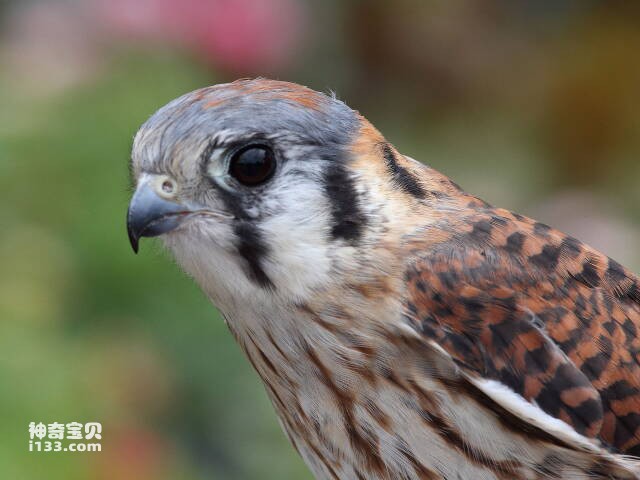
The top ten animals with outstanding vision in the world, an inventory of animals with unique vision
In nature, although human eyes have evolved to an almost perfect level, there are many animals with equally amazing visual abilities. They may be able to see further, or have a wider field of vision. The ability of animals to see depends largely on their living environment and hunting habits....
What are the dancing animals?
Some animals dance, perhaps to attract mates, display their colors or sounds, or to interact socially or to hunt for prey. Here are some dancing animals:1. Birds: Many birds dance to attract mates. The most famous of these are the birds of paradise, which attract mates with their unique dance perfor...