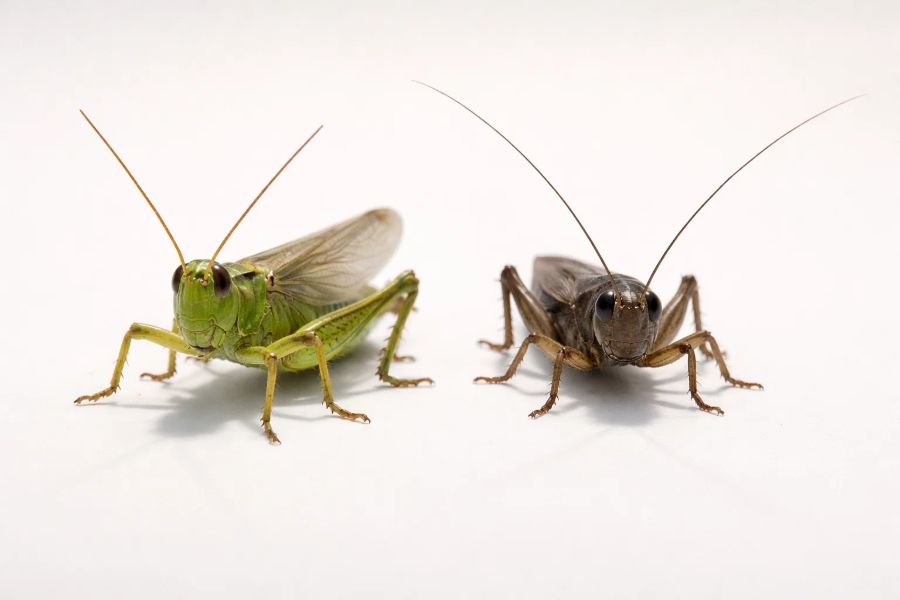
Grasshoppers and crickets are both in the insect order Orthoptera, but they belong to different major groups and have some easy-to-spot differences.
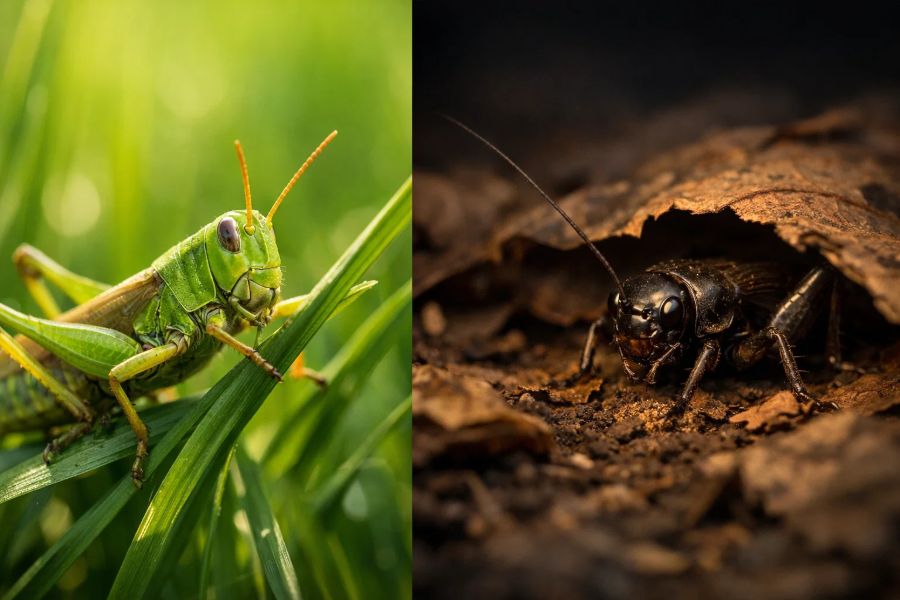
Quick comparison
| Feature | Grasshoppers | Crickets |
|---|---|---|
| Group (within Orthoptera) | Caelifera | Ensifera |
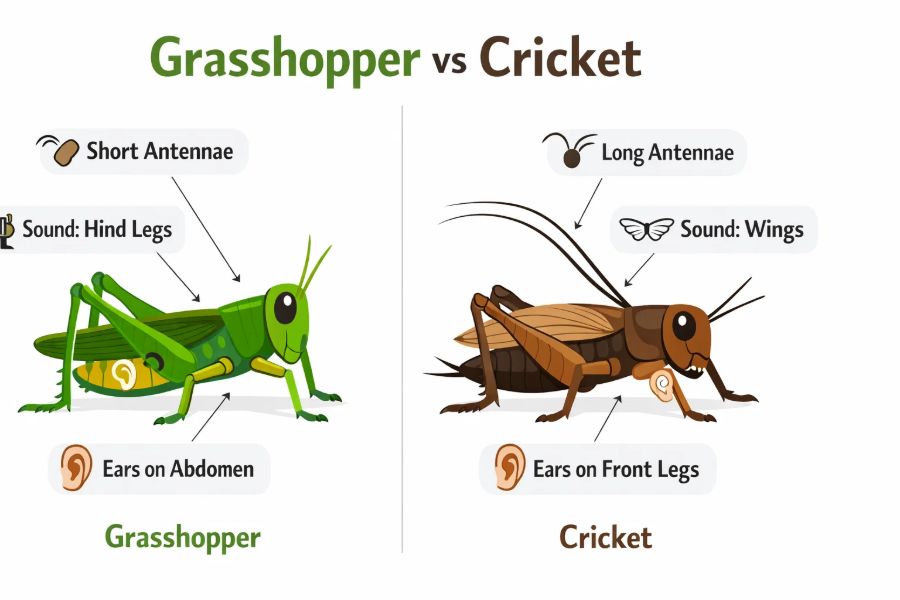
| Antennae | Short (usually shorter than the body) | Long (often longer than the body) |
| Body shape | More “stout,” often built for jumping in open areas | More “slender,” often adapted for hiding in vegetation/crevices |
| Active time | Mostly daytime | Mostly night-time |
| Habitat | Often fields, grasslands, open areas | Often leaf litter, shrubs, burrows, indoors (some species) |
| Sound (“chirping”) | Many species stridulate by rubbing hind legs against wings | Usually stridulate by rubbing forewings together |
| Hearing organ (tympanum) | Typically on the abdomen | Typically on the front legs |
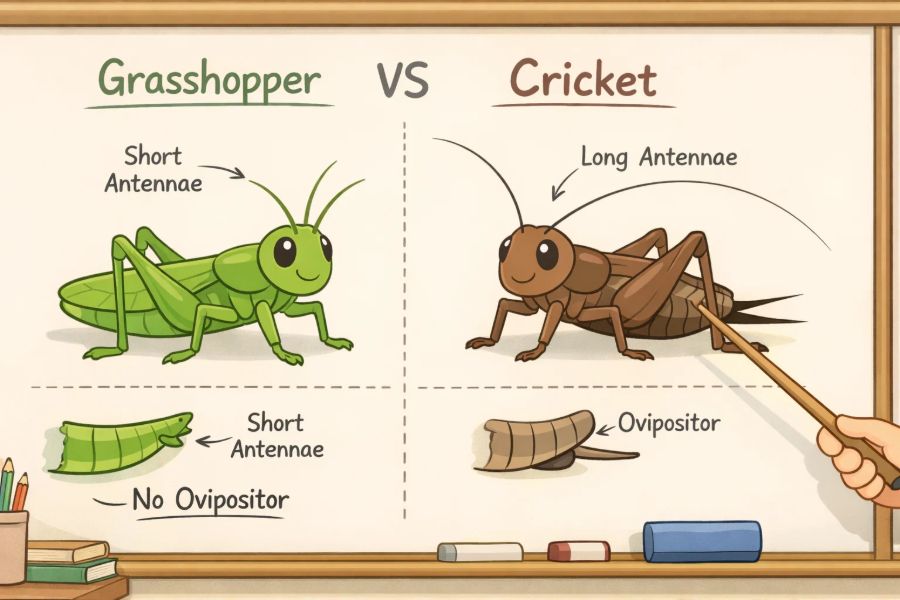
| Egg-laying (females) | Ovipositor usually short and less obvious | Ovipositor often long, needle-like (many species) |
| Diet | Many are plant-heavy feeders | More often omnivorous (plants + insects/scavenging) |
The easiest ways to tell them apart (fast)
Look at the antennae: long = usually a cricket; short = usually a grasshopper.
Listen + watch how they make sound: crickets typically “sing” by rubbing wings, grasshoppers often use legs + wings.
Check the female’s ovipositor: a long “spike” at the rear often points to crickets (and their relatives like katydids).
Common confusion: katydids
Katydids are often mistaken for grasshoppers, but they’re actually closer to crickets (they’re also Ensifera) and usually have very long antennae.
If you want, describe what you saw (antennae length, time of day, colour, and where you found it), and I’ll help you identify which one it most likely is.