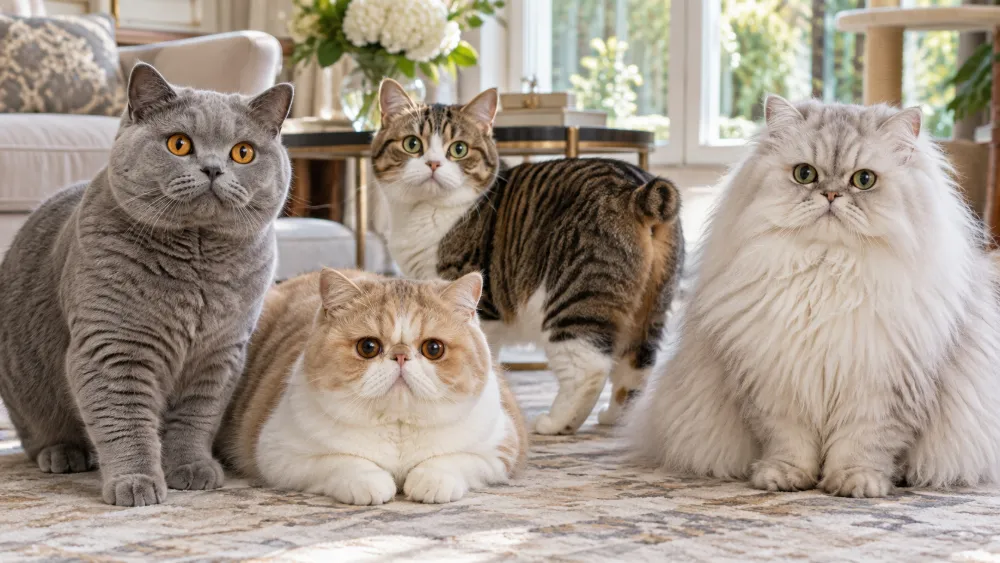
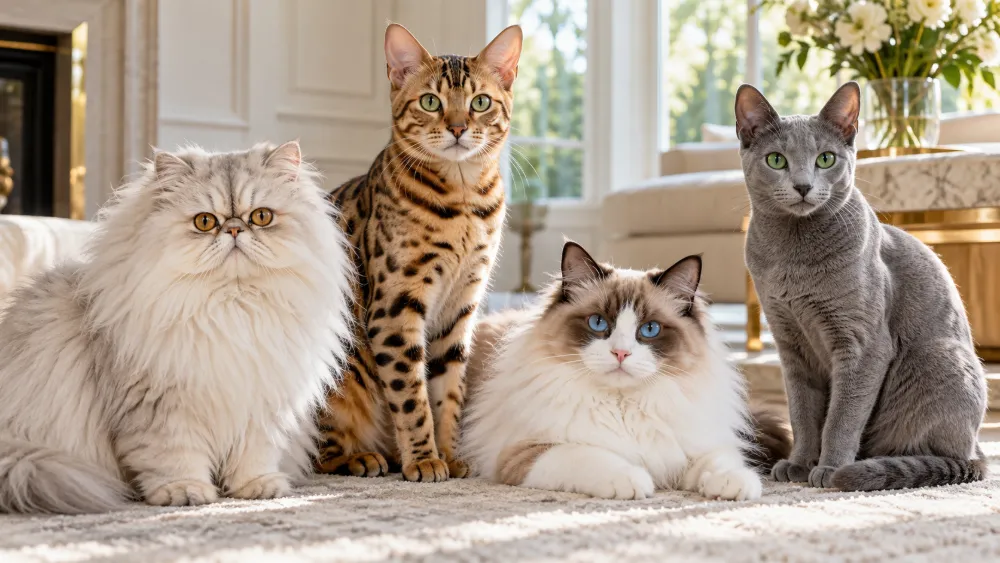
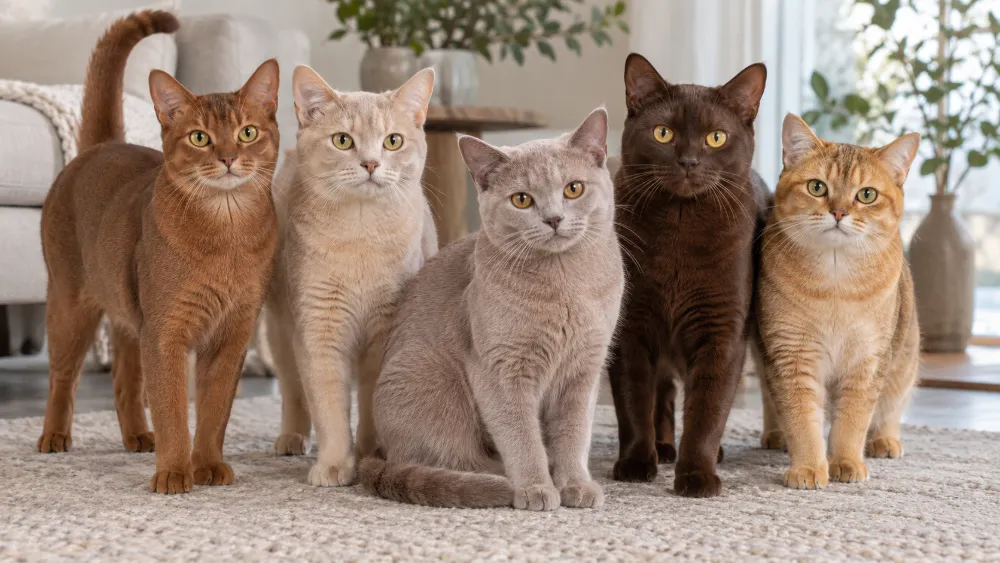
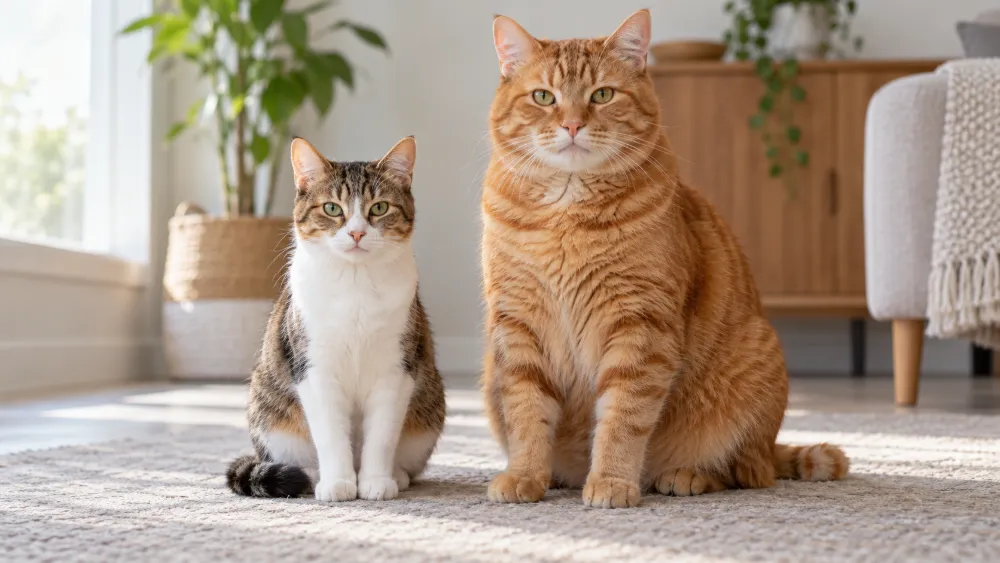
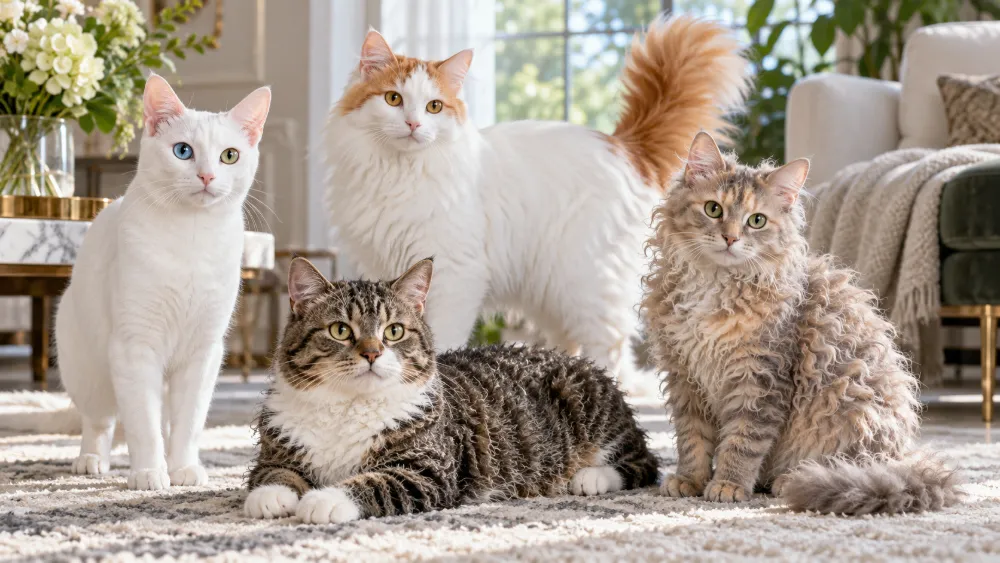
Cat eyes can be blue, green, yellow, gold, amber, copper—or even two different colors.
The color comes mainly from pigmentation within the iris, combined with the way light interacts with its microscopic structure.
Most young kittens initially have blue-looking eyes because relatively little pigment has accumulated in the iris.
As the kitten grows, pigment-producing cells become more active and the eyes may gradually change to their permanent adult color.
Adult cat eye color is influenced by genetics and iris pigmentation. Blue eyes contain very little visible iris pigment, while yellow, gold and copper eyes generally have progressively more pigment.
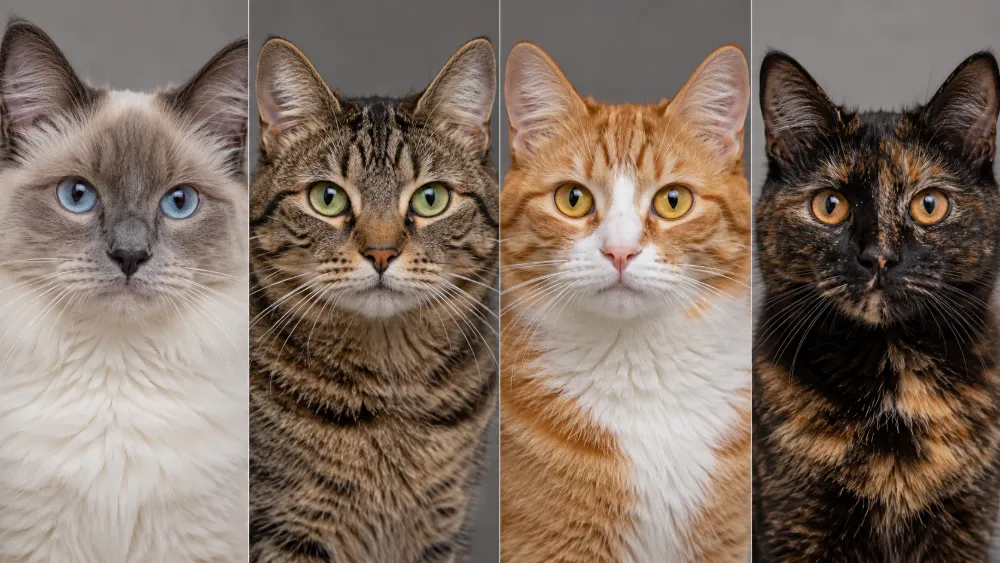
What Colors Can Cat Eyes Be?
Common domestic cat eye colors include:
blue;
green;
yellow;
gold;
amber;
orange;
copper;
and combinations of these shades.
Some cats also have heterochromia, meaning the two eyes are different colors.
Eye colors form a spectrum rather than perfectly separated categories, so one person's “gold” may look like amber or copper to someone else.
Cat Eye Color Chart
| Eye Color | Typical Appearance | General Pigmentation |
|---|---|---|
| Blue | Pale sky blue to deep sapphire | Very little iris pigment |
| Green | Yellow-green to vivid emerald | Low to intermediate pigmentation plus light scattering |
| Yellow | Lemon to golden yellow | Moderate pigmentation |
| Gold / Amber | Warm golden-brown | Moderate to strong pigmentation |
| Copper | Deep orange-brown | Strong visible iris pigmentation |
| Odd eyes | One eye differs from the other | Unequal pigmentation between irises |
Why Do Cats Have Different Eye Colors?
The iris is the colored ring surrounding the pupil.
Its appearance depends partly on melanin, the same major pigment involved in skin and coat coloration.
However, eye color is not simply determined by one “blue gene,” “green gene” or “yellow gene.”
Genetics influence:
how pigment-producing cells develop;
how much pigment reaches the iris;
where the pigment is distributed;
and how iris tissue interacts with light.
That combination creates the wide range of feline eye colors.
Why Are Blue Cat Eyes Blue?
Blue cat eyes contain relatively little visible pigment in the iris.
The blue appearance is produced largely by the way light is scattered through the lightly pigmented iris tissue.
This is why blue eyes can look:
pale gray-blue;
bright sky blue;
violet-blue;
or deep sapphire
depending on genetics, iris structure and lighting.
They do not contain literal blue pigment in the same way blue paint does.
Why Do Siamese Cats Have Blue Eyes?
Siamese cats provide a particularly interesting genetic example.
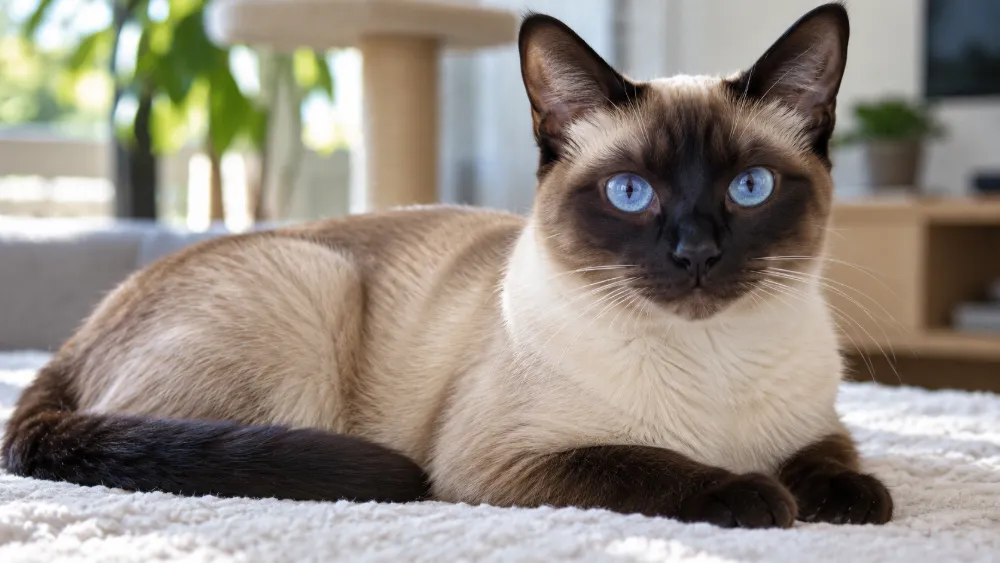
The classic Siamese colorpoint pattern is associated with a mutation affecting the TYR gene, which encodes the pigment-producing enzyme tyrosinase.
The altered enzyme is temperature-sensitive.
That is why Siamese-type cats develop darker pigment on cooler parts of the body such as:
the face;
ears;
legs;
paws;
and tail.
Pigmentation is greatly reduced in the iris, producing the characteristic blue eyes associated with the colorpoint phenotype.
Do All Siamese Cats Have Blue Eyes?
Traditional Siamese colorpoint cats have blue eyes as part of the phenotype.
The same general colorpoint genetic mechanism also occurs in breeds and varieties such as:
Himalayans;
colorpoint Persians;
some Ragdolls;
Birmans;
and Neva Masquerade Siberians.
The exact depth of blue varies among individuals and breeding lines.
Why Do Cats Have Green Eyes?
Green eyes develop when iris pigmentation and light scattering combine to create a green appearance.
The shade can range from:
yellow-green;
olive;
grass green;
to vivid emerald.
Green is especially common and diverse in domestic cats.
Genetics research on the cat family suggests that green iris coloration has a long evolutionary history within the lineage that includes domestic cats.
Why Do Cats Have Yellow or Gold Eyes?
Yellow and gold eyes contain more visible pigmentation than most blue eyes.
Depending on pigment concentration and iris structure, the color may look:
pale lemon yellow;
bright gold;
amber;
or yellow-brown.
These warm colors are extremely common among random-bred domestic cats.
What Are Copper Cat Eyes?
Copper eyes are at the deep orange-brown end of the normal feline eye-color spectrum.
They may appear:
orange;
burnt orange;
deep amber;
or copper-brown.
Strong copper coloration is particularly valued in the breed standards of some pedigreed cats.
Lighting makes a major difference, so the same eye may look more golden indoors and more orange in bright natural light.
Are Brown Eyes Common in Cats?
Very dark brown eyes like those commonly seen in humans are unusual in domestic cats.
What looks brown is often better described as:
dark amber;
gold;
orange;
or copper.
This is one reason cat eye colors are often described differently by different observers.
Why Are Kittens Born With Blue Eyes?
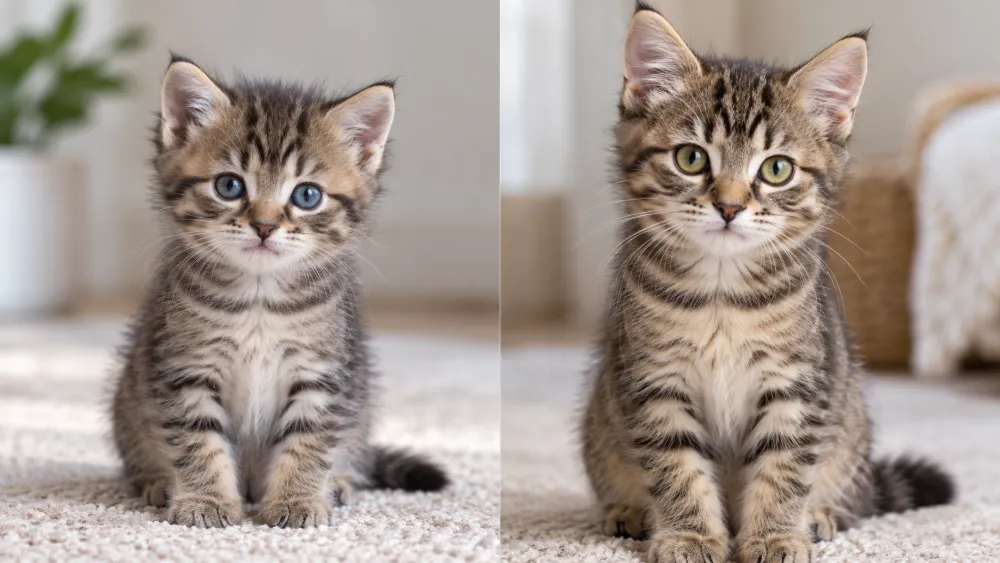
Most young kittens initially appear to have blue eyes because the pigment-producing cells in the iris are not yet highly active.
As melanin accumulates during development, the permanent eye color begins to appear.
A kitten destined to have green, yellow or copper eyes may therefore start life with blue-gray eyes.
When Do Kittens' Eyes Change Color?
The transition often becomes noticeable at approximately five to seven weeks of age.
By roughly eight weeks, many kittens show an eye color close to the one they will have as adults.
However, the final depth and intensity of the color may continue developing afterward.
Colorpoint cats that remain blue-eyed are an obvious exception because blue is their normal adult color.
Can a Cat Have Two Different-Colored Eyes?
Yes.
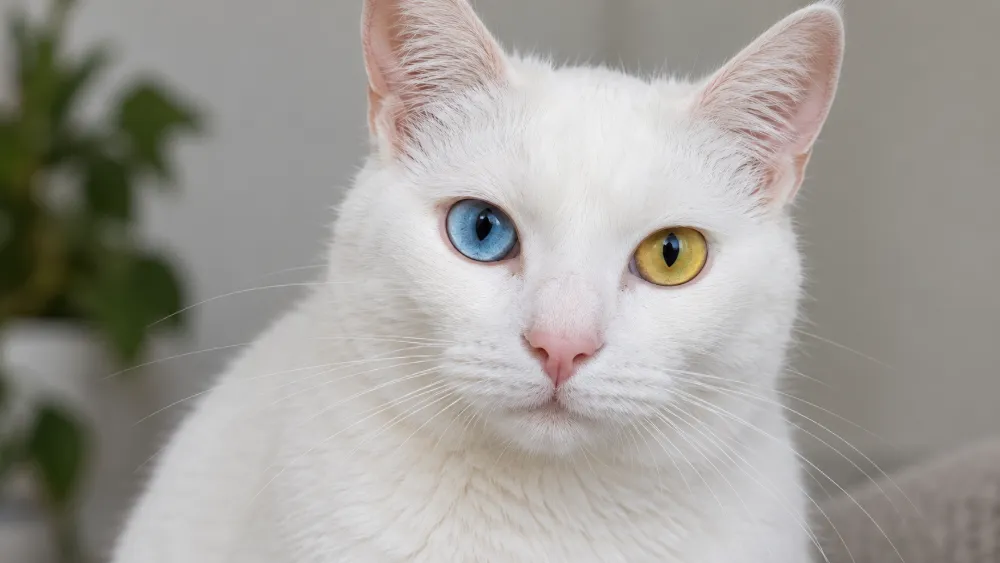
The condition is called heterochromia.
In complete heterochromia, one iris is one color and the other iris is another.
A classic example is a white cat with:
one blue eye;
and one yellow, green or copper eye.
What Causes Odd Eyes in Cats?
Congenital heterochromia develops when pigmentation differs between the two irises during development.
One eye may receive very little pigment and remain blue while the other develops yellow, green or copper coloration.
Odd eyes are particularly noticeable in white cats because some genes affecting white coat pigmentation can also influence pigment-cell distribution elsewhere in the body.
Can One Cat Eye Have Two Colors?
Yes.
This is sometimes called sectoral heterochromia.
Instead of having two completely different eyes, a single iris contains areas of different colors.
For example, a primarily blue eye may contain a wedge of gold or green.
If this pattern has been present since the cat was young and the eye is otherwise healthy, it may simply be a normal pigmentation variation.
Do Blue-Eyed Cats Have Better or Worse Vision?
Blue eye color alone does not mean a cat is blind.
Cornell specifically notes that blue-eyed white cats are not more prone to blindness simply because they have blue eyes.
Healthy blue-eyed cats can have functional vision just like cats with green, yellow or copper eyes.
Vision problems should be evaluated based on eye health rather than normal iris color.
Are Blue-Eyed Cats Deaf?
Some are, but many are not.
This commonly repeated statement needs qualification.
Congenital deafness is associated particularly with white pigmentation, and the risk can be higher in white cats with one or two blue eyes.
But:
a blue-eyed Siamese is not automatically deaf;
a blue-eyed white cat is not automatically deaf;
and a white cat without blue eyes can still have congenital deafness.
The biological connection involves genes affecting pigment cells and inner-ear development rather than blue iris color itself causing hearing loss.
How Common Is Deafness in White Blue-Eyed Cats?
The answer depends heavily on the population studied.
Different studies of white cats have produced substantially different percentages.
For example, one study of client-owned purebred kittens found congenital sensorineural deafness in about 30 percent of the white kittens tested overall, with higher rates among kittens that had at least one blue iris.
Other studies have produced lower or higher estimates.
That variability is why statements such as “all blue-eyed white cats are deaf” are incorrect.
The most reliable way to diagnose congenital deafness is specialized hearing testing such as BAER testing.
Can Eye Color Tell You a Cat's Breed?
Sometimes it provides a clue, but it is rarely enough by itself.
Blue eyes are strongly associated with colorpoint cats such as Siamese-type cats.
Certain pedigreed breeds may also be selected for characteristic:
green;
gold;
copper;
or blue eyes.
But mixed-breed cats can display most of these colors too.
A cat should not be identified as a specific breed solely because of eye color.
Does Coat Color Determine Eye Color?
Coat and eye pigmentation can share genetic pathways, but there is no simple rule such as “black cats always have yellow eyes.”
Some associations are strong.
Colorpoint cats are a good example because the same pigmentation mechanism responsible for their coat pattern is also associated with blue eyes.
White pigmentation can also be associated with blue or odd eyes.
But many ordinary coat colors occur alongside several possible eye colors.
Why Do Cat Eyes Look Different in Different Light?
Lighting can dramatically change how an iris appears.
A green eye may look:
yellow-green in warm indoor light;
gray-green in shade;
or bright emerald in daylight.
Pupil size also changes how much of the iris is visible.
In dim conditions, the pupil becomes large and the colored iris appears narrower.
In bright light, the pupil contracts into the familiar vertical slit, exposing more iris color.
Can a Cat's Eye Color Change as an Adult?
A slight difference caused by lighting is normal.
A genuine new change in the iris color of an adult cat is different.
If an adult cat's eye gradually or suddenly changes color—especially only one eye—it should be evaluated by a veterinarian.
Changes can sometimes be associated with:
inflammation inside the eye;
injury;
iris abnormalities;
glaucoma;
pigment changes;
or other ocular disease.
When Is an Eye Color Change an Emergency?
Seek veterinary attention promptly if a color change occurs together with:
cloudiness;
redness;
squinting;
eye discharge;
one pupil larger than the other;
an irregular pupil;
pawing at the eye;
or apparent vision loss.
Normal congenital eye color should not suddenly change in a healthy adult cat.
What Is the Rarest Cat Eye Color?
There is no universal scientific database ranking every domestic cat eye color by rarity.
Some deeply saturated shades—such as intense copper or vivid emerald—and certain forms of heterochromia may appear unusual depending on the population.
But claims that one particular eye color is definitively “the rarest cat eye color in the world” are usually based on breed websites rather than population-wide evidence.
Do Cat Eye Colors Affect Personality?
There is no reliable evidence that blue, green, gold or copper eyes determine a cat's personality.
Behavior is influenced by many other factors, including:
genetics;
early socialization;
individual temperament;
environment;
health;
and previous experiences.
Eye color is primarily a physical pigmentation trait, not a personality test.
FAQ
What colors can cats' eyes be?
Common colors include blue, green, yellow, gold, amber, orange and copper. Some cats also have two different-colored eyes.
Why do kittens have blue eyes?
Young kittens initially have very little pigment in the iris, so their eyes appear blue. Pigment develops as they grow.
When do kittens' eyes change color?
Changes often begin around five to seven weeks, and many kittens show something close to their adult eye color by approximately eight weeks.
Why do Siamese cats have blue eyes?
The Siamese colorpoint phenotype is associated with a temperature-sensitive TYR gene variant that reduces pigmentation, including pigmentation within the iris.
What is an odd-eyed cat?
An odd-eyed cat has complete heterochromia, meaning one eye is a different color from the other. A common combination is one blue eye and one yellow, green or copper eye.
Are blue-eyed cats deaf?
Not automatically. Congenital deafness is more strongly associated with certain white-pigmentation genetics, although white cats with blue eyes can have an increased risk.
Are blue-eyed cats blind?
No. Normal blue iris color does not itself cause blindness.
Can adult cats' eye color change?
A true new iris-color change in an adult should be checked by a veterinarian, particularly if it affects one eye or occurs with cloudiness, redness or discomfort.
What is the rarest cat eye color?
There is no strong population-wide evidence establishing one universal rarest color. The frequency varies by breed, genetics and cat population.
Does eye color determine a cat's personality?
No reliable evidence shows that normal iris color predicts feline personality.
Final Answer
Cat eye colors range from blue and green through yellow, gold, amber and deep copper, and some cats even have two different-colored eyes.
The colors develop through genetics, iris pigmentation and the way light interacts with the eye.
Most kittens initially appear blue-eyed because little pigment has accumulated in the iris. Over the following weeks, many develop their permanent green, yellow or copper coloration.
Blue-eyed colorpoint cats such as Siamese cats remain blue because their pigmentation genetics reduce pigment in the iris.
Odd-eyed cats develop different amounts of pigment in their two irises, producing heterochromia.
Normal eye color itself is usually just an inherited physical trait. But if an adult cat's iris suddenly changes color—particularly in only one eye or together with cloudiness, redness, squinting or unequal pupils—that is a health change rather than a new color morph and should be checked by a veterinarian.
Related Reading
Sources Used for Fact Checking
Cornell Feline Health Center — Feline Vision Problems
Merck Veterinary Manual — Deafness in Cats
PetMD — Kitten Eye Development and Eye Color
Cats Protection — Kitten Development and Heterochromia
Lyons et al. — Tyrosinase Mutations Associated With Siamese and Burmese Phenotypes
Veterinary Journal / BAER Studies — Congenital Deafness in White Cats