What are the most beautiful cats in the world?
There is no scientific answer. Beauty is subjective, and one person's perfect fluffy Persian may be another person's sleek Siamese or wild-looking Bengal.
Still, some cat breeds are especially memorable because of distinctive combinations of coat texture, color, pattern, eyes and body shape. Rather than pretending to rank them from objectively most to least beautiful, this list highlights 10 breeds whose appearances have made them especially recognizable.
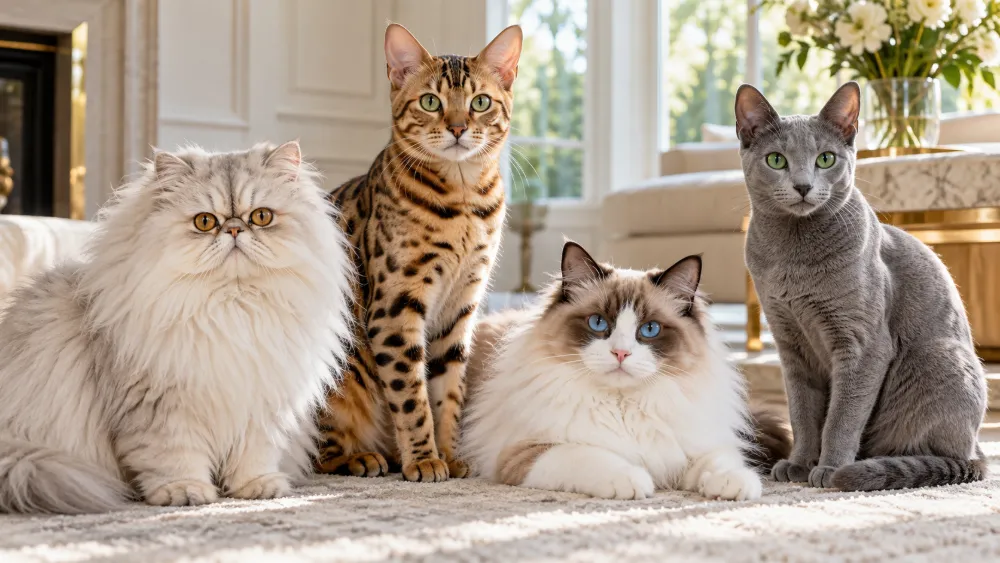
10 Beautiful Cat Breeds at a Glance
| Breed | Standout Feature | Coat |
|---|---|---|
| Persian | Round eyes and luxurious coat | Longhair |
| Bengal | Leopard-like rosettes | Short |
| Ragdoll | Blue eyes and pointed coloration | Semi-longhair |
| Russian Blue | Silver-blue coat and green eyes | Short |
| Maine Coon | Large frame and flowing tail | Longhair |
| Turkish Angora | Fine silky coat and graceful body | Longhair |
| Abyssinian | Richly ticked coat | Short |
| Siamese | Blue eyes and dramatic points | Short |
| Norwegian Forest Cat | Heavy forest coat and long tail | Semi-longhair |
| British Shorthair | Round face and dense plush coat | Short |
1. Persian
The Persian is one of the classic examples of a cat breed developed around a dramatic coat and rounded appearance.
Its long, full coat creates a soft silhouette, while large round eyes, small ears and a broad head add to the breed's distinctive expression.
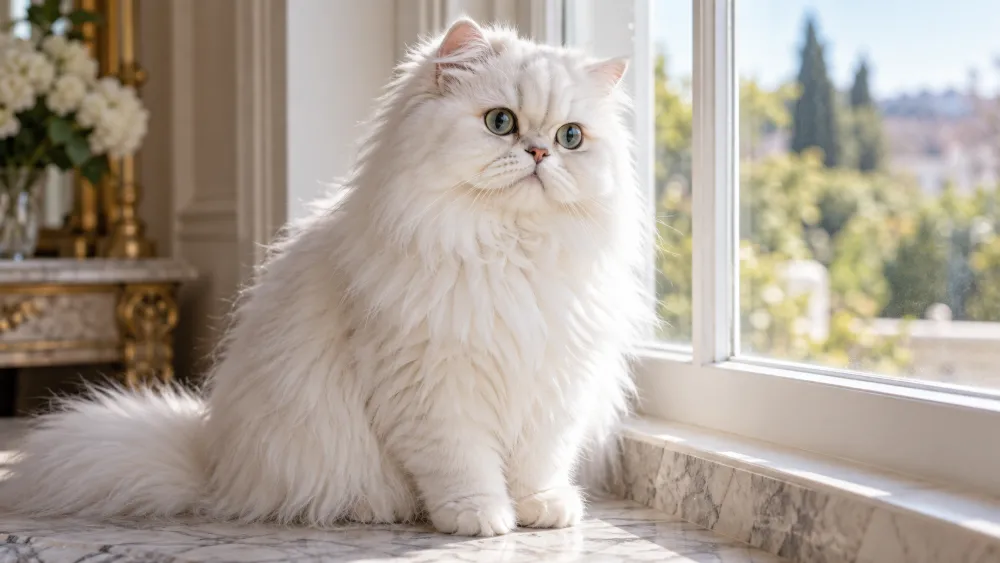
Persians occur in many colors and patterns, so the breed can look surprisingly different from one cat to another.
The coat is beautiful but demanding. Long-haired Persians require regular grooming to prevent tangles and mats.
Appearance should also never be pushed to unhealthy extremes. A responsible breeding program should prioritize healthy breathing, functional anatomy and overall welfare rather than simply producing the flattest possible face.
2. Bengal
Few domestic cats have a coat as immediately recognizable as the Bengal.
Bengals can have spotted or marbled coats, but the rosetted pattern is especially famous because the markings resemble the two-toned spots seen on some wild cats such as leopards and jaguars.
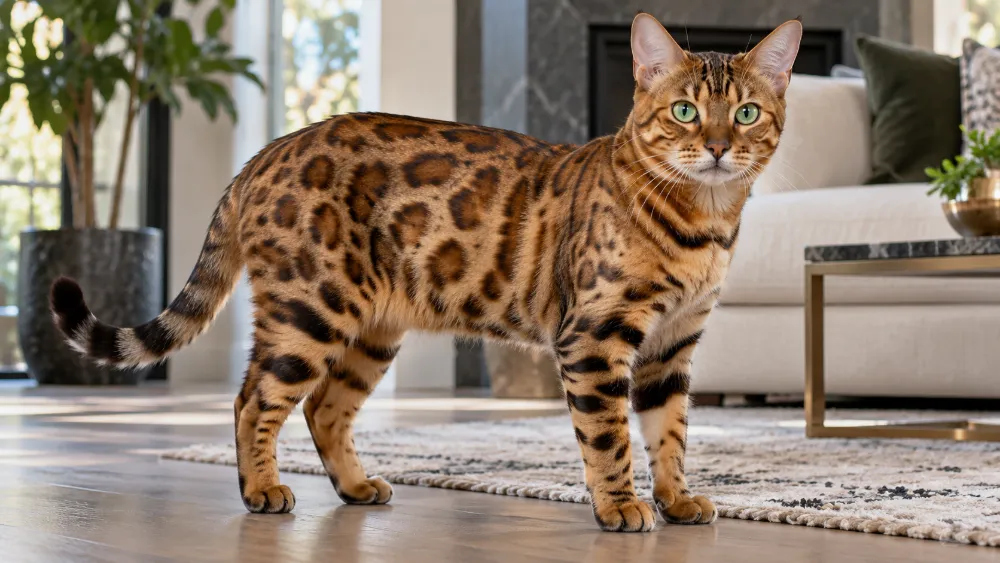
The breed also has an athletic, muscular build that fits the visual impression created by its patterned coat.
Some Bengals have a coat effect often called “glitter,” in which individual hairs reflect light and give the coat a subtle shimmering appearance.
The familiar golden-brown Bengal is only one possibility. Bengal coat colors and patterns can vary significantly.
3. Ragdoll
The Ragdoll combines several traits that many people associate with a striking cat: a large body, soft semi-long coat, pointed coloration and vivid blue eyes.
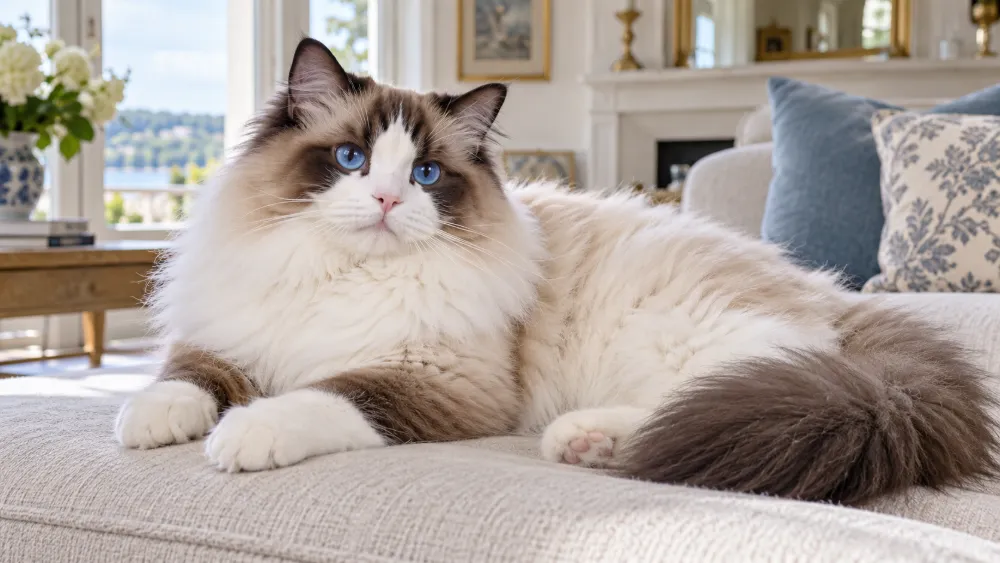
Ragdolls occur in several patterns, including colorpoint, mitted and bicolor. In bicolor cats, an inverted white V on the face can create an especially dramatic contrast with the darker ears and bright blue eyes.
The breed is slow to mature, so young Ragdolls may continue developing in size, coat and color for several years.
4. Russian Blue
The Russian Blue proves that a cat does not need complex markings to have a distinctive appearance.
Its coat is an even blue-gray shade with silver-tipped guard hairs that can produce a luminous sheen under good light.
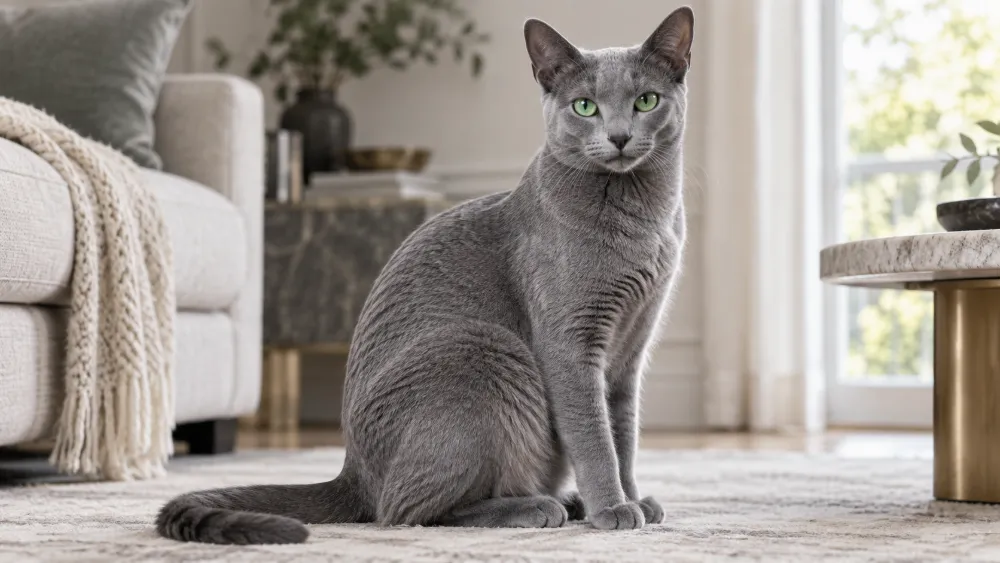
The contrast between the silvery blue coat and vivid green eyes is one of the breed's best-known characteristics.
Russian Blues also have dense, plush short coats and a graceful, fine-boned but muscular body.
Not every gray domestic cat is a Russian Blue. A true pedigreed breed is defined by ancestry and breed characteristics, not coat color alone.
5. Maine Coon
The Maine Coon creates a completely different type of visual impression.
Instead of looking delicate, the breed is large, rugged and heavily coated. Adult cats have a shaggy coat, broad paws, prominent ears and an exceptionally long, flowing tail.
The coat is shorter around the shoulders and longer along the sides, belly and hind legs, creating a naturally layered appearance.
Maine Coons occur in a wide variety of colors and patterns, from classic brown tabby to solids, silvers and cats with white.
The combination of large size and dramatic fur is one reason photographs of Maine Coons often make them appear almost wild, although they are fully domestic cats.
If size is what catches your eye, see our cat breeds from largest to smallest.
6. Turkish Angora
The Turkish Angora has a more refined silhouette than the heavy Persian or Maine Coon.
It has a long, slender but muscular body combined with a fine, silky single coat. A full tail carried behind the cat gives the breed a flowing appearance when it moves.
White Turkish Angoras are particularly well known, but the breed is not limited to white. Accepted cats can occur in a variety of colors and patterns.
The Cat Fanciers' Association breed standard emphasizes balance, grace and a silky coat rather than exaggerated features.
The Turkish Angora is also one of the breeds worth knowing in the wider discussion of rare cat breeds.
7. Abyssinian
The Abyssinian's beauty comes largely from something that is easy to miss in a quick photograph: its ticking.
Instead of conventional stripes covering the body, individual hairs have alternating bands of light and dark pigment. This creates a warm, glowing appearance across the coat.
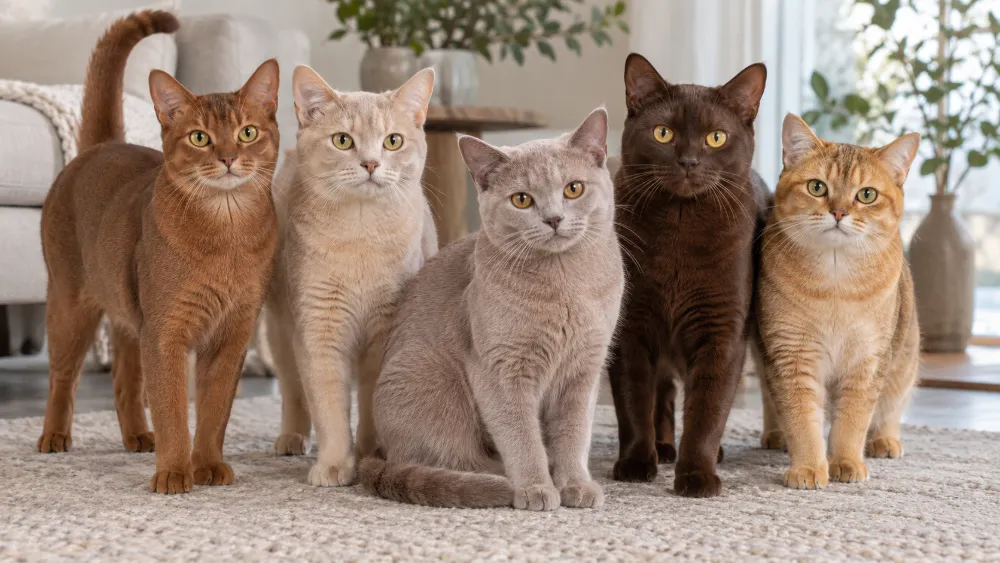
The classic ruddy Abyssinian combines burnt-sienna tones with darker ticking, while CFA also recognizes cinnamon, blue and fawn.
The breed has a medium-sized, lithe and muscular body, large expressive eyes and prominent ears.
Because the pattern is built into individual hairs rather than large patches or spots, an Abyssinian can look subtly different as the light changes.
8. Siamese
The Siamese is one of the world's most recognizable pedigreed cats.
The classic combination is a pale body with darker coloration on the face, ears, legs and tail. These darker areas are known as the points.
Traditional Siamese colors recognized by CFA include seal, chocolate, blue and lilac point.
All have vivid blue eyes, creating strong contrast with the darker mask around the face.
The pointed pattern is temperature sensitive. Kittens are born very pale, while the cooler extremities develop darker pigmentation as they grow.
Colorpoint genetics also appear in other breeds, so a pointed cat is not automatically Siamese.
9. Norwegian Forest Cat
The Norwegian Forest Cat looks as if it was designed for a northern landscape.
Its semi-long coat includes a dense undercoat covered by longer guard hairs. During colder months, a full ruff, bushy tail and heavier body coat give the cat an especially dramatic appearance.
The head has a distinctive triangular form, while large ears and almond-shaped eyes contribute to the breed's alert expression.
Norwegian Forest Cats appear in numerous colors and patterns, including tabbies, solids, cats with white and the unusual amber coloration discussed in our rare cat colors guide.
10. British Shorthair
The British Shorthair is almost the visual opposite of the slender Siamese.
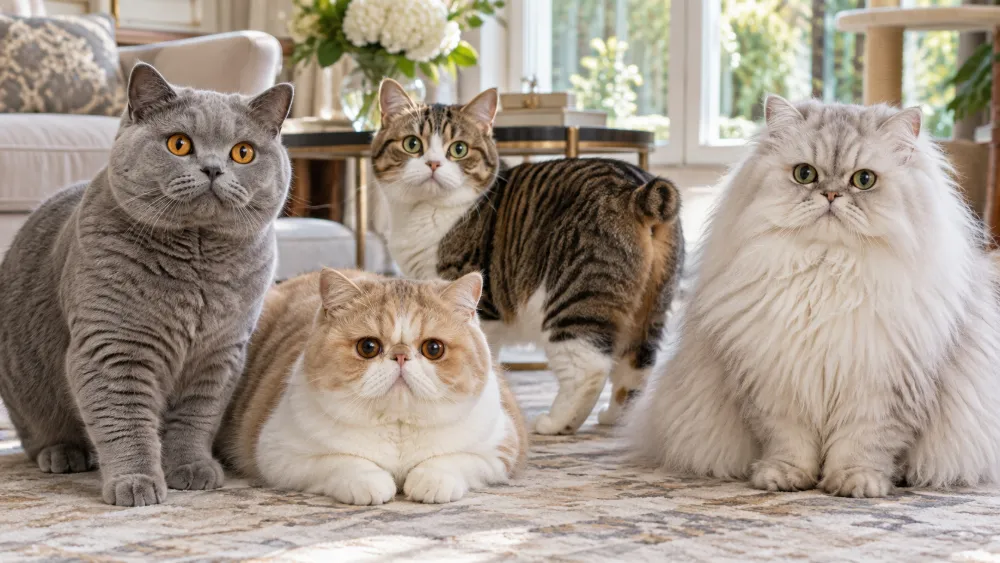
Its body is compact and powerful, with a broad chest, round head, full cheeks and large round eyes.
The short coat is exceptionally dense and creates the plush appearance for which the breed is famous.
Blue is probably the color most strongly associated with the British Shorthair, but the breed occurs in many other colors and patterns.
A blue British Shorthair with copper or gold eyes creates one of the best-known color contrasts in the cat fancy.
What Makes a Cat Look Beautiful?
There is no biological formula for feline beauty.
Different people respond to completely different features:
large or unusually colored eyes;
long flowing coats;
dense plush coats;
dramatic spots or rosettes;
strong color contrast;
unusual coat colors;
large body size;
or graceful body proportions.
This explains why a Bengal, Persian and Russian Blue can all be described as beautiful even though they look almost nothing alike.
Does a Beautiful Cat Have to Be Purebred?
Absolutely not.
Pedigreed breeds are useful in a list like this because their physical traits have documented breed standards. They are not inherently more beautiful than mixed-breed cats.
Domestic shorthairs and longhairs can have extraordinary combinations of colors, patterns, eye colors and facial features that do not fit any particular breed.
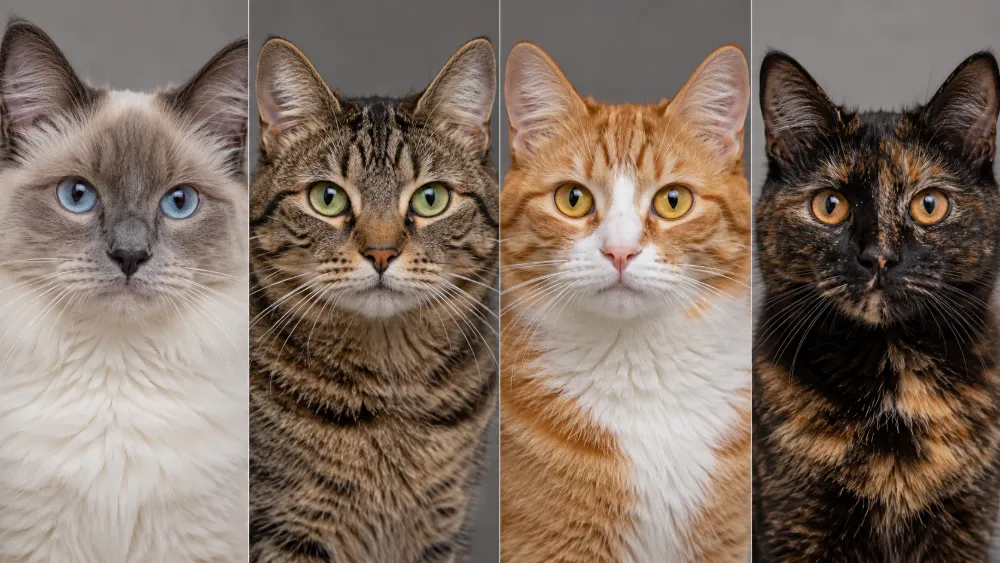
A tortoiseshell rescue cat, silver tabby or black-and-white domestic cat can be every bit as visually striking as a pedigreed show cat.
Are Rare Cats More Beautiful?
Rarity and beauty are separate ideas.
An uncommon breed or coat color can attract attention because people are less familiar with it, but being rare does not make an animal objectively more attractive.
For example, cinnamon and fawn are relatively uncommon cat colors, while black, tabby and orange cats are far more familiar. That says nothing about which is prettier.
See our guides to rare cat colors and rare cat breeds for the difference.
Beautiful Does Not Mean Extreme
There is an important difference between a distinctive breed feature and an exaggerated feature that interferes with health.
A cat should still be able to breathe normally, move comfortably, eat properly, groom itself and live without preventable physical problems.
When choosing a pedigreed cat, health testing, responsible breeding and welfare matter much more than producing the largest eyes, shortest face, longest coat or most exaggerated body shape possible.
What About Weird-Looking Cats?
Beauty is especially subjective when unusual breeds are involved.
Hairless cats, extremely curly coats, folded ears and unusual facial shapes can look fascinating to one person and strange to another.
That is why our existing unusual-looking cats guide should remain separate from this page. Its search intent focuses on odd or unconventional appearance rather than conventional visual beauty.
FAQ
What is the most beautiful cat in the world?
There is no objectively most beautiful cat. Beauty is subjective. Persian, Bengal, Ragdoll, Russian Blue, Maine Coon and Turkish Angora cats are among the breeds frequently admired for distinctive coats, eyes or body shapes.
What cat breed has the prettiest eyes?
That depends on personal preference. Ragdolls and Siamese are known for blue eyes, Russian Blues for vivid green eyes, and many other breeds can have gold, copper, green or even odd-colored eyes.
What is the prettiest fluffy cat breed?
Persians, Maine Coons, Ragdolls, Norwegian Forest Cats and Turkish Angoras all have striking longer coats, but they differ greatly in coat texture, body shape and grooming requirements.
Which cat looks most like a leopard?
The Bengal is especially famous for spotted and rosetted coat patterns that can create a leopard-like appearance. Bengals are domestic cats despite their wild-looking coat.
Are Russian Blue cats actually blue?
“Blue” in cat terminology refers to a diluted gray color rather than bright blue. Russian Blues have a blue-gray coat with silver-tipped hairs that can create a noticeable sheen.
Are beautiful cats expensive?
Not necessarily. Price depends on pedigree, breed, breeder, location, demand and other factors. Appearance alone does not determine value, and mixed-breed or shelter cats can be just as visually striking as expensive pedigreed cats.
What is the rarest beautiful cat breed?
There is no meaningful single answer because beauty is subjective and rarity depends on the registry and location. Some visually distinctive breeds have relatively small registered populations, which we cover separately in our rare cat breeds guide.
Final Thoughts
The most beautiful cats do not all share one type of appearance.
A Persian attracts attention with an enormous flowing coat and round features. A Bengal uses spots and rosettes. A Ragdoll combines bright blue eyes with contrasting points. A Russian Blue relies on a remarkably simple silver-blue and green color combination.
That variety is exactly what makes domestic cats so visually interesting.
Rather than trying to crown one universal winner, it makes more sense to appreciate how different breeds—and ordinary mixed-breed cats—can be beautiful for completely different reasons.
For an even broader look at the cat family, visit our guide to the different types of felines.