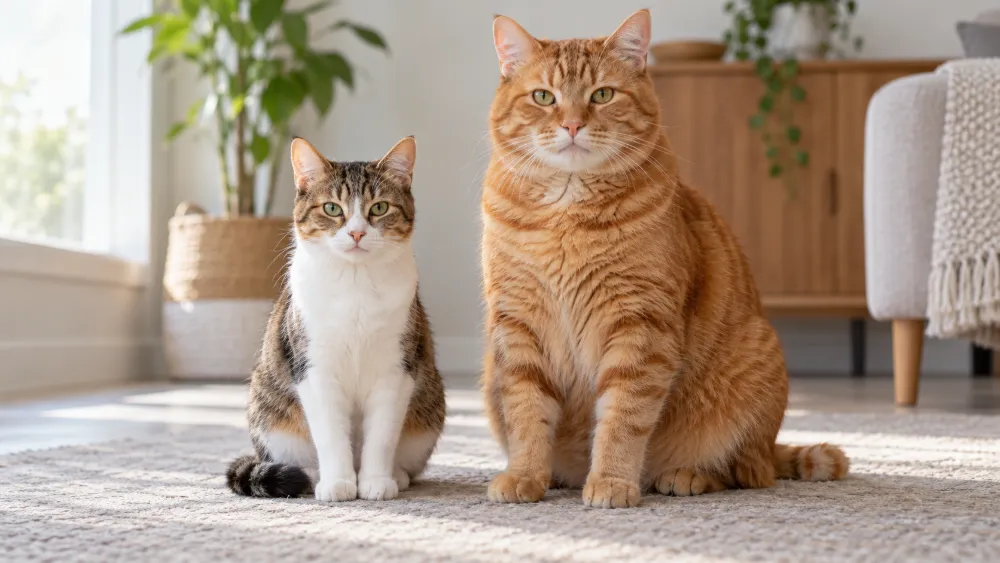
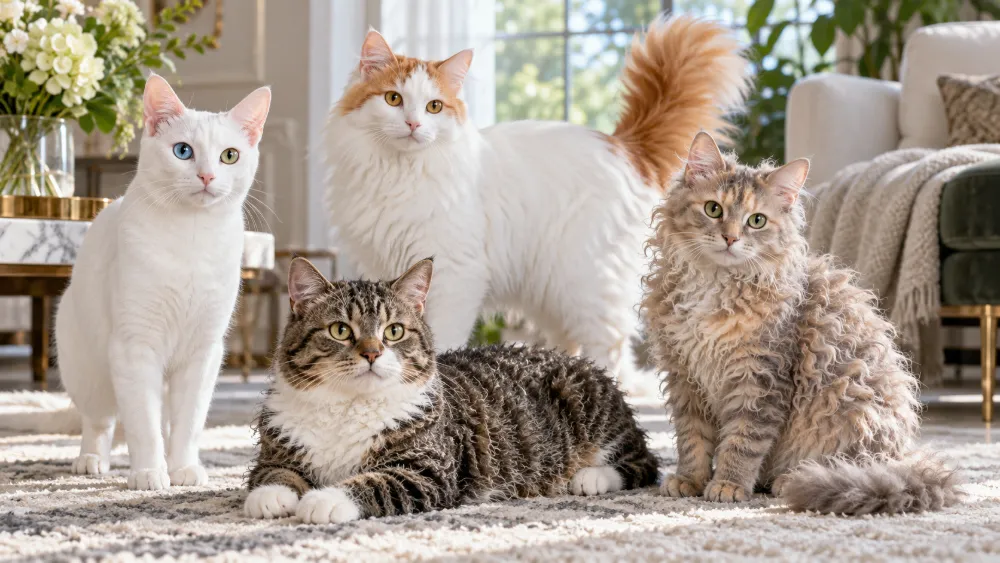
Most people associate purring so strongly with cats that it is easy to assume every cat does it.
But the answer to “Do all cats purr?” is no—not every individual cat purrs often or noticeably, and not every species in the cat family produces the same kind of purr.
Purring is extremely common in domestic cats. Some cats purr loudly enough to hear across a room, while others produce a vibration so soft that you may only notice it by placing a hand gently against their chest or throat. A few cats rarely seem to purr at all.
Quick Answer: Do All Cats Purr?
No.
Most domestic cats purr, but individual cats vary greatly. Some purr frequently, some very quietly and some rarely or apparently never.
Not purring does not automatically mean that a cat is unhappy.
The wider cat family also shows different vocal abilities. Cheetahs and mountain lions can purr, while lions and other roaring cats produce a different range of vocalizations and do not make the same continuous inhale-and-exhale purr associated with house cats.
Why Do Some Cats Purr More Than Others?
Purring is one part of feline communication, not a mandatory behavior that every cat must use equally.
One cat may begin purring almost as soon as a person approaches. Another may show affection by rubbing its face against you, raising its tail, kneading, blinking slowly or simply choosing to sit nearby.
Cats Protection notes that some cats may prefer to communicate through other vocalizations or body language rather than purring frequently.
If your cat has never been much of a purrer but otherwise eats, plays, sleeps and interacts normally, that may simply be normal for that individual.
Why Do Cats Purr?
People often interpret a purr as “I am happy,” and that is frequently correct—but not always.
Cats may purr in several different situations.
Relaxation and social contact
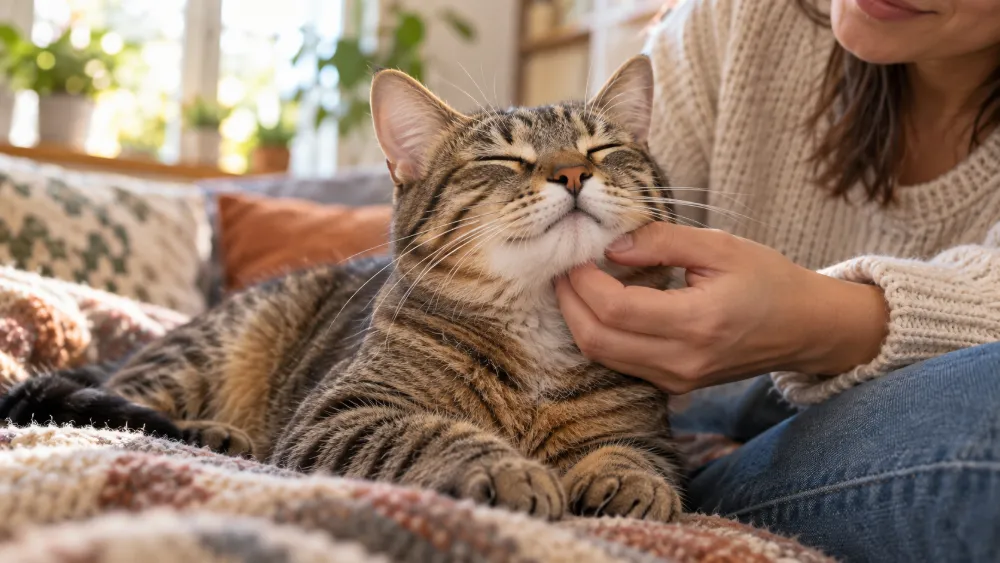
A cat resting comfortably while being stroked may purr when it feels relaxed and secure.
Look at the rest of the body. Relaxed ears, loose muscles and comfortable posture make contentment a likely explanation.
Communication between kittens and their mother
Purring begins very early in a cat's life and forms part of communication between kittens and their mother.
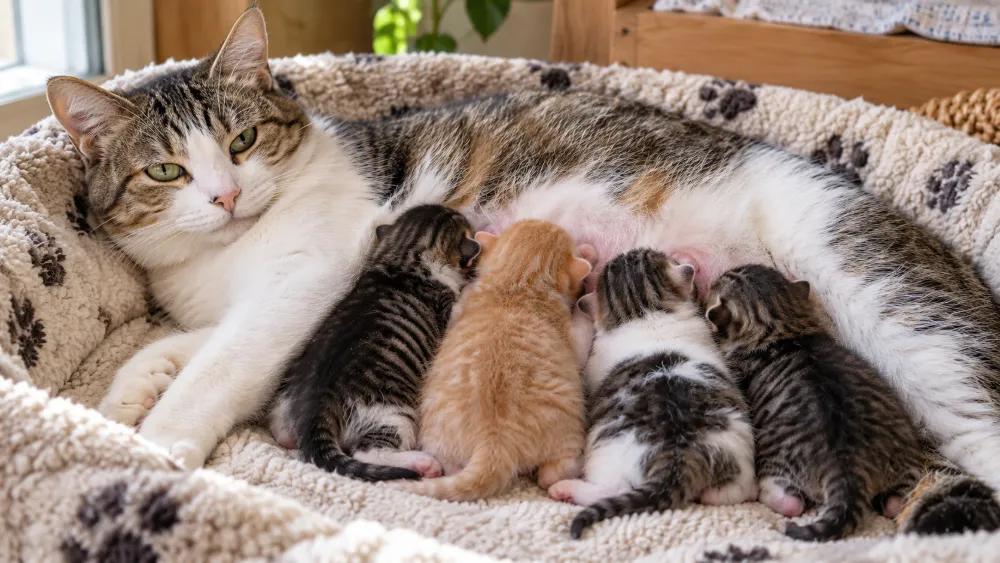
Young kittens can use low, close-range vocal communication while nursing, and mothers may purr around their kittens as well.
Stress or discomfort
A purring cat is not automatically a comfortable cat.
Cats may also purr when frightened, stressed, injured or experiencing pain. Veterinary behavior guidance therefore recommends considering the cat's whole body language and behavior rather than using purring alone as a health indicator.
If a cat is purring while hiding, refusing food, becoming less active or showing other unusual behavior, the purr should not be taken as proof that everything is fine.
How Do Cats Actually Purr?
The familiar explanation says that rapid contractions of muscles around the cat's larynx, or voice box, interrupt airflow and create the rhythmic purring sound.
Recent research suggests the mechanism is more complicated.
In a 2023 study published in Current Biology, researchers examined the larynges of eight domestic cats. Surprisingly, all eight were able to produce self-sustaining vibrations at typical purring frequencies even without active neural input or muscular contraction.
The researchers found specialized connective-tissue structures within the vocal folds that may help cats produce unusually low sounds despite their relatively small larynges.
The experiment produced frequencies around 25–30 Hz, within the normal purring range.
This does not mean the nervous system plays no role when a living cat purrs. Instead, the study suggests that airflow and the physical structure of the vocal folds may contribute much more to the sound than older explanations assumed.
Why Is My Cat Not Purring?
If your cat has never purred much, it may simply be an individual behavioral difference.
Some cats are extremely vocal. Others are naturally quiet.
You can look for other signs that your cat feels comfortable around you, including:
slow blinking;
rubbing its face or body against you;
resting nearby;
kneading;
a relaxed upright tail;
playful behavior;
and voluntarily seeking interaction.
A cat does not need to purr loudly to have a positive relationship with its owner.
What If My Cat Suddenly Stops Purring?
A change is more informative than a lifelong habit.
If a cat that previously purred frequently suddenly becomes quiet, pay attention to the rest of its behavior.
Contact a veterinarian if the change occurs together with signs such as:
reduced appetite;
hiding more than usual;
low energy;
difficulty jumping or walking;
vomiting or diarrhea;
breathing changes;
or other noticeable behavioral changes.
Likewise, suddenly purring much more than usual in unusual circumstances can sometimes accompany stress or pain.
Do Big Cats Purr?
Some do, but the familiar division between “purring cats” and “roaring cats” needs a little explanation.
Cheetahs can purr
Cheetahs do not roar like lions and tigers. Smithsonian's National Zoo documents cheetahs producing purrs as well as chirps, growls, hisses and other calls.
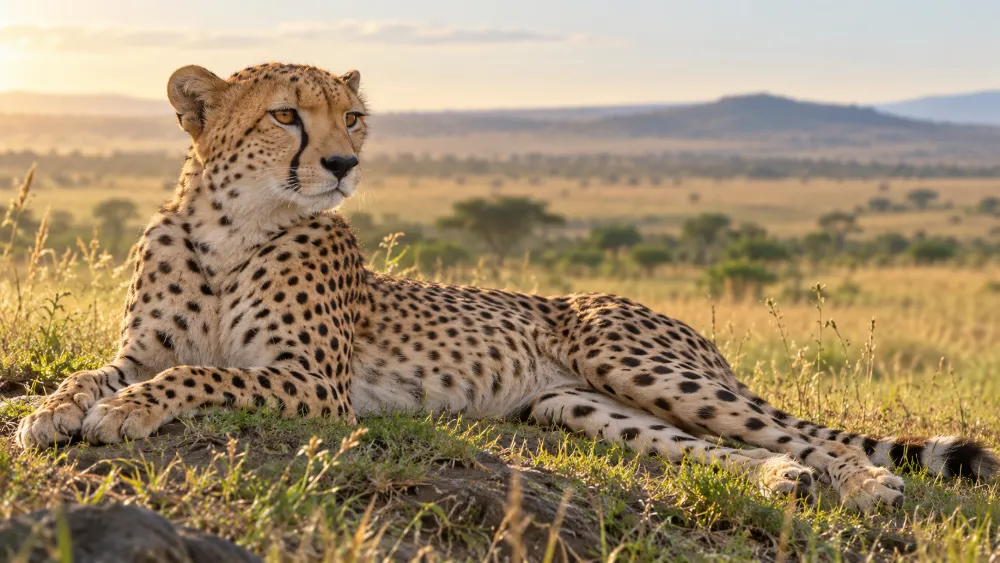
Importantly, cheetahs can produce their purring sound continuously while breathing both in and out, much like domestic cats.
Mountain lions can purr too
Mountain lions—also called pumas or cougars—are physically much larger than house cats, but zoologically they belong to the non-roaring branch of the cat family.
They can purr and also produce whistles, growls, hisses and yowls.
Lions do not make the same continuous purr
Lions are anatomically specialized for roaring.

Their vocal anatomy differs from that of domestic cats, cheetahs and pumas. They can make low grunts, moans and other close-contact sounds, but these should not be confused with the continuous purr of a house cat.
The traditional explanation focused heavily on differences in the hyoid apparatus. Modern anatomical research suggests the structure of the larynx and vocal folds is also important, so the simple rule “one hyoid type equals purring, another equals roaring” is an oversimplification.
For more about the diversity of the cat family, see our Types of Felines guide.
Does Purring Always Mean a Cat Is Happy?
No.
Purring often accompanies comfort, but it can also occur during fear, stress, illness or pain.
The safest way to interpret a purr is to look at context.
A cat stretched comfortably across your lap with relaxed ears and eyes is very different from a cat crouching at the veterinarian with wide pupils and tense muscles.
VCA Animal Hospitals specifically cautions that increased purring combined with hiding, reduced mobility or other behavioral changes can accompany discomfort or pain.
FAQ
Can every domestic cat purr?
Purring is extremely common in domestic cats, but not every individual purrs frequently or noticeably. Some cats appear to purr very little or not at all.
Why does my cat never purr?
If your cat has always been quiet and otherwise appears healthy and relaxed, it may simply communicate in other ways. A sudden change from frequent purring to no purring deserves more attention.
Can cats purr when they are scared?
Yes. Cats can purr during stress, fear, discomfort and pain as well as during relaxed social situations.
Can lions purr?
Lions do not produce the same continuous inhale-and-exhale purr made by domestic cats. Their vocal anatomy is specialized for roaring and other sounds.
Can cheetahs purr?
Yes. Cheetahs can purr continuously while inhaling and exhaling. They cannot roar like lions or tigers.
Can mountain lions purr?
Yes. Despite their large body size, mountain lions belong to the non-roaring branch of the cat family and can purr.
Is purring proof that my cat loves me?
No single behavior proves affection. A relaxed cat may purr during positive interaction, but body language, voluntary social contact and the overall relationship provide better context.
Final Thoughts
Purring may be one of the signature sounds of a domestic cat, but cats do not all use it in exactly the same way.
Some cats rumble loudly whenever they are touched. Others purr so softly that the vibration is easier to feel than hear, and a few rarely appear to purr at all.
The sound also has more than one meaning. It can accompany relaxation and bonding, but cats may purr during stressful or painful situations too.
And across the wider feline family, vocal abilities vary even more: cheetahs and mountain lions can purr, while lions are specialized for roaring.
So if your cat is quiet, do not judge its mood by the absence of a purr alone. Watch the entire cat.
Sources Used for Fact Checking
Current Biology — research on the physical mechanism of domestic cat purring
PubMed — Domestic cat larynges can produce purring frequencies without neural input
Cats Protection — feline purring behavior and reasons some cats do not purr
VCA Animal Hospitals — purring, behavior and pain
Smithsonian's National Zoo — cheetah vocalizations and purring
San Diego Zoo Wildlife Alliance — mountain lion and felid vocalizations