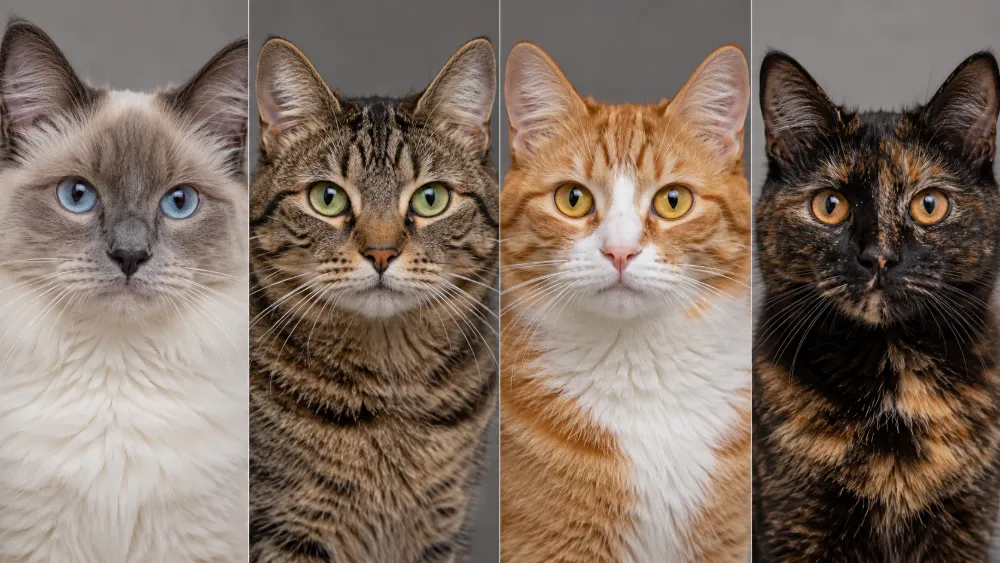
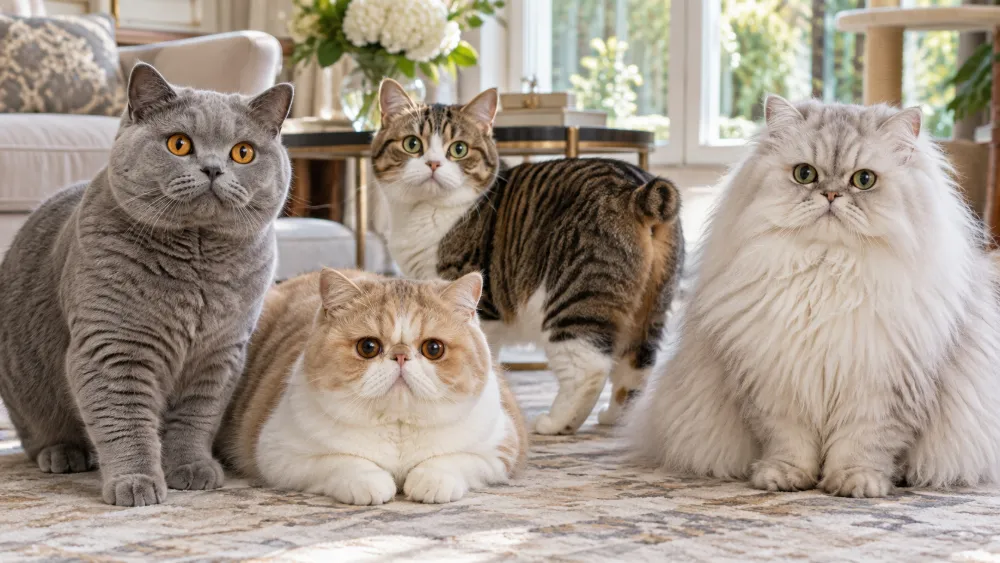
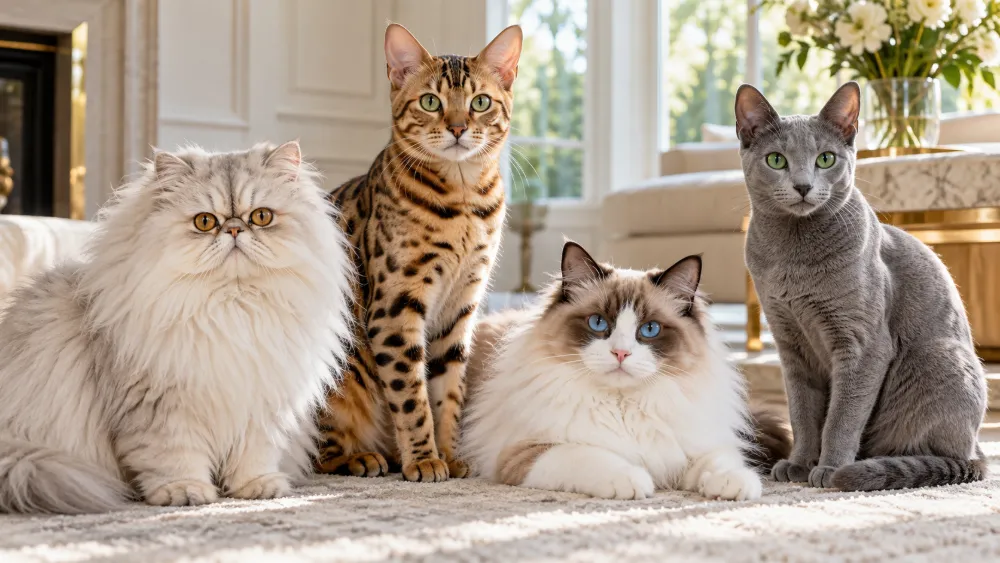
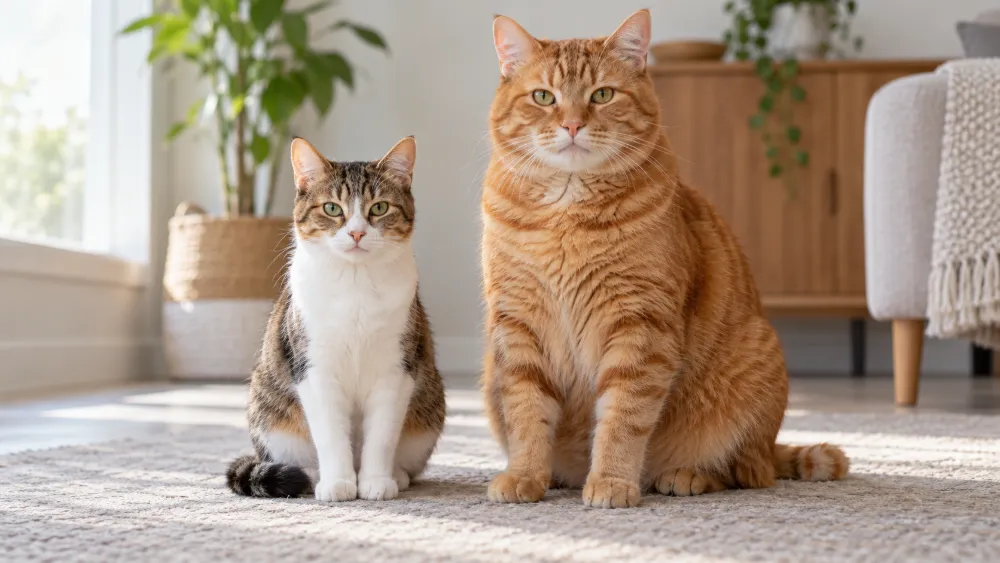
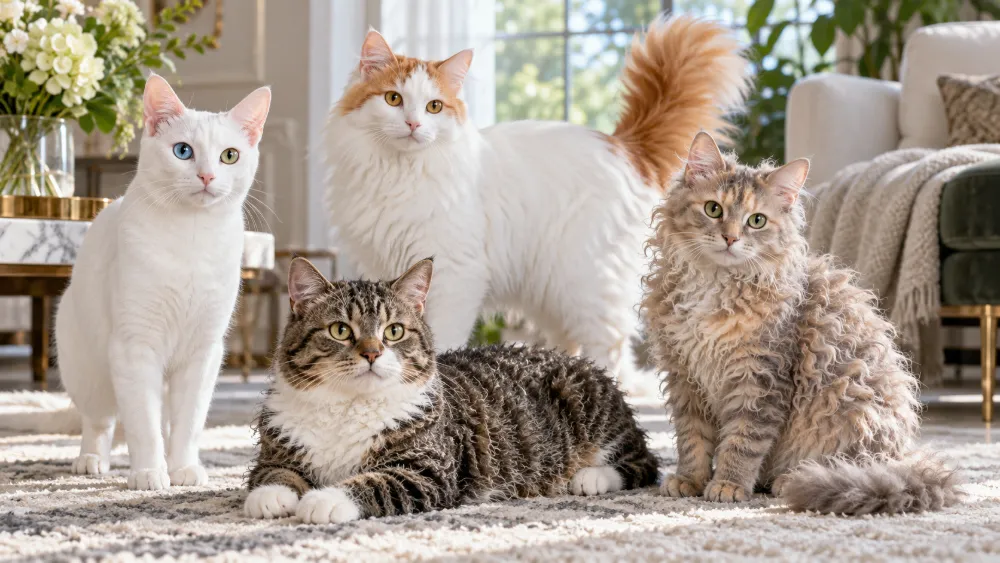
Cats come in an enormous range of colors, from familiar black and orange to shades that many people may never encounter in person.
But calling a cat color “rare” can be tricky. There is no worldwide database that counts every coat color in every domestic cat. A color that is unusual in random-bred cats may be relatively common within a breed that has been selectively bred for it.
Some uncommon colors are especially interesting because we understand much of the genetics behind them. Cinnamon and chocolate, for example, involve variants affecting black pigment, while colors such as fawn and lilac can appear when those base colors are combined with dilution.
Here are seven of the most unusual cat coat colors and color effects—and what actually produces them.
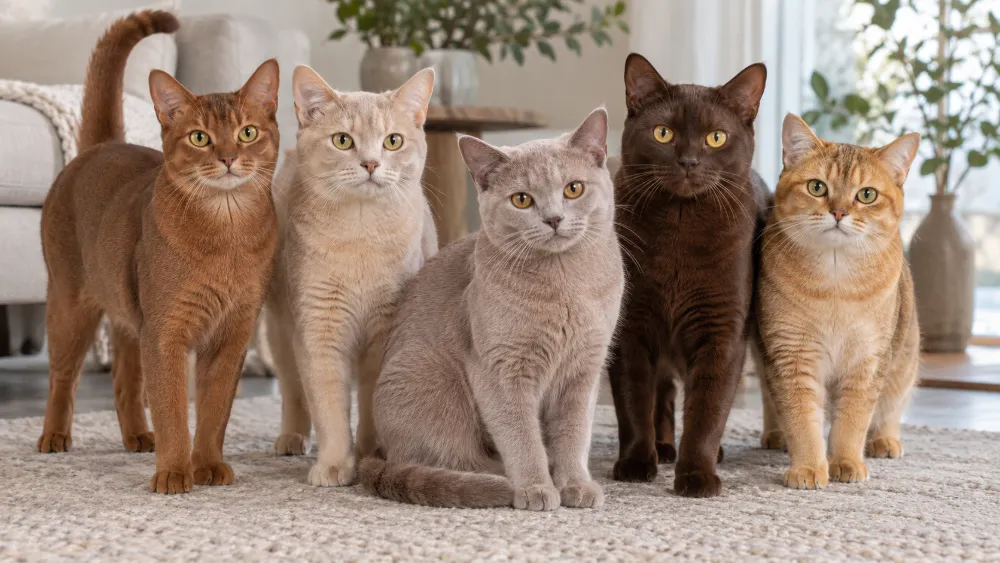
Rare Cat Colors at a Glance
| Color | Typical Appearance | Main Genetic Basis | Why It Is Uncommon |
|---|---|---|---|
| Cinnamon | Warm reddish brown | Brown-locus TYRP1 variant | Requires a particular recessive allele combination |
| Fawn | Pale beige or pinkish tan | Cinnamon plus dilution | Requires multiple recessive traits together |
| Chocolate | Rich warm brown | Brown-locus TYRP1 variant | Less common outside breeds carrying the allele |
| Lilac | Pale gray-lavender or pinkish taupe | Chocolate plus dilution | Requires brown and dilute genetics together |
| Amber | Golden color developing with age | MC1R mutation in Norwegian Forest Cats | Breed-specific and recessive |
| True Albino | White coat with lack of normal pigment | Rare TYR mutation | Extremely uncommon mutation |
| Smoke | Dark hair tips over a pale or white base | Silver/inhibitor effect plus base color | Requires a specific combination of coat traits |
1. Cinnamon
Cinnamon is one of the most distinctive brown-based cat colors.
Instead of the deep brown seen in chocolate cats, cinnamon produces a warmer, lighter reddish-brown shade that is sometimes compared with the color of a cinnamon stick.
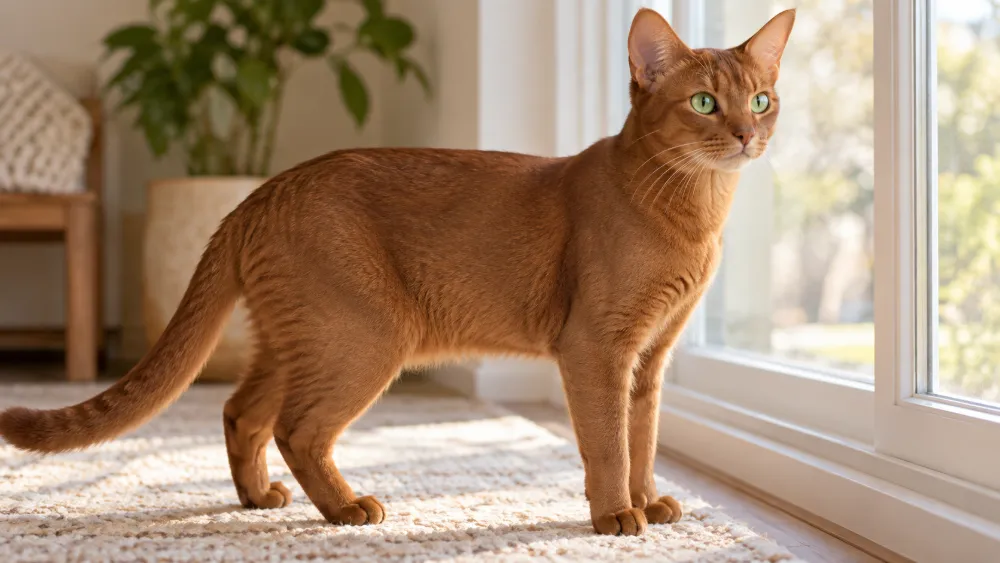
The color is associated with variants in the TYRP1 gene, which affects eumelanin—the dark pigment responsible for black and brown coloration.
According to the University of California, Davis Veterinary Genetics Laboratory, the normal dominant allele produces black-based pigmentation, while recessive brown-locus variants can produce chocolate or cinnamon.
Cinnamon is less frequently encountered because a cat generally needs to inherit the relevant recessive cinnamon allele from both sides of its ancestry for the color to appear.
It is seen in certain pedigreed populations, including some Oriental and British-type breeding lines, but it is unusual among ordinary random-bred household cats.
2. Fawn
Fawn is even paler than cinnamon.
It is usually described as a soft beige, mushroom or pinkish-cream color rather than a deep brown.
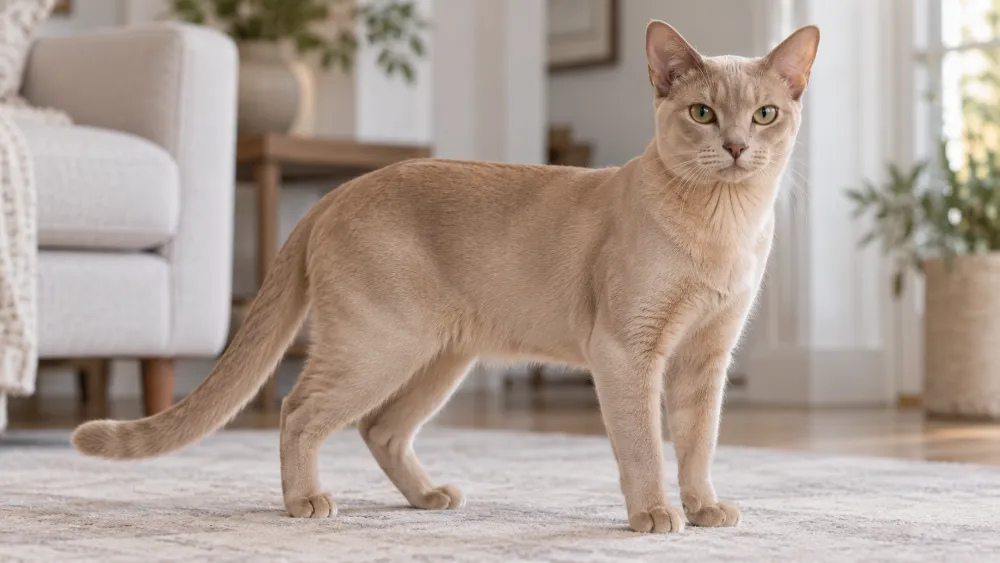
Genetically, fawn can be understood as a diluted cinnamon.
This means the cat needs the genetic background that produces cinnamon as well as two copies of the recessive dilution variant.
The dilution gene affects how pigment granules are distributed inside the hair shaft. Instead of producing an entirely different pigment, it makes an existing color appear lighter.
Because fawn depends on more than one recessive genetic condition coming together, it tends to be less common than basic colors such as black or red.
3. Chocolate
Chocolate cats have a warm brown coat rather than black.
The shade can range from medium brown to a deep, rich chocolate depending on breed, coat length and other genetic modifiers.
Chocolate and cinnamon are genetically related. UC Davis identifies both as brown-locus phenotypes associated with variants in TYRP1.
The genetic dominance relationship can be simplified as:
black > chocolate > cinnamon
This does not mean every black cat secretly contains every other color. It means the black-associated allele is dominant over the variants associated with chocolate and cinnamon.
A cat may therefore carry a recessive chocolate or cinnamon variant without visibly showing it.
Chocolate is well established in some breeds, so it should not be described as universally rare. It is much less frequently seen, however, across the entire domestic cat population than ordinary black-based coloration.
4. Lilac
Lilac is one of the easiest cat colors to misidentify in photographs.
Despite the name, the coat is not bright purple. A true lilac cat usually appears as a pale grayish-taupe or soft lavender-gray with a warm pinkish undertone.
Lilac is generally produced when a genetically chocolate cat also inherits the recessive dilution trait.
In simple terms:
black diluted becomes blue;
red diluted becomes cream;
chocolate diluted becomes lilac;
cinnamon diluted becomes fawn.
This is why lilac and fawn can be relatively uncommon: producing them requires the correct combination of both base-color and dilution alleles.
UC Davis notes that the feline dilution trait is autosomal recessive, meaning a cat needs two copies of the dilute variant to express the diluted coloration.
5. Amber
Amber is particularly fascinating because the color can change dramatically as the cat grows.
The best-documented amber coloration occurs in the Norwegian Forest Cat.
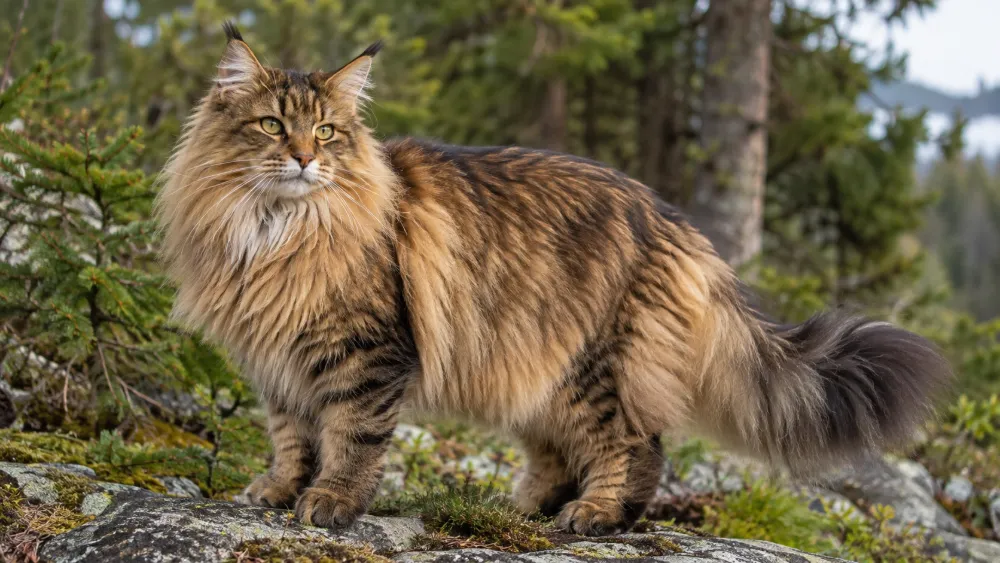
UC Davis reports that a recessive mutation in the MC1R gene can cause dark eumelanin pigmentation to be gradually replaced by yellow pigment as the cat matures.
Amber kittens may therefore begin life looking much darker than they will as adults.
The known mutation traces back to a Norwegian Forest Cat ancestor born in Norway in 1981. The color was originally referred to as “X Colour” before becoming known as amber.
Because this particular genetic effect is associated with a specific breed population and is recessively inherited, it is far less widespread than ordinary orange or brown coats.
6. True Albino
A white cat is not automatically an albino cat.
This is one of the most important distinctions in cat color genetics.
Many white cats owe their appearance to dominant white or white-spotting genetics. True inherited albinism is caused by a different mutation that interferes with normal pigment production.
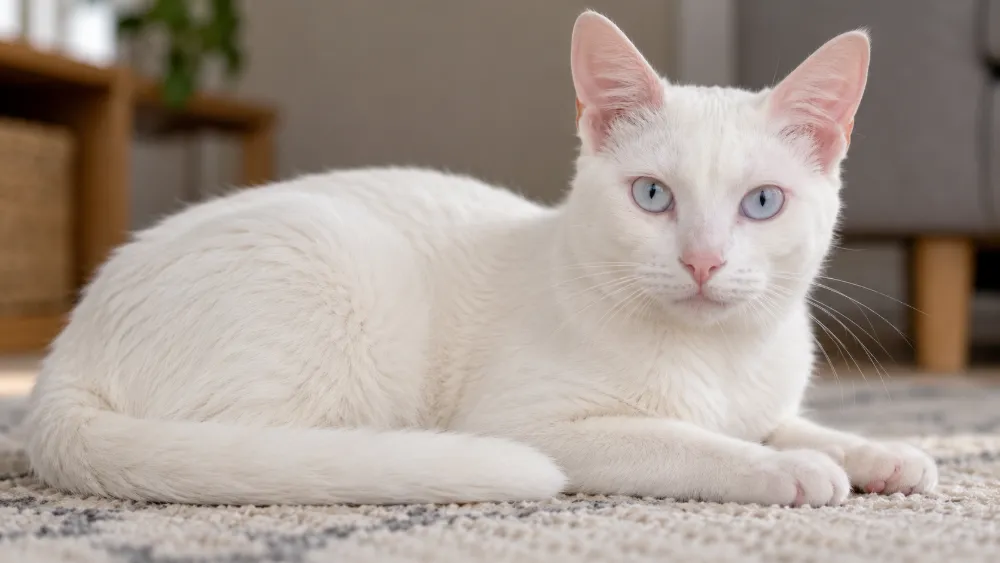
The Veterinary Genetics Laboratory at UC Davis describes feline albinism as a rare inherited condition associated with a mutation in the TYR gene.
The mutation is autosomal recessive and produces a white coat with blue eyes.
How rare is it?
UC Davis reports that among 9,229 cats tested for this mutation, only four tested positive—two Tonkinese and two Siamese cats.
That does not prove that albino is statistically the single rarest cat color in the entire world, because DNA-test populations are not the same as a worldwide census. But it does demonstrate that the known mutation is genuinely very uncommon.
7. Smoke
Smoke is slightly different from the solid colors above because it is a color effect rather than simply a single pigment shade.
A smoke cat may look almost solid when sitting still. When the fur separates or the cat moves, however, a much paler base becomes visible beneath the dark hair tips.
This creates a dramatic contrast between the outer portion of the coat and the roots.
Black smoke is probably the best-known example, but smoke effects can occur over other genetically compatible base colors.
Smoke should not be called universally rare, because its frequency varies greatly among breeds and populations. It is nevertheless much less familiar to many pet owners than straightforward solid, tabby or bicolor coats.
What Is the Rarest Cat Color?
There is no scientifically established global ranking of cat colors from rarest to most common.
Several factors make such a ranking difficult:
most domestic cats are not registered by coat color;
breed registries track different populations;
some colors are rare globally but common within a particular breed;
different genetic mechanisms can produce visually similar cats;
and terminology varies between cat registries and breeders.
True genetic albinism is clearly extremely uncommon based on available testing data, while cinnamon, fawn and some breed-specific colors such as amber are also uncommon.
It would still be misleading to declare any one of them the universal “rarest cat color” without defining the population being measured.
Is White the Rarest Cat Color?
No.
A completely white coat can result from several different genetic mechanisms, and ordinary dominant-white cats are not the same as albino cats.
This is why appearance alone cannot always reveal the exact genetics behind a white cat.
The same principle applies to many other cat colors: two cats can look similar while reaching that appearance through different genetic pathways.
Are Calico and Tortoiseshell Rare Colors?
Calico and tortoiseshell are better described as coat patterns involving orange and non-orange pigmentation rather than individual solid colors.
They are strongly associated with female cats because the orange-color gene is located on the X chromosome.
Male calico and tortoiseshell cats are much less common because producing those patterns in a male usually requires an unusual sex-chromosome configuration or another exceptional genetic circumstance.
For the full explanation, see our Calico vs. Tortoiseshell guide.
Does a Rare Color Mean a Rare Breed?
No.
Breed and coat color are two different concepts.
A common breed can occasionally have an uncommon color, while a rare breed may come in an ordinary-looking color.
For example, rarity in a pedigreed breed usually refers to population size, breeder numbers or registrations—not simply the color of its fur.
See our guide to rare cat breeds for the difference between breed rarity and coat-color rarity.
Does Coat Color Affect a Cat's Personality?
People often describe orange cats as friendly, tortoiseshell cats as feisty or black cats as especially affectionate.
These stereotypes are popular, but coat color alone should not be treated as a reliable predictor of an individual cat's personality.
Behavior is influenced by many factors, including genetics beyond coat color, early socialization, age, environment, health and individual experience.
Choosing a cat primarily because of a supposedly color-linked personality can therefore be misleading.
Are Rare Cat Colors More Expensive?
Sometimes—but rarity does not automatically justify a high price.
Within pedigreed cats, unusual colors can attract demand, particularly if the color is difficult to produce within an accepted breed standard.
However, price can also reflect breeder reputation, pedigree, geographic availability, health testing and demand.
A seller calling a kitten “ultra rare” or “exclusive color” is not proof that the color is genetically rare.
Buyers should focus on health, welfare, responsible breeding and accurate pedigree information rather than marketing language.
Can DNA Testing Identify Cat Color Genetics?
For several coat traits, yes.
Veterinary genetic laboratories can test for variants associated with traits such as:
chocolate and cinnamon;
dilution;
colorpoint restriction;
dominant white and white spotting;
amber in Norwegian Forest Cats;
and certain forms of albinism.
DNA testing is especially useful for breeders because a cat can carry a recessive color allele without displaying that color itself.
However, feline coat genetics is complex, and not every possible shade or pattern can be reduced to a single simple DNA test.
FAQ
What is the rarest cat color?
There is no verified worldwide ranking of cat colors. True genetic albinism is exceptionally rare in available DNA-testing data, while cinnamon, fawn and breed-specific amber coloration are also uncommon.
Is cinnamon a rare cat color?
Yes, cinnamon is relatively uncommon across the overall domestic cat population. It results from recessive variants affecting brown pigmentation and is much more likely to appear in breeding populations where those alleles are deliberately maintained.
What color is a fawn cat?
Fawn is a pale, warm beige or pinkish-tan color. Genetically, it is generally the diluted form of cinnamon.
What color is a lilac cat?
Lilac cats usually have a pale grayish or lavender-taupe coat with a subtle warm or pinkish tone. Lilac is generally produced when chocolate pigmentation is combined with the recessive dilution trait.
Are albino cats just white cats?
No. Many white cats have dominant-white or white-spotting genetics and are not albino. True feline albinism involves a specific pigment-production mutation and is much rarer.
Is amber the same as an orange cat?
No. The documented amber phenotype in Norwegian Forest Cats is caused by a different genetic mechanism. Cats can begin darker and develop increasingly golden coloration as they mature.
Are rare-colored cats unhealthy?
A rare coat color by itself does not mean a cat is unhealthy. Health depends on the specific genetic background, breed, breeding practices and individual animal. Responsible breeders should prioritize genetic diversity and health over producing unusual colors.
Final Thoughts
The most fascinating thing about rare cat colors is not simply how unusual they look—it is how many different genetic pathways can produce them.
Cinnamon and chocolate alter dark pigmentation. Dilution transforms those colors into paler shades such as fawn and lilac. Norwegian Forest Cat amber changes as a cat matures, while true albinism can almost completely prevent normal pigment production.
That complexity is also why claims about the “rarest cat color in the world” should be treated carefully.
There is no complete worldwide census of feline coat colors. A better approach is to look at the genetics, the breeds or populations in which a color appears, and how frequently the necessary alleles are actually present.
If you are interested in how appearance relates to the wider cat family, you can also explore our guide to the different types of felines.