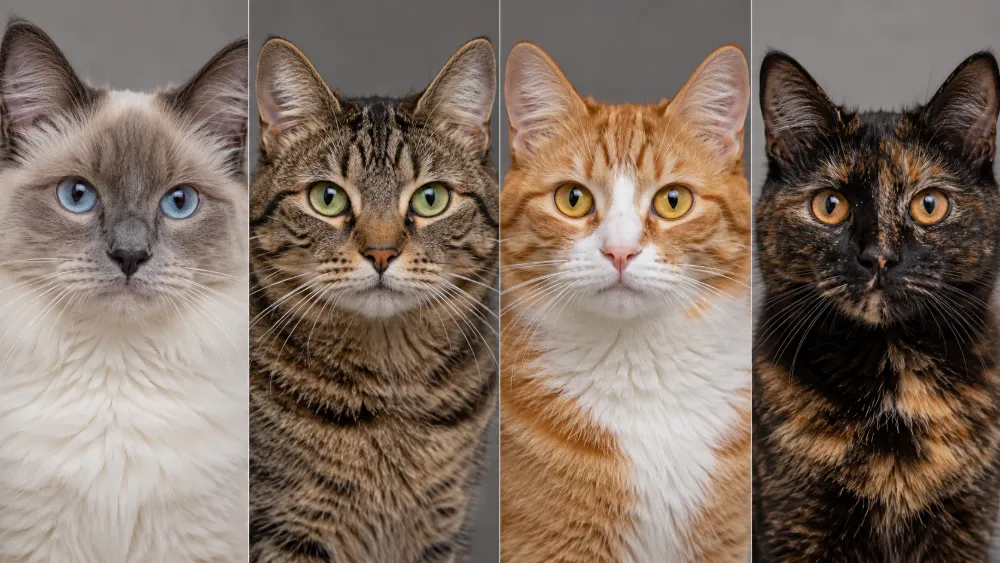
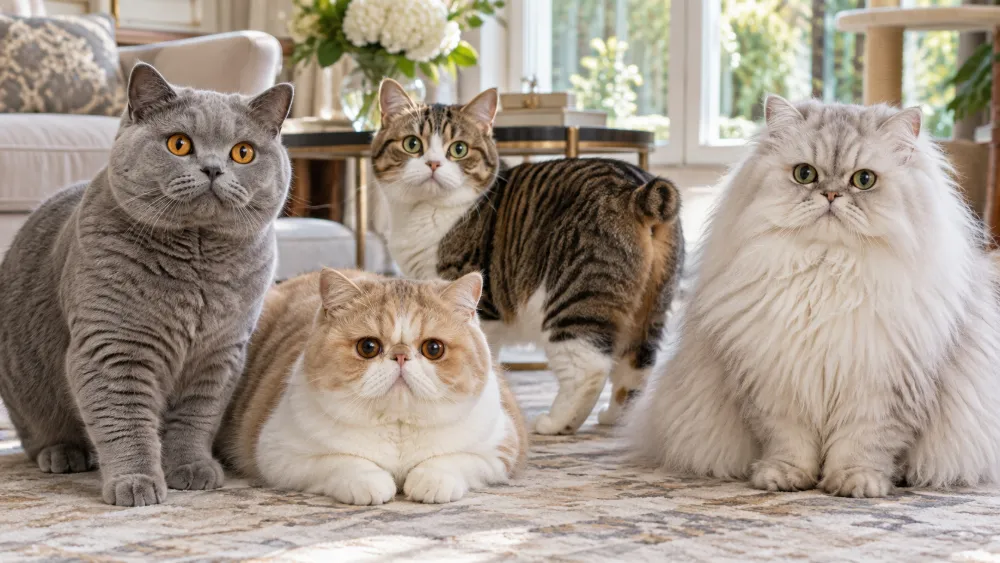
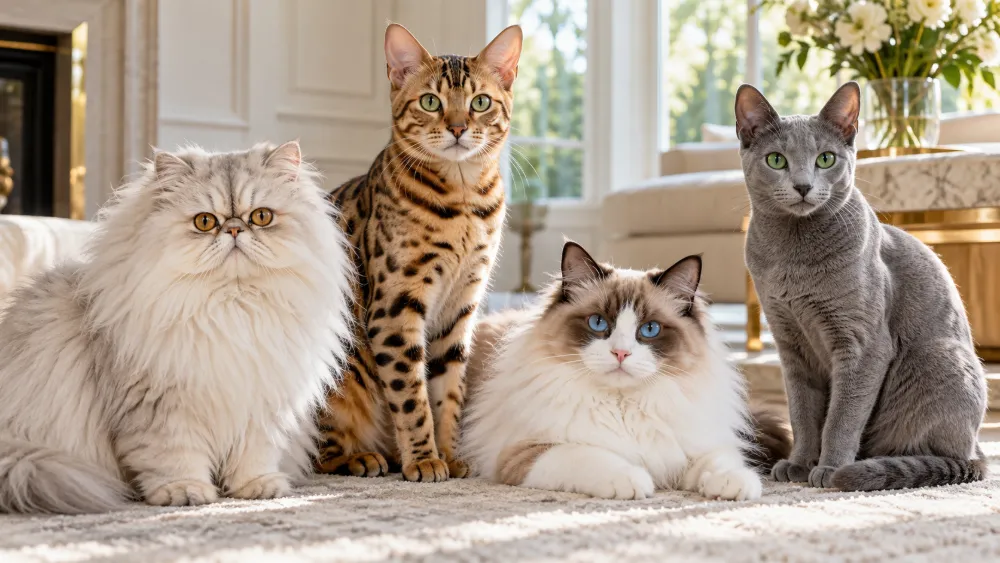
If your cat seems much smaller than other cats of the same age, it is natural to wonder whether something is wrong.
The good news is that a small cat can be completely healthy. Genetics, breed, sex and age all influence adult size, and some cats are simply petite. However, a cat that is unusually thin, stops growing, loses weight or develops other symptoms may need veterinary attention.
The key is to separate small body size from being underweight. A healthy small cat can have good muscle tone and an ideal body condition, while a larger cat can still be underweight.
Quick Answer: Why Is My Cat So Small?
Your cat may be small because of:
normal genetics and natural individual variation;
a naturally small cat breed;
being female;
still being young and growing;
nutrition that does not fully meet growth needs;
intestinal parasites or other health problems;
or weight loss rather than naturally small body size.
If your cat is active, eating normally, maintaining its weight and has a healthy body condition, being smaller than average is often not a problem.
If your cat is losing weight, has poor appetite, diarrhea, vomiting, weakness, a dull coat or seems to have stopped growing unexpectedly, contact a veterinarian.
1. Your Cat May Simply Be Naturally Small
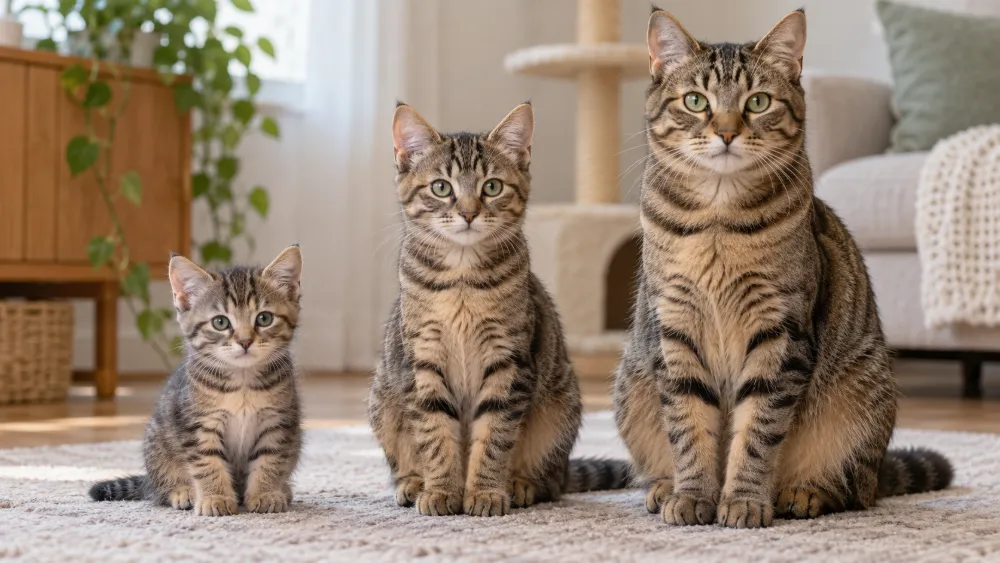
Just like people, domestic cats do not all grow to the same size.
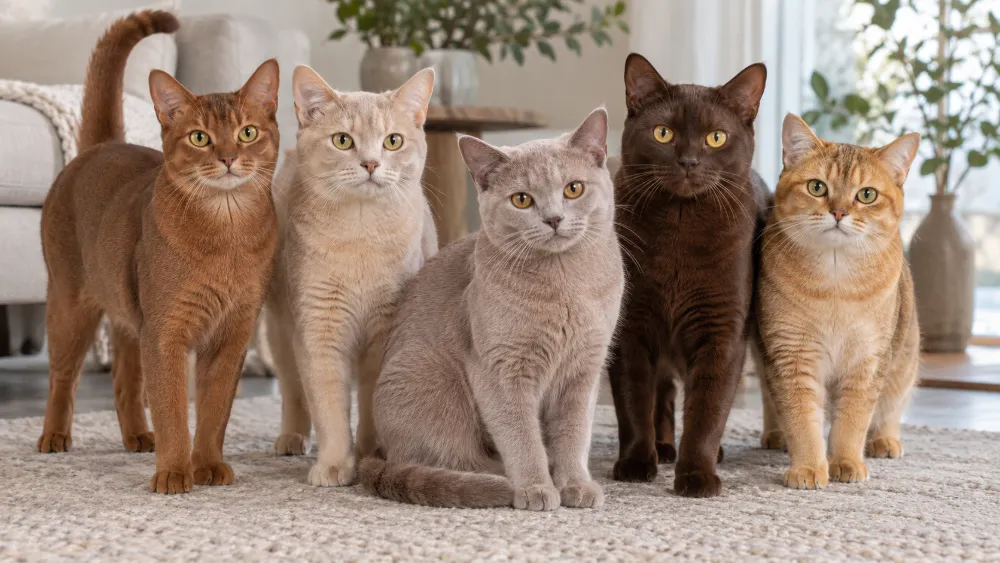
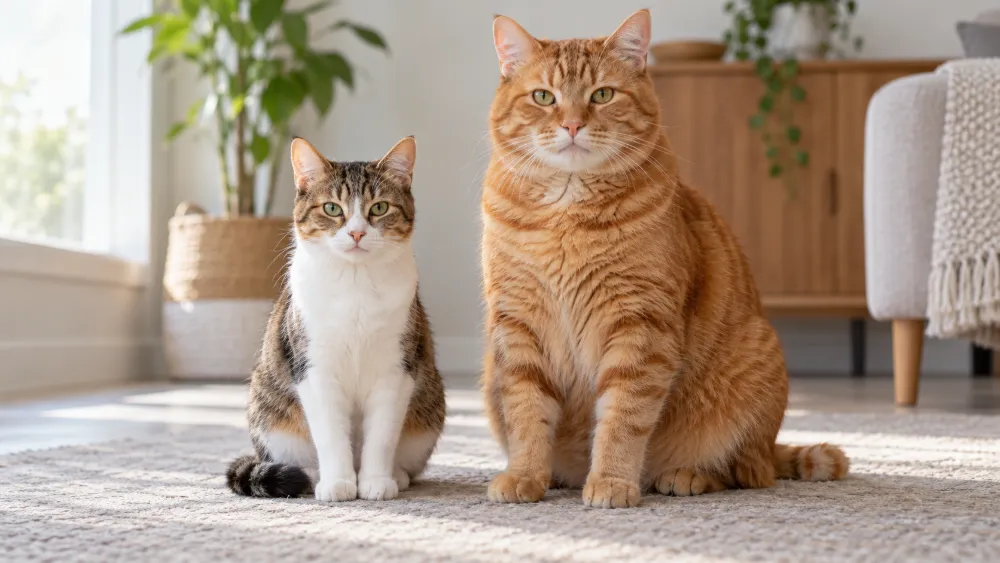
Two healthy adult cats from the same general population can differ considerably in height, body length, bone structure and weight. Genetics inherited from the parents play a major role in determining the eventual size of a kitten.
This means a petite adult cat does not automatically have a growth problem.
If your cat has always been smaller than average, maintains a stable weight and appears energetic and well proportioned, its size may simply be normal for that individual.
2. Some Cat Breeds Are Naturally Small
Breed can make a large difference in adult body size.
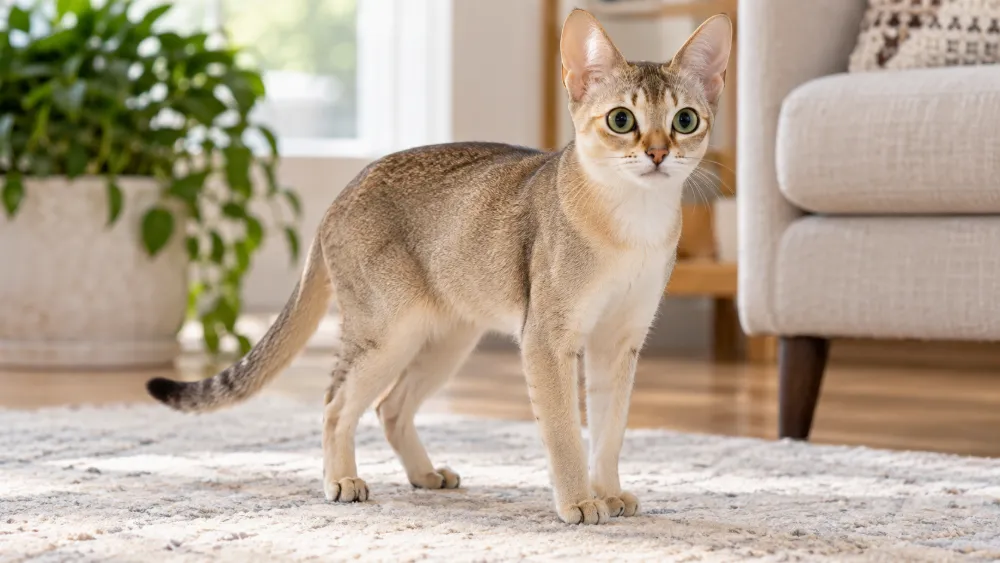
The Singapura, for example, is known for its very small adult size. At the other end of the spectrum, breeds such as the Maine Coon can develop much larger frames.
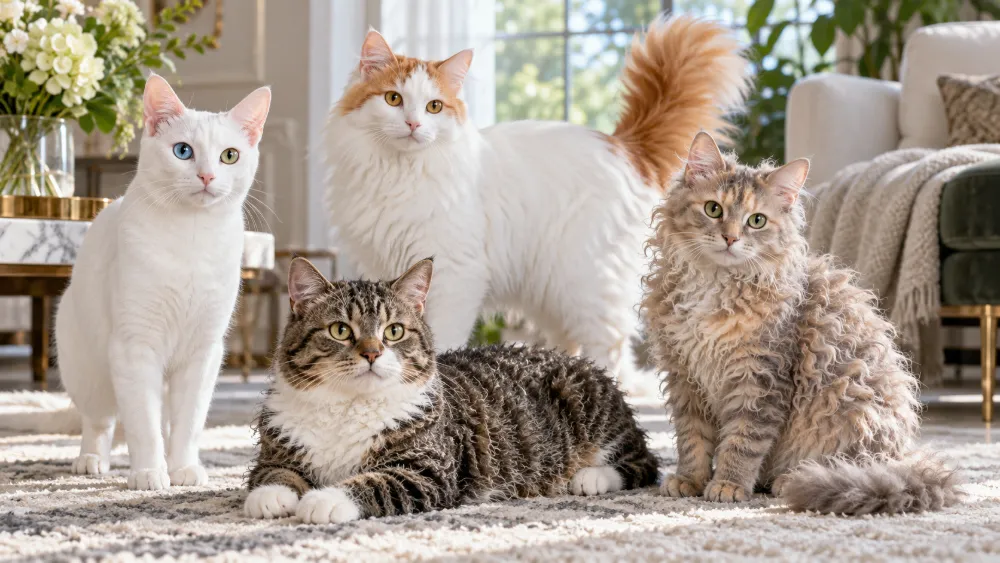
Mixed-breed cats also inherit different combinations of size-related traits from their parents, so even littermates may not finish at exactly the same size.
If you want to compare naturally large and small breeds, see our guide to cat breeds from largest to smallest.
Some uncommon pedigreed breeds are also naturally petite. You can explore more in our guide to rare cat breeds.
3. Female Cats Are Often Smaller Than Males
Sex is another factor that can influence body size.
Within the same breed or population, males are often heavier and more robust than females. The difference is not absolute—there are large females and small males—but it can explain why a healthy female looks noticeably smaller than another adult cat.
This is especially important when comparing two cats in the same household. If one is male and the other female, a size difference does not necessarily mean that the smaller cat has failed to grow properly.
4. Your Cat May Not Be Fully Grown Yet
A kitten that looks small may simply still be growing.
Most typical domestic cats approach their adult size during the first year to year and a half of life. Growth rate varies with genetics, breed and sex, so there is no single birthday on which every cat suddenly becomes full grown.
Some females may reach most of their adult size earlier, while some males and larger breeds can continue developing for longer.
A kitten should not be evaluated against the expected weight of a fully mature adult cat. It is more useful to look at whether the kitten is gaining weight and developing steadily over time.
You can also use our pet age calculator for a general view of your cat's life stage, although individual growth still varies.
5. Nutrition Can Affect Kitten Growth
Growing kittens need enough energy, protein and essential nutrients to support development.
Kitten food is formulated differently from ordinary adult maintenance food because growth places additional nutritional demands on the body.
A kitten may struggle to gain weight if it:
does not receive enough food;
is fed a diet that is not complete and balanced for growth;
has difficulty competing with other pets for food;
has poor appetite;
or cannot properly digest or absorb nutrients.
More food is not always the correct solution. If a kitten is not growing as expected despite apparently eating enough, a veterinarian should investigate the reason rather than simply increasing portions indefinitely.
6. Parasites or Illness Can Make a Cat Look Too Small
Sometimes small size is not genetic at all.
Intestinal parasites and various digestive or systemic diseases can interfere with weight gain or cause weight loss. The possible causes differ depending on the cat's age, history and symptoms, so appearance alone cannot identify the problem.
Warning signs that deserve veterinary attention include:
weight loss;
failure to gain weight in a growing kitten;
persistent diarrhea;
repeated vomiting;
poor or suddenly reduced appetite;
weakness or unusual tiredness;
a dull or poorly maintained coat;
changes in thirst or urination;
or a visibly bony body.
A veterinarian may need to examine the cat, review its diet and growth history, check for parasites or perform other tests depending on what the examination reveals.
7. Your Cat May Be Underweight Rather Than Naturally Small
This is the most important distinction.
Small describes the overall size of the skeleton and body. Underweight means the cat carries less body tissue or fat than is appropriate for its frame.
A small-framed cat can be at an ideal weight. A large-framed cat can be underweight.
How to Tell Whether a Small Cat Is Too Thin
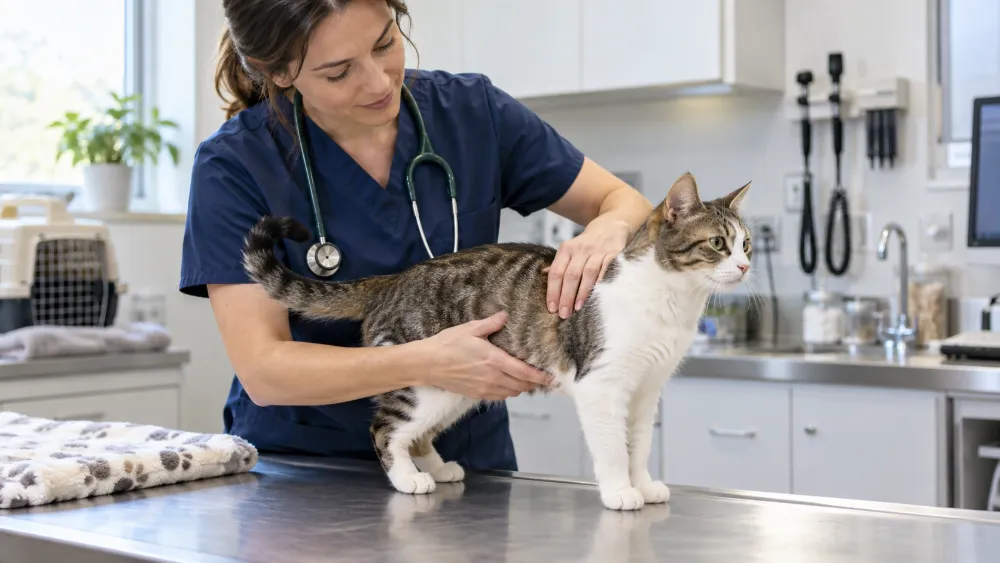
Veterinarians often assess body condition rather than judging a cat from weight alone.
One commonly used system is the nine-point Body Condition Score, or BCS.
In an ideally conditioned cat, you should generally be able to feel the ribs beneath a slight covering of fat without the ribs being sharply prominent. Viewed from above, the cat should have some waist behind the ribs. The abdomen should also have some contour rather than an extreme hollow appearance.
An underweight cat may have:
ribs that are unusually easy to see or feel;
prominent spinal or pelvic bones;
very little fat covering;
a strongly pronounced waist;
or loss of muscle.
Long-haired cats can hide weight loss surprisingly well, so feeling the body gently is often more useful than looking at the coat.
For a general starting point, you can use our pet weight and body-condition reference tool. It is an educational reference rather than a diagnosis, so unexpected weight loss or an abnormal body condition should still be discussed with a veterinarian.
Small but Healthy vs. Underweight: Quick Comparison
| Small but Healthy Cat | Possibly Underweight Cat |
|---|---|
| Has always been petite | Recently becoming thinner |
| Weight remains stable | Weight continues to drop |
| Normal appetite | Poor or changed appetite |
| Active and alert | Weak or unusually tired |
| Good muscle coverage | Visible muscle loss |
| Ribs can be felt but are not sharply prominent | Ribs, spine or hips may be very prominent |
| Normal stool and digestion | May have vomiting or diarrhea |
How Big Should My Cat Be?
There is no single ideal weight for every adult cat.
Breed, body frame, sex, muscle mass and genetics all matter. That is why comparing your cat with an arbitrary number from the internet can be misleading.
Instead, consider three things together:
Body condition: Does the cat appear appropriately lean for its frame?
Weight trend: Is weight stable, increasing normally during growth, or unexpectedly falling?
Overall health: Is the cat eating, playing, grooming and behaving normally?
A naturally petite cat that scores well in all three areas is very different from a cat that has recently become thin.
When Should I Take a Small Cat to the Vet?
Arrange a veterinary check if your cat is unusually small and you are unsure whether its growth is normal—especially if the cat is still a kitten.
Seek veterinary advice sooner if you notice:
unexplained weight loss;
failure of a kitten to gain weight;
loss of appetite;
persistent vomiting or diarrhea;
marked weakness or lethargy;
difficulty eating;
noticeable muscle loss;
or other significant changes in behavior or health.
Tracking body weight at home can also be useful. Weighing your cat consistently with the same scale can make gradual changes easier to detect.
FAQ
Why is my cat so small but fully grown?
A fully grown cat can be naturally small because of genetics, breed, sex and individual body structure. If your cat has a stable weight, good muscle tone, normal appetite and normal behavior, a petite adult size may be completely normal.
Why is my cat smaller than other cats her age?
Age alone does not determine size. Genetics, sex, breed, nutrition and growth rate all vary between cats. Two cats born at approximately the same time can therefore reach different adult sizes.
Is a small cat automatically underweight?
No. A small cat has a smaller overall frame, while an underweight cat has too little body tissue for its frame. Body condition and weight trend are more useful than body weight alone.
At what age do cats stop growing?
Many domestic cats reach most of their adult size around 12 to 18 months of age, although growth varies by breed, sex and individual cat. Some larger breeds can continue developing for longer.
Can poor nutrition make a kitten stay small?
Inadequate nutrition can interfere with healthy growth. Growing kittens need a complete and balanced diet appropriate for growth. A kitten that fails to gain weight despite eating should be evaluated by a veterinarian because nutritional intake is only one possible cause.
Can worms make a kitten small?
Intestinal parasites can contribute to poor growth or weight problems in some kittens. However, a kitten's appearance cannot confirm a parasite infection. Diagnosis and appropriate treatment should be based on veterinary advice.
Should I feed my small cat more?
Not simply because the cat looks small. A naturally petite cat may already be at an ideal body condition. Feeding significantly more than needed could eventually cause excess weight. If your cat appears underweight or is losing weight, identify the cause with a veterinarian before making major dietary changes.
Final Thoughts
If you keep asking, “Why is my cat so small?” start by looking at the whole cat rather than the number on the scale.
A petite frame can be perfectly normal. Breed, genetics, sex and age create enormous natural variation among domestic cats.
What matters more is whether your cat is maintaining an appropriate body condition, growing normally for its life stage, eating well and remaining active.
A cat that has always been small and healthy is very different from one that is becoming thinner. If the change is new, growth appears to have stopped unexpectedly or other symptoms are present, a veterinary examination is the safest next step.
```